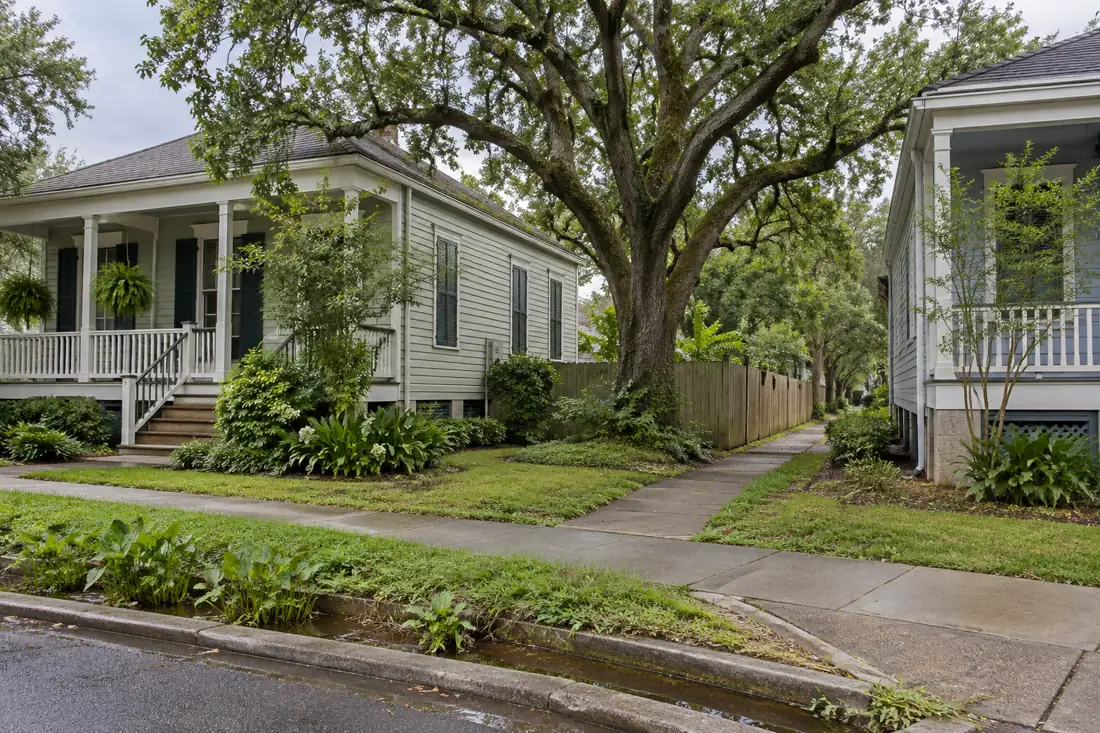
Westwego tree work starts with access
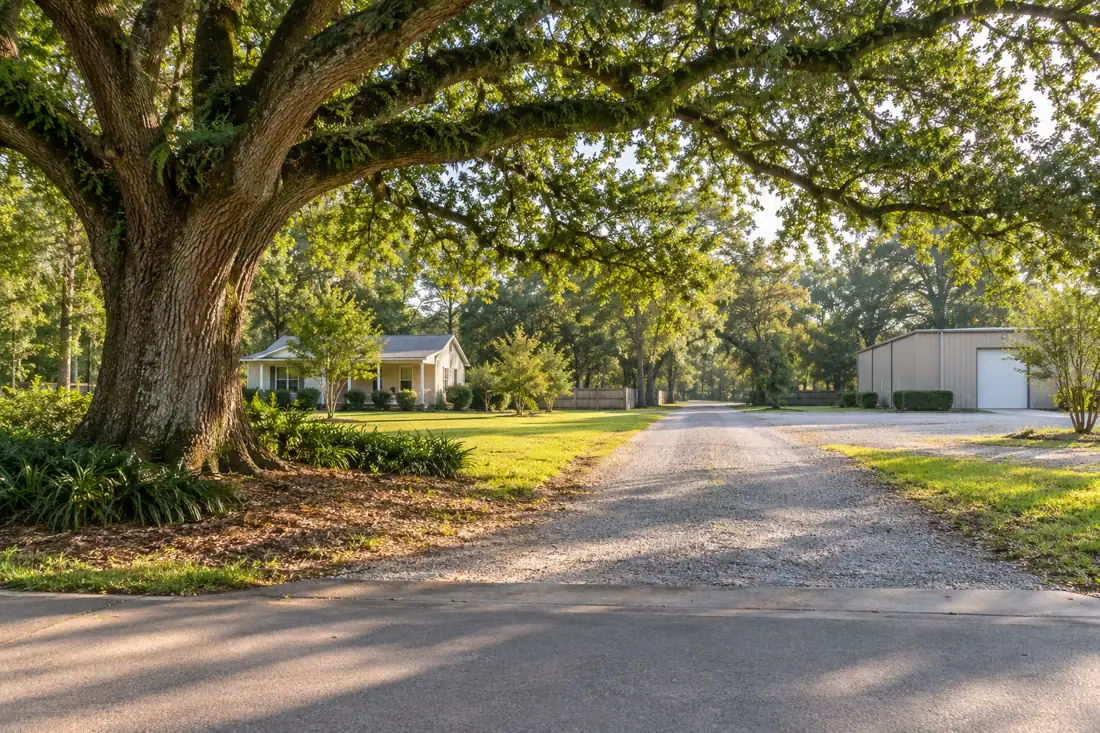
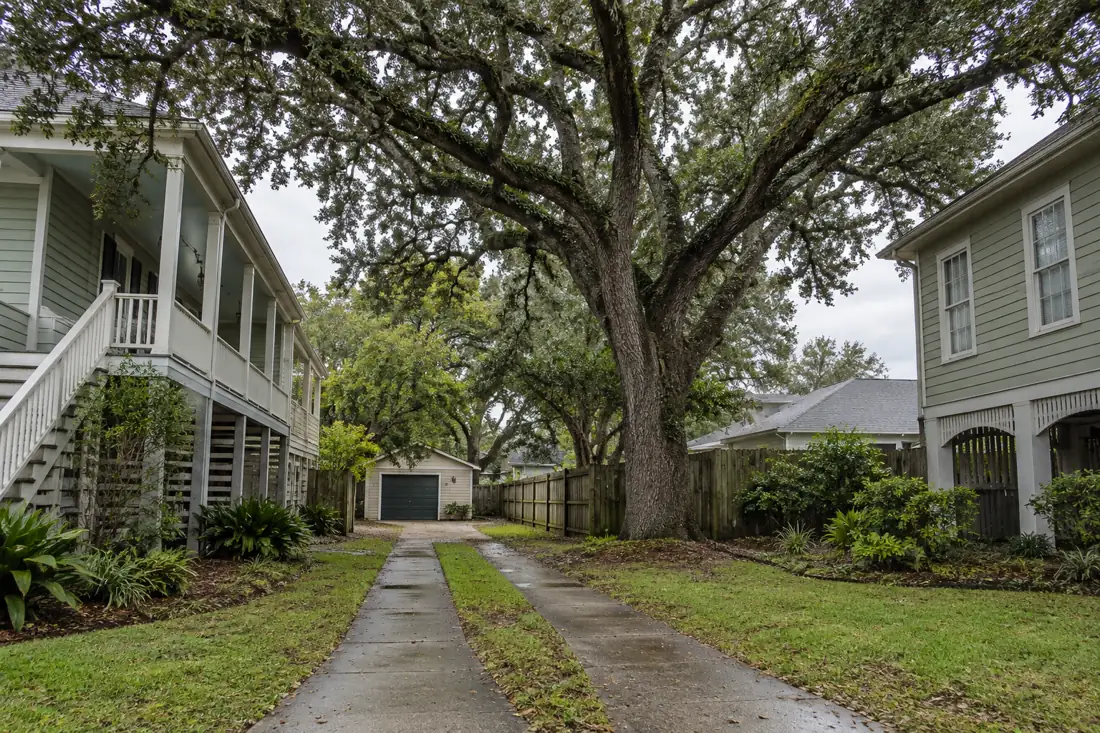
Compact lots, fences, soft ground and nearby structures can make access the deciding factor in a tree-service plan. Tree Huggers evaluates the tree, targets, equipment route and debris volume together so the estimate reflects the actual job.
Westwego wet-ground access and storm follow-up
Before scheduling tree work in Westwego, provide a recent description of ground and access conditions rather than relying on an old photograph. Waterlogged soil, a ditch crossing, or a soft side yard can change which equipment routes are practical. A crew needs to know about culverts, irrigation, buried lines and any areas that should not carry vehicle weight. Keep photos to areas that can be viewed safely from the ground.
After wind or rain, compare current lean, soil cracking, root movement and broken attachments with earlier observations if those exist. A newly exposed root plate or changing lean deserves prompt professional attention; it cannot be declared safe through a phone photo alone. Keep a reasonable exclusion area and avoid parking beneath compromised branches while arranging an assessment. If electrical conductors are involved, contact the utility and stay clear.
Scope the job by outcome: hazard inspection, selective clearance, controlled removal, cutting and hauling debris, and optional stump finish. Explain whether chips and logs should remain or leave, and identify property access approvals. That detail lets the written estimate account for cleanup and ground protection without inventing a price from tree height alone.
We handle routine residential work as well as larger removals, high-risk trees, storm debris and equipment-heavy projects.
Start with the tree's role in your property
Explain what you want to change: a branch near the roof, a tree you are concerned about, an old stump in a usable area or storm material blocking access. The desired result helps distinguish pruning, assessment, removal and cleanup. You do not need to choose a machine or technical pruning term before contacting the company. Describe the concern and the ordinary use of the space around it.
For a Westwego request, include the full work address and a current contact who can arrange entry. A mailing address and the practical entrance may differ on a shared or larger property. The tree services overview helps identify related work. If the tree has changed suddenly, explain that at first contact rather than placing an urgent condition inside an otherwise routine yard-improvement request.
Follow the route from the street to the tree
Photograph the entrance, side passage and work area as a connected route. A wide opening at the driveway may lead to a narrower gate, a sharp turn or a step behind the house. Show those transitions. Mention an opening that cannot be measured safely rather than estimating it as certain. The estimator needs the usable route, not simply the widest place visible in the first image.
Keep parked vehicles, private gates and shared access arrangements in the discussion. Do not remove fencing or relocate another person’s property to prepare for assumed equipment. The equipment planning hub explains how access informs handling. An honest route description helps the company review an appropriate approach and explain limitations before the customer relies on a method that may not fit the actual rear-yard path.

Include roofs, fences and retained features
Show what is beside and beneath the tree. A roof, garden bed, shed or neighboring fence can influence the work boundary even when the trunk is small. Tell the estimator which features need to remain accessible and which areas are shared. Avoid cropped photos that remove the very object motivating the request. A wider view lets the discussion connect the tree task to the property the customer wants to keep using.
Existing damage should be described accurately, without attributing every mark to one tree or event before review. If work near a boundary is being considered, resolve the appropriate permission and limits rather than assuming a fence proves ownership. Keep sensitive access details in the agreed direct channel. The plan should identify the tree being authorized and the surrounding features to account for, not treat everything visible in the yard as part of the work.
Define trimming by a result you can recognize
If the objective is clearance or deadwood removal, say which branch area or route is involved. Explain the use: a roof edge, walkway, driveway or outdoor sitting area. The tree trimming service provides related scope information. A precise objective is easier to review than a general request to cut the tree back, particularly when the customer wants to retain shade or a particular part of the canopy.
Pruning should follow the tree and site review rather than an assumed uniform shape or a demand to remove an arbitrary amount. Ask what the proposed work addresses and what remains outside it. If the concern is a new crack, movement or failure, identify it as a condition question rather than ordinary trimming. That helps the conversation distinguish a clearance objective from a need for further assessment of the tree.
Compare removal scopes beyond the visible trunk
For a possible removal, explain why it is being considered and provide safe whole-tree views. The tree removal page describes the broader service. Handling the crown, moving logs through a tight route and hauling material can be substantial parts of the task. A photograph of the trunk alone does not establish those conditions, and two similar-looking trees may have different surrounding constraints.
Ask which tree is included, what material leaves and how the remaining stump will be handled. Do not infer grinding, excavation or landscape restoration from a general removal description. If another project follows, tell the estimator what that provider expects to do next. Keeping the handoff visible gives the customer a practical way to compare proposals on the same work rather than relying on a single total price with different assumptions behind it.

Verify Westwego street access and drainage before tree work
Westwego properties can be deceptively tight once tree work is staged. A driveway may fit a family vehicle but not provide a safe loading route, and a roadside ditch may separate the usable pavement from the trunk. Before an estimate, identify the tree, the street-facing approach, low branches over a neighboring driveway, and any overhead service wires. Take one wide image from the curb and one showing the path to the base rather than sending only a close photograph of the canopy.
Where public frontage, drainage infrastructure, or utility rights-of-way are involved, the property owner and contractor should establish who can authorize access and what approvals must be checked. A gate opening, saturated ground, decorative edging, or planted drainage area may affect how material is moved. Do not assume that nearby open ground is suitable for equipment merely because it appears unobstructed in a picture; site conditions and applicable restrictions need direct confirmation.
Ask for a scope that distinguishes pruning, removal, wood hauling, stump treatment, and protection of surfaces or landscaping. Note whether an adjacent owner must approve access or temporary occupation. A useful estimate also identifies what will happen if hidden obstructions make the first route impractical. Document the final cleanup standard and where cut material can be staged without obstructing vehicles, pedestrians, or drainage. These are planning checks, not claims of work already performed at a particular address.
Make the future stump area part of the discussion
Describe whether the space will remain lawn, receive a garden, support a new surface or be used by another contractor. Intended use affects what needs to be agreed about a stump, grindings and the final ground condition. The stump grinding service and planning guide help organize that request. Show the route to the stump as well as the object itself.
Identify known buried features and any information that still needs verification by the responsible party. Do not assume a clear-looking patch of lawn is empty beneath the surface. Ask what remains after the accepted task, including grindings and later soil work. The result should be described in ordinary terms the owner and next contractor can understand, with separate responsibilities for grading, construction or replanting where those operations are not included.
Treat storm concerns as current conditions
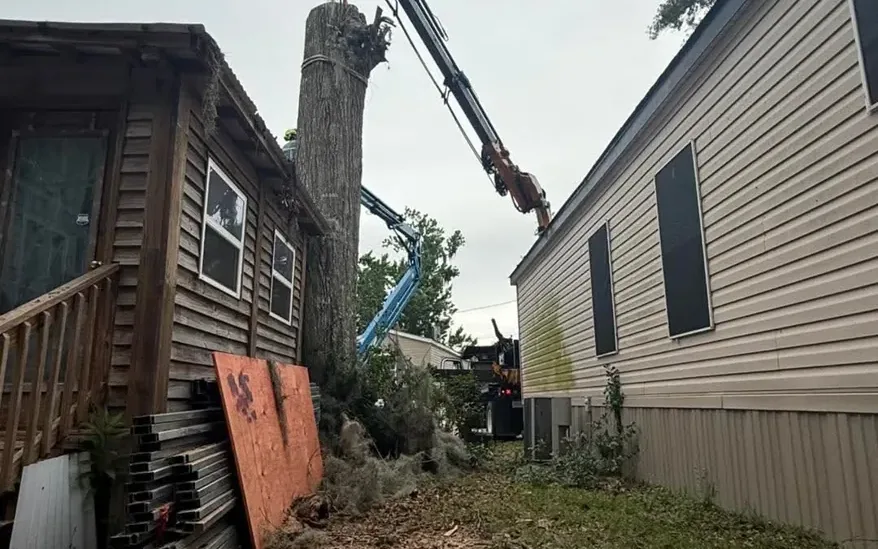
Report newly hanging material, changed lean, a fallen tree or an obstruction directly. Do not climb or approach damage to improve the photo set. Call 504-458-8336 about current availability for urgent tree work; a form does not confirm dispatch. Immediate threats to people or electrical involvement call for the appropriate emergency or utility service. Keep people and pets out of the affected area while arrangements are discussed.
The storm-damage page and fallen-tree service explain related tasks. When photos are older, describe what changed after they were taken. A standing tree and loose material beneath it may require different work. The request should not treat the presence of branches on the ground as proof that the remaining canopy and access are ready for routine cleanup.
Agree on wood movement and the practical finish
Specify logs, branches, chips and any existing pile that you want considered. If some wood stays, discuss its identity, processing and placement before the scope is accepted. Do not assume firewood lengths or splitting are included. Mixed fencing, roofing and other non-tree contents should be identified separately. The debris service provides a starting point for that material boundary.
Ask how the access path and work area will be left after the agreed material is removed. Small fragments, ground impressions, soil repair and replacement planting are different issues. A clear finish is especially useful when the route crosses a maintained garden or a shared entrance. The quote should connect the customer’s expected use of the area to the actual task, leaving later restoration visible instead of relying on the broad word cleanup.
Send a request that can become a work plan
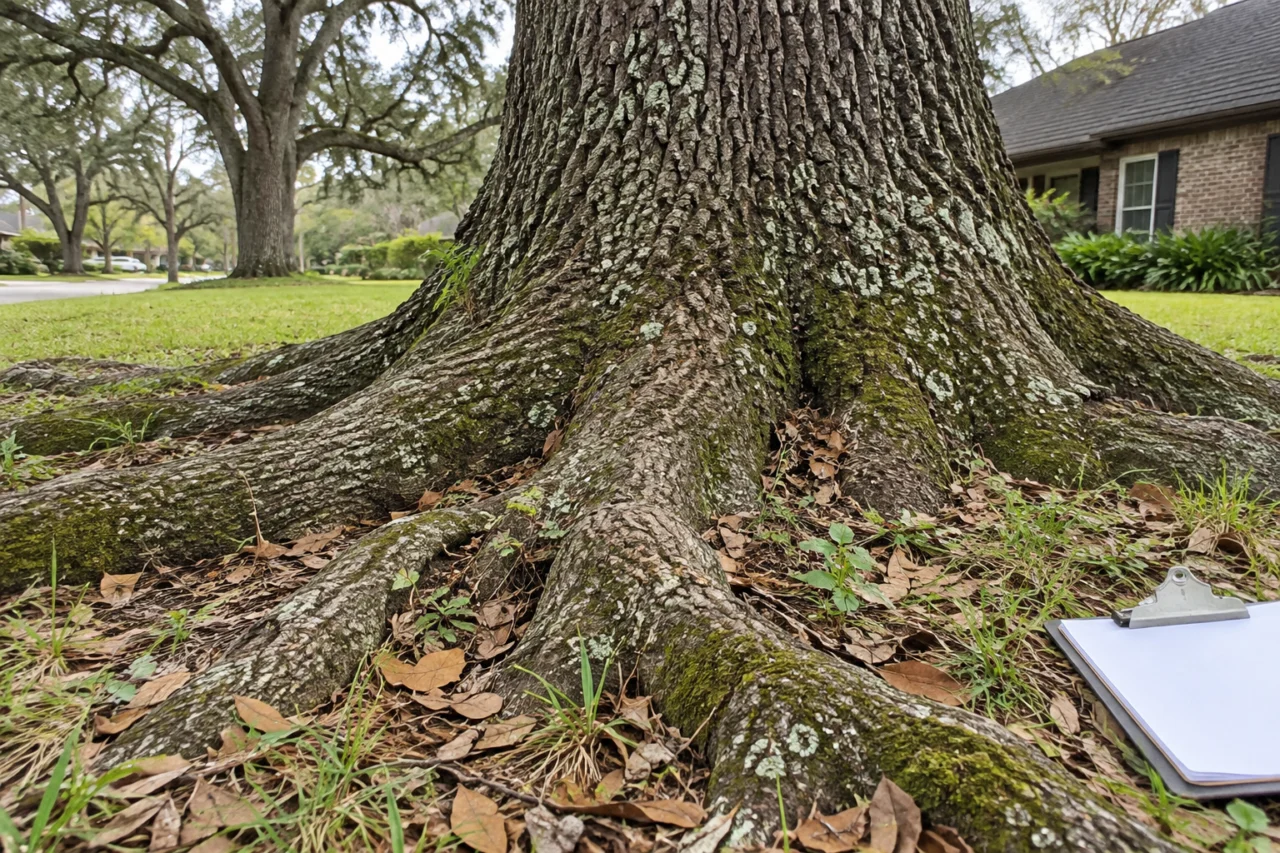
Include the work address, desired result, safe tree photos, route views and access restrictions. Identify who can approve the work and who can meet the crew if the purchaser is elsewhere. For several trees, attach simple location labels to each image and the task list. This makes later questions easier to resolve without repeatedly interpreting the same unlabeled collection of close-ups.
A planning example is retaining a backyard shade tree while removing deadwood near a roof and grinding an unrelated front stump. Those are separate objectives, even on one small property. It is an example, not a photographed local job. Review the tree identifiers, proposed tasks, stump decisions and finish before approval. The local property planning hub offers more detailed reading once the immediate request is clearly defined.
Match Westwego tree work to small-lot access and ground conditions
Many small residential lots do not have a straight route from the road to the tree. For a Westwego inquiry, show the full tree and the path equipment or debris would have to take, including gate width, fences, steps, paved edges and any overhead obstruction. A machine that fits the driveway may not fit the turn into the back yard. If access depends on a neighbor's yard, describe that possibility without implying that permission has already been granted.
Ground moisture matters as much as gate width. Soft soil or recently saturated turf can change equipment timing and surface-protection needs, especially when a heavy piece must be moved from a confined yard. Tell the contractor about known drain covers, septic components, buried irrigation and landscaping that the owner wants preserved. Request a clear understanding of what temporary protection is proposed and what ordinary wear or repair work is outside the tree service's scope.

Consider neighboring uses without assuming permission
Distinguish the requested result for each tree. An older live oak with a limb over a roof, a dead tree near a fence and a separate stump in the front yard should not be treated as one undifferentiated removal. A condition concern may warrant an assessment; ordinary clearance may require selective pruning instead. The contractor should make its own work-method decision after reviewing actual access, tree structure and targets. Do not climb or approach unstable wood to improve a photo.
Before approving the estimate, check whether debris hauling, wood retention, stump grinding and landscape restoration are included. Explain where trucks may park and what times access is available, then name the person authorized to accept scope changes. If recent weather has created a new crack, root movement or suspended branch, tell the company that at the outset rather than presenting the request as routine yard maintenance. Urgent hazards and routine scheduling have different next steps.
Tree Service Westwego questions
What should a Westwego estimate request include?
Provide the full work address, desired result, safe whole-tree photos, access-route views and a current contact.
Does a narrow gate prevent all tree work?
The complete site and task need review. Describe gates, turns and surfaces before assuming a particular method fits or cannot fit.
Should I remove a fence panel before the estimate?
Do not alter property for an assumed approach. Discuss access, permission and the proposed method first.
Can I request clearance while keeping shade?
Explain the specific roof, path or access objective and what you want retained so pruning can be discussed appropriately.
Is a condition concern the same as routine trimming?
No. Report new cracks, movement or failures as observations that may require a different review.
Does tree removal include the stump?
Confirm stump handling explicitly. Main-tree removal, grinding, excavation and restoration are different tasks.
What information helps with stump grinding?
Show the stump, route, intended future use and known buried features or information limits.
What if a tree or limb has just failed?
Keep clear and call about current availability. Use emergency or utility services for immediate threats or electrical involvement.
Can logs stay for my use?
Discuss retained wood, processing and location before accepting the work. Particular lengths and splitting are not automatic.
Are mixed fence or building materials included in hauling?
Disclose them separately and confirm the accepted material boundary before work.
How do I compare two local tree quotes?
Compare identified trees, tasks, access, material handling, stump decisions and the practical finish on the same basis.
Does sending photos confirm a scheduled visit?
No. Photos support the inquiry; availability and the next step need confirmation with the company.
Let’s plan your tree work.
Send the property address, safe tree photos and the result you need. Include access restrictions and the person who can approve the work.