Tree service for dense neighborhoods and mature canopy
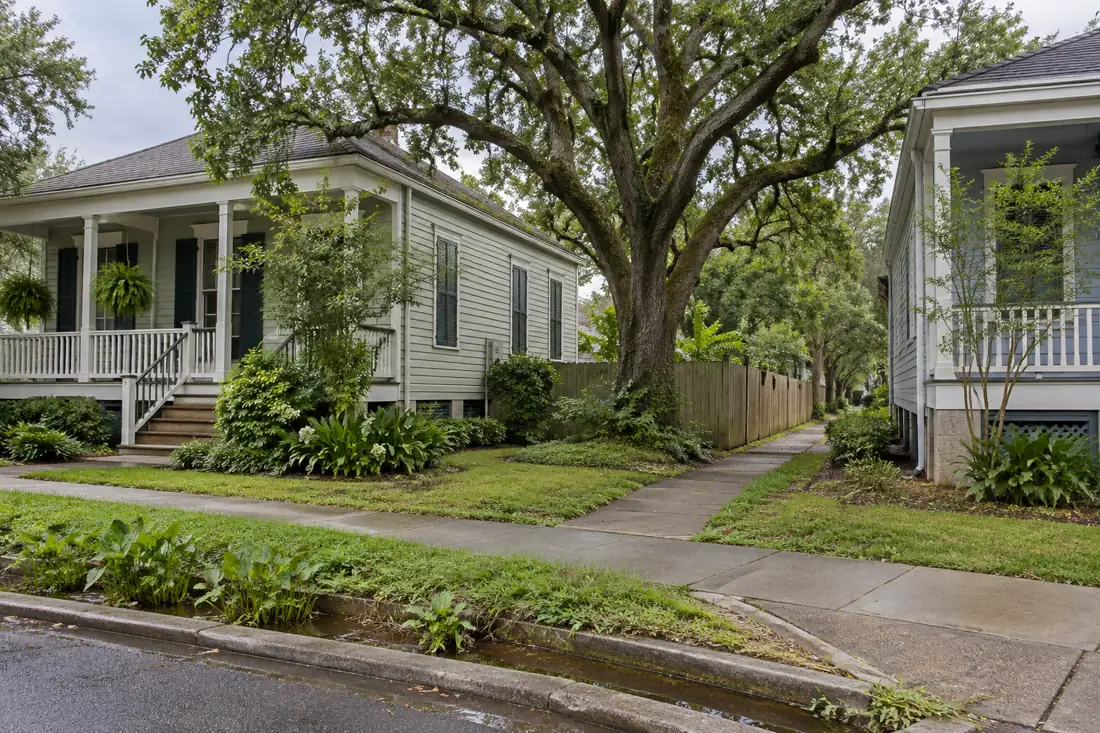
Metairie trees often extend over roofs, pools, driveways and neighboring yards. A useful work plan considers targets, drop zones, gate width, equipment placement and debris handling before cutting begins. Large removals can require controlled lowering, aerial access or crane support when open dropping is not appropriate.
Metairie tree work beside driveways and shared yards
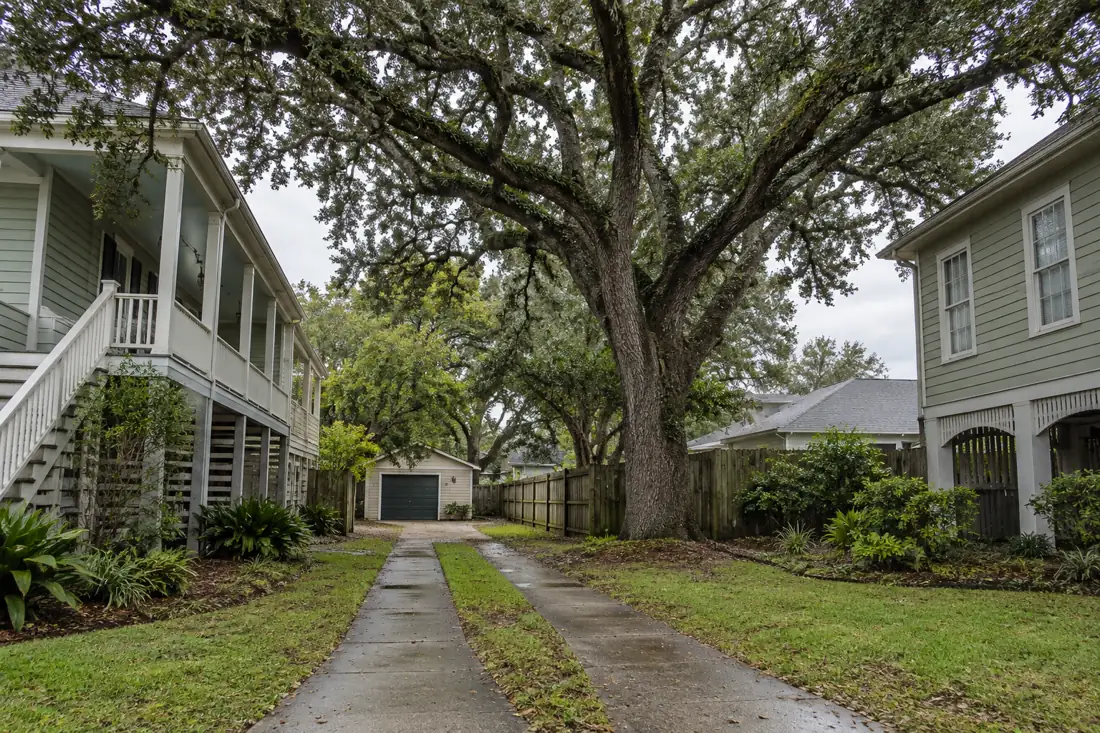
Trees in Metairie may be close to driveways, fences, roofs and utility corridors. When gathering estimate information, take one wide photograph showing the property layout and several safe close views of the trunk base, canopy and the specific concern. If the work is near an electrical drop or overhead line, do not move or touch branches and do not assume normal pruning access is appropriate. Utility coordination may be required before any tree equipment is positioned.
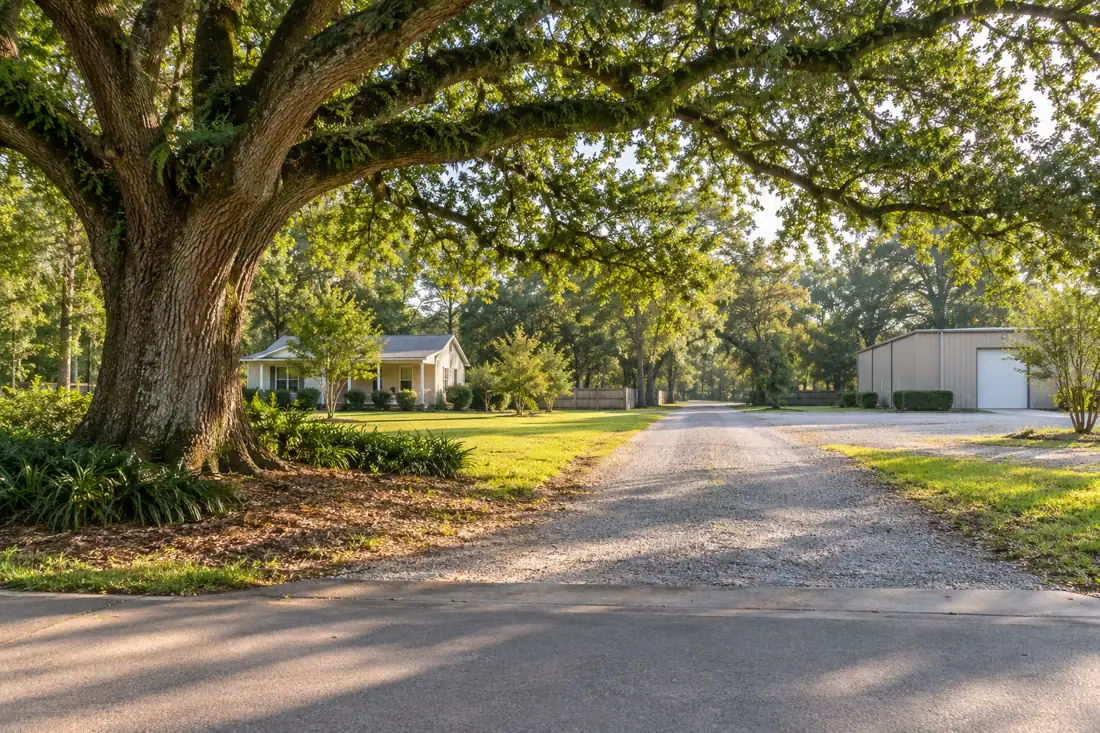
Access questions often decide the method. Note the narrowest gate or driveway point, vehicle parking, soft lawns, irrigation heads and the location where cut material can be handled. If the crew would need to cross a neighboring lot or temporarily restrict another household’s access, resolve that permission in advance. A picture of only the upper canopy cannot reveal all of those practical constraints.
For pruning, name the desired clearance and explain why it matters, such as access for a vehicle or keeping vegetation off a structure. For removal, ask whether hauling, stump grinding and chip removal are included. Keep those options distinct so the proposal reflects the actual customer decision rather than a generic tree service description.
Not every concern requires removal. Deadwood, roof clearance and structural pruning may solve a specific problem when the tree is otherwise retainable.
Describe the problem you notice from the house
A branch above a roof, low growth beside a drive or dead material in a canopy can lead to different requests. Describe the part of the property affected and what you would like to change. The company does not need a technical diagnosis to begin a useful discussion. It needs the tree’s location, the observed concern and the result the customer hopes to achieve.
Include the full Metairie work address and safe wide photos of the tree and surrounding use areas. If the owner and on-site contact differ, identify both roles. The service overview can help distinguish care, removal and stump work. Avoid starting with a machine or an arbitrary amount of canopy reduction; the actual objective gives the review a clearer foundation than a method chosen before the tree and property are understood.
Put retained shade into the pruning brief
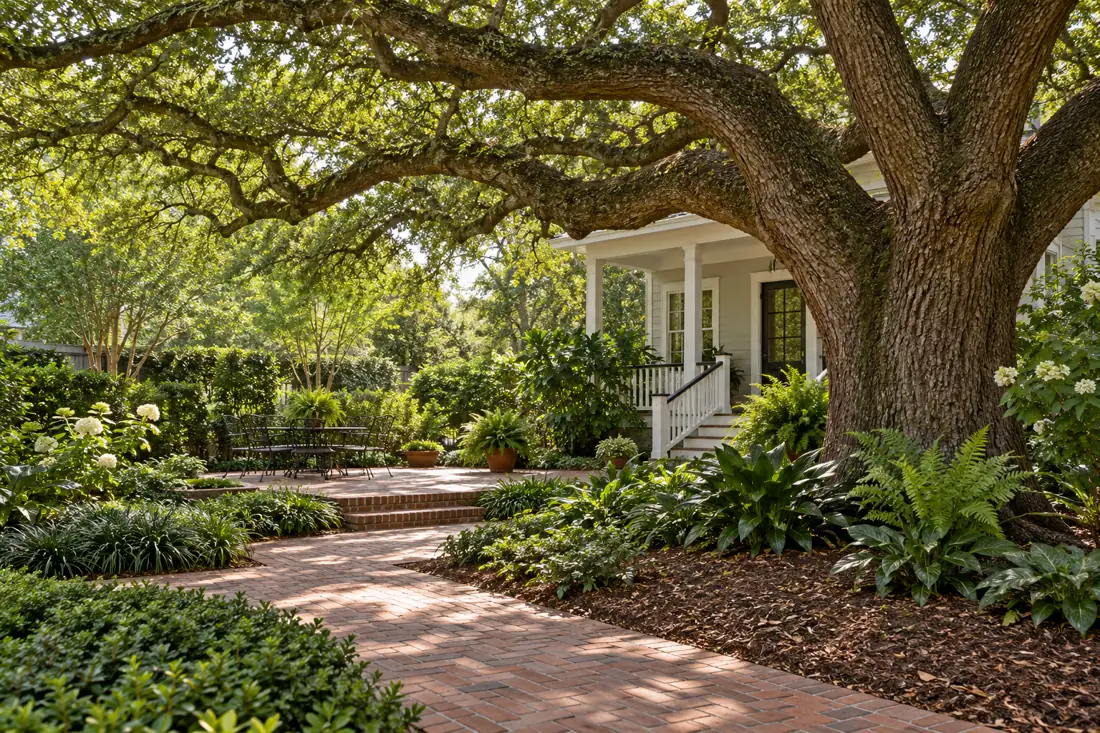
Tell the estimator which canopy or outdoor area you value and which specific conflict needs attention. A homeowner may want better roof clearance while retaining a shaded patio. Those intentions should be discussed together rather than allowing a vague request to thin everything to define the job. Show the tree from more than one safe ground position so the relationship between branches and surrounding uses is visible.
The trimming service and pruning hub explain related scope questions. Ask what the proposed work aims to accomplish and which parts of the tree are outside it. A usable pruning agreement connects the tree review to recognizable objectives, such as a defined area of clearance or identified deadwood. It should not depend on a promise of a permanently unchanged canopy after a living tree continues to grow.

Show roofs, patios and neighboring targets together
Include buildings, fences, pools, outdoor furniture areas and other nearby features where relevant to the work. A close-up can make a branch look isolated when it actually crosses a roof or shared boundary. Keep the wider image available when sending detail views. Explain which areas belong to the property and where permission or coordination remains unresolved before relying on neighboring space for work or access.
Do not climb onto a roof or beneath damaged material to get a better angle. Describe unavailable views honestly. If the concern involves a branch already resting on a building, review the tree-on-house service. Building evaluation and repairs are separate from tree handling unless expressly arranged with the relevant providers. The work discussion should make those boundaries visible instead of assuming every nearby repair belongs in the tree quote.
Bring condition changes into the conversation early
Explain newly observed cracks, failures, ground disturbance or a change in lean, and say when you noticed them. Mention earlier construction, another recent failure or a previous assessment if known. These observations do not establish a diagnosis, but they can help define the questions that need review. A green canopy alone should not be treated as a remote condition determination for a tree near an occupied area.
The assessment page provides more context. Ask whether the proposed visit addresses a specific branch, routine pruning or a broader condition concern. If retention and removal are both being discussed, keep the reasons and limitations clear. A useful care plan includes any recommended follow-up, who will arrange it and which observations should prompt another conversation, rather than leaving the customer with an undefined impression that one visit guarantees the tree indefinitely.
Metairie Homeowners: Document Clearance and Site Access
Metairie neighborhoods often contain mature shade trees near single-story roofs, driveways and a network of overhead services. The first step in evaluating a tree is to describe what it is affecting: a branch over a walkway, a canopy close to the roof edge, a tree near a planned renovation, or a condition that changed after severe weather.
Photographs should include the entire trunk and nearby structure when possible. A close image of a crack or branch union can be helpful as a supplement, but it does not establish whether the tree is structurally sound or whether removal is necessary. Keep observations separate from diagnosis so an estimator can evaluate the actual property.

Access and protection are part of the job, not an afterthought. Ask whether the intended equipment can fit the driveway or gate, where wood will be staged, and what surfaces must remain usable for household members. A truck on an open curb lane and a climber working above a fenced backyard present different constraints. Where branches are near utility lines, appropriately qualified personnel and utility coordination may be necessary. Never attempt to trim across energized conductors or stand under a partially detached limb to get a better picture. Describe any driveway settlement, irrigation system or underground utility location before requesting stump work or heavy equipment access.
Useful preparation for a property-specific tree recommendation
Be precise about the finished result. If the objective is clearance above a roof, what branches will be reduced or removed, and what clearance can realistically be achieved without excessive cutting? If the objective is removing a tree, will the stump remain, be cut low or be ground, and who will remove the grinding chips?
If debris hauling is quoted separately, the customer should know before the crew begins. A transparent written scope also identifies what has not been inspected or authorized, including trees on a neighbor's parcel. Do not rely on a generic regional photo as proof that the contractor has completed an identical job at a specific Metairie address.
After tree work, compare the result with the agreed scope and keep any photos or written recommendations for future reference. A clear sidewalk and clean driveway can be checked, but a completed visit does not make every tree on the property permanently safe. Nearby renovation or drainage changes may justify a later reassessment.
To start a request, share the city, the service needed and safe access details, along with wide photographs if appropriate. Keep bank information, gate codes, children's details and unrelated private documents out of an ordinary quote request; provide job-specific contacts only through the approved business process.

Trace access behind the front view
Show the route from the street through the drive, gate and any narrow passage to the actual work area. Include turns, steps, surfaces and changes in ground condition. A roomy front yard can conceal a difficult rear approach. The estimator needs to see where equipment and material would move, including the loading area, rather than only the tree’s position in a broad photograph of the house.
The equipment planning hub explains how that information supports method selection. Mention retained beds, known buried features and restrictions along the route. Do not assume access across a neighbor’s property is available or remove fencing before an approach is agreed. The complete route helps the company discuss an appropriate plan and gives the customer a clearer understanding of why two trees of similar size can involve different work.
Ask removal questions before comparing totals
If removal is under consideration, identify the specific tree and why the discussion has shifted to that option. Provide whole-tree views and explain the intended future use of the space. The removal service addresses the larger scope. Handling wood near retained features, moving it through a restricted route and loading it are parts of the job that a trunk-only image does not establish.
Compare proposals by the same tasks: tree identified, work included, logs and brush disposition, remaining stump and practical finish. Ask which items require a separate visit or provider. Do not assume a price includes roof repair, a new landscape bed or construction preparation merely because those plans motivated the removal. Clear stage boundaries make the accepted work useful to both the owner and any contractor who follows with another part of the property project.
Plan the stump area for its next purpose
An old or newly created stump can affect a lawn, garden, walkway or future project differently. Say what you want to do with the space and show the access route. The stump grinding page and stump guide help organize decisions about the task and finish. Known buried features and any required verification should be raised before the relevant work is arranged.
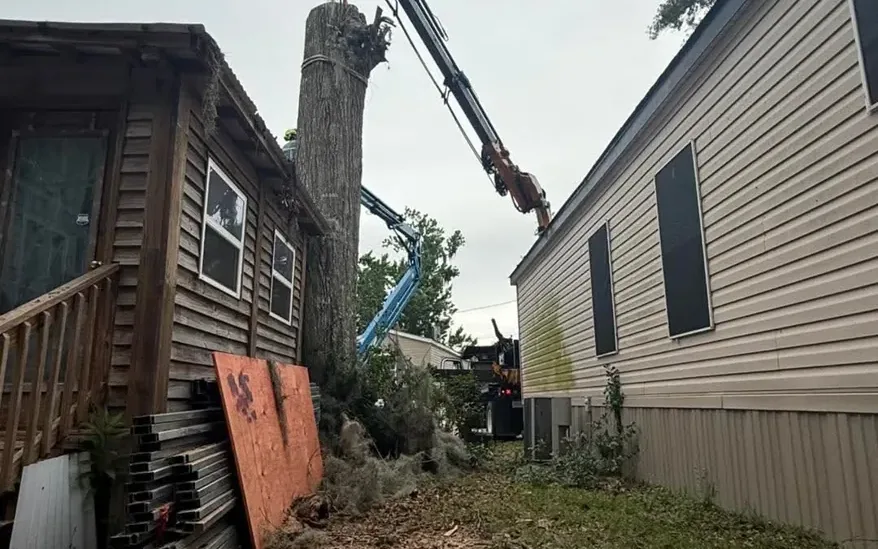
Discuss grindings, remaining roots, later soil work and who handles the next stage. Grinding, full excavation, backfill and grading are not interchangeable descriptions. If another provider has a requirement for construction or planting, obtain that requirement from the responsible party rather than assuming any stump service produces the same final ground condition. A clear explanation of what remains prevents a tidy surface from being mistaken for every below-ground task having been completed.
Keep storm response distinct from planned care
For newly fallen wood, hanging limbs or sudden changes, keep people away and describe the current condition directly. Call 504-458-8336 about urgent tree-work availability; a photo message or form does not confirm dispatch. Use the appropriate emergency or utility service for immediate threats to people or electrical involvement. Do not pull or cut damaged material to prepare it for a routine visit.
The storm-damage service and hanging-limb page provide related context. State when photos were taken and what changed afterward. Planned pruning and storm handling may involve different scopes even on the same tree. Keeping those objectives separate helps the company understand whether the next conversation is about ordinary clearance, a changed condition or immediate access and tree-handling concerns.
Finish with a clear material and property handoff
Confirm logs, brush, chips and retained wood before the work is accepted. Include older piles or mixed non-tree contents as separate items. The debris service explains that boundary. Ask how the work area and access surfaces will be left, with soil repair, planting, building work and other restoration assigned separately where they are not included. A specific finish makes comparison and completion easier than broad cleanup language.
As a planning example, a customer might keep a shade tree with targeted pruning while removing a different declining tree and leaving its stump for a later garden decision. That is an example, not a documented local job. Send the address, safe photos, priorities and access details together. Review the work tree by tree so the final agreement reflects both what the customer wants changed and what they want to retain.
Tree Service Metairie questions
What helps start a Metairie tree-service request?
Send the address, safe whole-tree photos, nearby use areas, the desired result and access-route information.
Can pruning be discussed while retaining patio shade?
Yes. Explain the specific conflict and valued canopy together so the objective is clear before work is proposed.
Is a request to thin everything a complete pruning scope?
It leaves important assumptions open. Discuss the actual clearance, deadwood or other objective and the tree review.
Should roof and patio areas appear in photos?
Include relevant surrounding features from safe positions so the branch or tree is not shown without context.
Can a green canopy establish the tree's condition?
No remote conclusion should rely on foliage alone. Report observed changes and ask what assessment is appropriate.
Does a tree quote include roof repairs?
Tree handling and building evaluation or repairs are separate responsibilities unless expressly arranged.
What access details matter for a rear-yard tree?
Show the complete route, gates, turns, surfaces, setup and loading space, plus permission limits.
How should removal proposals be compared?
Use the same identified tree, handling, hauling, stump decision and finished condition rather than totals alone.
Will stump grinding create construction-ready ground?
Do not assume that. Obtain next-phase requirements from the responsible provider and clarify roots, soil and surface work.
What if damage appears after a storm?
Keep clear, describe current conditions and call about availability. Use emergency or utility services where appropriate.
Can retained wood be part of the agreement?
Discuss which wood stays, processing and placement before accepting the scope. Specific lengths or splitting are not automatic.
What belongs in the final work review?
Check each tree's task, retained features, material handling, stump status and items assigned to later work or another provider.
Let’s plan your tree work.
Send the property address, safe tree photos and the result you need. Include access restrictions and the person who can approve the work.