Mechanized work changes the exposure
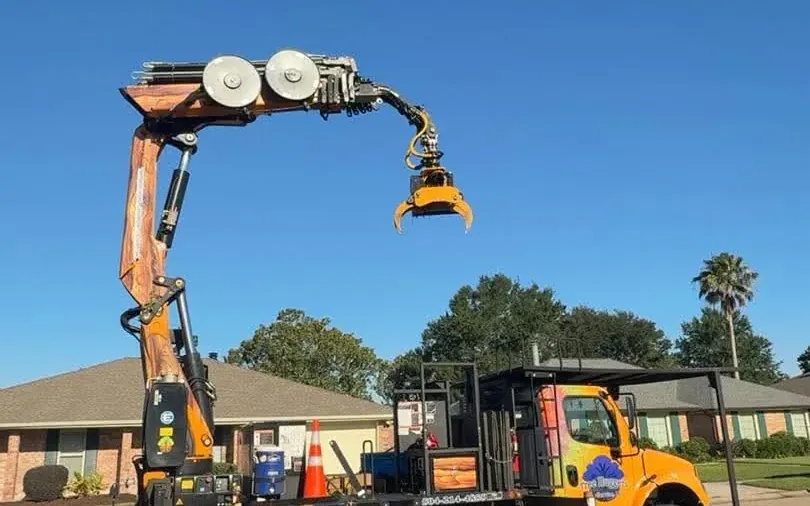
Traditional tree work can require climbers, repeated rigging and significant manual handling. Mechanized equipment can sometimes grip, cut or manipulate sections from a safer operating position while improving control and production. It is not the answer on every property, but on suitable sites it can change how a difficult tree is approached.
Practical scope and safety guidance: Remote-operated equipment can reduce some forms of close-in exposure, but its availability does not make every confined tree site suitable for mechanized work. Record the actual gate opening, path width, turning areas, slopes, soil firmness, overhead clearance and distance from the tree to buildings or utilities. A photograph from the street does not show whether equipment can cross a yard without damaging irrigation, drains, roots or paving.
Discuss how the machine will be delivered, where it can safely set up, and which steps still require a trained crew outside the operating area. The proposed removal method should account for suspended loads, debris landing zones and bystander exclusion. When access is unsuitable, a different controlled method may be more appropriate. Request a written estimate that describes site protection, what equipment is expected and how logs, brush and surface restoration will be handled.
Mechanized removal service: machine suitability is site-specific
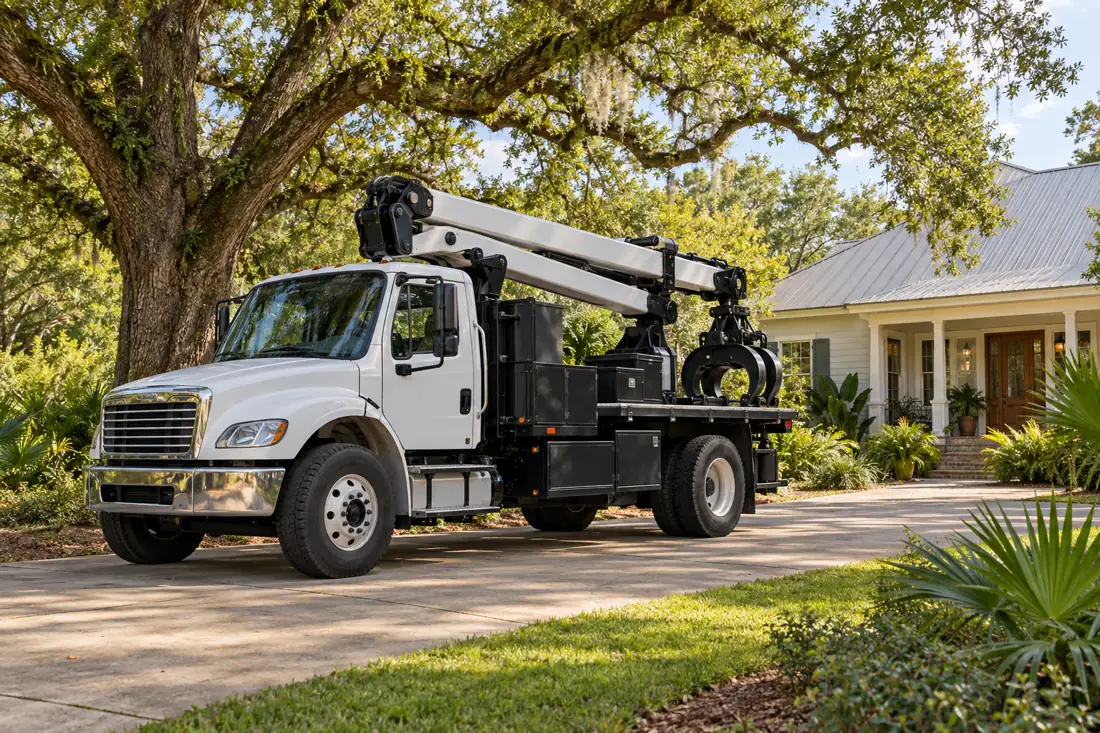
A remote-controlled cutting or gripping head may be useful where access, piece size and safe positioning make traditional methods difficult, but it cannot be treated as a universal replacement for rigging or climbing. The actual work plan depends on boom reach, machine setup, load limits, overhead utilities, nearby structures and the crew’s exclusion zones. Ground bearing capacity and access rights must also be considered.
This service-oriented page is for discussing whether specialized equipment belongs in a proposed tree-removal operation. The linked explanatory guide addresses what ‘remote controlled’ actually means and why an operator still makes each cutting and movement decision. Do not assume a device has been chosen, or that its presence guarantees a safer job, before a contractor assesses the site. What Is Remote-Controlled or Robotic Tree Removal?.
Machine footprint, gates, ground conditions, reach and overhead obstacles all matter.
Determine whether mechanized cutting, crane work, rigging or a mixed approach fits best.
Control tree sections and move material to a safe processing and cleanup area.
Where remote-controlled equipment is useful
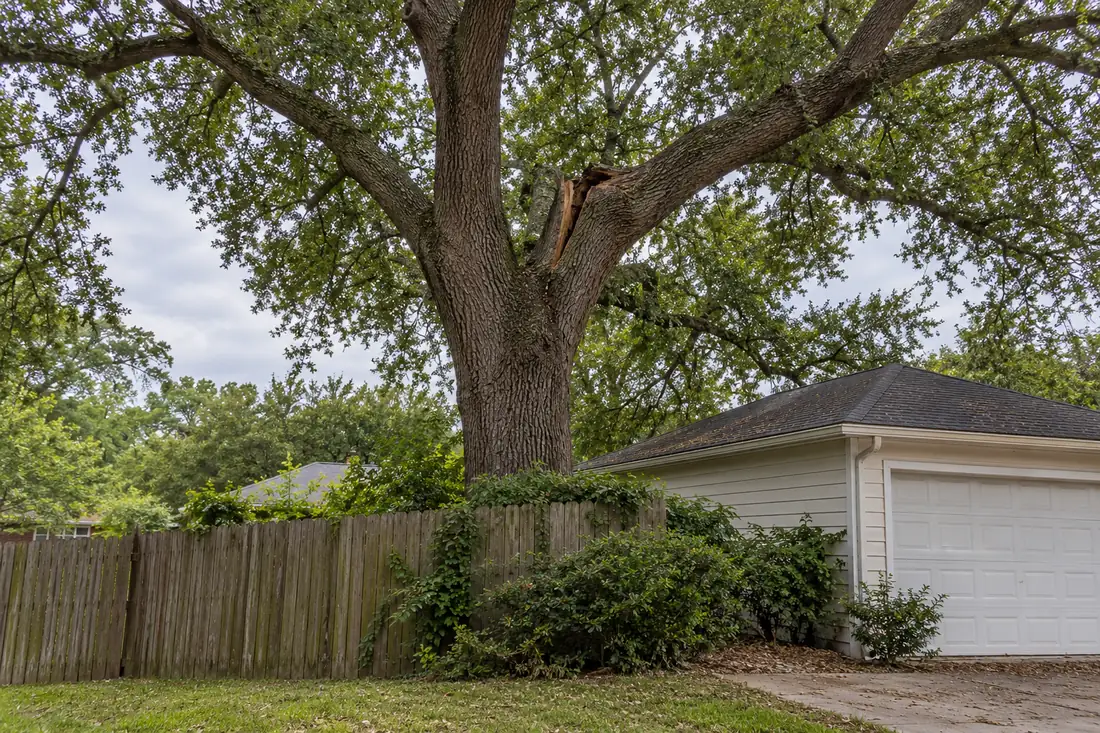
Large residential removals, storm-damaged canopies, commercial properties and jobs with repeated heavy sections can all be candidates. The value comes from reducing unnecessary exposure and handling while maintaining control around targets.
Related services
Have a difficult tree?
Text photos of the tree, targets and equipment access so we can evaluate the best method.
Determine whether compact remote equipment actually helps access
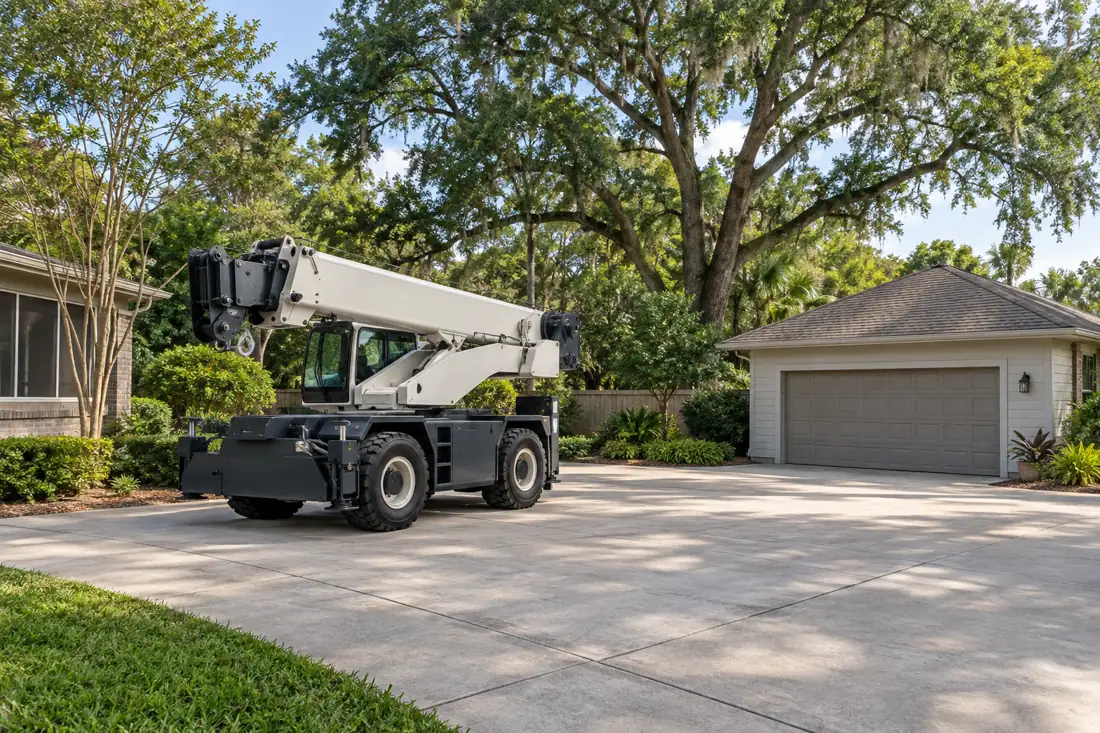
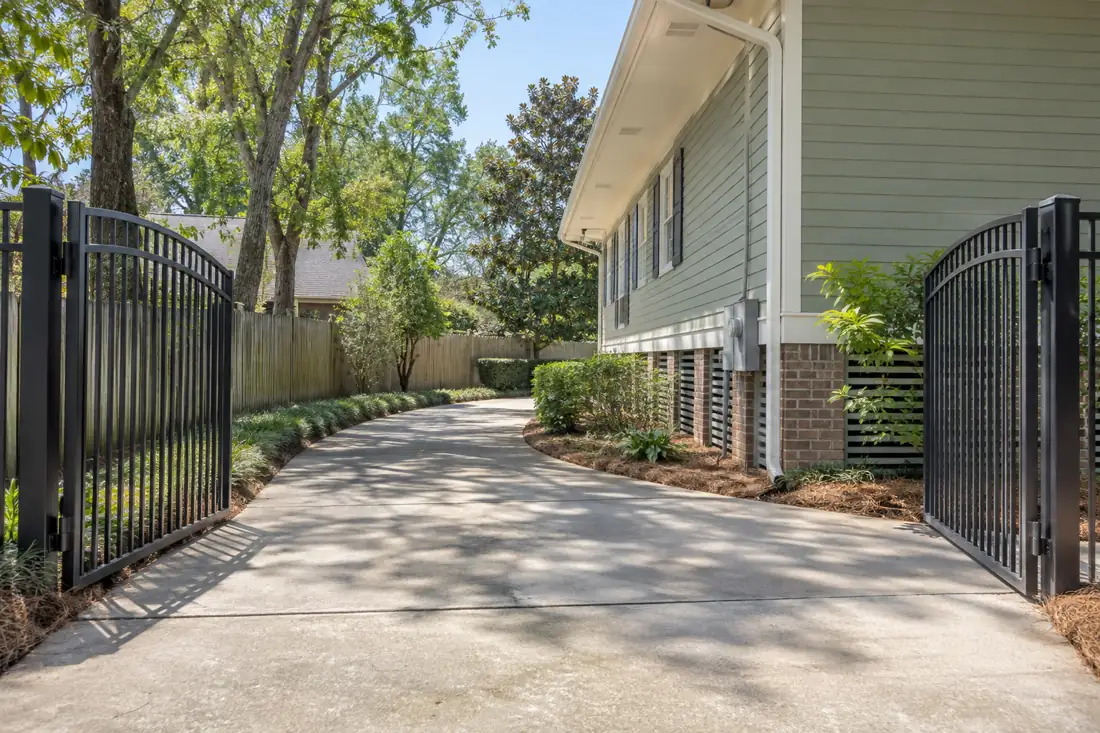
Remote-operated or compact machinery can reduce direct operator exposure in some work situations, but the name of the equipment does not establish that it is suitable for a particular tree. Evaluate the physical problem first: available width, ground bearing capacity, slope, turning radius, nearby windows, overhead obstructions, and where cut sections will be received. A narrow gate may allow a small device through while still preventing safe material extraction or efficient cleanup.
Ask what the equipment will do
Ask whether the proposed operation is cutting, grasping, hauling, or processing, and who will control the work zone. Machines differ substantially in capabilities, attachment limits, stability, and manufacturer requirements. A photograph of a tight side yard should never be treated as proof a particular brand or machine could be safely deployed there. Exposed roots, irrigation tubing, waterlogged soil, or steps can change the practical route even when a tape measurement fits.
Confirm how the crew will move the wood
Before accepting an estimate, request a simple explanation of how the contractor would move material away from structures and where a human crew must still work. Confirm protections for adjacent fences and utility services, and clarify backup methods if the proposed device cannot reach the target. The most useful outcome is a sequence and access plan tailored to measured conditions, not a sales claim that remote technology automatically makes every difficult removal cheaper or safer.

Understand what remote-controlled describes
Remote-controlled tree work describes how particular equipment is operated; it does not mean a tree is removed automatically or without a crew. The operator, ground team, equipment arrangement and material-handling plan still matter. Ask Tree Huggers to explain the proposed system in ordinary terms, including which parts of your tree it may help address and what other methods remain part of the job.
The benefit is easiest to understand through the work objective. Holding and handling a section from an equipment position may offer options around buildings or compromised wood. Those options depend on the actual setup. The company’s original equipment photographs provide context, while a proposal for your address must identify the method and conditions that actually apply there.
Start the inquiry with the difficult part of the job
Tell Tree Huggers why you are considering a specialized approach. Perhaps a large limb extends over a building, the tree has suffered damage, or another contractor identified a handling constraint. Describe what you observed and what was discussed, without turning an informal opinion into a confirmed diagnosis. This lets the estimator start with the problem rather than an assumption that one attachment is required.
Include the complete tree and nearby targets in safe photographs. A close-up of a branch may hide the route equipment would need to take or the structure beneath it. If you want to preserve part of the tree rather than remove it entirely, make that clear. The goal might be selective work, a removal assessment or another conversation; the machine is one part of that decision.
Reach is about a working arrangement, not one number
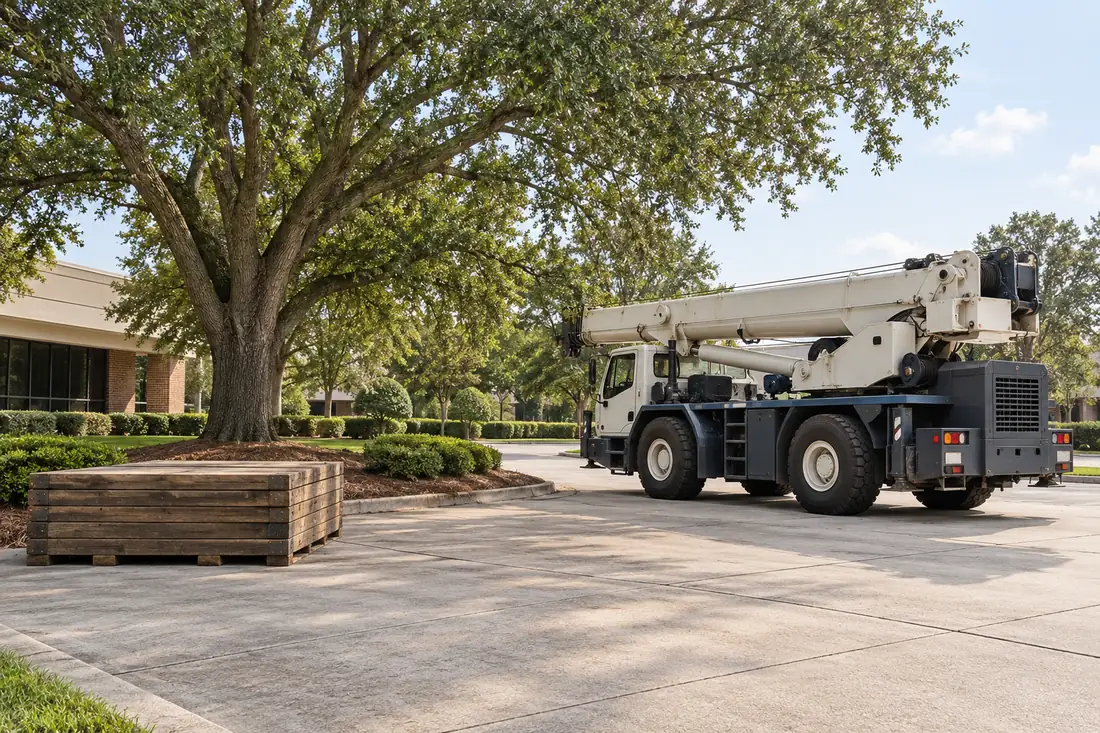
An equipment photograph can make a distant canopy appear easy to reach. At a real property, the position of the truck, the approach, intervening obstacles and the material to be handled all affect suitability. A maximum reach mentioned in advertising should not be treated as a promise that every branch inside that distance can be handled in the same way.
Ask the contractor how the proposed position relates to your tree and targets. You do not need to estimate section weights or design a sequence yourself. Explain what can move, what cannot, and whether another property or occupied route limits the available position. A useful estimate connects the working arrangement to the task rather than presenting a machine specification as the entire plan.

The machine needs a usable route to its position
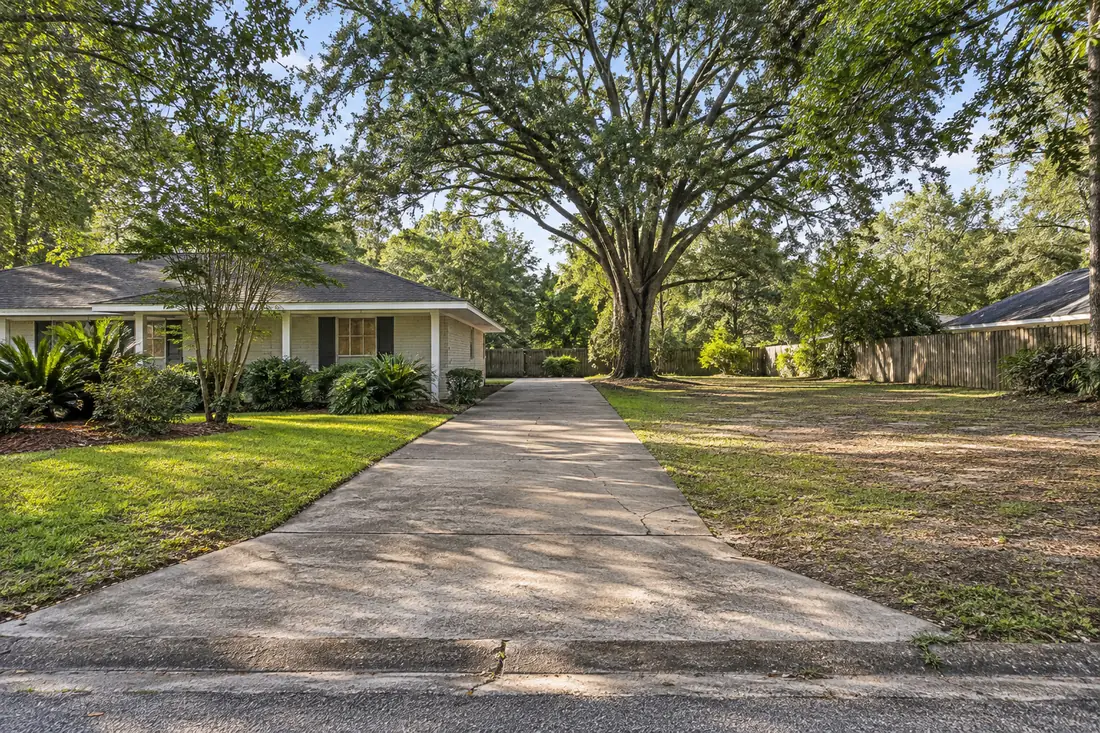
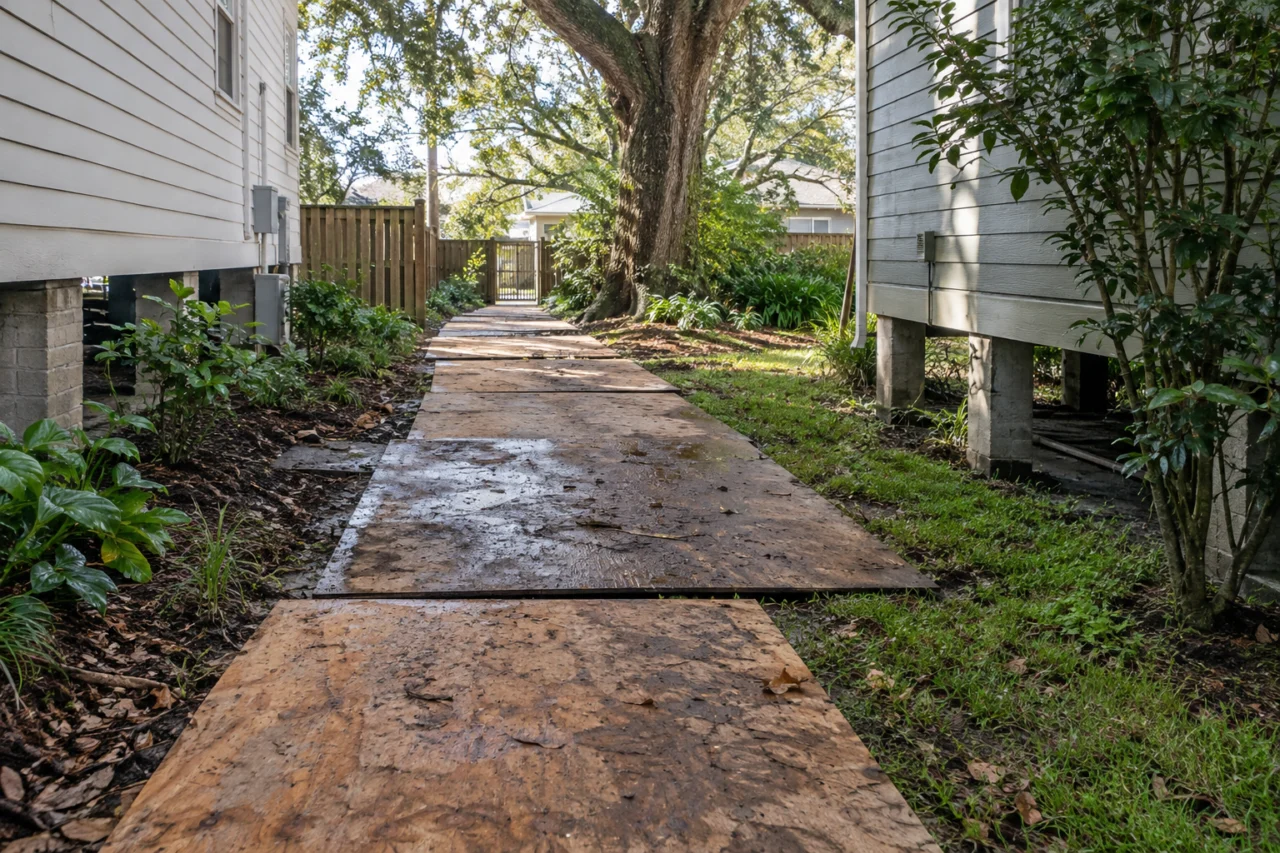
Show the approach from the street, including turns, gates, overhead obstructions and surface changes. The route needs to be understood as a continuous path, not a series of individually generous openings. A wide driveway entrance may lead to a tight corner, and an open rear yard may be inaccessible without crossing a finished landscape or someone else’s property.
Explain who controls each part of that route and which vehicles or portable obstacles can be moved. If a proposed opening or shared access arrangement is still uncertain, identify it before a visit is scheduled. Tree Huggers can evaluate options, but the company should not arrive with equipment to discover that the assumed approach is unavailable or different from the estimate photographs.
Holding material does not remove the need for space
A section secured during cutting still needs a destination. The site may need room for lowering or placing material, processing branches and moving debris toward transport. Ask how those activities connect to the equipment position. On a confined property, the handling route may be just as important as the reach into the tree.
Point out fences, pool enclosures, fixed play equipment, landscaping and any area that must remain usable. For a business, explain delivery traffic and occupied entrances. These details help define the working area and the customer’s responsibilities. An attachment that reduces one handling step does not make the rest of the property irrelevant to the job.
Some trees call for a combination of methods
A mechanized system may suit part of a tree while other portions require a different approach. That is a reason to ask how the complete job will be handled, not to insist that every cut use the same equipment. The estimate should describe a result and a workable method rather than promise that one system will solve every condition encountered.
Ask where conventional rigging, climbing, crane assistance or other handling may be part of the discussion. The appropriate mix depends on the assessment and site. If the proposed plan differs from what you initially expected, ask what constraint explains that choice. Understanding that connection makes equipment proposals easier to compare without the customer prescribing technical operations.
Distinguish personnel exposure from a safety guarantee
One reason to discuss remote equipment is the possibility of handling certain material from an equipment operating position. That does not mean the task becomes risk-free or that everyone can stand nearby. The contractor and property contact still need arrangements for the active work area, resident movement and other people who may approach the site.
Mention children, pets, neighboring activities and workers from other trades. If your concern involves a damaged tree, explain any recent change before the crew arrives. Do not approach suspect branches for a closer view because a remote system may later be used. The high-risk removal discussion remains about the particular condition, targets and assessment, not an equipment guarantee.
Prepare the estimate for the whole removal outcome
Specify which tree or limbs are included and whether the objective is pruning, partial work or complete removal. Then discuss debris, retained wood, hauling and stump treatment. A machine-focused headline can leave those customer outcomes unstated, even though they strongly affect what the finished property looks like and how much handling the job includes.
If another contractor follows the tree work, explain the required handover. A landscaper, fence installer or builder may need a particular area cleared or a separate ground treatment. Ask which tasks Tree Huggers is proposing and which remain for that next provider. Compare the complete scope rather than assuming a mechanized cutting price includes every finishing task on the property.
Managed sites need an approval contact who understands access
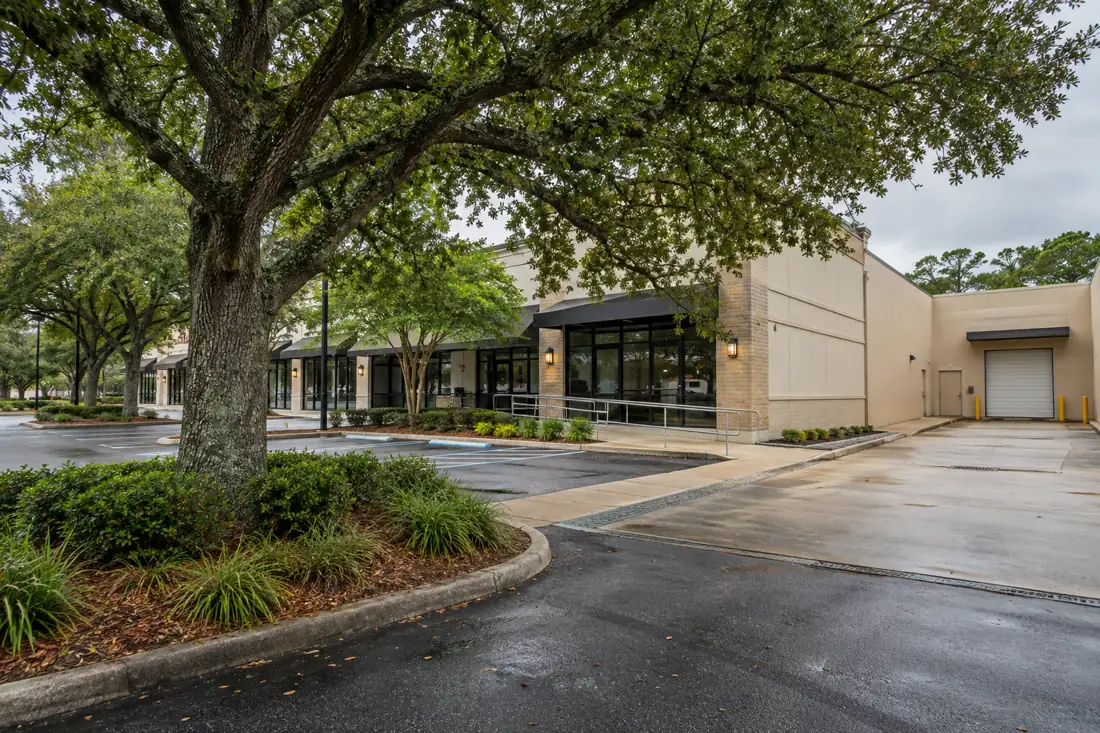
For commercial or institutional work, identify both the person who can approve the scope and the person who manages the physical site. Share actual work-window restrictions, occupied routes and staging limits. Those constraints can influence how equipment is used even when the tree itself appears straightforward. A site contact who knows the route helps prevent avoidable changes on arrival.
If the request involves a prime contractor or a larger cleanup operation, send the tree list and project requirements that apply to this subcontract. Ask for current documents directly when required. The equipment description is capability context; it does not establish eligibility for a particular contract or confirm that a proposed working arrangement has been approved by another party.
Request a site-specific answer from Tree Huggers
Call or text 504-458-8336 with the address, whole-tree photographs, affected structures and equipment approach. Describe the difficult part of the job and the finish you need. Tree Huggers is based in Marrero and can discuss specialized work in Greater New Orleans, with larger opportunities considered by scope and mobilization needs.
Ask whether a site visit is needed, what the proposed system would accomplish and how scheduling will be confirmed. If the tree changes after the estimate, report the change so the plan can be reviewed. An inquiry about remote-controlled work starts a conversation; it does not reserve a particular machine, confirm a removal method or dispatch a crew.
Remote-controlled equipment: verify the whole working arrangement
Remote-controlled equipment does not mean every narrow yard is accessible or that exclusion zones can be ignored. Show the tree, gates, side-yard turns, grade and likely staging area. Mention soft soil, septic systems, buried utilities, fragile paving and overhead restrictions before discussing a machine. Photographs cannot verify ground bearing or reach.
Ask where the machine would stand, how pieces would be controlled, where crews work and how cut material exits. Access width is only one constraint; a route with tight turns or an inadequate landing area may change the plan. Clarify any assumptions about temporary fence openings, neighboring property or traffic management.
Compare the approach with manual rigging or crane assistance based on the site, not the equipment’s marketing name. The high-risk guide addresses hazard communication regardless of cutting method. Specify the same protections, debris finish and authorization limits in the written scope.
Three details to settle before an estimate
- Photograph route and working position
- List surface and overhead constraints
- Request a material-exit and safety-boundary plan
Remote-Controlled Tree Removal questions
Does remote-controlled mean no workers are needed?
No. The equipment is part of a crew operation. Ask how the operator, ground team, processing and cleanup connect to the proposed method for your property.
Can I request a grapple saw for any tree?
You can ask about the option, but access, condition, reach and handling constraints determine suitability. Describe the tree and targets so the contractor can discuss the appropriate assessment.
Is remote-controlled cutting the same as crane removal?
They are different equipment discussions and may have different site requirements. A job may involve one, another or a combination; ask why the proposed method fits the particular tree.
Does maximum reach tell me whether the machine can work here?
No. The working position, obstacles and material handling also matter. A maximum specification is not a site-specific commitment about every branch within that distance.
What access photos are most useful for mechanized work?
Show the street approach, turns, gate, surfaces and potential working area, plus the tree and targets. Explain which obstacles can move and who controls any shared route.
Can equipment remove only selected limbs?
That may be part of a pruning discussion when suitable. Clearly state that the tree is to remain and describe the objective before the contractor proposes a scope or method.
Will the equipment fit through a temporarily opened fence?
Do not assume so. Confirm the complete access route and required opening with the contractor, then agree who handles permission, the opening and restoration before altering the fence.
Does using remote equipment guarantee no property disturbance?
No. Ask how the equipment route, working area, protection measures and separate restoration responsibilities will be handled. Specialized capability does not remove every site limitation.
Can other trades work beside the tree crew?
The contractor and site contact need an appropriate work-area arrangement. Disclose other trades and occupied routes early so the sequence and access can be coordinated.
Does the mechanized-work estimate include hauling?
Only as agreed. Confirm the identified trees, cutting, handling, retained wood, hauling and stump treatment so the proposal describes the finish as well as the equipment phase.
What if the tree is too compromised for the method I expected?
Discuss the current condition and the contractor’s assessment. The method may need to change; do not treat a request for a particular machine as approval of a technical work plan.
How do I begin a specialized-equipment inquiry?
Call or text 504-458-8336 with the address, safe tree and access views, the difficult condition and desired result. Tree Huggers must confirm scope, suitability and availability directly.
Talk to Tree Huggers
Get a clear estimate for your tree work.
Text the property address, a wide photo of the tree, and what you want done. We’ll talk through access and next steps.