After a limb fails, remaining broken material and changed loading need attention before cosmetic cleanup. Keep clear and identify any affected structures or wires. An assessment should consider the break, the remaining tree and possible causes. The appropriate next step may differ from simply cutting the visible stub flush.
Site planning detail: When a heavy limb breaks, the broken piece is only one part of the problem. The remaining attachment, neighboring limbs, trunk load distribution, and any damaged roof or utility service also need review. Photograph the tree from several safe positions before debris removal, but never enter the drop zone to obtain a better angle. A partially detached limb may be held temporarily by other branches and can shift suddenly; treat it as a hazard even when it appears motionless.
Ask the crew to explain which material is being stabilized or removed first and where equipment will stand. Separate the tree-removal scope from roof repair, utility restoration, or claim paperwork. After the immediate hazard is addressed, ask whether the remaining tree needs another structural inspection or planned follow-up.
After a large limb fails, photograph the broken attachment and the fallen material from outside the drop zone. Note if any part is suspended, resting on a roof, touching electrical equipment or blocking access. Do not pull a lodged branch with a vehicle or walk under a hanging section to get a better picture.
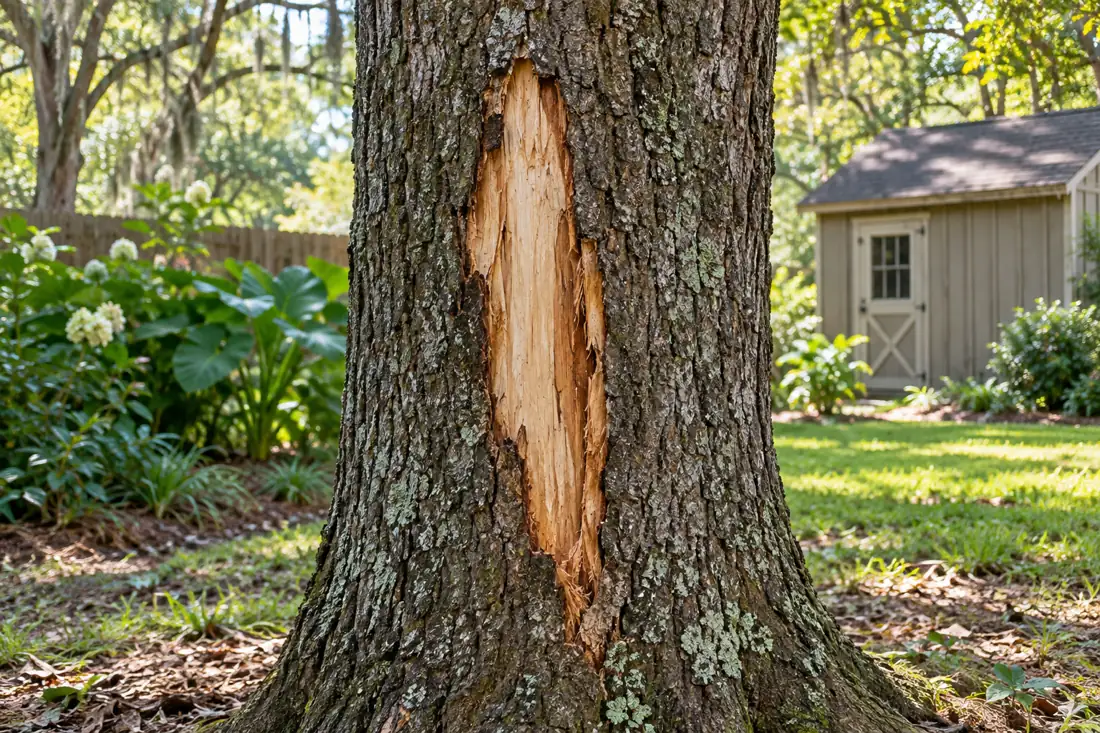
A remaining tear can expose wood and change the balance of neighboring limbs. The first decision is whether people and property are currently exposed to more movement, not whether the entire tree needs removal.
When requesting help, describe what has already fallen, what remains attached and which areas cannot be safely used. Ask the contractor to distinguish removal of unstable material, final pruning at appropriate attachments and a wider assessment of other defects. Clarify debris hauling, cleanup limits and potential roof or fence coordination in the written scope.
If the tree retains significant crown and structure, discuss whether preservation and follow-up are sensible. Keep dated photographs before cleanup where safe, particularly when several parties may need to understand what occurred.
Secure the area before handling fallen wood
A freshly broken limb can leave hanging sections, torn branches and unpredictable pressure in the remaining crown. Keep people, pets and vehicles clear of the fall area, including beneath adjacent branches that may have been struck. If part of the limb rests on a roof or fence, do not pull it away or climb onto the structure. The apparent size of the material on the ground can distract from hazards still overhead.
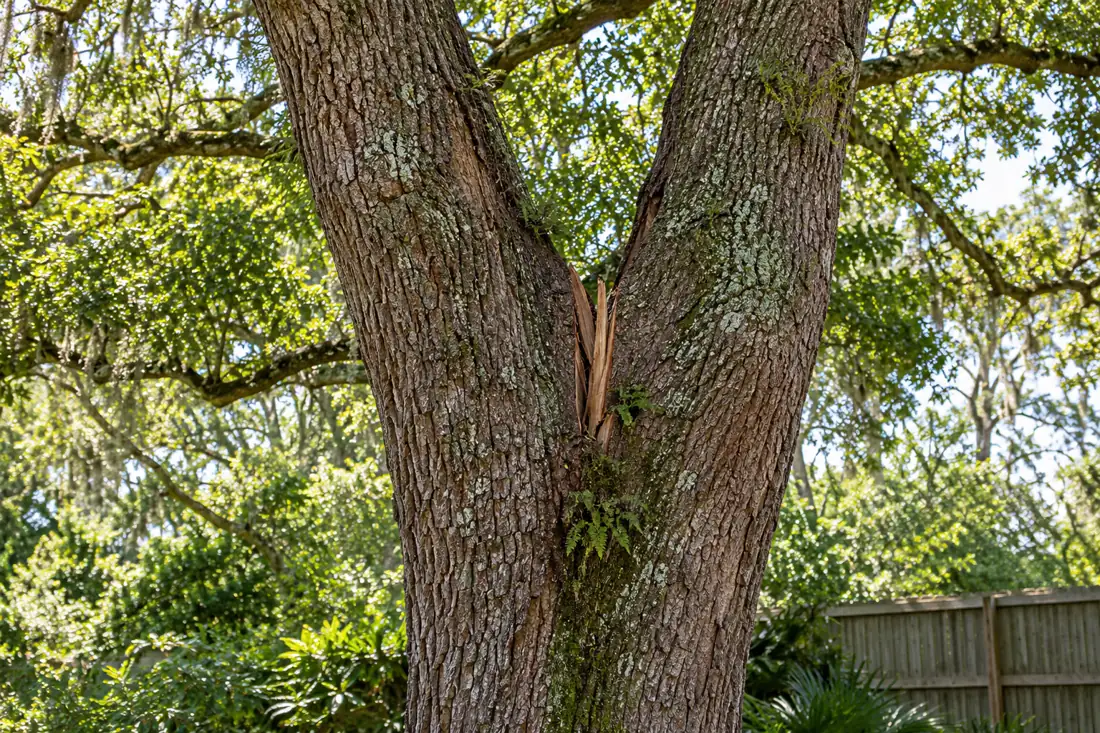
Photograph the whole tree from a safe viewpoint and note the location of fallen sections, the direction of the break and any blocked access. Do not stand under a fractured union for a close-up. When power lines may be involved, assume they are energized and involve the utility. A prompt call should explain whether the area is occupied, whether a structure is affected and whether the tree has shifted. These observations guide the appropriate urgency without pretending that a photo establishes stability.

Study the remaining attachment rather than the ground alone
The broken portion is only one part of the condition. The remaining attachment may have torn bark down the trunk, exposed wood or altered how neighboring stems carry weight. An assessor needs to see the remaining union and the rest of the canopy, not merely a pile of branches. Provide distant photographs that show how the break relates to the main stem and nearby buildings or paths.
A branch that failed in wind does not prove the entire tree must be removed, but it also does not prove the rest is sound. Branch unions vary in structure, and additional defects may be hidden. Ask for a site-specific evaluation of what remains, including other large limbs, relevant decay and target exposure. Avoid treating a single dramatic photograph as enough to decide between selective pruning, further investigation and complete removal.
Record the timeline and weather without guessing
Describe when the failure was discovered, whether a storm, heavy rain or unusual wind occurred, and whether the limb had visible changes beforehand. If nobody saw it fall, say so. The difference matters because breakage can involve preexisting weakness, external loading or a combination of factors. Photographs taken before the event may help reveal prior canopy shape, but do not infer a cause from timing alone.
Note whether the limb struck another branch, a fence, an overhead cable or a building, and whether any part was moved before the evaluation. Keep invoices, preexisting inspection notes and dated images if they exist. An insurer, property manager or engineer may need a different kind of documentation from the tree contractor. Clear records help each party understand what is observed and what remains uncertain, without claiming to establish liability or insurance coverage.
Look above the fallen branch before deciding how to clean up
Keep the immediate work area out of use until the hanging or broken material has been evaluated. A limb on the ground may be the obvious damage, but a split retained in the attachment or newly loaded adjacent branches can be more important. Photograph the fallen piece, the break from the ground and the parts of the crown directly above.
Do not approach limbs suspended in other branches or attempt to release tension with a rope. If electrical lines may be involved, use the utility's established emergency procedure.

Check what remains overhead after a large limb fails
The fallen limb is only part of the post-break condition. The remaining attachment, neighboring branches and changed canopy balance deserve attention before the site is reopened. Take overview photographs only from a safe position; do not walk below broken limbs to get a better angle or assume that because the largest piece has landed nothing else can fall.
Ask the assessor to distinguish loose material needing immediate control from the longer-term health and structural questions. The tree may have a torn attachment or a remaining split that calls for additional review. Not every visible stub should be cut flush, and the extent of pruning should be chosen for the actual branch collar and retained canopy.
Arrange cleanup so equipment and debris piles avoid unnecessary compaction around retained roots. Confirm if wood removal, lawn repair, fencing or building repair is outside the tree-work scope. Keep a dated record of the break and the agreed result; future observations will then distinguish new changes from damage already documented.
Ask the tree professional to describe both the removal of dangerous debris and the condition of the remaining structure. A flush cut against the trunk is not automatically appropriate; the final cut location depends on the actual attachment and sound tissues. Some failures leave cracks that extend beyond the visible break. A proposal should distinguish safe equipment access, retained-wood assessment, target clearance and debris hauling rather than listing only the volume of fallen wood.
Protect the root zone while equipment and debris travel through the site. Dragging logs across exposed roots, stacking heavy material against the trunk or repeatedly driving over damp soil can create additional problems after the initial damage. Agree on an access path, disposal method and protection for irrigation, pavers and fences before cleanup. If the branch struck a structure, document the building damage separately and coordinate with the appropriate licensed trade or insurer without claiming tree crews can certify a roof or electrical repair.
After the work, ask which remaining limbs, if any, merit further review, what changes should prompt immediate contact and how the property owner should document future events. Keep before/after photographs with the written work scope, without portraying them as a guarantee that the tree will withstand every storm. Some trees can be retained after a limb loss, while others have a condition that warrants major reduction or removal. The recommendation should state the actual reasons rather than assuming one outcome.
[/fusion_text][/fusion_builder_column_inner]
After a major limb break, evaluate what remains attached
A branch on the ground may leave a torn union, loose hanger or damaged adjacent stem overhead. Removing debris does not demonstrate that the remaining crown is safe. Photograph the original attachment and landing area from a safe distance. Keep people away from suspended fragments and avoid climbing or pulling the branch for a better view.
Separate the immediate hazard scope from longer-term tree-care choices. A qualified inspection may consider the wound, crown balance, remaining attachments and existing decay. Ask whether the estimate includes controlled lowering, site cleanup, additional pruning and a later review if the tree will be retained.

Understand why a flush cut is not a universal fix
A tear may leave a long strip of loosened bark and an irregular stub. It can be tempting to cut flat against the trunk for a neat look, but branch attachments include structures that influence how the tree compartmentalizes injury. An indiscriminate flush cut can remove living tissue beyond the damaged branch. The proper location and method depend on the species, branch size, break geometry and remaining structure.
Large broken limbs can carry considerable tension even after reaching the ground. Do not try to free an attached section with a ladder, rope or household saw. If an arborist recommends corrective pruning, ask which parts will be removed, how access will be achieved and what the intended result is. The aim is a carefully defined response to damage, not simply making the wound smooth or restoring the original appearance overnight.
Consider load redistribution through the canopy
Removing a major limb changes the canopy's shape and the way remaining branches are exposed to wind. Nearby stems might have grown with shelter or shared mechanical influence that has now changed. A professional should consider whether any remaining limbs have poor attachment or unusually long leverage after the break. The answer may involve observation, selective risk reduction or another method, depending on what a closer examination finds.
Ask what cannot be determined from ground level and whether more detailed inspection is warranted. Avoid accepting a blanket rule that every tree with one failure needs topping, severe reduction or removal. Those approaches can create their own structural and health problems. The decision should relate to the tree's actual defects, site targets and owner's priorities. Keep the purpose of any recommended cut clear in the written scope.

Protect the root area during debris removal
The cleanup route can be as consequential as the crown work. Large logs, machines and repeated hauling passes may compact saturated soil, strike roots or damage lawns. Identify the access gate, slope, pavement edges and ground that must be protected before selecting a handling method. If a branch fell across a planting bed or drainage swale, explain what should remain and what restoration is outside the tree-service scope.
Discuss whether wood will be cut into movable pieces, chipped, loaded or retained on site. The owner may want usable logs, but their size, position and safe handling determine what is practical. Don't promise that a crew can remove every piece without using a particular route or equipment until the site is assessed. A good plan keeps the area controlled and separates debris handling from roof, fence or landscape repairs that may involve other trades.
Separate tree work from structural repairs and claims
A branch may damage shingles, a car, a wall or an electrical service line. The tree contractor can discuss safe tree and debris work, but should not be expected to diagnose roofing or electrical damage outside their scope. Document affected property from a safe location and contact the relevant provider. If an insurance claim is contemplated, ask the insurer what records it requires rather than assuming a particular service is covered.
Avoid making emergency repairs that expose people to unstable limbs. When the site is safe enough for planning, distinguish immediate hazard reduction from elective pruning, stump work, hauling and restoration. Request itemized scope descriptions where useful. If the job changes after a closer inspection, record the reason and the approval before additional work. That protects the owner from confusing necessary tree safety work with unrelated property repairs.

Ask what the injury means for future growth
A tree can form woundwood around injured tissue, but it cannot simply replace a large branch in its original structure. Recovery depends on the species, vigor, wound characteristics and continuing conditions. The remaining crown may look unbalanced for a time without being automatically hazardous; conversely, green leaves do not rule out structural defects. Ask which observations would support continued retention and which could justify a later re-evaluation.
The care plan might include reduced avoidable stress, review of nearby construction activity, and monitoring of the failure point. Avoid aggressive fertilizer or wound paint as a substitute for assessment. If the tree is valued for shade or habitat, discuss those goals explicitly so the professional can weigh options without overlooking safety. Decisions should be based on current findings and realistic expectations, not a promise to make the crown look untouched.
Prepare a precise request for qualified help
When contacting Tree Huggers, identify the tree, address, approximate location of the failure and whether anyone or anything remains exposed. Send an overview photograph from a safe distance, not a close-up taken under a suspended limb. Mention blocked entrances, gate widths, damaged structures and whether utilities or neighbors are involved. Explain whether the immediate need is securing a hazard, removing debris or evaluating what remains.
Ask for the proposed scope to name the affected limb or tree, safe access approach, material handling and any exclusions. Do not infer that an online form produces immediate emergency dispatch. Where the condition appears dangerous, call the appropriate emergency or utility service first as circumstances require. A practical estimate conversation should distinguish work that can be described now from findings that need a site assessment and the owner's approval.

Verify the finished condition and remaining obligations
After authorized work, compare the actual site with the agreement. Look for the specified broken material, the agreed condition of remaining limbs, debris piles, fence openings and any separately included stump or ground work. Do not walk into an uncleared work zone to inspect it. If a roof, fence or drainage feature was affected, record whether its repair was part of this contract or assigned to another party.
Save the final description of completed work with dated images and any follow-up tree-care recommendation. There may be a monitoring plan for the remaining crown, or the assessment may identify additional defects requiring a new decision. A thorough handover explains what was done and what was not, rather than using the word safe as a permanent guarantee. Revisit the tree if new cracks, significant movement or another sudden failure occurs.
Questions about this project
Does healthy-looking foliage mean a tree is structurally safe?
No. Leaves do not establish the condition of roots, trunk or branch connections. Explain visible defects and recent changes, and ask for an assessment appropriate to the tree and nearby targets.
Should I test a cracked branch or trunk?
Do not pull, shake, climb or cut damaged material to test it. Keep clear of the affected area and describe the condition from a safe location. Qualified assessment and an appropriate work plan are needed.
How should several storm-damaged trees be described?
Use marked photos or a simple tree list showing locations, affected targets and access problems. Identify urgent routes or buildings separately from later cleanup. The contractor can then discuss assessment and a practical work sequence.
Can restoration be handled in phases?
Yes, when the parties agree on clear scopes. Initial hazard or access work, planned removal, hauling and building or landscape repairs may involve different stages and providers. Record the responsibilities and completion requirements for each.
How should I describe the pruning I want?
Explain the objective: clearance for a route or building, deadwood, a damaged branch or structural development. Ask for suitable tree-specific work rather than requiring an arbitrary shape or amount of canopy to be removed.
Will pruning resolve every tree concern?
No. Root, trunk and major structural problems may need a different assessment or response. State the full concern so pruning is not used as a substitute for evaluating the condition that prompted the call.
Is a free work estimate the same as a written risk assessment?
Not necessarily. Explain whether you need pricing, condition advice, a documented assessment or a combination. Ask what the visit includes, who provides it and what limitations apply to any findings or recommendations.
What history should I share?
Share known storm damage, prior failures, construction, root disturbance, flooding, pruning and recent changes. Include the timing and nearby property use. Useful history supports the evaluation without replacing inspection of the current tree and site.
Is leaving the trunk untouched enough to protect a tree?
No. Roots, soil conditions and nearby work can matter even when the trunk is not cut. Identify retained trees before planning access, excavation and storage, and ask what site-specific protection is appropriate.
Can pruning undo construction-related root damage?
Do not assume it can. Share the work history and ask for an assessment of the current tree and site. Pruning, monitoring or other recommendations should address an identified need rather than substitute for protection planning.
What should I tell Tree Huggers about tree care after a large limb breaks?
Explain the property address, the work you want and the specific concerns: remaining damage, changed loading, break location. Send safe photos of the tree, surroundings and access route. The contractor can then discuss the assessment and scope needed for this situation.
How do I request an estimate for this work?
Call 504-458-8336, text photos or use the estimate form on this page. Include the address, desired outcome and any timing constraints. The company will need to review scope and availability; an online request does not confirm a price, appointment or emergency dispatch.
Get a scope for your property
After a large limb breaks, the exposed break may be only one part of the hazard. From outside any possible drop area, describe the direction of failure, whether material remains suspended in the canopy, and whether the falling limb struck a roof, fence, vehicle or utility line.
Photograph the ground debris and damaged attachment without standing beneath the remaining branch. Note whether the tree now leans, another limb has split, or the trunk shows fresh cracking. Do not climb the tree or try to tug a hanging section free to create a clearer picture.
Request a written scope that separates immediate hazard management from evaluating the remaining crown and the longer-term pruning response. It should identify what can be safely assessed from the ground, when specialized access is needed, what debris handling includes and whether any affected surface requires separate repair.
Removing the fallen limb alone does not confirm the tree is structurally sound. If electrical equipment or a line may be involved, stay clear and contact the relevant utility rather than asking a tree crew to improvise around energized infrastructure.