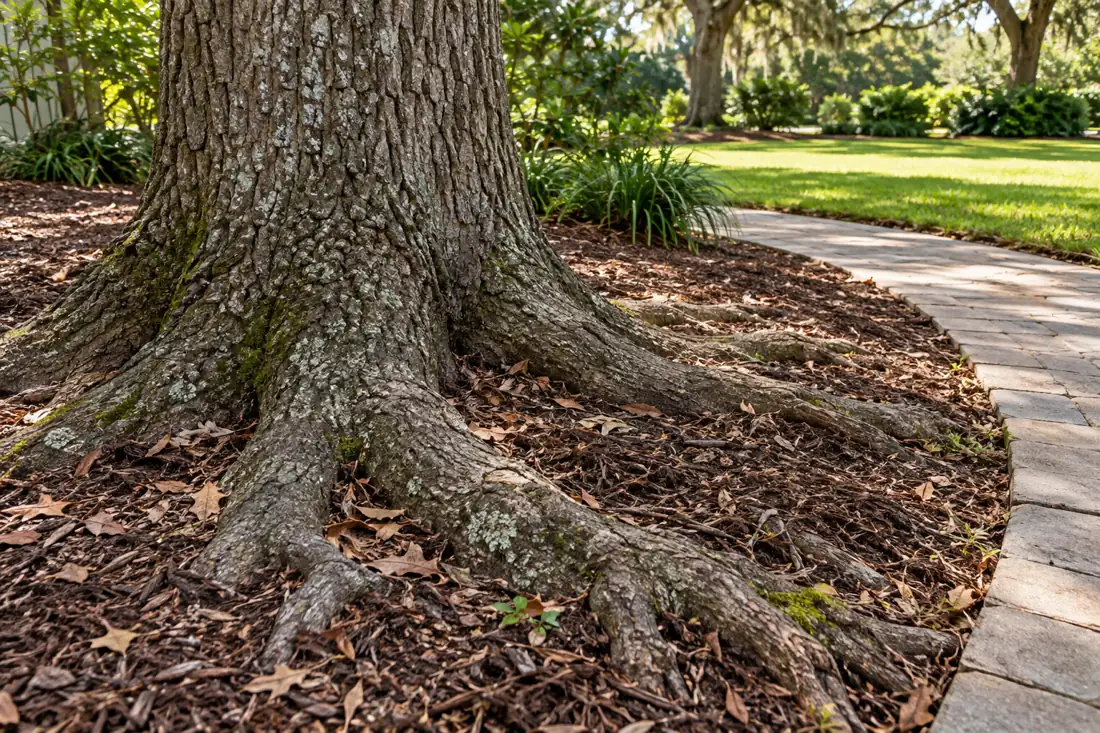
Flooding can affect the root environment and create delayed changes in a tree’s appearance. Share how long the area was inundated, any soil movement and the symptoms you have noticed. A condition assessment should consider the whole tree and site. Avoid assuming a green canopy immediately after flooding means there is no concern.
Site planning detail: After floodwater recedes, the timeline is more useful than one dramatic photograph. Record when the water arrived, how long it remained, whether it was moving or stagnant, and whether sediment or erosion changed the root zone. A tree may keep green leaves for a while even if its roots have been stressed, so follow-up observations should record new leaf growth, dieback, bark changes and fresh leaning over several visits.
Keep heavy vehicles off saturated soil, and do not fill exposed roots with soil simply to make the yard look level. If a tree has developed a new lean, cracked ground, hanging branches, or an exposed root plate, restrict access and obtain a prompt structural assessment instead of waiting for seasonal leaf changes. A drainage or grading contractor may need to coordinate with the tree professional.
Record approximately when water arrived, how high it stood around the trunk, how long the root zone stayed saturated and whether sediment or erosion changed the grade. Include photographs from different dates if they exist; a green canopy immediately after a flood does not prove roots were unaffected.
Conversely, early leaf drop can have more than one cause. Avoid driving on saturated soil or piling cleanup materials within the root area while conditions remain wet. Identify whether standing water came from a drainage failure, river flooding or another source when known.
Request an assessment that looks at roots, trunk base, soil oxygen and drainage alongside foliage symptoms. Explain what changed after the flood, including new lean, exposed roots, deposits, branch loss or fungal growth. Ask what monitoring is appropriate and which site corrections, if any, should be discussed with a drainage professional. Do not order heavy pruning solely because leaves browned after inundation; a stressed tree may need retained healthy foliage. Separate immediate stability concerns from slower recovery observations in the written recommendations.
Document how the site flooded
Tree decline after flooding should begin with a factual description of where water stood, approximately how long it remained and whether it was fresh or potentially contaminated. Note the extent on the trunk and whether nearby trees experienced similar conditions. If the precise duration is unknown, provide a range or state that it was not observed continuously. Avoid claiming a specific disease merely because foliage changed after a heavy rain.
Take safe photographs of the tree, the surrounding ground and the drainage pattern after water recedes. Do not enter floodwater or unstable soil to capture an image. Distinguish a single short event from repeated saturation over many weeks. Soil type, species and previous stress can influence the response, so the timeline is important context for a professional assessment.

Understand how prolonged saturation affects roots
Roots need access to oxygen as well as water, and saturated soil can restrict gas exchange for extended periods. Different species tolerate wet conditions differently, and the severity of injury may depend on depth, duration, temperature and soil characteristics. Flooding can also change soil structure or deposit sediment near the root flare. These processes help explain why crown symptoms may appear after the visible water has gone.
A green canopy immediately after a flood is not a promise that the tree escaped stress, and yellow leaves do not prove irreversible root injury. Ask the assessor what observations support the diagnosis and what alternative causes should be considered. The goal is to understand current condition and a reasonable management path, not to predict exact survival from the number of flooded days alone.
Distinguish temporary flood stress from immediate structural danger. After standing water recedes, record how long the root zone was saturated and whether the soil is still soft or eroded. Watch for a fresh lean, heaved soil, new cracks, dead branches and changes in foliage, but do not interpret one yellowing leaf as proof a tree must be removed. Have potentially unstable trees assessed from a safe distance. Maintenance decisions may require observation across a growing season, while a shifting root plate requires a different level of urgency.
Read the flood timeline before interpreting the canopy
A leaf that browns two weeks after a flood may reflect a different sequence than one that starts thinning the following season. Record the date water arrived, how quickly it receded, whether it returned after later storms, and when foliage, shoot growth or bark appearance changed.
Look for a boundary between saturated and well-drained ground rather than assuming the entire yard experienced the same stress. A dated photograph taken from the same safe position can reveal changes in crown density without requiring anyone to climb or approach unstable ground. One snapshot is not a diagnosis, but a reliable timeline can make a professional conversation much more useful.
Separate root stress from other possible causes
Waterlogged soil can limit oxygen to roots, but post-flood decline should not automatically be labeled root rot. Existing compaction, buried root flare, construction disturbance, pests, drought preceding the flood, chemical exposure and species-specific tolerance may all be relevant. Ask the assessor what evidence distinguishes these explanations and whether soil and drainage conditions need further investigation.
A tree may retain leaves while roots are compromised, or shed some foliage and recover; neither observation alone confirms future safety. If the site has changed grade or a drainage trench was installed nearby, include that work in the history. Avoid adding fertilizer or digging into major roots simply to do something quickly.
Identify delayed canopy symptoms
Leaf yellowing, thinning, unexpected drop or branch dieback may become noticeable weeks or months after saturated conditions, depending on species and season. Photograph the crown from consistent viewpoints and note whether symptoms affect the whole tree or particular branches. Compare with neighboring specimens only when they are reasonably similar in species, age and site position. Seasonal leaf behavior can otherwise confuse the interpretation.
Do not remove large branches solely because they look sparse immediately after a flood. A professional may need to distinguish truly dead tissue from delayed growth or seasonal change. If hanging limbs or severe cracks appear, address the separate safety issue promptly. A useful record connects symptoms with dates and environmental conditions without claiming that flooding caused every later defect.

What to verify on site: Note flooding dates, water depth, drainage changes and delayed canopy symptoms. Standing water can be relevant to root oxygen but cannot diagnose decline from a single picture.
Read the flood footprint before deciding whether a tree is recovering
Reconstruct the water event instead of relying on the tree's appearance today. Note the first day the root zone went under water, how long standing water remained, whether it moved or sat still, and where erosion or new sediment is visible. Photograph the trunk flare, soil line, low areas and any newly exposed roots without walking on unstable ground. For properties flooded by brackish or contaminated water, record that possibility rather than treating every event like ordinary rainwater ponding.
Expect symptoms to change on a slower timetable than the flood. Some trees retain green leaves immediately after saturated roots have been stressed, while others shed foliage or show dieback later. Identify which branches changed, compare a current photograph with one taken before the event, and note whether neighboring species reacted differently.
A single branch tip or green leaf cannot confirm normal root function. If a tree developed a new lean, visible soil heave or loose major root plate, keep people away and request a prompt qualified assessment.
Drainage improvements can create their own root-zone damage if heavy equipment cuts or compacts soil under the canopy. Before regrading, ditch cleaning or trenching, map where machinery will travel and where spoil will be placed. Clearing blocked surface drains might be less disruptive than deep excavation; the appropriate option depends on actual elevations and local drainage responsibility. Avoid piling additional soil against the trunk to hide flood marks. Root oxygen, soil structure and runoff should be considered together.
Record a practical sequence for observation: photographs after the water recedes, a condition review where symptoms or targets justify it, then subsequent observations across the growing season. Do not use a fixed recovery date as a guarantee. If preservation remains feasible, clarify what maintenance or access restrictions are recommended and what signs should trigger reinspection. If removal is advised, ask for the condition findings and property exposure behind that decision rather than accepting a recommendation based only on prior flooding.

Examine the root flare and surrounding soil
After water drains, check for deposited silt, new erosion, exposed roots or soil piled against the trunk. The base may be buried by sediment even though the yard looks otherwise normal. Photograph these features without digging around major roots. If the ground remains soft, avoid heavy machinery and repeated foot traffic that could increase compaction or disturb anchorage.
Ask whether any soil correction or root-collar assessment is appropriate. Abruptly removing large quantities of material with ordinary tools can injure roots, while leaving deep deposits may change local conditions. The appropriate response depends on the tree and site. Where the flood also damaged drainage structures, involve the responsible specialist rather than assuming tree treatment alone can correct the wet environment.
Post-flood inspection: separate soil saturation from instability
After prolonged standing water, note the actual waterline, duration and drainage route rather than treating leaf color as the only symptom. Saturated soil may change root oxygen conditions, but displaced ground or a newly leaning trunk introduces a separate immediate safety concern. Do not enter a muddy root-plate area to inspect damage.
Mark the dates when the site drained and any new cracks, erosion, exposed roots or canopy changes observed from a safe vantage. A qualified review can address stability, the suitability of regrading and reasonable monitoring; rapid leaf recovery should not be promised.
Consider contaminated water and debris
Floodwater may carry sediment, salt in some coastal situations, sewage or other contaminants. Do not assume contamination without evidence, but report known sources or unusual odors to the appropriate authorities and professionals. Keep people and pets away from hazardous water or debris. A tree-care provider may need information about site safety before entering, while environmental or utility specialists address conditions outside ordinary arboricultural work.
Avoid applying soil treatments or fertilizers as an improvised response to possible contamination. Different contaminants require different assessment, and some issues cannot be diagnosed by the color of leaves. If saltwater exposure is suspected, the site history, rainfall and soil information may inform a professional plan. The owner should understand what was observed, what remains untested and which provider is qualified to investigate each concern.

Restore drainage without damaging living roots
Improving surface drainage may be important when the property remains wet, but the remedy should not involve careless trenching through major tree roots. Identify where water enters, where it is supposed to leave and whether grading or blocked inlets contribute to repeated saturation. A drainage professional can develop the site plan while an arborist considers the tree's root protection needs.
Do not assume that filling a low area with deep soil against the trunk is harmless. Grade changes can bury the flare and modify oxygen availability. Where nearby structures also experience water problems, coordinate broader site decisions rather than designing around the tree in isolation. The practical aim is a drier, functional landscape without introducing new damage through poorly planned earthwork.
Adjust maintenance expectations during recovery
An affected tree may need careful observation and protection from additional stress while its condition becomes clearer. Avoid unnecessary root excavation, heavy equipment traffic and large pruning cuts without a qualified reason. Watering needs should reflect actual soil moisture rather than a rigid post-flood schedule; overwatering a still-saturated site can prolong the problem. Ask about species-appropriate care and realistic indicators of change.
Fertilizer does not automatically repair damaged roots, and a sudden flush of foliage is not proof of structural soundness. Where a diagnosed secondary pest or disease is present, a targeted treatment may be considered under qualified guidance. The owner should distinguish ongoing maintenance from interventions intended to address a specific finding. Keep records of what is applied so later evaluations are based on actual treatment history.

Check for instability after erosion or soil movement
Flooding may coincide with erosion around roots, bank loss or changes in ground support. Significant new lean, root-plate movement or cracking soil should prompt caution, especially near occupied areas. Keep people clear of a potential fall zone and seek qualified assessment. Do not test a tree by pushing it or driving equipment over soft ground. Structural risk is a different question from leaf health and may require more urgent action.
If the tree is near a watercourse, public easement or utility line, the relevant authority may need to be involved. A professional should identify what can be inspected safely and whether temporary restrictions are appropriate. No short observation period can guarantee a water-stressed tree will never fail. Practical risk management should follow actual evidence and site exposure.
Plan a useful reassessment schedule
Some symptoms take time to develop or resolve, so repeatable observations can be more informative than one visit. Photograph the same crown and trunk viewpoints, note weather and drainage changes, and record major branch failures or new cracks immediately. Ask the arborist when a follow-up is useful for this species and condition. The interval may depend on whether the initial finding is physiological stress, disease, root damage or a structural concern.
If another flood occurs, update the timeline instead of treating it as one continuous event. A tree that endured several short periods of saturation may present a different history from one submerged for a single longer period. Avoid declaring recovery solely because the lawn dries or new leaves appear. The objective is evidence-based monitoring with clear triggers for additional help.

Choose a response based on findings and property use
Tree Huggers can discuss practical tree-work needs if a flood-stressed tree requires pruning, removal, debris handling or other service. An assessment may instead support monitoring and changes to site management. Send the address, safe photographs, flooding history, known drainage issues and desired result. Mention buildings, paths or other regularly occupied targets beneath the tree, and any access restrictions caused by soft ground.
Ask for separate explanations of diagnosis and proposed work. The scope should identify which trees, access methods, material handling and restoration items are included, with uncertainty clearly stated. An online inquiry does not prove a diagnosis, guarantee recovery or confirm an appointment. Where a tree shows sudden instability, prioritize keeping people out of danger and involving appropriate qualified assistance before ordinary scheduling.
Plan safe observation without creating new damage
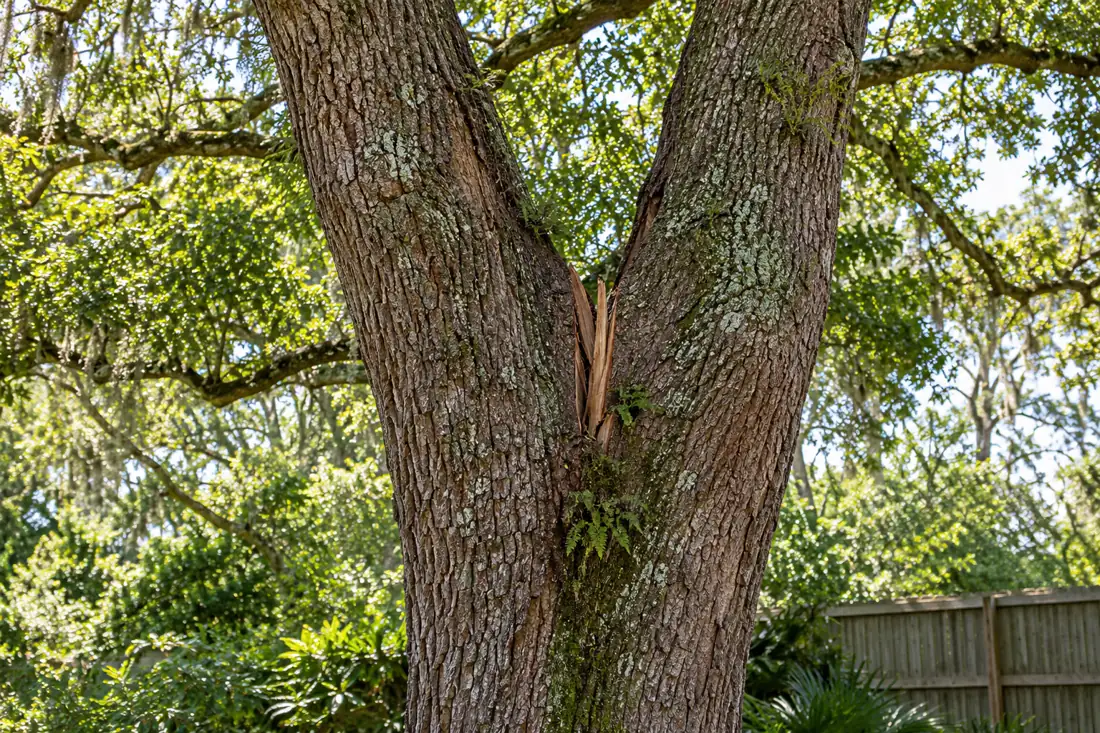
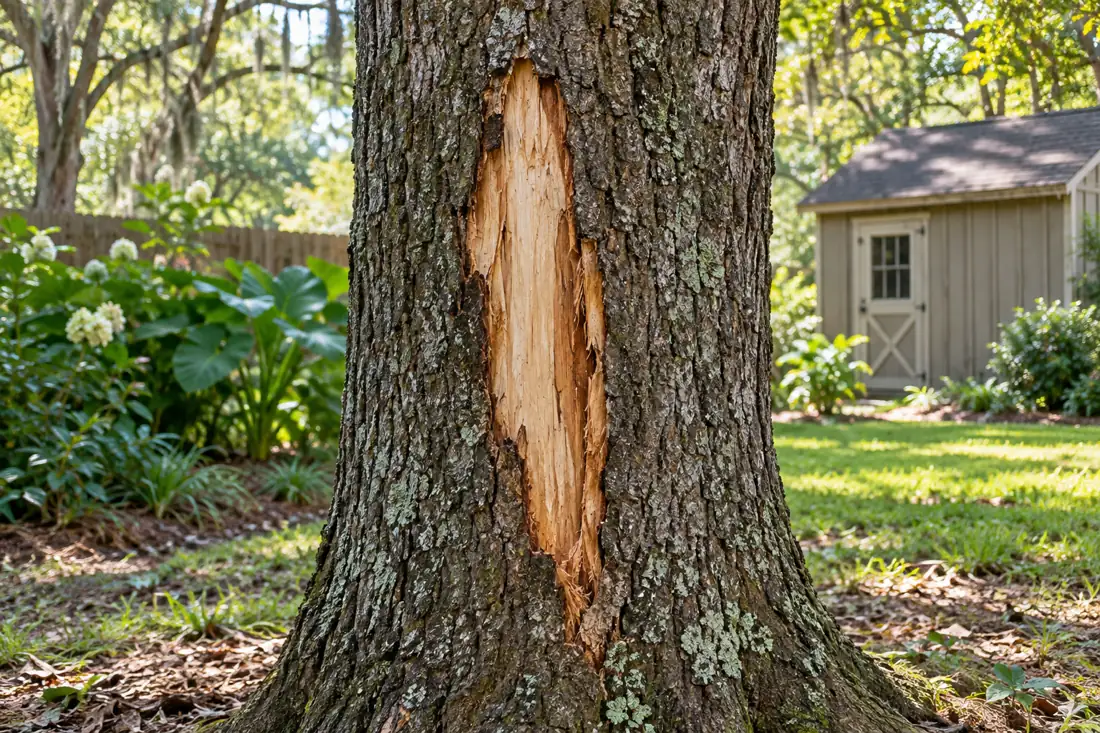
Use a fixed viewing point to note new lean, fresh ground cracking, exposed roots, mushrooms near the base, hanging limbs or changes in trunk condition. These observations should be reported promptly, particularly when the tree could affect a house, public path or occupied area. They do not substitute for an on-site assessment.
Keep people away from a visibly shifting root plate, avoid driving vehicles or staging heavy materials over wet root zones, and do not probe soft soil where utilities may be present. Once access is safe, note whether rainwater continues to collect against the trunk after normal showers. If water remains trapped, restoring drainage may involve specialists other than a tree contractor.
Decide what a useful written scope should cover
A request to remove a flooded tree and a request to evaluate whether it can be retained are different jobs. State which decision is open, what structures or travel routes are within reach, and whether you need an assessment, corrective work or a removal estimate.
Ask the provider to identify observations, uncertainty, any recommendation to obtain an arboricultural evaluation, and the boundaries of proposed work. If removing the tree is recommended, clarify equipment access, debris handling, stump treatment and ground protection before approval. If retaining it is reasonable, agree on what symptoms warrant reassessment and who will monitor them.
Documenting these questions helps avoid treating a vague promise of recovery as a safety guarantee.
Questions about this project
Can tree equipment use any driveway?
No general assumption should be made. Pavement condition, edges, support, buried infrastructure and the proposed equipment all matter. Ask the contractor to assess the intended setup and route for the particular property.
Do mats guarantee there will be no ground damage?
Ground protection is one part of a site-specific plan. It does not remove every load, soil or access limitation. Discuss the proposed measures and any restoration responsibilities in the written scope.
Is a free work estimate the same as a written risk assessment?
Not necessarily. Explain whether you need pricing, condition advice, a documented assessment or a combination. Ask what the visit includes, who provides it and what limitations apply to any findings or recommendations.
What history should I share?
Share known storm damage, prior failures, construction, root disturbance, flooding, pruning and recent changes. Include the timing and nearby property use. Useful history supports the evaluation without replacing inspection of the current tree and site.
Is leaving the trunk untouched enough to protect a tree?
No. Roots, soil conditions and nearby work can matter even when the trunk is not cut. Identify retained trees before planning access, excavation and storage, and ask what site-specific protection is appropriate.
Can pruning undo construction-related root damage?
Do not assume it can. Share the work history and ask for an assessment of the current tree and site. Pruning, monitoring or other recommendations should address an identified need rather than substitute for protection planning.
How should several storm-damaged trees be described?
Use marked photos or a simple tree list showing locations, affected targets and access problems. Identify urgent routes or buildings separately from later cleanup. The contractor can then discuss assessment and a practical work sequence.
Can restoration be handled in phases?
Yes, when the parties agree on clear scopes. Initial hazard or access work, planned removal, hauling and building or landscape repairs may involve different stages and providers. Record the responsibilities and completion requirements for each.
How should extra work be approved?
Use the agreed approval process and identify the change, reason, scope, price or schedule effect as applicable. Confirm who has authority before treating an additional tree or task as part of the original job.
What completion records are useful?
Keep the agreed scope, tree or area identification, authorized changes, invoice and labeled photos where appropriate. Include unresolved items and a contact. Contract-specific records should follow the buyer's stated requirements.
What should I tell Tree Huggers about tree decline after flooding?
Explain the property address, the work you want and the specific concerns: flood duration, root conditions, delayed symptoms. Send safe photos of the tree, surroundings and access route. The contractor can then discuss the assessment and scope needed for this situation.
How do I request an estimate for this work?
Call 504-458-8336, text photos or use the estimate form on this page. Include the address, desired outcome and any timing constraints. The company will need to review scope and availability; an online request does not confirm a price, appointment or emergency dispatch.
Get a scope for your property
Tree symptoms after flooding may emerge well after standing water recedes, so the timeline matters. Record approximate dates and duration of inundation, whether water covered the root area or trunk base, and when foliage changed. Share wide photographs of the tree and drainage area, along with closer ground-level images of leaf color, canopy thinning or dead branches if safe.
Note any flood cleanup, sediment deposition, changed grade or vehicle traffic over saturated soil. Do not probe soft ground near a leaning tree or enter water to inspect roots.
A practical assessment request should ask which symptoms are consistent with root stress, which alternative causes remain possible and what observations should be monitored over time. Avoid treating every brown leaf as proof that the tree is dead or adding water before soil conditions are understood. Identify surrounding structures and frequently used areas if weakened branches are present. The written plan should distinguish immediate access or safety measures from longer-term soil and tree-health follow-up, without promising recovery after a specific interval.