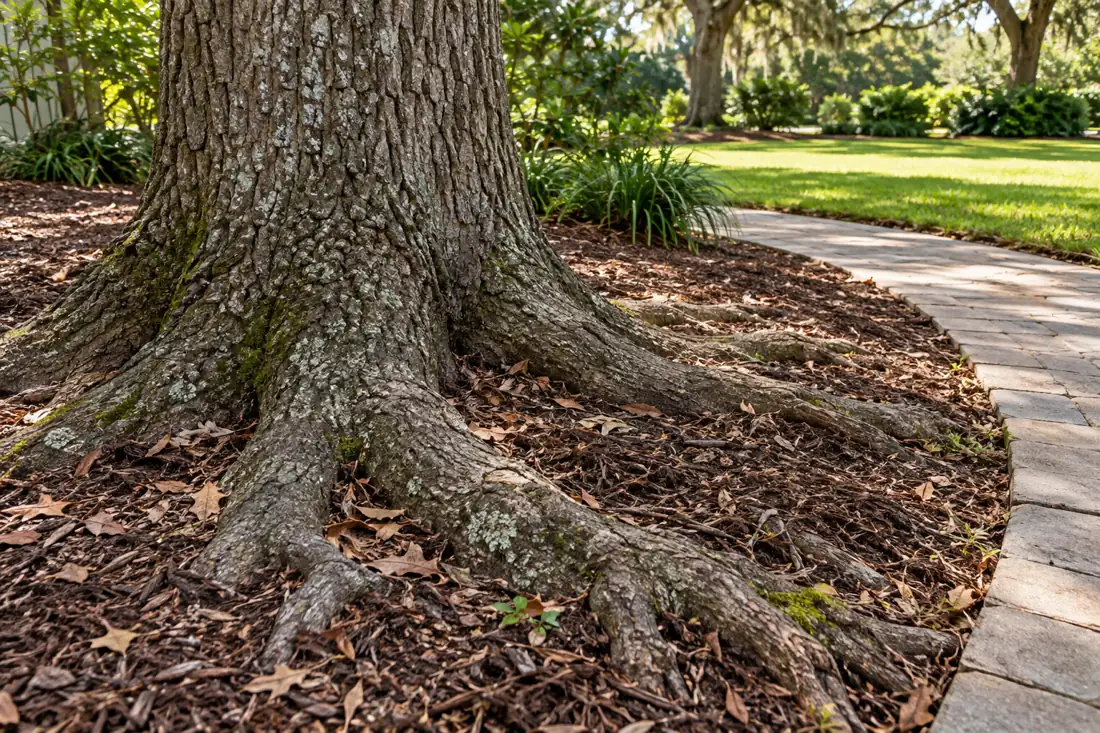
Dry conditions can coincide with leaf changes, dead branches and other stresses. Describe the timing, watering history and any other recent work around the tree. Symptoms can have more than one cause, so a useful evaluation looks beyond one leaf or photograph. Treatment should follow a reasonable assessment rather than a generic injection or fertilizer package.
Site planning detail: Drought stress can be confused with disease, old storm injury, compaction, or irrigation failure. To make an assessment useful, note the last weeks of rainfall and watering, any recently installed sod or hardscape, and whether leaf symptoms began on one branch or throughout the canopy. A hose running beside the trunk does not prove that water is reaching the absorbing roots, and heavy watering on already poorly drained soil can create a different problem.
Review actual soil moisture in the relevant root area before changing a schedule. Avoid piling fresh mulch against bark or fertilizing a visibly stressed tree without knowing the reason for the decline. Track the tree through new growth and subsequent weather, not only one leaf-drop event. Newly broken limbs or a changed lean still need separate safety assessment.
Start with the dates, not a diagnosis. Record when rainfall tapered off, whether irrigation changed, and when the first visible thinning or branch dieback appeared. Photograph the entire canopy from one safe, repeatable viewpoint and include the soil surface and nearby paving. Note whether distress is concentrated on the afternoon-sun side, on a single limb or throughout the tree.
A brown crown after hot weather can reflect drought, root disturbance, disease or more than one condition. Neither a wet week nor a single photograph proves that roots have recovered.
Ask for an evaluation that distinguishes what can be observed now from what requires monitoring. Explain whether the tree shades a home, overhangs a walking route or has dead wood above occupied space. Discuss soil moisture, mulch placement and irrigation changes before buying a blanket fertilizer or injection treatment. If removal is proposed, ask which findings support that decision and whether a second qualified assessment is reasonable. Request a written scope stating any immediate safety work separately from optional ongoing care.
Reconstruct the period of water stress before choosing a treatment
A tree that looks thin after a dry spell may have experienced weeks of limited soil moisture before anyone noticed its canopy change. The useful question is not simply whether rain has returned, but how long the tree and its root area were stressed, whether symptoms began during the dry period and what conditions have changed since. Trees vary by species, age, rooting depth and site. A mature oak over compacted pavement may respond differently from a newly planted ornamental in a mulched bed.
Write down approximately when the leaves began browning, curling or dropping and whether the changes affected the whole crown or individual branches. Note recent irrigation changes, construction, unusual heat and lawn maintenance. Photographs taken from the same safe viewpoint over time are more useful than a single close-up of a dry leaf. Avoid saying the tree is dead based only on a summer canopy photograph; an assessment must connect observable symptoms to the particular tree and its growing conditions.

Distinguish drought symptoms from other common causes
Leaf scorch, early shedding and sparse new growth can occur with inadequate water, but they are not exclusive to drought. Root damage, prolonged saturated soil, soil compaction, pests, diseases and herbicide exposure can create overlapping symptoms. If only one side of a tree is affected, ask what is different about that side: pavement, drainage, excavation, sun exposure or prior pruning. A description of the distribution of symptoms helps a qualified professional decide what needs further inspection.
Do not treat a generic online diagnosis as permission to apply a pesticide, fertilizer or fungicide. Some interventions can add stress or waste money when the underlying problem is different. Provide honest history, including any previous treatments and when they were applied. Ask the assessor which findings support its proposed diagnosis and what remains uncertain. A condition review may recommend monitoring or additional investigation rather than immediate tree removal, and those alternatives deserve a clear explanation.
Examine how water actually reaches the root zone
Rainfall measured at a regional station does not establish the moisture available to a particular tree. Roof overhangs, paving, raised beds, slopes, runoff paths and dense turf may change how water infiltrates the soil. For an established tree, absorbing roots often extend beyond the narrow ring immediately beside the trunk. Observe where the root zone is likely to be, whether irrigation reaches it and whether water drains away or collects in isolated spots.
If using supplemental watering, ask a local tree professional about an approach suited to the soil, species, season and actual moisture conditions. Shallow daily sprinkling may have different effects than deliberate watering of a larger root area. Avoid flooding the trunk or creating standing water just because the foliage is brown. The goal is appropriate soil moisture, not the largest possible water volume. When a site has irrigation restrictions or drainage problems, include them in the plan instead of recommending a one-size-fits-all schedule.
Investigate dry soil before buying a universal tree treatment
Build a weather and watering timeline that goes beyond the week someone noticed brown leaves. Ask when rain stopped, whether the tree previously received irrigation, whether a sprinkler head moved and whether construction or turf replacement altered the soil. A tree surrounded by irrigated grass may have a different moisture history from one beside a compacted driveway. Record these changes in sequence so a professional can distinguish a prolonged moisture shortage from root disturbance, a disease process or an unrelated branch injury.

What to verify on site: Record rainfall gaps, watering, hardscape heat, recent digging, mulch depth and leaf changes. Sparse foliage is not proof of drought alone and should be evaluated with other possible causes.
Compare Drought Stress With Site Changes Before Choosing Treatment
Leaf thinning after a dry period is worth documenting, but it does not identify the cause on its own. Compare the entire canopy with other trees of the same species nearby and note whether the change appeared after heat, grading, trenching or irrigation work. Different parts of a property can receive very different amounts of water.
Photograph the trunk base from a safe position, a broad view of the crown and the ground conditions near pavement. Do not excavate roots or add large volumes of water merely to make a symptom disappear before an assessment. Constantly wet soil can be a separate problem, especially where drainage is poor.
When requesting a tree-health visit, give an approximate timeline rather than an invented diagnosis. Note recent soil disturbance, mulch placement, sprinkler changes and any broken branches. A field assessment may need to distinguish root stress, structural defects, pests and normal seasonal responses before a defensible care plan can be discussed.
Observe how water enters the soil rather than assuming a short sprinkler cycle wets the whole root zone. Runoff on compacted ground, steep slopes, thick turf and deep mulch can all change infiltration. A shallow wet patch immediately after watering does not show how deep moisture has moved. Ask a local qualified professional for a watering approach appropriate to species, soil and current restrictions; avoid fixed gallon promises that ignore tree size and site conditions. Never mound wet mulch against the trunk.
Look for conflicting clues before purchasing fertilizers, injection treatments or an aggressive canopy cut. Browning on one branch, cracking soil around recent excavation, repeated mower injury and irrigation overspray suggest different questions. Pruning living foliage solely to match stressed roots can reduce the leaves the tree needs for recovery. In some situations the first useful step is correcting irrigation coverage or limiting further soil traffic, not applying a product. Document who will manage that correction and how it will be checked.
Use repeatable photos to judge whether conditions are changing: the same full-canopy view, a closer view of the most affected branch and a wide shot showing the soil and irrigation layout. Record new growth or dieback without declaring the tree recovered after a few rains. If weak, broken branches threaten an occupied route, address that exposure separately from long-term moisture stress. A useful assessment request describes the timeline, watering system and nearby construction rather than simply asking to 'revive a tree.'
[/fusion_text][/fusion_builder_column_inner]
Drought follow-up: document the watering pattern, not just the heat
Brown foliage in a hot month can reflect several overlapping problems. Write down how long the site stayed dry, whether irrigation reaches the wider root zone and whether drainage recently changed. A brief surface sprinkle may wet only turf, while uncontrolled heavy watering can be harmful on poorly drained ground.
Preserve a practical timeline of symptoms and recent landscaping decisions. If large limbs are failing or the tree has new instability, those immediate concerns take priority over a general watering discussion. Select treatment only after considering site conditions and a suitable assessment.
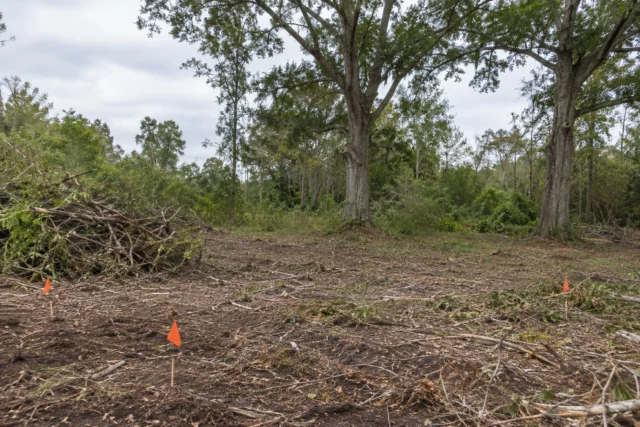
Check mulch, turf and soil disturbance around the trunk
A well-managed mulch area can reduce competition and moderate surface conditions, but mulch piled against bark can trap moisture at the trunk and conceal the root flare. Describe the existing mulch depth and whether it touches the trunk. A buried root flare or repeated mower contact can be relevant to a decline investigation. Do not add more material automatically; the assessor may first need to determine whether grade or mulch levels have changed since the tree was planted.
Turf, landscape fabric, hardscape and recently excavated planting beds may also influence the root environment. If a sprinkler line was moved or a driveway widened during the drought period, include that timeline. Compaction from vehicles and stored materials can reduce pore space for water and oxygen. The tree care plan should distinguish correcting a site condition from treating a disease. Even when watering improves, damaged roots or an unsuitable planting depth may require a different response.
Interpret dead twigs and branches without testing them yourself
Drought-related stress can be uneven across a canopy. Small twigs may die while other branches continue growing, and some species shed leaves or branches as part of their response. The extent and location of dieback matters, particularly when branches hang over a home, parking area or pedestrian route. Stay out of a suspected fall area and have the crown assessed if large dead wood or structural defects are visible. Do not climb, scrape bark, cut branches or shake limbs to confirm whether they are alive.
A qualified professional may examine buds, twigs and branch structure and distinguish routine seasonal patterns from more serious decline. Ask what level of pruning, if any, would serve a clear objective. Removing every sparse branch immediately can eliminate living tissue that may recover, while ignoring a large dead branch over a target can create an avoidable exposure. A careful recommendation balances tree health, site use and safety instead of responding only to the appearance of the canopy.

Separate short-term support from long-term recovery
Water-stressed trees do not necessarily return to full canopy density after one rainfall. Growth responses can take seasons, and some damage may not be reversible. A practical plan identifies what can be improved now, how the tree's condition will be observed and when a follow-up would be informative. Ask what signs would justify additional action, such as expanding deadwood, a changed lean or a newly exposed structural defect. Do not accept a guaranteed recovery promise based on a product application.
Some trees may be candidates for monitoring or site correction, while others have extensive decline combined with unacceptable exposure. The choice depends on the actual findings, not the customer's preference alone. If removal is recommended, ask which conditions support that conclusion and whether an independent assessment would be useful for a significant tree. Document the distinction between proactive maintenance, a treatment proposal and a structural risk assessment so the homeowner understands what each service can establish.
Avoid common watering and fertilizer mistakes
A stressed tree is not automatically deficient in fertilizer. Adding nutrients without identifying a need may have little benefit and can complicate care, especially when soil moisture or root function is the main limitation. Likewise, excessive watering can displace oxygen in poorly drained soil. Avoid treating the tree on the basis of a lawn-care schedule, because turf and large tree roots may require different management. Ask a qualified professional which conditions should be verified before changing irrigation or applying materials.
Describe how the property is watered now, including controller settings, hand watering, irrigation heads and drainage after rain. If the tree sits in a low area, note puddling and how long it persists. If an automatic system has been off, identify how long. These details allow care recommendations to be tailored to the site rather than sold as a universal package. Keep records of adjustments so the response can be evaluated over time instead of repeatedly changing several variables at once.
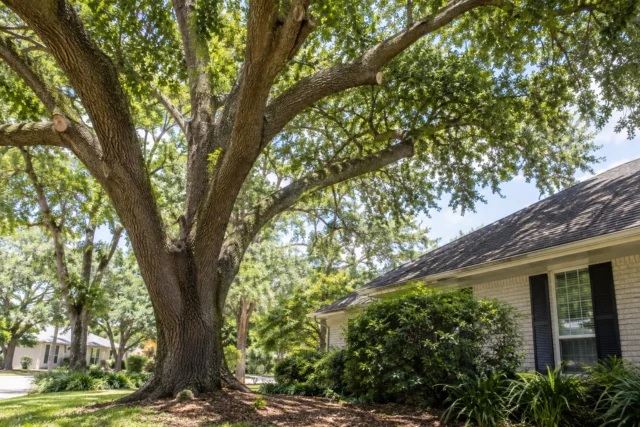
Protect the tree during future building and landscape work
A tree weakened by water stress may also be vulnerable to new root injury from trenching, grading or equipment traffic. Before a fence, patio, drainage improvement or driveway project, identify the tree's likely root area and ask how the work could affect it. A construction footprint that stops short of the trunk may still cross important roots. Coordinate protective limits with the relevant tree professional and construction trades before machines arrive, not after materials are stacked against the bark.
If future landscaping replaces lawn with paving, discuss changes in water infiltration and access for care. Tree preservation measures should be part of the project plan rather than an afterthought attached to an estimate. Mark staging areas, excavation limits and routes that can be used without damaging retained trees. This preparation is useful even if the drought symptoms improve, because the site's next change can become the dominant stressor.
Make the first inquiry useful and define the next decision
When contacting Tree Huggers, describe the tree species if known, approximate size, how long symptoms have been present, recent storms or construction, and the areas people use beneath the crown. Attach safe wide photographs and a few detail images that show the pattern of decline. Do not take photos from beneath an unstable branch. Ask whether the next step is a condition review, pruning estimate or removal planning, and be clear that an online submission does not guarantee an immediate visit.
Retain the professional's findings and any agreed monitoring observations. If further work is recommended, request a scope that identifies the affected tree, objective, debris handling and site access requirements. Where diagnosis remains uncertain, document that uncertainty rather than turning it into a definite claim for or against removal. A decision record built around the tree's actual condition is more useful than repeating generic drought tips every few weeks.
Questions about this project
Is a free work estimate the same as a written risk assessment?
Not necessarily. Explain whether you need pricing, condition advice, a documented assessment or a combination. Ask what the visit includes, who provides it and what limitations apply to any findings or recommendations.
What history should I share?
Share known storm damage, prior failures, construction, root disturbance, flooding, pruning and recent changes. Include the timing and nearby property use. Useful history supports the evaluation without replacing inspection of the current tree and site.
Is leaving the trunk untouched enough to protect a tree?
No. Roots, soil conditions and nearby work can matter even when the trunk is not cut. Identify retained trees before planning access, excavation and storage, and ask what site-specific protection is appropriate.
Can pruning undo construction-related root damage?
Do not assume it can. Share the work history and ask for an assessment of the current tree and site. Pruning, monitoring or other recommendations should address an identified need rather than substitute for protection planning.
Should every declining tree receive an injection?
No general treatment fits every cause of decline. Ask what problem has been identified, why the treatment is appropriate and how results will be reviewed. Site or structural concerns may require a different response.
What information helps with a treatment discussion?
Provide symptom timing, the parts affected, watering or site history, recent construction and previous treatments. The provider should explain the basis, limits and follow-up for any recommended care.
Can tree equipment use any driveway?
No general assumption should be made. Pavement condition, edges, support, buried infrastructure and the proposed equipment all matter. Ask the contractor to assess the intended setup and route for the particular property.
Do mats guarantee there will be no ground damage?
Ground protection is one part of a site-specific plan. It does not remove every load, soil or access limitation. Discuss the proposed measures and any restoration responsibilities in the written scope.
How should extra work be approved?
Use the agreed approval process and identify the change, reason, scope, price or schedule effect as applicable. Confirm who has authority before treating an additional tree or task as part of the original job.
What completion records are useful?
Keep the agreed scope, tree or area identification, authorized changes, invoice and labeled photos where appropriate. Include unresolved items and a contact. Contract-specific records should follow the buyer's stated requirements.
What should I tell Tree Huggers about tree decline after drought?
Explain the property address, the work you want and the specific concerns: symptom timeline, watering history, overlapping causes. Send safe photos of the tree, surroundings and access route. The contractor can then discuss the assessment and scope needed for this situation.
How do I request an estimate for this work?
Call 504-458-8336, text photos or use the estimate form on this page. Include the address, desired outcome and any timing constraints. The company will need to review scope and availability; an online request does not confirm a price, appointment or emergency dispatch.
Get a scope for your property
During drought, canopy thinning, scorched leaf edges and small twig dieback can look similar to other tree-health problems. Supply the tree's approximate location, recent watering pattern, irrigation coverage and the date symptoms appeared. Show which parts of the crown are affected in wide photographs and note any nearby paving, trenching or soil disturbance that changed root conditions.
If several species are affected, say so rather than assuming they have the same cause. Do not climb to collect samples or overwater the root zone to test a theory.
A useful review should consider moisture availability, drainage, species, season and competing explanations such as pests or root injury. Ask for practical monitoring indicators and a scope that distinguishes routine cultural care from pruning truly dead or unsafe branches. Irrigation changes should be based on soil and tree conditions, not a fixed promise that more water will solve every symptom.
If there is significant limb failure or a newly changed lean, make that immediate safety concern explicit instead of hiding it in a general drought-health request.