Live oak limb failures can result from weak branch unions, heavy end weight, decay, storm loading, old wounds or combinations of factors.
Document the failed limb and the attachment that remains
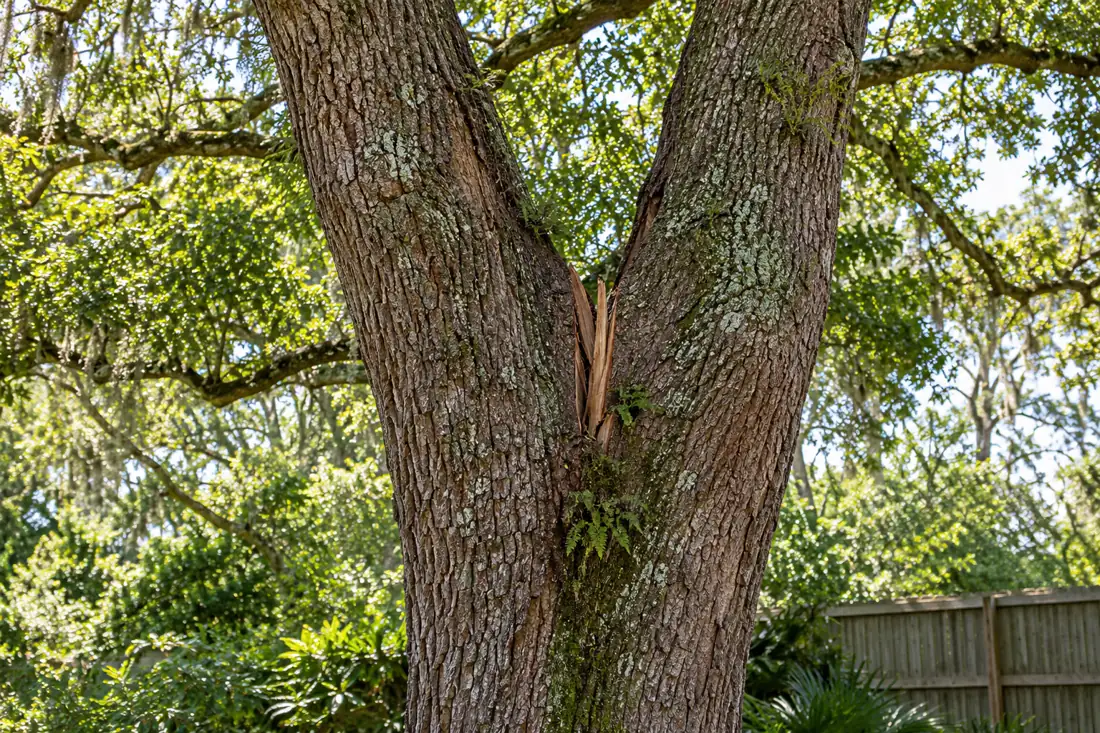
After a large live oak limb splits, a photo of the fallen section alone is rarely enough. From outside the drop zone, include the remaining union, adjacent branches and any vertical crack extending into the trunk. Note whether the failure followed wind, heavy rain, a recent cut or an apparently calm period; do not assume the first event explains the entire defect.
A suitable follow-up distinguishes debris removal from inspection of the retained tree. If the damaged union involves more than one heavy leader, ask whether the remaining structure warrants an assessment before reopening a patio, parking space or walkway beneath it.
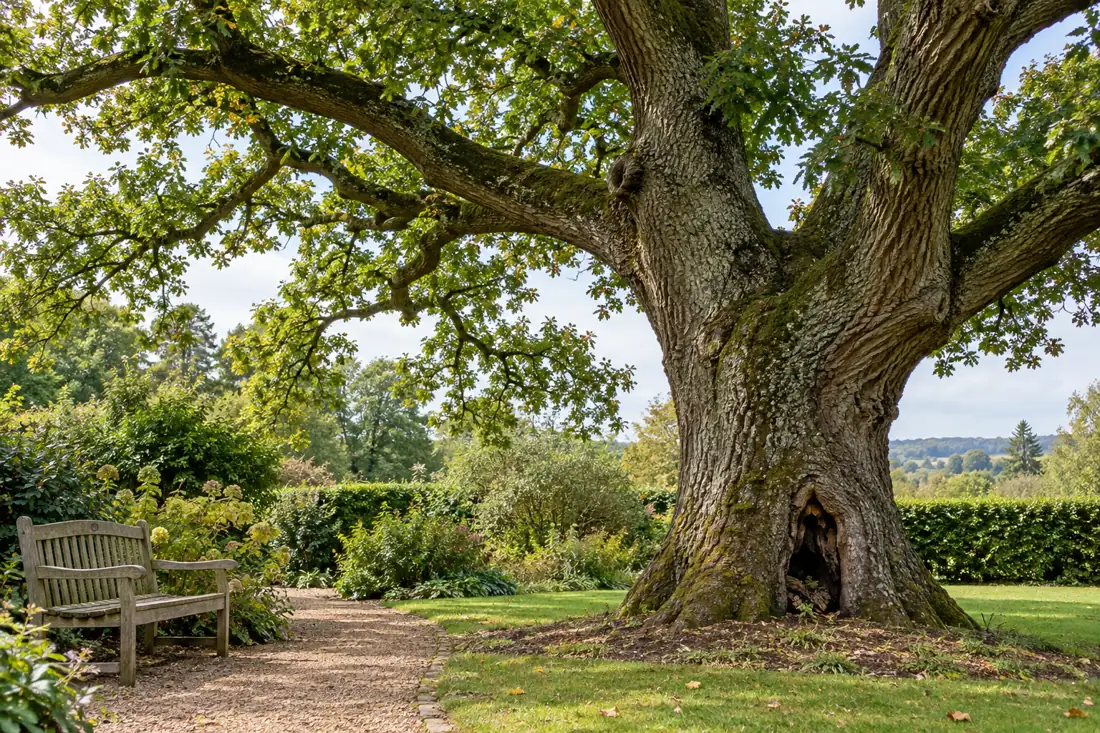
Long lateral limbs carry leverage
As a limb extends, the load on its attachment increases. Weight reduction through proper pruning may help selected limbs, but cuts should preserve enough foliage and natural structure.
Look at the attachment
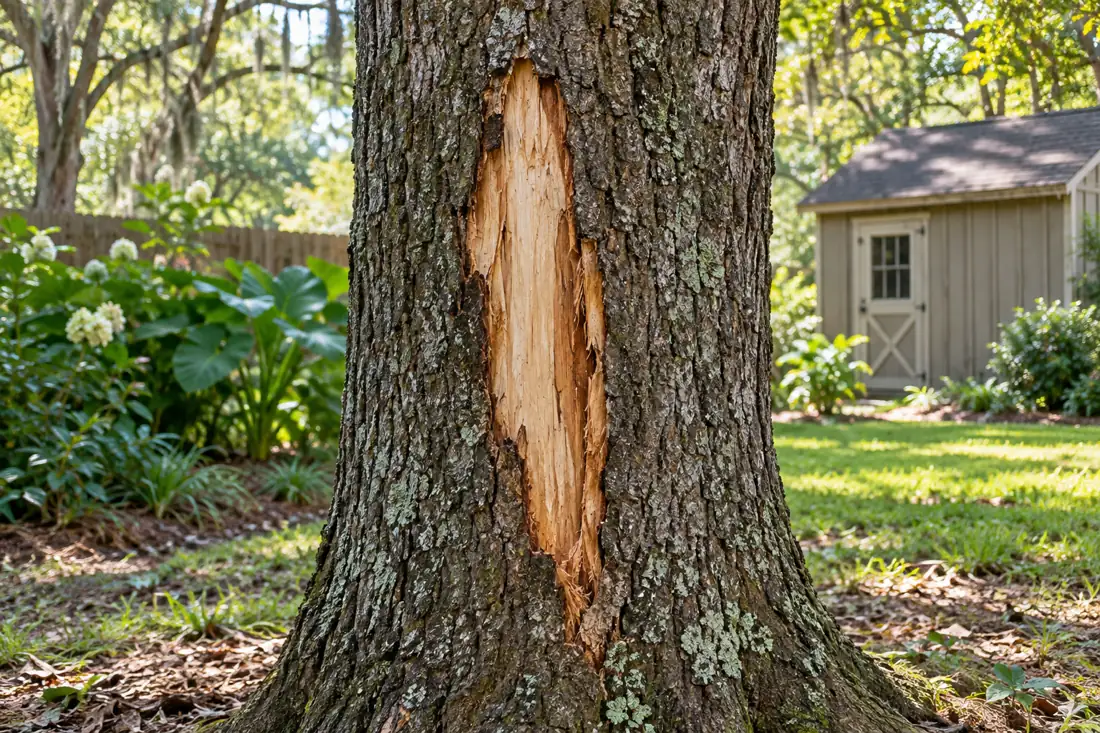
Included bark, cracks, cavities and previous failures provide clues. Mature trees may also be candidates for cabling or support.
Describe the event before naming the cause
A limb may break during a storm, after a visible crack develops or without an owner noticing a warning beforehand. Start with what you observed: which part failed, when it occurred and what conditions you know about. Do not turn an uncertain observation into a firm diagnosis simply because one explanation sounds plausible. The remaining tree and the failed part may require a professional review before the reason for failure or the appropriate response can be described confidently.
Retain safe photographs showing the original position if you have them. If cleanup is needed, tell the provider that understanding the failure is also part of your request. That lets the company explain what assessment is available and what records can be kept. Do not move a suspended limb or approach a loaded branch to improve the evidence.
When a tree or branch contacts a line, keep clear and contact the utility. The immediate work plan and any later analysis should begin from a safe, accurate description.
Ask about the connection as well as the branch size
A large limb draws attention, but its size does not by itself explain its condition or connection to the rest of the tree. Tell the assessor where the opening or failure occurred: at a fork, along the branch, near the trunk or at an old cut. Include a whole-tree view so the feature is not isolated from the surrounding structure. Ask what can be established visually and whether more investigation would usefully inform the decision.
A narrow fork or an unusual bark seam is something to report, not a reason to declare every similar-looking branch defective. The assessor should relate the observation to the actual tree, history and nearby targets. For background on live-oak form and management, LSU AgCenter’s canopy-management guidance discusses the importance of branch structure and professional care. Use it to prepare questions, while leaving the conclusion about your particular limb to an appropriate assessment rather than a comparison with an illustration.

Give the assessor the branch and site history
Share previous limb failures, old pruning, visible support hardware and any records you already have. Explain whether the branch’s position appears to have changed and whether something underneath was recently built or moved. Older photographs can help establish what was present at a particular time, but do not attach a precise date you cannot verify. A note that a picture is from an approximate year is more useful than false certainty about the tree’s history.
Construction and access changes also belong in the conversation. Tell the assessor about excavation, paving, heavy traffic and drainage work near the tree, without assuming they caused the limb failure. If different providers worked on the site, collect the available scope notes so the review is based on actual work rather than recollection alone. This information may influence what else needs assessment. It should not be used to assign responsibility to another party without the appropriate investigation and professional advice.
Separate the fallen piece from the remaining concern
Removing debris on the ground is a different scope from addressing suspended material or evaluating the standing tree. Tell the company which pieces have already fallen and what remains overhead. Keep the affected area clear and avoid assuming that the tree has finished moving because the first branch is down. A broken piece held by another branch or tree should be described as overhead material rather than ordinary brush-pile cleanup.
Ask what the proposed visit covers. It may include removal of hazardous material, review of the remaining limb structure or a separate condition assessment. Confirm the distinction in writing when it matters to the owner or manager. If your only request is hauling already cut wood, say that too; the provider still needs to understand whether access passes beneath unresolved damage.
A clear separation prevents a debris invoice from being misread as confirmation that the remaining oak was fully assessed or that every overhead concern was addressed.
Understand why the surroundings affect the recommendation
Show the occupied spaces, roofs, paths and parking areas beneath and around the branch. A garden corner that nobody uses presents a different management discussion from the same branch over a bedroom or public entrance. Tell the assessor how the area is used now and whether that use is changing. Include neighboring property where relevant. The tree’s structure and the consequences of a potential failure need to be discussed together.

Record what changed around the failed limb
After a limb failure, preserve the location and approximate time of the event in a safe record. Notes about recent wind, previous pruning, an old visible wound and nearby digging may help an assessor understand the history, but none proves a cause by itself. Do not approach unstable remaining limbs to obtain a better image.
The remaining attachment and neighboring canopy can matter more than the portion already on the ground. Explain which paths, rooms or parked vehicles are exposed beneath the tree, and keep those areas controlled until the condition has been appropriately evaluated. A fallen limb photograph is not a whole-tree safety certification.
Ask whether the recommendation concerns one attachment, broader crown management or the tree itself. If selective work is proposed, record the named limbs and objectives. Also decide what happens to fallen wood, chips and access surfaces; those completion items are separate from diagnosing why the limb failed.
The owner may be able to relocate a movable feature while awaiting advice, but should not enter a questionable area to do so. Ask how to manage access until the recommendation is made. Do not assume a painted line, a rope or an arbitrary distance establishes a safe exclusion area for every tree. The response should reflect the actual condition and the relevant professional or emergency guidance. If there is current danger, prioritize that response instead of continuing to collect routine maintenance quotes.
Document limb failure without entering the drop zone
Following a split or fallen limb, first distinguish the detached material from the remaining structure. A broken branch on the ground might be the most visible issue, while another branch, a cracked union or hanging wood above it requires separate evaluation. Photograph the tree from a safe distance, keeping the trunk, main scaffold limbs and affected area in the frame. Do not stand directly under a damaged canopy to obtain a closer image.
Record whether the failure followed high wind, prolonged rainfall, visible decay, recent pruning or a long period of apparently normal conditions. These observations are useful context, not a diagnosis. Different causes can leave similar visible results. A large old limb may carry substantial end weight, but a photo showing its length alone cannot reveal the integrity of wood inside its attachment or the tree's root system.

Identify what the remaining canopy needs reviewed
Tell the assessor which targets remain beneath the canopy: a driveway, roof, patio, parked vehicles or a shared neighbor boundary. The same visible limb condition may require different precautions depending on exposure. Ask whether the scope includes an inspection of adjacent unions or only removal of the piece already down. Any recommended pruning should be described by objective rather than an arbitrary percentage of foliage to remove.
Keep the completed work record distinct from an assurance that future failures are impossible. Note the specific limb addressed, material removed or retained, and whether further inspection or monitoring was recommended. After new cracking, a changed lean or another significant event, request reevaluation rather than treating an old cleanup invoice as a continuing structural assessment. Ongoing use of the yard matters as much as the initial incident.
For a live oak limb concern, share safe wide views of the branch union, the fallen material if any, and structures beneath the remaining canopy. Keep people out of a suspected failure area until a qualified assessment guides the next step.
Compare branch management options without choosing from a photo
A review may lead to a defined pruning objective, a support-system discussion, further assessment or removal planning. Ask what observed issue the proposed action addresses and what limitations remain. The recommendation should explain why the approach fits the current structure, not simply use the label limb reduction or cabling as a complete justification. A method that worked on another tree is not automatically appropriate for the branch at your property.
For a support proposal, ask who is responsible for inspection and future review. For a pruning proposal, ask which portion of the tree is being addressed and what result is intended. For removal, ask what access and property protection will be required. Keep the options specific enough to compare. The goal is not to obtain a promise that a managed limb can never fail; it is to understand the professional recommendation, its practical responsibilities and the remaining uncertainty before accepting the work.
Make cleanup and retained material part of the agreement
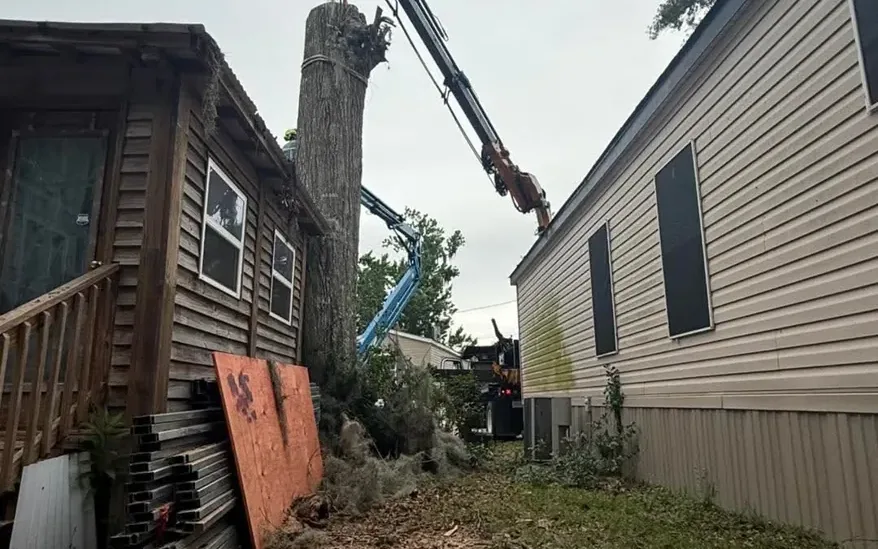
A large oak limb can produce substantial wood even when the standing tree remains. Decide whether logs are hauled or retained and where retained material will be placed. Ask whether additional cutting, loading and disposal are included. If a fence, roof or garden feature was damaged, separate its repair from tree debris handling. A tree-work proposal should identify the finished condition it actually covers rather than quietly absorbing unrelated restoration assumptions.
Describe the route from the fallen limb to the street or loading area. Include gates, soft ground and features that cannot be moved. Do not drag material through another property or across a fragile surface just to make the estimate simpler. The provider should assess handling against the site.
At handover, keep the cleanup record separate from any assessment of the remaining oak. Both records can be useful, but they answer different questions and should not be treated as interchangeable evidence of the tree’s future condition.
Request the review your remaining oak needs
Send the address, a safe whole-tree view, the failed or split area if visible and the spaces below it. Describe the event timing and any known past pruning or support work. Say whether you need immediate damaged-limb handling, cleanup, a condition-focused assessment or a combination. Ask which services are included in the visit and whether a written report requires a separate arrangement.
See the split-oak preservation guide for the next decision and cabling versus removal when support is being considered. A fallen limb does not supply a complete diagnosis of the standing oak, and a living canopy does not settle every structural question. The useful next step connects the actual observation, the surrounding property and an appropriate professional review, followed by a scope that clearly describes the work and any follow-up.
What Causes Live Oak Limbs to Split? questions
Does a large limb split only because it is heavy?
Branch size alone does not establish the cause. Structure, condition, history and the actual event require appropriate review.
Should I call every narrow fork dangerous?
No. Report the feature and ask how it relates to this tree rather than diagnosing every similar shape from appearance.
What if a limb is caught in another tree?
Keep clear and describe it as suspended material. Do not treat it as an ordinary ground-debris pile.
Can a cleanup invoice prove the remaining tree is safe?
No. Debris handling and assessment of the standing tree are different services and records.
Should I retain older photographs?
Yes, when safely available. Preserve the original context and be honest about known or approximate dates.
Does the area below the branch matter?
Yes. Explain roofs, entrances, paths, vehicles and how people use the affected space.
Will a cable always solve the concern?
No. Suitability, limitations and inspection responsibilities require a tree-specific recommendation.
Can pruning be chosen from one close photograph?
A close photo helps describe the concern but does not establish the complete structure or site conditions.
Should construction history be disclosed?
Yes. Share actual excavation, paving, drainage and traffic history without assuming it proves the cause of failure.
Is cutting retained firewood included in hauling?
Not automatically. Confirm extra processing, storage location, loading and disposal in the agreement.
What if a line is involved in the failure?
Keep clear and contact the utility. Do not move branches or enter the area to document the connection.
What should the first request explain?
State whether you need urgent limb handling, ground cleanup, standing-tree assessment or several of those services.
Let’s plan your tree work.
Send the property address, safe tree photos and the result you need. Include access restrictions and the person who can approve the work.