Record lightning damage without entering the affected canopy
A lightning strike can leave a visible bark seam, scorched foliage or broken limbs, while some injuries develop over subsequent weeks. From a safe distance, record the date of the suspected strike and take consistent photographs of the trunk and crown for comparison. Do not touch hanging branches, climb the tree or assume that only the visibly damaged side was affected.
An assessor may need to consider the wound, remaining unions, canopy condition and the exposure beneath the tree. Avoid making a removal decision from one photograph or promising recovery based solely on green leaves shortly after the event.
Common lightning-damage signs
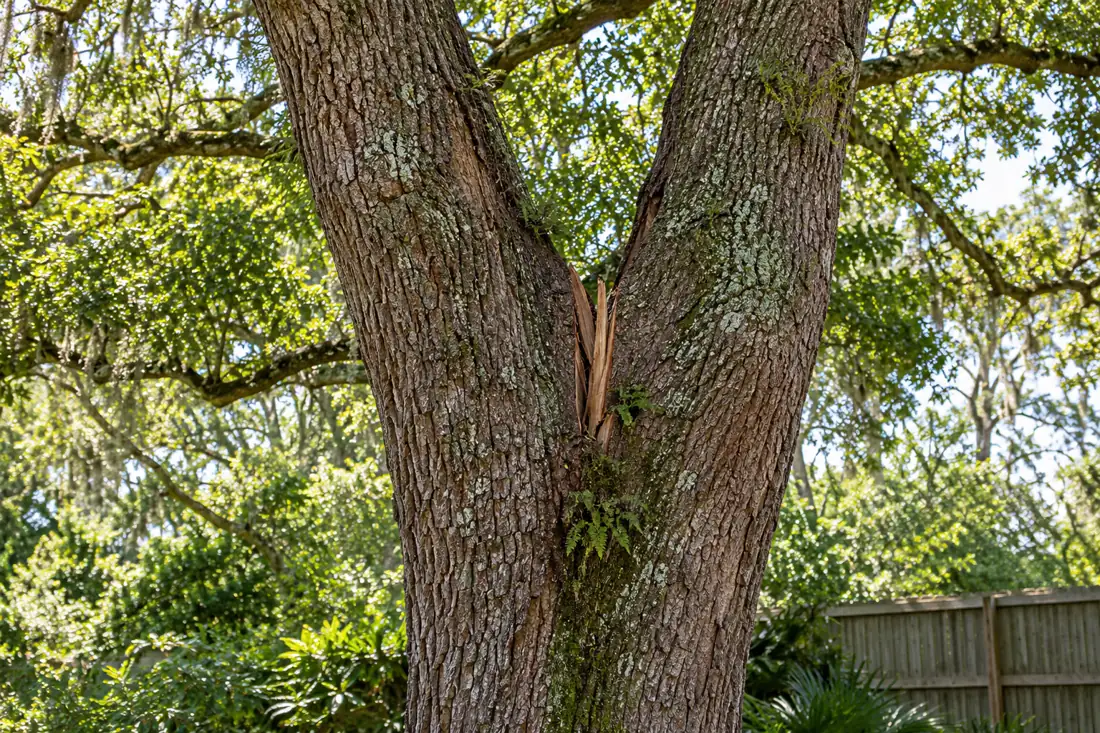
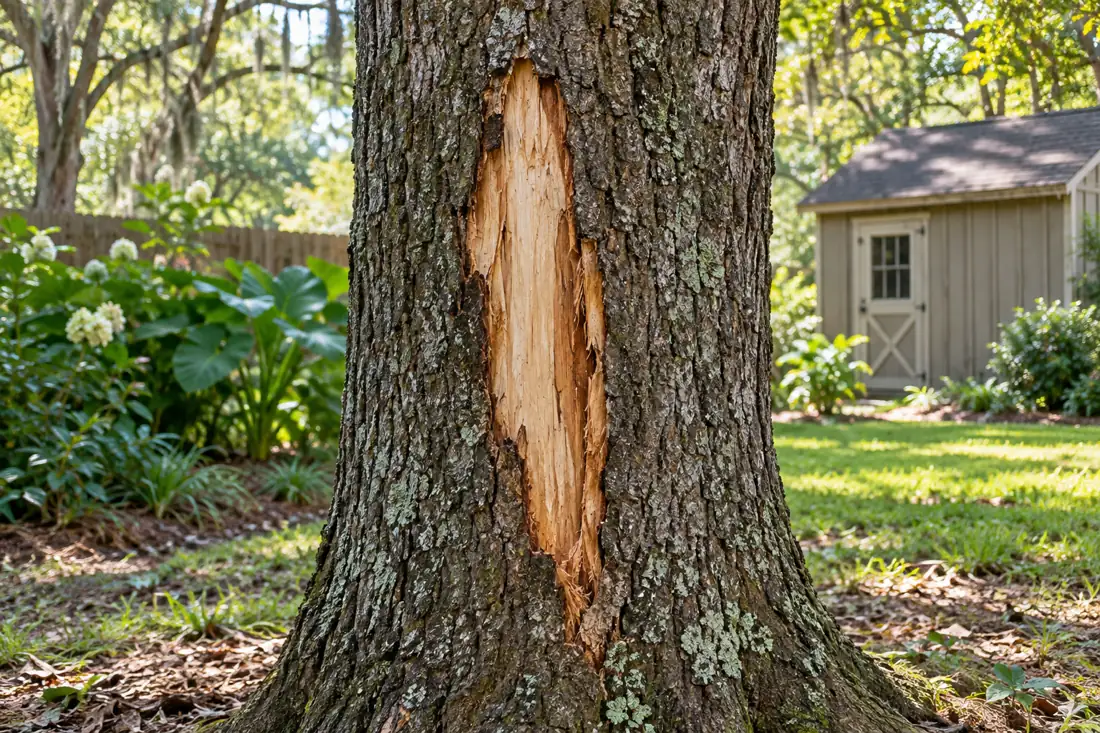
Long vertical wounds can appear where energy traveled through the trunk.
Immediate branch damage can be obvious while other effects take longer to show.
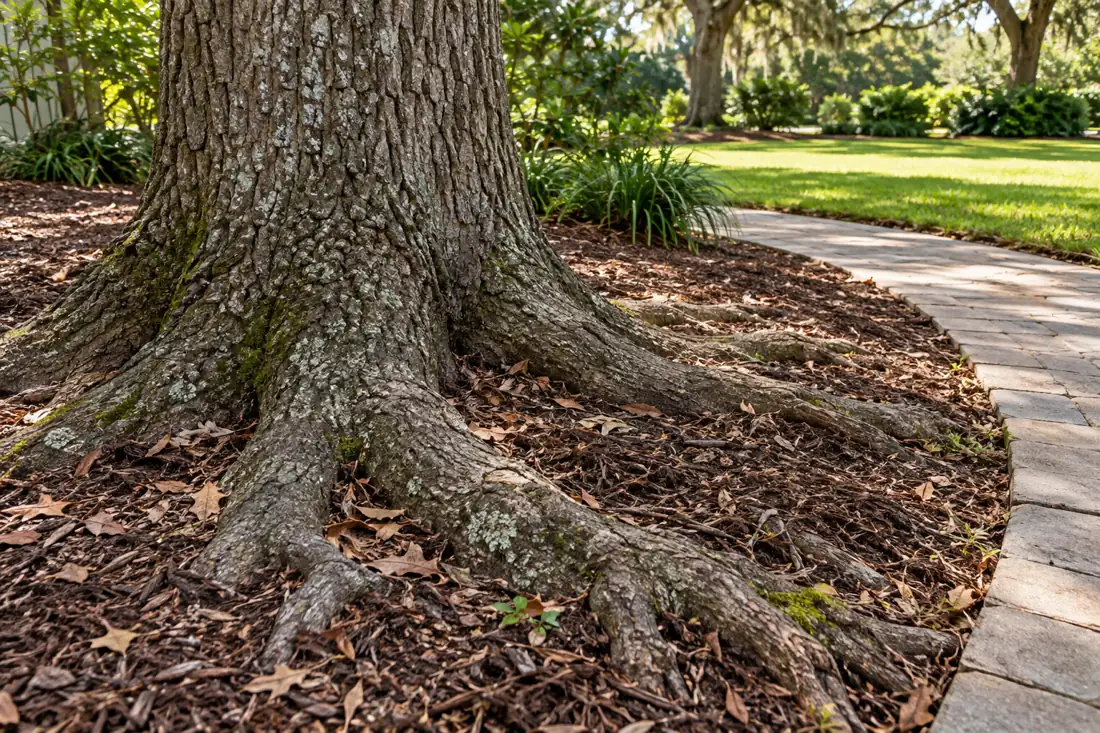
Root or cambium damage may lead to thinning canopy, dieback or decay over time.
Do not make the decision from bark damage alone
A dramatic wound may not mean the tree is beyond recovery, while a tree with less visible damage may have important internal or root injury. Structural stability, root condition, species, crown damage and targets all matter.
What happens after the strike?
Broken or hazardous limbs may need prompt pruning. The tree should then be monitored for canopy response, wound progression and secondary decline. Valuable trees may also be candidates for a long-term health and risk-management plan.
Related resources
Lightning Protection

Tree Health
Risk Assessment
Establish what is known about the strike
Thunder, a flash near the property and a damaged tree can suggest lightning injury, but a homeowner rarely sees every detail of the event. Begin with the time and weather, the tree’s location and the changes first noticed afterward. A narrow vertical bark wound, scattered bark, a split limb or dead foliage may be visible. Sometimes the most important damage is not obvious from the ground. Do not assume an undamaged-looking crown means nothing happened, or that a long wound guarantees the tree will die.
The US Forest Service’s discussion of lightning and forest health recognizes that strikes can injure or weaken individual trees. Injury severity varies with the event, tree and location; there is no dependable shortcut from the length of a mark to the future of the whole tree. Keep the observed evidence distinct from a definite diagnosis unless someone witnessed the impact or a qualified assessment supports it. Note whether several neighboring trees show changes, since a single incident can affect more than one plant.
Track delayed injury after a suspected strike
A lightning event may leave bark loss, a vertical seam, foliage scorch or no immediately obvious external sign. Subsequent dieback or structural problems can become clearer with time. Keep a dated record of what was seen immediately afterward and what changed weeks later. A photo cannot confirm the path electricity took through the wood or guarantee the absence of internal injury.
If nearby wires are damaged, utility clearance comes first. Routine tree-health questions should not be confused with urgent electric-service hazards; explain both the visible defect and who controls access.
Stay clear of immediate electrical and structural hazards
After a thunderstorm, the first concern is the safety of people near the tree, not whether leaves will recover. Keep away from fallen electrical lines, damaged service attachments, suspended wood and freshly split branches. Do not touch a tree that could be in contact with energized equipment. Contact the utility or emergency service responsible for the hazard. A storm can also loosen major limbs or cause a trunk to split, creating a danger that remains after the weather has moved away.
Do not climb the tree, strike a suspect limb with a pole or pull bark from the wound to expose more tissue. Electrical conditions are a separate matter from tree biology, and the first responder may need to secure a line before any tree crew can approach.
Photograph only from safe public or private areas that you are authorized to use. A clear description such as ‘long fresh bark strip on the side facing the driveway’ is more helpful than a close-up obtained by standing beneath broken wood.

What the trunk wound can reveal
Lightning can cause bark to split or peel, leave a narrow furrow or produce more extensive wood damage. The apparent pattern depends on conditions and should not be presented as a precise map of where energy traveled. A fresh strip may expose lighter wood, while old injuries can look similar without recent photographs. An evaluator needs to inspect the continuity of the trunk, the extent of any split and the condition of supporting branches. The crown and root zone are part of the same assessment.
A severe split through a load-bearing section may create an immediate structural concern even if green leaves remain. Conversely, a visible bark injury without major cracking or instability does not automatically require removal. The ISA tree-risk resource describes why assessment considers defects and nearby targets together. Record whether the wound is near a large branch union, at the base or on a smaller section. Those positions influence both the investigation and possible work plan.
Understand delayed canopy changes
Some leaves and branches may remain green for a period following injury, then discolor or decline later. This possibility is one reason that an initial visual inspection and a follow-up plan can both be appropriate, particularly when the tree is prominent and no urgent defect has been confirmed. Changes in foliage alone may also reflect drought, root conditions, pests or another event. Do not infer a lightning cause for every later symptom simply because there was a thunderstorm in the same season.
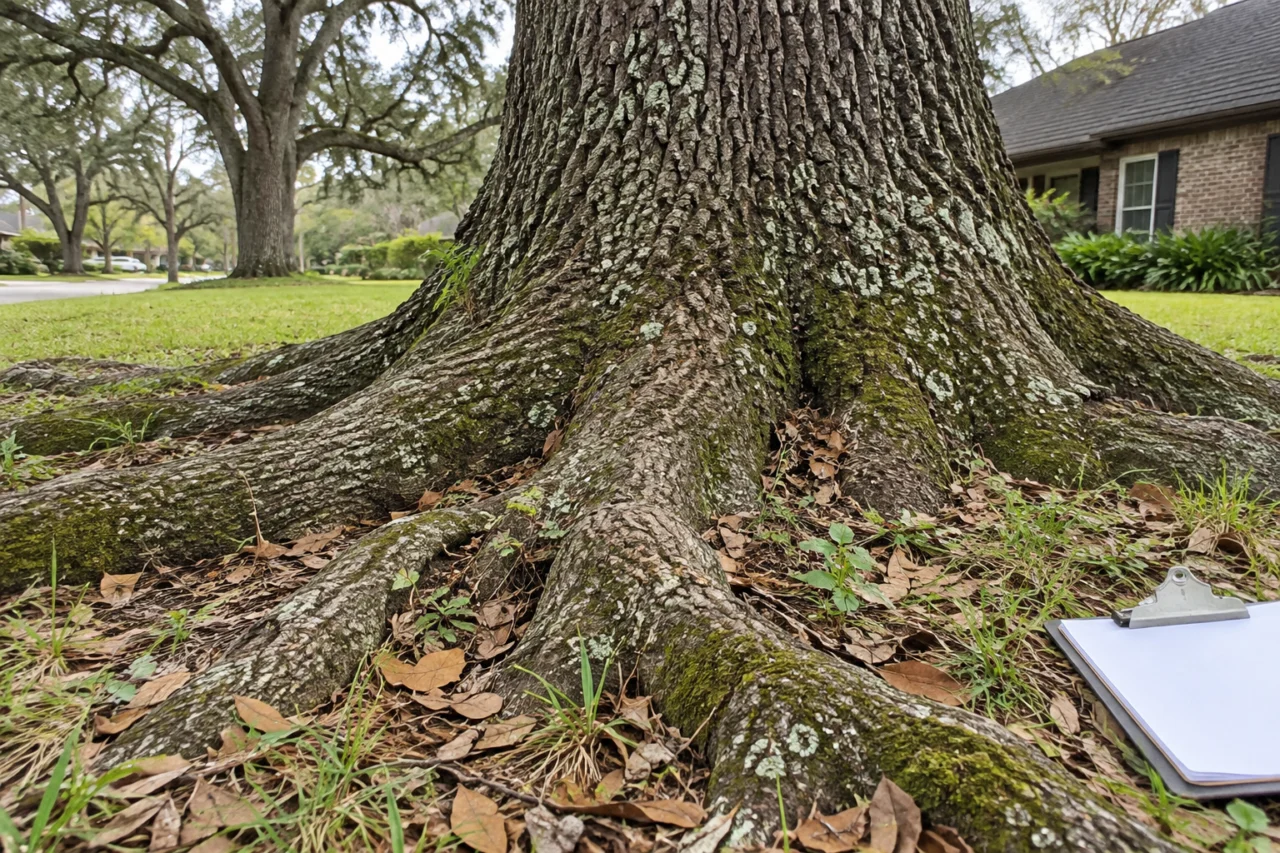
Monitoring must remain safe and focused. Take dated photographs from the same ground-level vantage points, showing the crown, major stems and wounded area without entering a hazard zone. Note newly dead branch tips, increasing bark separation or a fresh crack, and report significant changes promptly. If the tree hangs over a home or regularly used entrance, the consequences of waiting without a plan may be unacceptable. A professional should explain the level of observation and reassessment appropriate to the actual condition.
What lightning can leave behind in a mature tree
A lightning strike may create a long strip of missing bark, cracks in the trunk, or damage that is less obvious from the sidewalk. Those clues do not establish how much living tissue is affected or whether a tree must be removed. A useful first step is to note the date of the storm, photograph the affected trunk from a safe distance, and compare the canopy with any pictures taken before the event.
Treat nearby conductors and broken overhead lines as a separate immediate hazard. Do not handle a hanging limb, climb the tree, probe a damaged cavity, or assume that a branch is stable because it has not fallen. Keep people and vehicles away from the possible fall area, and contact the utility when electrical infrastructure may be involved. A professional tree evaluation can begin once the site is safe.

When observation becomes an urgent site decision
Trees sometimes show delayed symptoms over subsequent growing periods. Leaf discoloration, scattered canopy dieback, or bark changes can have more than one cause, so the event history helps interpret them. Photograph consistent landmarks over time rather than relying on memory. A single green branch does not prove that all major attachments are sound, just as an isolated wound does not prove an entire tree is dead.
For an estimate, identify which tree was affected, whether the scar faces a building or public walkway, and whether access is through a gate, driveway, or neighboring property. Request an explanation of the particular pruning, monitoring, inspection, or removal scope being considered. The goal is a documented decision grounded in observable condition and the surroundings, not a blanket promise of storm survival.
Discuss secondary stress without guessing treatments
Lightning-damaged tissue may be vulnerable to later biological problems, but a bark wound is not sufficient evidence for a particular insect or disease treatment. The US Forest Service has documented links between lightning injury and later pest or decay issues in some tree types; those findings do not establish that your oak, pine or cypress needs one product. Ask what signs an evaluator can verify, whether monitoring is appropriate and what evidence would justify treatment. Unnecessary drilling, scraping or coating may create additional stress.
A landscape contractor, tree-care provider and diagnostic specialist may have different roles. If you want to preserve a significant tree, seek an assessment that addresses species, observed injury, overall vigor and structural safety, not a generic ‘spray after lightning’ package. If the tree will be monitored, request a review interval and a list of specific changes to report. That is more useful than assuming the tree has either been cured or condemned based on its first post-storm appearance.
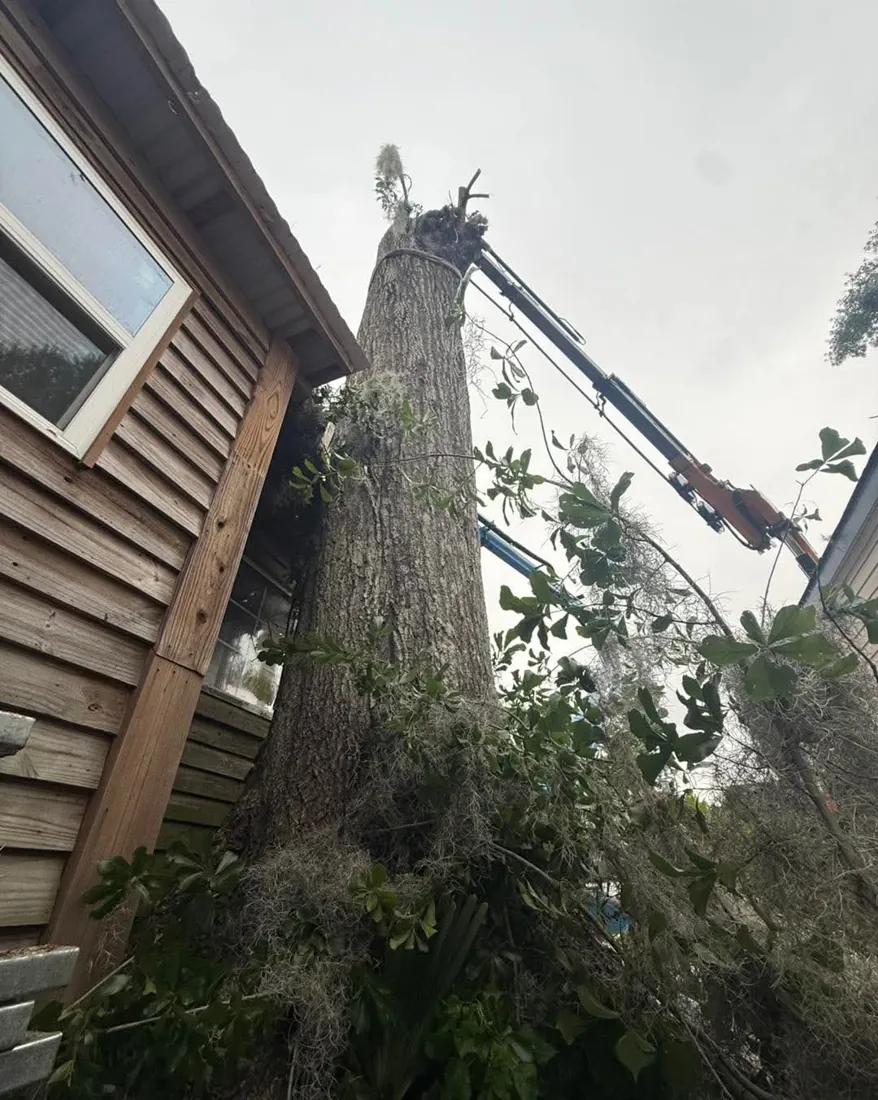
When pruning or removal becomes appropriate
Where a strike has left a dead hanging branch, cracked union or unstable stem, targeted work may be necessary irrespective of the tree’s ultimate survival prospects. The scope could involve removing affected limbs, reducing exposure beneath them or removing an entire tree after assessment. A professional should explain whether proposed cuts are meant to address an identified hazard or merely improve appearance. Removing living branches from an already stressed tree without a clear objective can make recovery harder to evaluate.
If a whole-tree removal is recommended, ask for the observable reasons and how the crew plans to handle the damaged wood. Split or compromised material can behave differently under cutting and lifting loads. Roofs, wires, fences and the available equipment route should be reflected in the method and quote. A tree near a structure might require controlled piece-by-piece work rather than a simple felling operation. The provider should separate urgent stabilization, complete removal, hauling and stump treatment if those are distinct stages.
Separate post-strike evidence from the decision to remove
A suspected lightning strike calls for a record of what changed, not an immediate assumption that every marked tree must be removed. Photograph the trunk from several angles, the crown from a safe distance, and the ground around the base. Note when the event was observed and whether there are newly hanging branches, bark displacement, a split, or sudden leaf wilt. Compare with earlier photographs if available; a weather event alone does not establish every defect’s cause.
Keep people away from visibly unstable branches and do not touch a tree or limb that may contact utility lines. The question for an on-site assessment is whether the tree presents an immediate exposure, what additional inspection is warranted, and whether any practical mitigation exists. A scar may be obvious while internal injury is not. Conversely, peeling bark is not proof that the entire trunk has lost its support.
After the initial decision, retain a dated observation plan rather than treating one inspection as a lifetime clearance. Record new crown dieback, branch shedding, pest activity, or changes around the root zone for follow-up with a qualified professional. If removal is recommended, ask which observed conditions drive that recommendation and how access, debris and stump work will be handled separately.

Collect evidence for the next conversation
Send the property address, tree location, time of the storm if known and the first images taken afterward. Label photographs by date and show the entire tree, the wound and surrounding targets when safe to do so. Mention any fresh cracks, large broken limbs, unusual lean or changes in the soil. If a utility was called, state whether it has actually cleared the affected area rather than assuming it did. Never ask a crew to begin before the electrical status is understood.
For a significant residential or commercial tree, preserving a clean record can help future reassessment and work planning. Include earlier photos if available and identify which observations were made personally versus supplied by someone else. The decision about whether to monitor, prune or remove should follow the current assessment and risks. A website cannot determine how much living wood remains or predict the outcome of an unobserved strike from one photograph.
Build the work scope around the actual findings
A useful written scope states whether the contractor is evaluating the tree, removing a particular broken limb, managing access, or removing the entire tree. Ask whether nearby planting, lawn and hardscape need protection and what will happen to wood and debris. If the customer is coordinating with roofers or an insurer, keep their responsibilities separate. An invoice for tree work documents that work; it is not a scientific certification that the tree was struck by lightning or that an insurance policy will pay.
Tree Huggers can discuss tree risk assessment, tree health care and dangerous tree removal in relation to the current conditions. If there is a live electrical hazard, contact the utility first. If the tree appears stable but injured, report exactly what has changed and request an appropriate evaluation. The safest decision responds to confirmed defects and real property exposure while leaving room for preservation when the evidence supports it.
Diagnose suspected strike damage before deciding the work
A lightning-damaged tree can present immediate hazards, but a dark mark or damaged strip of bark alone does not establish that the entire tree must be removed. Keep people away from unstable limbs, observe the tree from a safe position and record when the event occurred. A qualified assessment considers crown condition, trunk injury, root stability and nearby targets before selecting monitoring, care or removal.
This page addresses suspected damage and what evidence helps an assessment. It differs from preventive lightning protection, which concerns a system planned before a strike. When the situation involves compromised wood directly beside a building, consult the lightning-damage removal planning guide for access, roof protection and safe handling questions.
Questions about Lightning-Damaged Tree
Will a lightning-struck tree always die?
No. Outcomes vary with injury severity, species and conditions. A strike may cause minor damage or severe failure. A visible bark scar alone does not predict survival.
What marks may appear after lightning?
Possible signs include a vertical bark furrow, split wood, broken branches and later crown decline. These signs are not exclusive to lightning and should be assessed in context.
Can a tree look green after serious lightning injury?
Yes. Foliage may remain green for a period. Crown condition alone does not establish that the stem and roots are sound or that later decline will not occur.
Should I touch the trunk after lightning?
Stay away from damaged trees during active weather and where electrical lines or unstable material may be involved. Do not touch conductors, climb, pry bark or enter an unsafe drop zone.
Should the bark wound be painted or filled?
Do not apply a treatment as an assumed cure. Ask a qualified professional what injury is present, whether intervention is useful and what monitoring is warranted.
Can lightning injury make branches hazardous?
It can. Broken limbs, fresh splits or weakened connections require careful professional attention. Do not shake or saw suspect limbs from underneath.
Could insects or fungi appear later?
Some injured trees develop secondary biological problems. Their presence and management depend on the species and observations; lightning alone does not justify a particular pesticide or product.
How soon should a damaged tree be inspected?
Prioritize immediate hazards such as hanging wood, fresh splits, unstable lean or nearby electrical issues. Other cases need a timely evaluation and a follow-up plan suited to the condition.
What if a strike may have involved a power line?
Contact the responsible utility and keep clear until it confirms the area is safe. A tree crew cannot assume a conductor is de-energized based on appearance.
Can selective pruning preserve a damaged tree?
Sometimes targeted work addresses specific hazards while the tree is monitored. The recommendation should consider remaining structure, tree health and targets, not simply make the crown look even.
Which photographs help document a suspected strike?
Keep the original dated photos of the full tree, wound and surroundings from safe locations. Note when the storm occurred and when changes were first seen; do not stage or recreate the event.
How should removal be scoped after a strike?
Request a plan for safely handling damaged wood, access, utilities, hauling, stump work and any building protection. State whether the work is urgent stabilization or complete removal.
Get a scope for your property
For a lightning-related inquiry, send the approximate storm date, a safe photograph of the trunk wound, a full-tree view, and any new canopy changes. Explain whether branches overhang a roof, path, or electrical service. A written assessment can separate immediate hazards from follow-up observation without guessing at hidden damage.