Good reasons to prune before storm season
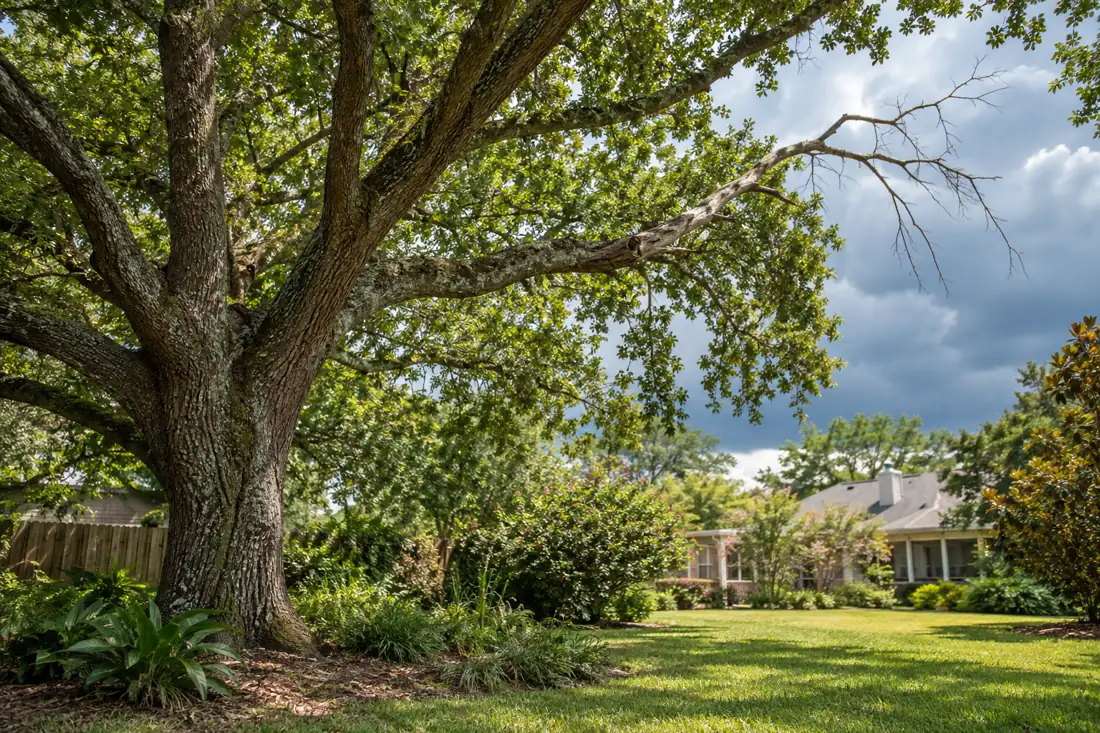
Deadwood over occupied areas has no recovery benefit and can be an obvious failure hazard.
How to request focused storm-season pruning
State the precise interference: dead limbs above a path, branches rubbing a roof, a compromised union, or clearance for deliveries. Show the whole canopy as well as the target. A request to cut everything back does not define a sound pruning objective.
Ask which live branches will remain and whether the proposed method avoids topping and excessive foliage loss. Some trees need assessment or monitoring instead of repeated trimming. Utility-line work requires appropriate coordination, not an ordinary clearance assumption.
Record the desired outcome, access restrictions and cleanup responsibilities before accepting an estimate. Identify the trees with numbers where several stand together, and save a photograph of the completed work for comparison after the next storm.
Site planning detail: Pruning immediately before hurricane season should target a defined defect or clearance need, not the mistaken idea that removing a huge percentage of the crown always reduces danger. Inspect from the ground for dead limbs, poorly attached branches and signs of sudden change, then request a professional assessment where targets are exposed. Ask why each proposed cut is necessary and how much live canopy it would remove.
Topping and indiscriminate interior stripping can stimulate weak regrowth, expose limbs to new loads and reduce tree health. Existing structural problems may call for further evaluation, cabling consideration or removal rather than cosmetic thinning. Schedule work with enough lead time for safe access and ordinary weather; avoid climbing, chainsaws and utility hazards as a homeowner project. Document which trees and objectives are authorized, and review the resulting crown from the ground before the crew leaves.
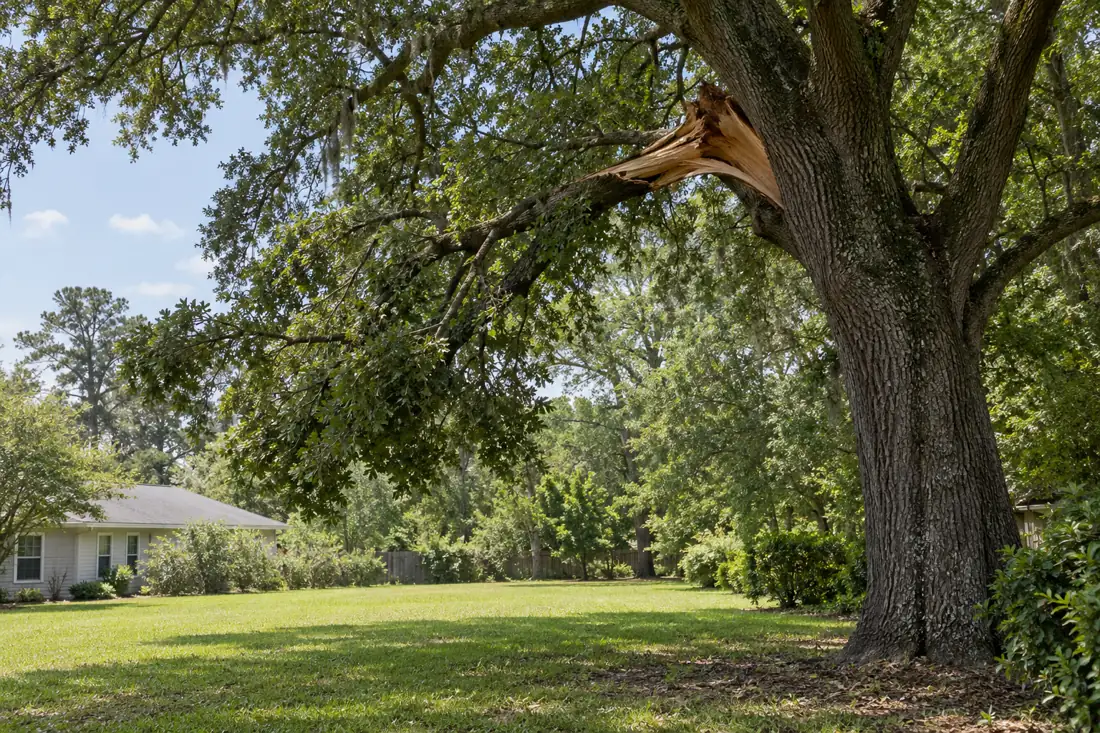
Storms from previous seasons may leave partially failed branches that should be addressed.
Selective reduction may help manage certain long heavy limbs without stripping the canopy.
Why topping is not hurricane preparation
Removing large portions of the crown or making indiscriminate heading cuts can stress the tree and encourage weakly attached regrowth. The objective should be targeted risk reduction, not simply making the tree look smaller.
Some trees need more than pruning
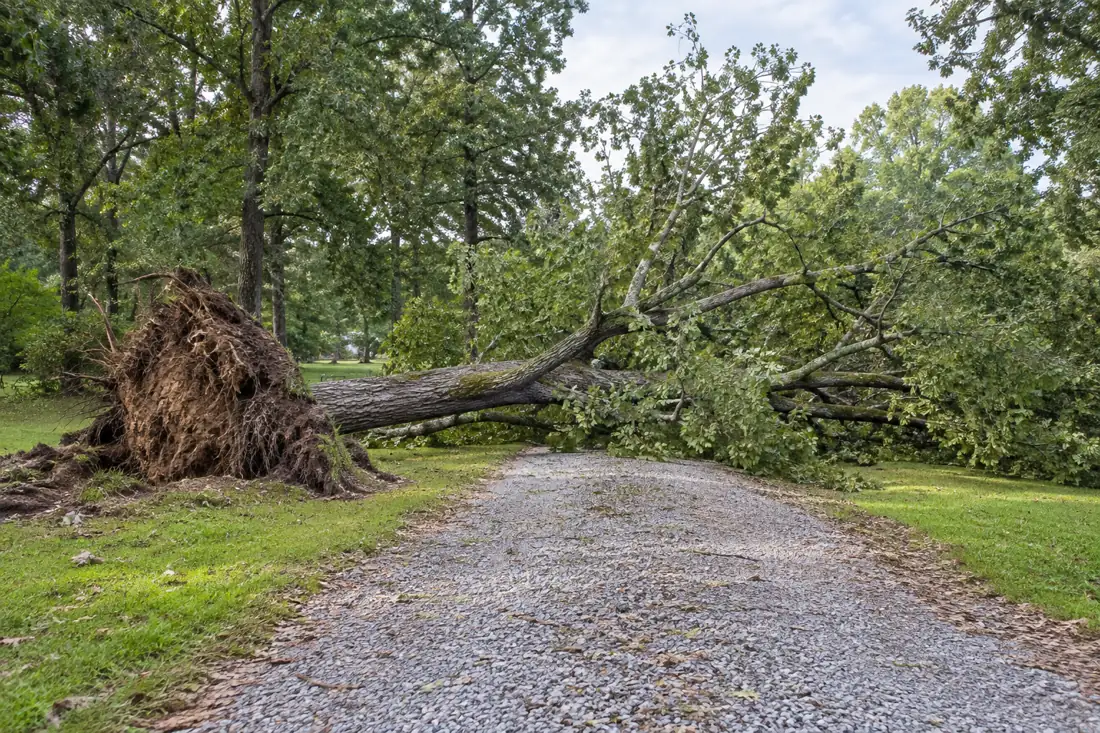
If a tree has major trunk cracks, root movement, severe decay or a dangerous lean, pruning alone may not address the actual risk. Support or removal may need to be considered.
Related resources
Tree Trimming
Tree Pruning
Storm Resource Center
The answer is often yes, but not for every tree
Pre-hurricane trimming can reduce a known hazard when it removes deadwood, resolves dangerous branch contact or addresses a specific weak limb. That does not mean every healthy tree should receive an annual heavy cut. A mature crown is part of a living system: foliage produces energy, branch structure distributes loads and every cut creates a wound the tree must manage. The decision should begin with observable conditions and nearby targets, not with the assumption that a smaller-looking tree will always survive high winds better.
Ask what the proposed pruning is intended to accomplish. Is the goal to clear a roof, remove a dead limb over a bedroom, reduce an overextended branch or correct damage from a previous storm? Each has a different approach. A professional should consider species, age, vigor, past pruning, branch attachment and the location of structures. Some trees need very little work before hurricane season; others need an inspection rather than immediate cutting. The preseason inspection guide provides a starting point for that conversation.
Remove deadwood that threatens occupied areas
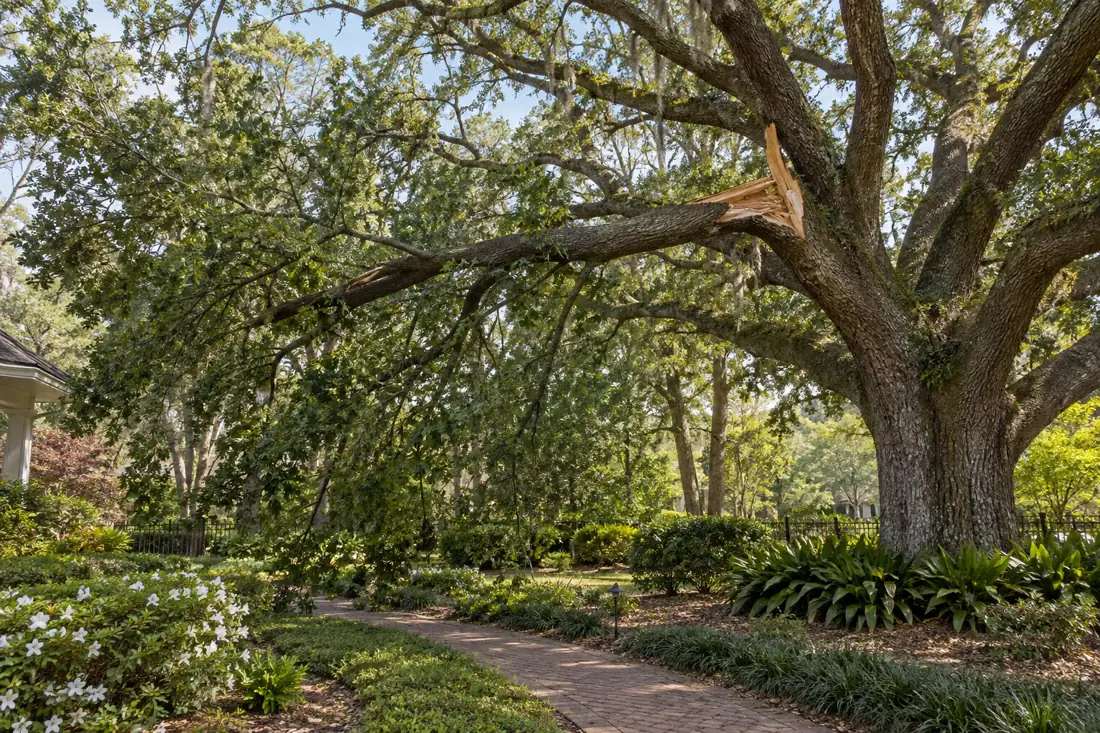
Dead branches can break under ordinary conditions and may become more likely to fall in strong wind. When a substantial dead limb is hanging over a driveway, roof, parking area or walkway, its removal may reduce an identifiable exposure. Size, height, access and the condition of surrounding branches matter.
A small dead twig is not the same work as a large branch suspended above a house. Ask the contractor to point out the specific limb and explain how it will be removed without damaging the tree or the property.
Not every dead branch in a tree deserves the same urgency. In a low-use habitat area, deadwood may have ecological value, but it should not be allowed to threaten people or property. Some decay and hollow sections occur within living trees, so deadwood pruning alone may not address a structural defect in the trunk.
A skilled inspection should distinguish crown maintenance from a risk assessment. Schedule necessary large-limb removal early enough that the crew can use controlled rigging, equipment and cleanup rather than rushing during a storm watch.

Pruning ahead of storms needs a defined objective
Reducing a specific broken limb, correcting poor clearance and managing a weak attachment are different objectives. Ask which branches are proposed for removal or reduction, why those cuts address an identified concern and what canopy structure will remain afterward. Large topping cuts do not become beneficial simply because they are made before hurricane season.
Avoid timing major elective work for the last days before a storm. Weather, site access and safe handling conditions may make a hurried operation more hazardous than a planned inspection and appropriate future work.
Prune for identified defects, not a hurricane-shaped silhouette
Healthy crowns need enough foliage to function, and severe topping or indiscriminate stripping is not a storm-preparation shortcut. The most defensible requests identify deadwood, damaged branches, weak unions or actual structural conflicts for evaluation. Explain where the risk is located and which people or structures are exposed, then let a qualified professional determine appropriate reductions and the limits of the work.
No pruning method guarantees a tree will remain standing in extreme weather. If a serious defect is discovered near occupied areas, ask about immediate protective steps and inspection priorities instead of treating topping as an emergency fix.
Protect roof clearance without stripping the canopy
Branches touching shingles, gutters or siding can cause abrasion and transfer movement into the building. A proper clearance plan considers where the branch will grow, its structure and how much live tissue must be removed. The answer is not always to cut the entire limb back to the trunk.
A selective reduction to a suitable lateral branch may preserve more of the crown while achieving the needed space. A qualified professional should determine the cut location and whether the branch is structurally sound enough to retain.
A tree close to a house may also require a broader evaluation of trunk and root stability. Roof clearance does not remove the risk of a whole-tree failure, and a tree can remain valuable even with limbs spreading over part of the home. Ask what clearance is actually achievable without unbalancing or severely injuring the canopy. If multiple large cuts are proposed, discuss whether the objective is realistic. The roof overhang guide explains how to evaluate exposure and work methods before modifying major limbs.
Avoid topping and other harmful shortcuts
Topping removes major crown sections without regard for natural branch structure. It can trigger fast-growing shoots attached to the edges of large wounds and leave the tree with fewer leaves and significant decay sites. These shoots can later become substantial branches with weaker attachments than the original limbs. A topped tree may appear shorter immediately after the work, but appearance is not proof of lower long-term risk. Ask for a pruning approach based on recognized arboricultural practice instead of an arbitrary height limit.
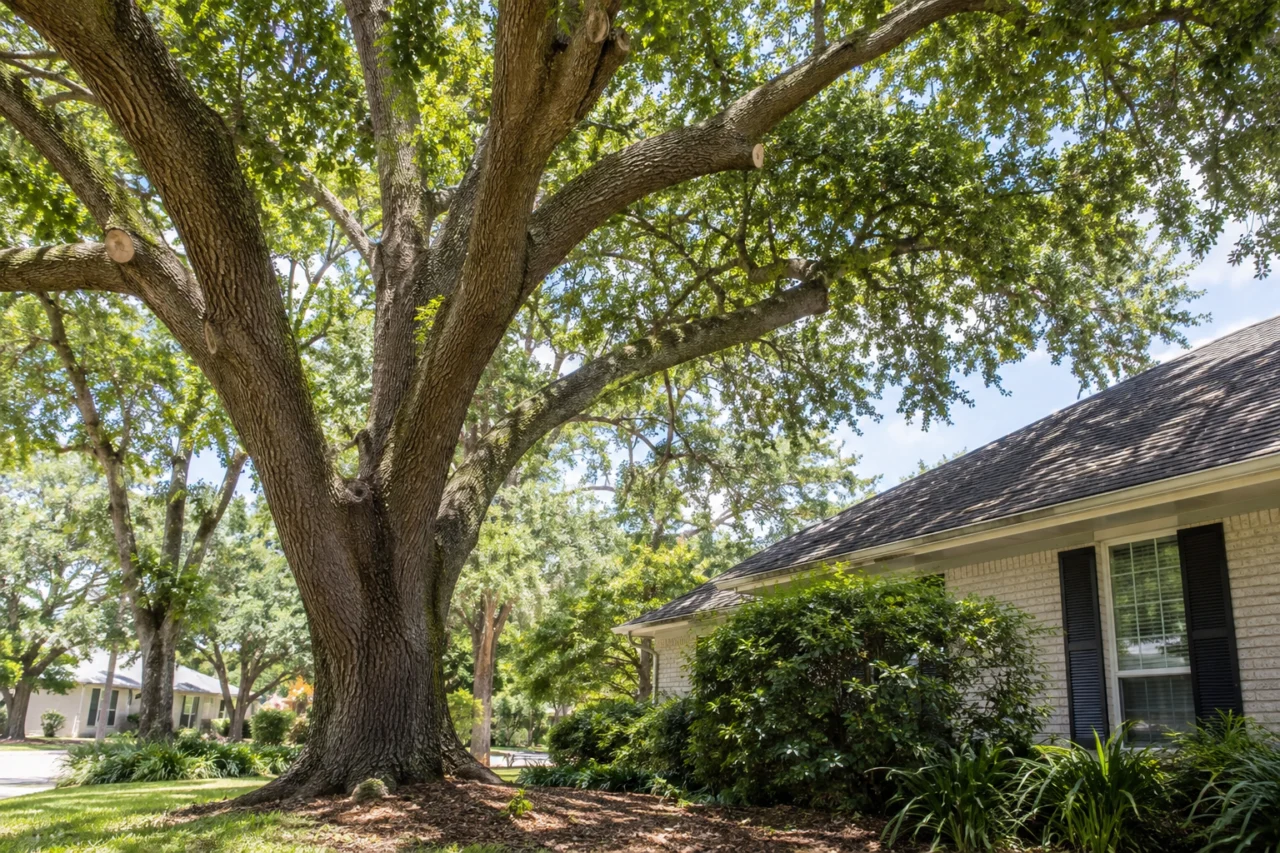
Lion-tailing is another concern. Removing most inner branches and foliage while leaving weight concentrated at branch ends can change how limbs move in wind and deprive interior portions of normal foliage. Excessive interior thinning is not a reliable hurricane-proofing strategy. Similarly, stripping one side of a tree to ‘balance it’ by eye can create new structural and growth problems. Appropriate cuts should be limited, purposeful and sensitive to species and branch attachment. The contractor should be able to explain why each significant removal is needed.
Selective pruning is different from hurricane topping
An understandable question is whether removing branches before storm season makes a tree safer. The answer depends on which branches are weak, dead, broken, or in conflict with a nearby target. A useful pruning plan identifies these individual branches and why each cut matters. Removing large amounts of healthy foliage solely because hurricane season is approaching may create stress without solving the underlying structural concern.
Topping a tree or stripping interior foliage is not equivalent to thoughtful crown management. Large indiscriminate cuts can leave wounds, stimulate poorly attached sprouts, and shift future maintenance needs. Even selective pruning cannot make a tree immune to exceptional winds. Review the species, condition, branch sizes, and limitations before deciding whether a proposed reduction is appropriate.
Keep clearance and tree health in the same conversation
For limbs near a roof, describe the actual contact or expected clearance rather than asking to trim everything over the building. Identify gutters, service drops and neighboring ownership before proposing a rigging or disposal method. Utility clearances may require coordination with the responsible provider.
A useful written scope records the pruning objective, limits and cleanup expectations. It should not promise storm-proof trees; pruning can address particular conditions but cannot eliminate every failure risk.

Match the cut to a documented reason
Pay special attention to old cuts and multiple stems with tight unions. They may deserve more detailed evaluation than a simple request to trim the branches nearest a roof. A branch positioned above a road or outdoor seating area also changes the consequence of failure. When the trunk, root plate, or major attachment is compromised, pruning may not address the primary risk.
Ask for the written scope to show which sections of the canopy are included, what clearance is intended, and how debris will leave the property. Clarify whether utility coordination or neighboring-property access is required. The finished result should preserve suitable living structure while addressing the identified concern, not satisfy an arbitrary percentage of crown removal.
Time the work for safe conditions and tree recovery
Routine trimming belongs in a reasonable planning window, not the final hours before a hurricane. Weather warnings can bring strong gusts, lightning, saturated soil and little time for proper cleanup. Those conditions increase risks for climbers, bucket operators and ground crews. If a storm is already approaching, follow local emergency instructions instead of trying to reshape a large tree at the last moment. A contractor may appropriately decline work when safe access and controlled handling are no longer possible.
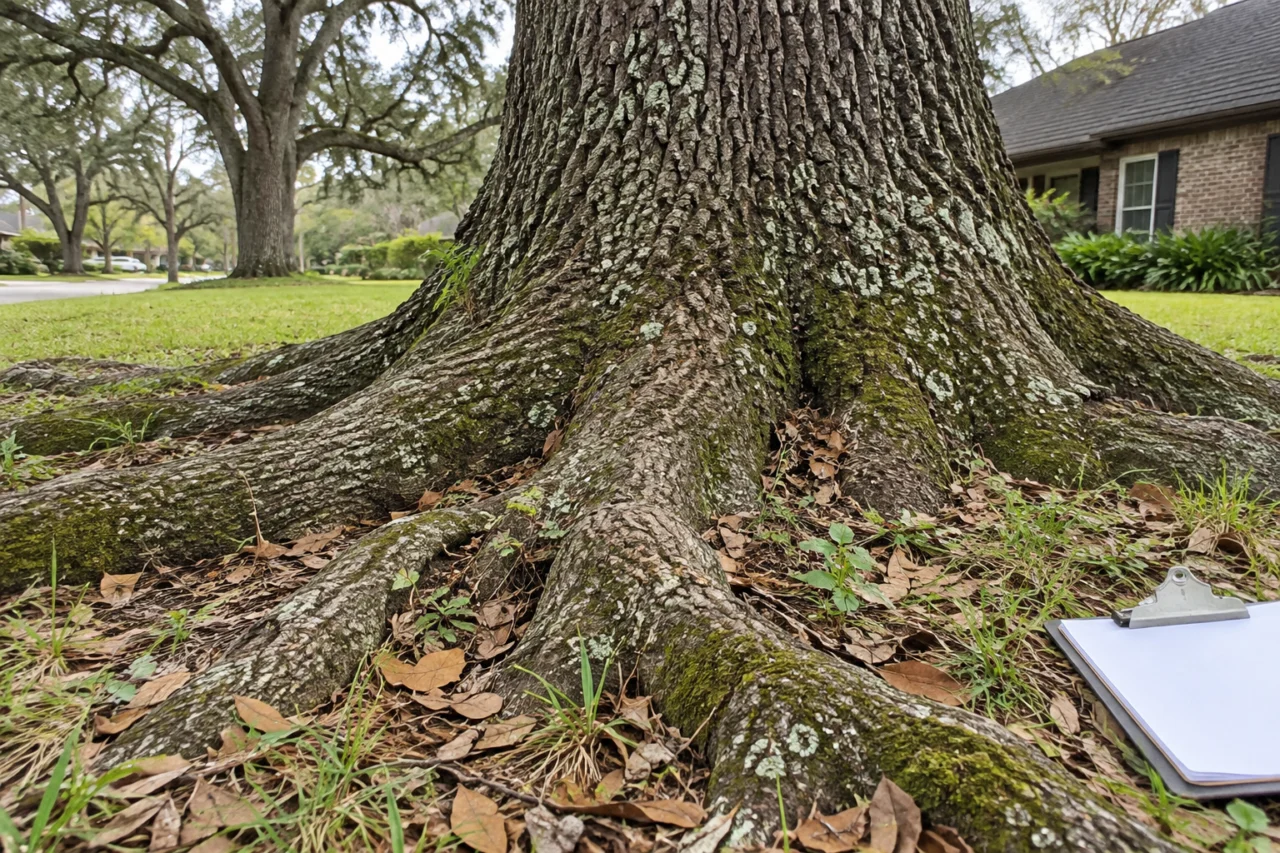
Seasonal timing also affects the tree. Species differ in growth patterns, disease susceptibility and response to pruning. Avoid unnecessary heavy cuts during stressful conditions such as severe drought or heat, and ask whether a particular disease risk changes the preferred schedule. Emergency removal of a clearly hazardous broken limb may be necessary regardless of ideal pruning season, but that is different from elective crown reduction.
An informed plan weighs both public safety and the biological cost of the work. Document the reason if urgent cutting departs from normal timing.
Choose cuts that preserve attachment and structure
A large branch should not be removed with a single uncontrolled cut from below. Proper pruning methods account for the weight of the limb and avoid tearing bark down the trunk. Branch collars and natural targets guide final cuts so the tree can close wounds as effectively as its biology permits. The crew may use separate relief cuts and rigging to lower material safely. Do not direct the operator to make flush cuts for a smoother visual appearance; they can damage living trunk tissue.
The term ‘crown reduction’ should not be confused with indiscriminate topping. Where appropriate, a reduction cut removes a smaller portion of a limb back to a lateral branch capable of continuing growth. The correct technique depends on the size, condition and location of the limb. Some defects cannot be corrected adequately by pruning alone; removal or a more formal structural assessment may be warranted. Ask for a description of retained branches, removed branches and the intended clearance, and compare that description against the final work.
Evaluate root and trunk concerns separately
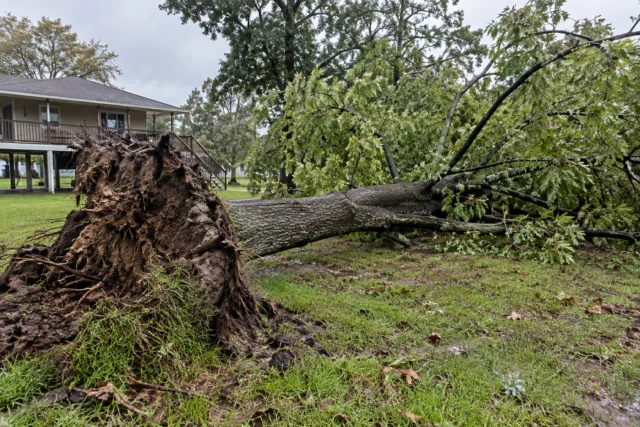
A tree leaning because of root movement cannot be made reliably secure simply by cutting enough foliage from the opposite side. The root plate, soil, trunk integrity and connection to the crown need examination. Fresh cracks, soil uplift and major cavities may require urgent risk assessment.
Do not accept a general claim that pruning eliminates every concern about a tree near a structure. In some cases, reducing a particular load may be one part of management, but it cannot substitute for a full evaluation of a compromised support system.
Past construction can complicate the decision. Root cutting for driveways, trenches and walls may have changed the tree’s anchorage. Repeated vehicle traffic, soil fill and drainage modification can affect growing conditions. Tell the assessor about these changes, even when they were performed years earlier. A crown that looks healthy does not prove the roots are intact. Where trunk or roots are the primary concern, ask whether additional assessment, temporary exclusion of the target area or eventual removal is more appropriate than routine trimming.
Consider utility lines, access and property boundaries
Never attempt to prune branches that touch or may contact energized conductors. Utility clearance work may require specialized line-clearance crews and coordination with the power provider. Keep ladders, poles and pruning tools away from the lines even if branches appear dry. Wet trees can conduct electricity, and a limb can pull a line down during a cut. Report the situation from a safe distance. A regular tree crew should not treat utility proximity as an ordinary trimming task.
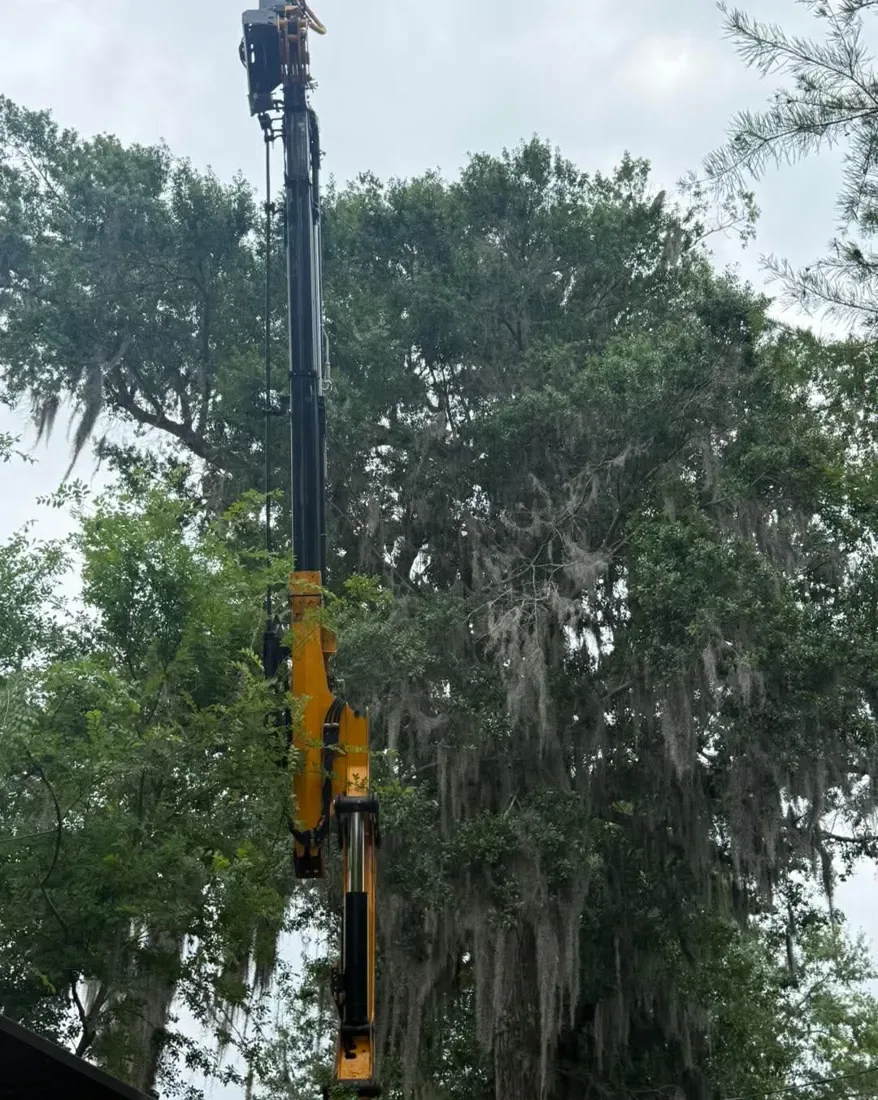
On a tight New Orleans lot, access may be the main technical challenge. Contractors should plan how limbs will be lowered around homes, fences, gardens and neighboring vehicles. Check gate width, overhead obstructions, ground bearing and any need for permission to cross another property. Get a written scope that identifies disposal and site cleanup, because removing several heavy limbs can produce substantial material.
Ask who protects the roof, who moves vulnerable objects and what happens if weather interrupts the work. Good planning is part of good pruning.
Evaluate the result instead of judging by how bare it looks
After trimming, the tree should still have a coherent crown, healthy retained foliage and no avoidable large stubs or torn bark. Review the work against the original identified objectives, such as the specified dead limb and roof clearance. A dramatically open canopy is not a measure of quality. Photograph the retained structure from the same angles you used before the visit. If a contractor discovers an unexpected crack or decay, ask for the finding to be documented rather than silently expanding the scope.
Keep the invoice, photographs and recommended follow-up interval. New growth, storm damage or a change in nearby construction may warrant another assessment later. A professional can explain which smaller issues can be monitored and which need prompt attention. The proper goal of pre-hurricane pruning is to reduce specific avoidable risks while retaining the benefits of living trees, not to create a guarantee of storm survival. When severe weather has already passed, use the post-storm inspection process before scheduling additional cuts.
Questions about Should You Trim Trees Before a Hurricane?
Should I trim every tree before hurricane season?
No. Work should respond to deadwood, specific structural concerns or needed clearance, not a fixed annual percentage of crown removal.
What is the best reason to prune before a storm?
Removing a known hazardous dead limb or resolving a specific clearance problem may reduce exposure while preserving healthy structure.
Does heavy thinning let hurricane wind pass safely through?
There is no guarantee. Excessive crown removal can stress trees and alter their structure. Qualified, limited pruning is preferable.
Why is topping discouraged?
Topping creates large wounds and can produce weakly attached shoots, leaving long-term structural and decay concerns.
What is lion-tailing?
Lion-tailing strips interior foliage and branches while leaving weight at limb ends. It can change load distribution and reduce healthy crown function.
How much clearance should branches have from my roof?
Appropriate clearance varies by tree structure, growth, roof conditions and the cuts required. Ask a professional to specify an achievable, sensible objective.
Can pruning repair unstable roots?
No. Removing crown weight does not restore a compromised root plate. Root movement requires its own risk assessment.
When is it too late to trim before a hurricane?
Once dangerous winds, lightning or saturated ground threaten crew safety, large tree work may need to stop. Follow emergency advice.
Can I trim branches touching power lines?
No. Keep clear and contact the utility or appropriate qualified line-clearance crew.
How should a large limb be removed?
Qualified crews use appropriate cuts, rigging and controlled lowering to avoid bark tearing and damage to the property. The method depends on the site.
Should pruning leave my tree looking sparse?
Not necessarily. A finished tree should retain healthy crown and appropriate structure; bare-looking canopies are not evidence of quality.
What belongs in a written trimming scope?
Identify each tree, specific defects or clearances, intended cuts, access method, cleanup, hauling and follow-up recommendations.
Get a scope for your property
When requesting pruning, show the limb attachment, nearby roof or roadway, and the amount of clearance sought. Ask that proposed cuts be identified by location and objective. The finished scope should clarify debris handling and site protection without promising that selective pruning eliminates every weather-related risk.