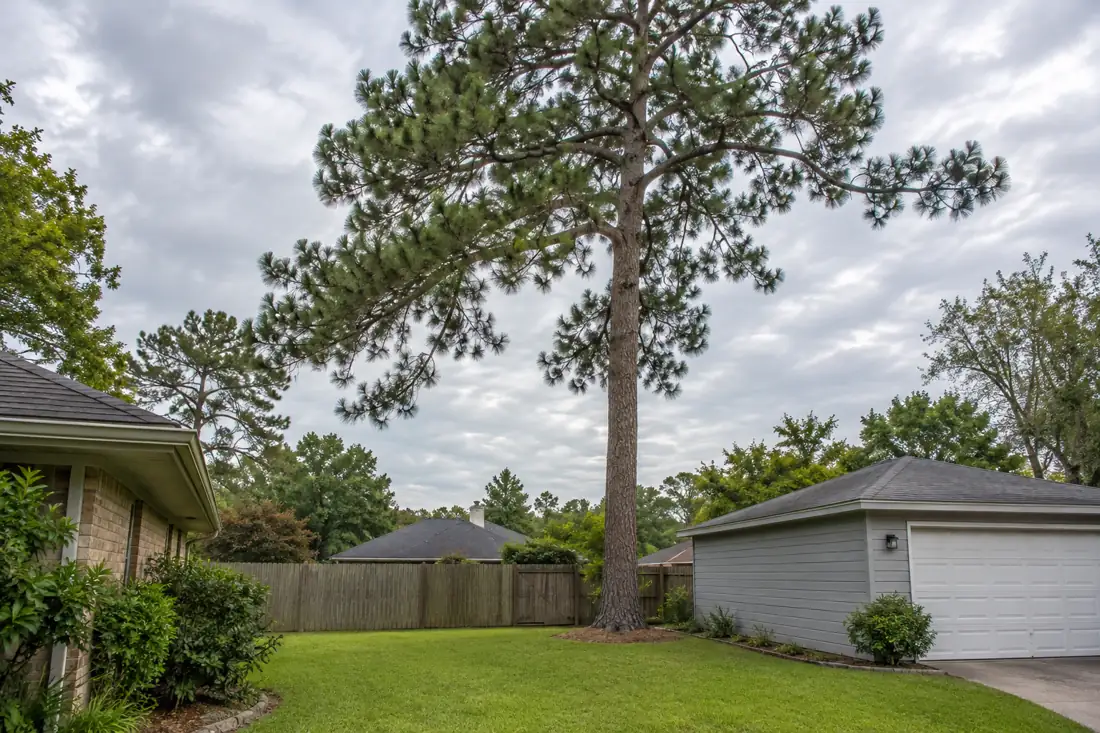
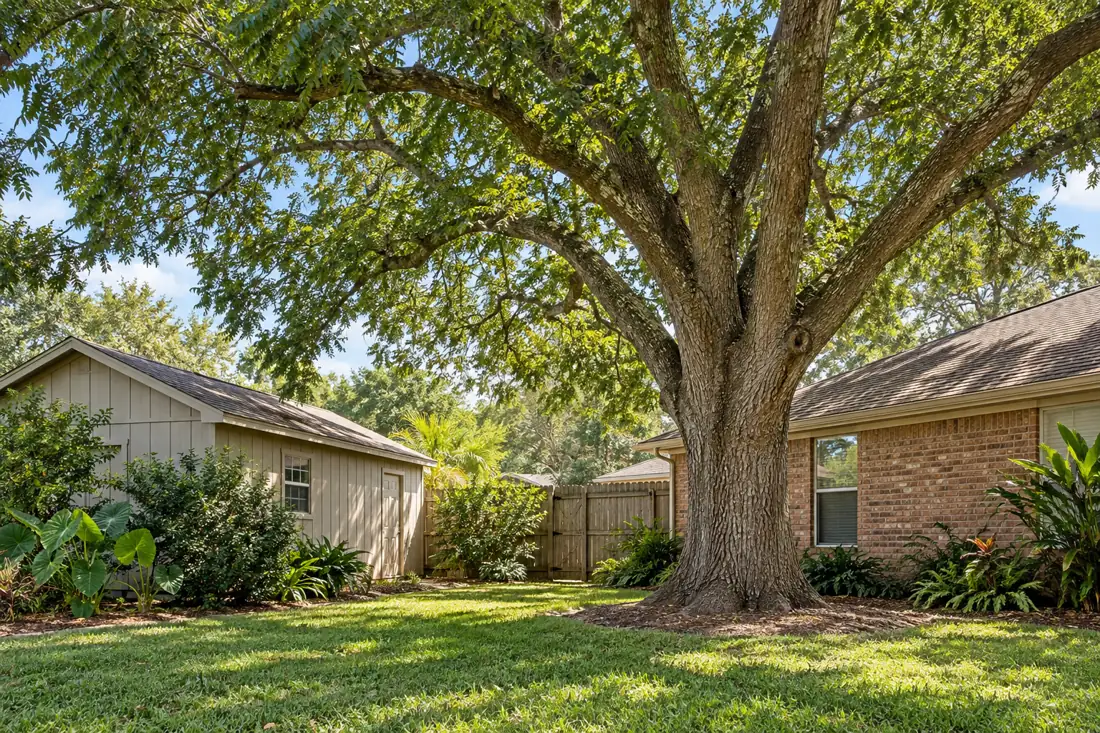
Balance pecan production with limb and site safety
A mature pecan tree is both a fruit-bearing resource and a heavy-limbed shade tree. Low nut yield alone does not establish a structural problem, and a generous crop does not prove the branches are sound. Record deadwood, split attachments, branch contact with roofs and recurring storm damage separately from questions about fruit production.
A useful pruning conversation identifies which scaffold limbs need evaluation and whether cuts would affect health or seasonal fruiting. When removal is proposed, ask for the actual condition or property conflict driving that decision instead of accepting a generic rule about pecan trees.
Large limbs need room and structure
Mature pecans can develop long heavy scaffold limbs. Deadwood, weak attachments and limbs extending over roofs or parking deserve careful evaluation because the amount of wood involved can be substantial.
Remove large dead limbs where they threaten occupied areas.
Broken tops, torn limbs and new cracks should be assessed after severe weather.
Construction and soil disturbance around mature roots can affect health and stability.
When removal is considered
Removal may be appropriate when severe decay, major root failure, repeated large failures or an unsuitable location makes the tree difficult to manage safely. Large pecan removals often benefit from specialized equipment.
Related resources
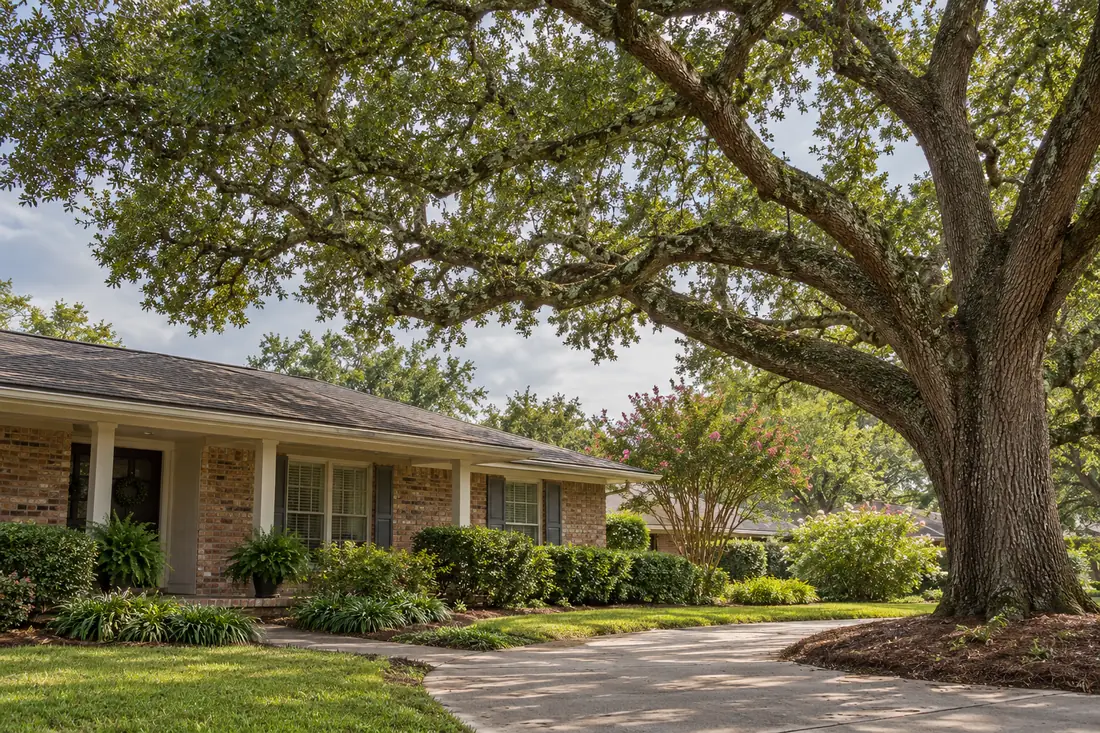
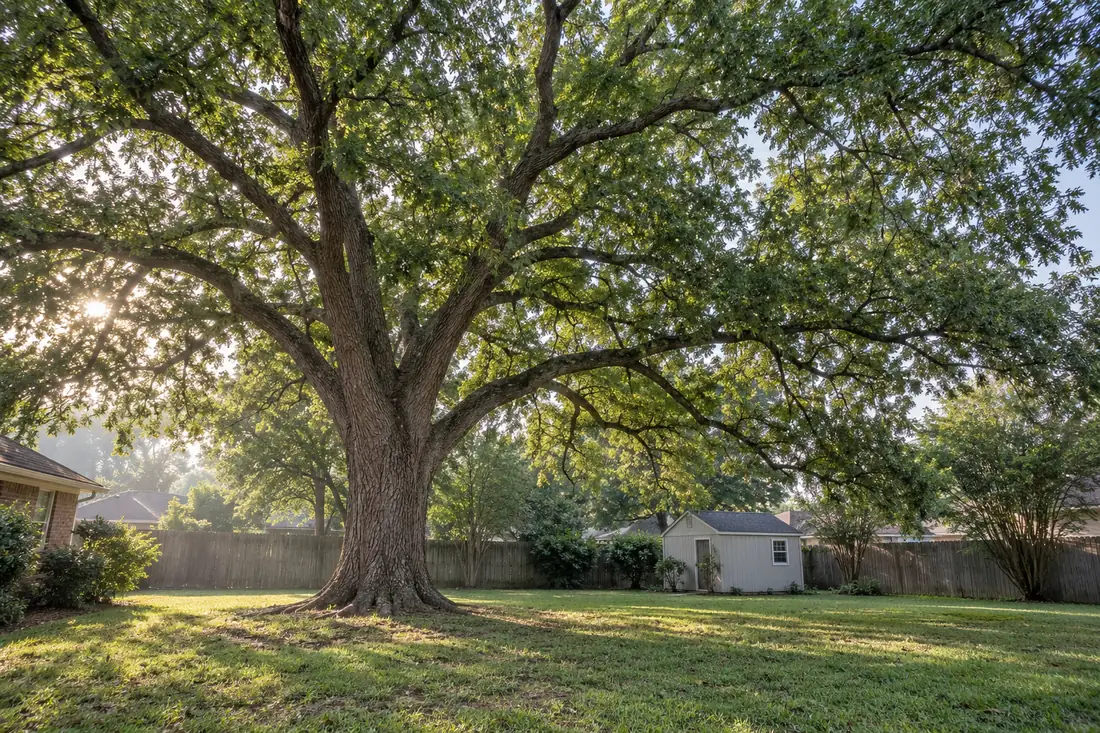
A pecan is both a landscape tree and a crop tree
Pecan trees can become immense shade trees in Louisiana, and the tree may be valued as much for its nuts and family history as for the summer canopy. That dual purpose affects care. A homeowner may want fruit production, clearance over a driveway and storm resilience from the same tree, but those goals do not always support the same pruning cuts.
Begin by deciding what matters most: productive healthy growth, safe passage, maintaining an old tree, or addressing a demonstrable defect. Avoid a vague request to trim the whole pecan.
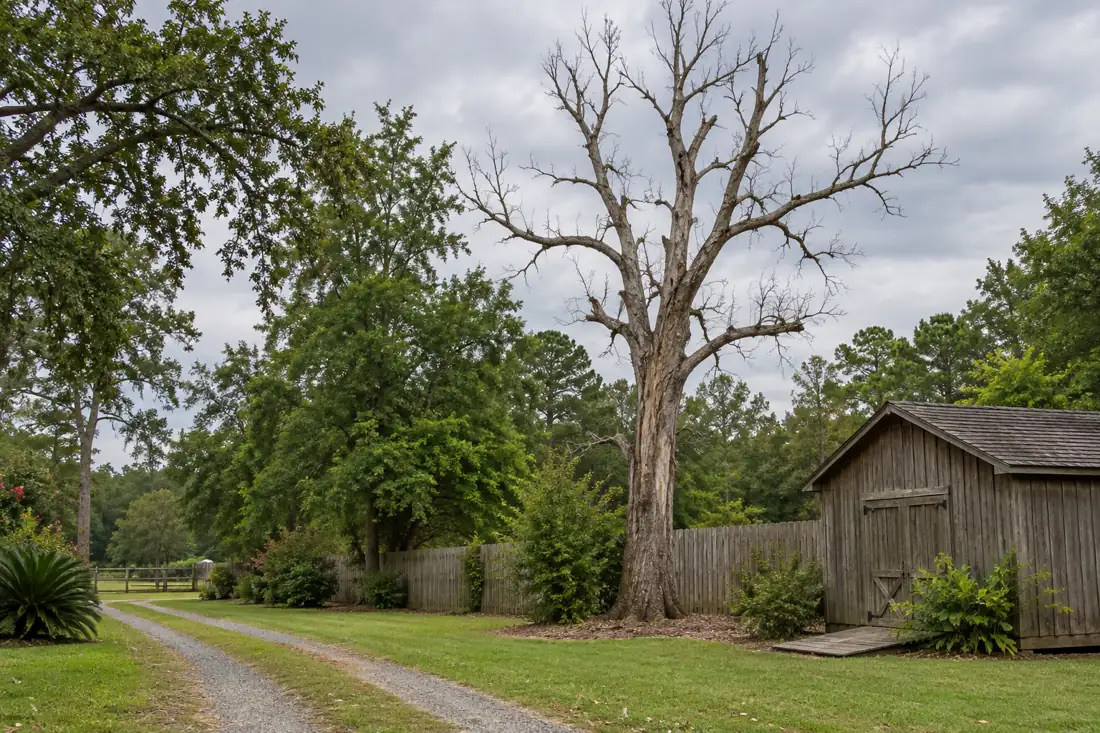
Observe the overall crown from the ground, including long limbs over houses, dense clusters of major branches, fruiting wood and any broken sections. Some nut drop, seasonal leaf loss and minor dead twigs are ordinary; a newly cracked scaffold limb or a root plate moving after wind is not. Pecans can bear heavy limbs that extend far beyond the trunk, so the shape of the branch unions and the consequences of a fall matter. Use photographs to identify exact areas before a professional arrives.
Understand heavy scaffold limbs and narrow unions
Large pecan branches can develop narrow V-shaped attachments with included bark. That bark trapped between expanding stems may reduce the quality of the union and increase splitting risk under load. LSU AgCenter extension material specifically illustrates this concern with a pecan branch section. A narrow angle is a clue to investigate, not proof that every V-shaped branch will fail. Evaluate the attachment, limb size, other defects, loading and what the limb could strike rather than diagnosing the whole tree from a phone picture.
On a young pecan, structural pruning may allow a competing stem to be addressed before it becomes a massive branch. In an old pecan, the same decision involves much larger wounds, potential decay and difficult rigging. A professional might recommend reducing a particular load, removing an unsound limb, a support system in a suitable situation or eventual removal if a primary union is no longer acceptable.
Ask what structural problem the proposed work addresses. Do not tie ropes around a weak fork and assume the tree has been made safe.

Look beyond nut production when evaluating a pecan
A large pecan can produce well while still having limb or root concerns that require attention. Record major scaffold attachments, broken limbs, changing canopy density and any shift in grade or drainage around the trunk. Nut crop size and scattered husks are not substitutes for a structural assessment.
If a limb extends over a driveway or building, describe that target and any recent breakage before asking for pruning or removal.
Keep productive crown management selective
An established pecan uses its foliage to support both growth and nut development. Removing large amounts of healthy crown to improve visibility or lower a perceived wind sail can sacrifice production and cause stress. Pruning should concentrate on dead, damaged and rubbing branches, problematic unions and genuine clearance needs. In certain situations, improving light and airflow may also help, but the scope should reflect the tree’s age and condition. A trained crew must preserve proper branch collars and avoid leaving long stubs that decay.
The ideal pruning season depends on the objective, tree condition and urgency. Dormant-season work is often used for planned structural corrections on pecans, while a dangerous broken branch may need prompt attention regardless of calendar. Do not schedule aggressive live-wood pruning during severe heat, drought or other stress merely because a contractor has an opening. If the tree bears heavily, talk about whether proposed cuts affect fruiting areas. A written scope protects both the living tree and the expectations of the person who harvests it.
Diagnose poor crops separately from unsafe wood
A disappointing nut season does not automatically mean a pecan is dying or hazardous. Production can vary with cultivar, pollination, late freezes, drought, pests, disease pressure and the tree’s natural bearing pattern. Leaves with spots, premature nut drop or poor kernel fill deserve horticultural investigation, but they do not establish the strength of a major branch union. Conversely, a tree with a generous nut crop can still have an unstable limb. Keep crop-health observations separate from the structural risk decision.

Keep pecan crop questions separate from tree stability
A pecan tree may carry a heavy seasonal nut crop while also having branches that require ordinary structural review. Timing, fruit drop and cleanup expectations are useful homeowner details, but none of them independently establishes that a limb is safe or unsafe. Report new cracking, deadwood or unusual branch movement separately from normal seasonal changes.
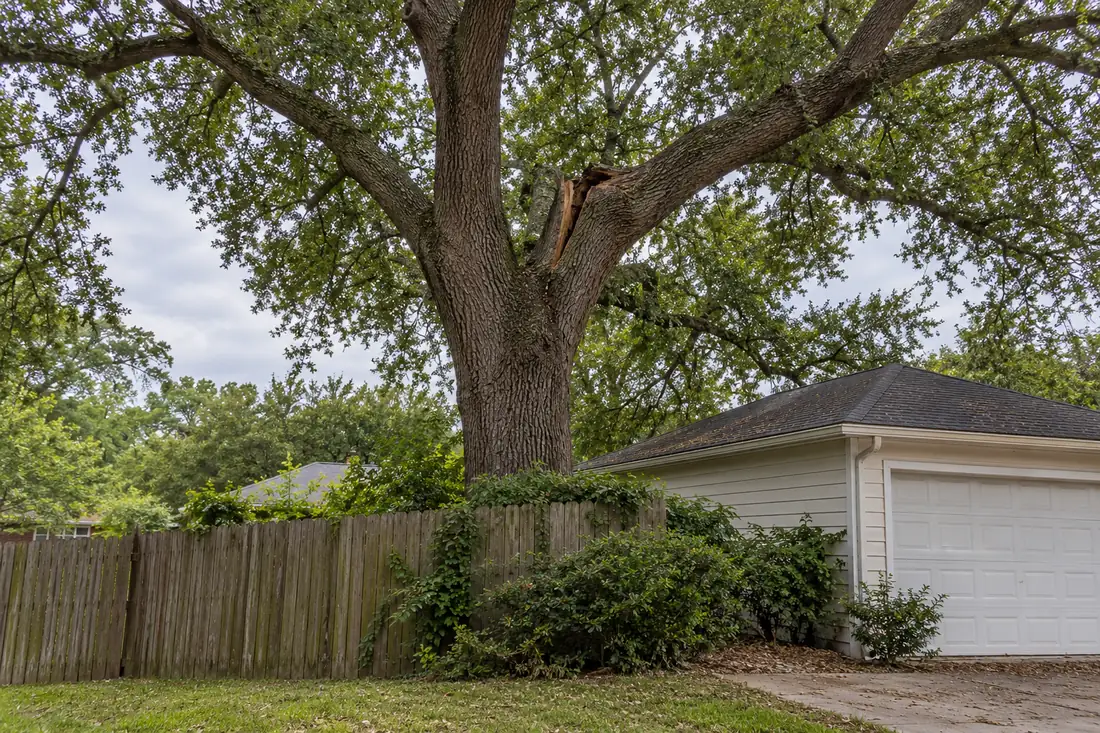
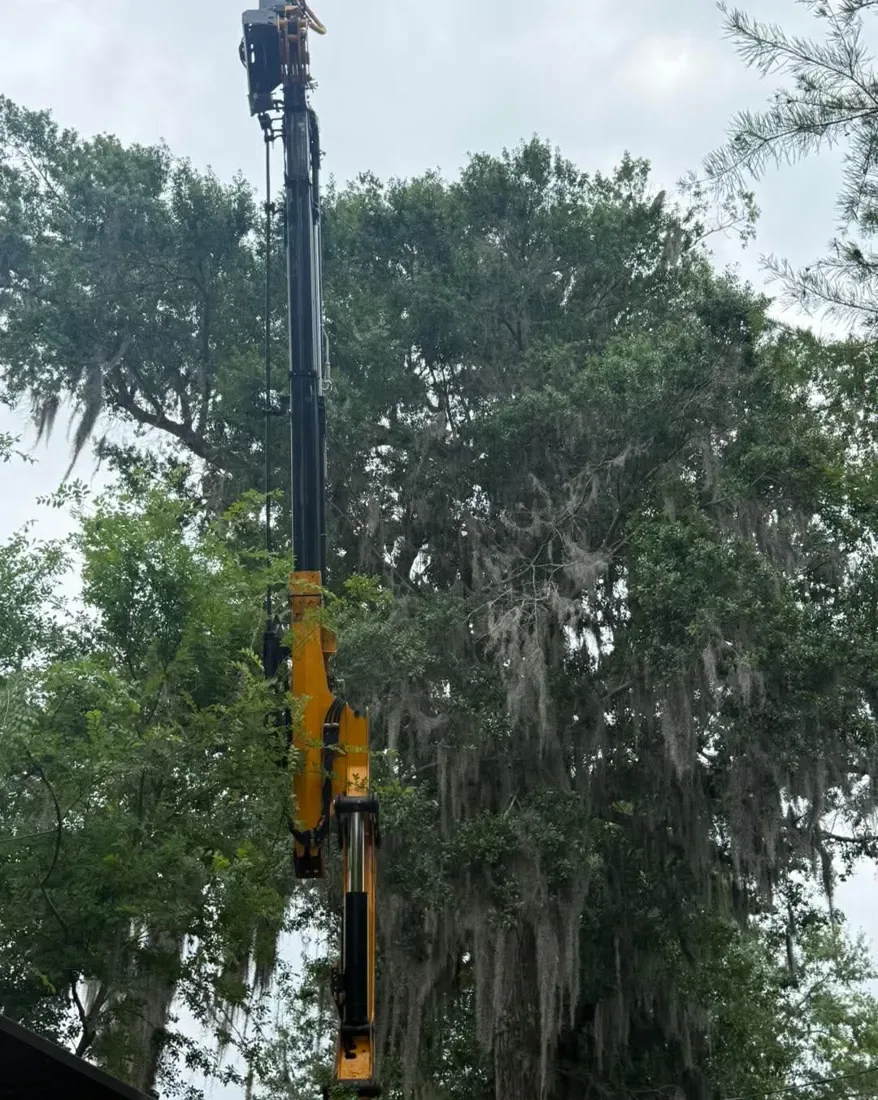
Before requesting a reduction cut, state whether the goal is passage clearance, damaged-wood management or a longer-term canopy objective. Have the professional explain how proposed cuts affect retained live crown and future growth. The accompanying pruning-context image illustrates the process, not a verified pecan-tree condition or completed customer project.
Separate pecan debris concerns from structural work
Pecans may drop nuts and leaves across a lawn, driveway or outdoor living area. Ordinary seasonal cleanup is a different concern from a fractured branch union or an unstable leaning tree. For pruning, identify the branch, building or access conflict that motivates the request. Photos of the whole crown and surrounding targets help distinguish maintenance from significant rigging work.
Where the goal is to retain the tree, ask how the proposed cuts might affect the remaining crown and whether a more selective approach is possible. If a major limb recently broke, determine whether loose wood remains attached before planning ordinary cleanup. Do not climb or shake a damaged limb to obtain a photograph.
If the goal is better harvest, ask a qualified horticulture professional about site-appropriate care and disease management rather than expecting a tree-removal crew to diagnose every orchard problem. Record when the poor yield started, whether neighboring pecans show similar issues and whether the site changed. Fertilizer should follow a reasoned soil or tissue evaluation, not a guess that extra nutrients cure defects. Excess fertilizer or careless chemical use can create additional problems without repairing cavities, cracked wood or damaged roots.
Pecan branch weight and overhead targets deserve a careful plan
Pecan trees may have substantial scaffold limbs and a wide crown, particularly when mature trees were retained near homes or parking areas. Review individual limb attachments rather than deciding solely by how many nuts or leaves fall. A limb that extends toward a roof but is structurally sound requires a different conversation from a cracked branch over a frequently used driveway.
Seasonal crop load, storms, and prior pruning can affect what the canopy looks like throughout the year. Some dead twigs or leaf issues may reflect ordinary seasonal change, while sudden dieback or a fresh split can require closer attention. Photograph the whole crown as well as the suspected problem and note whether the change developed quickly.
Use leaves and husks as context, not a diagnosis
Compound leaves and pecan husks may help identify the tree, but yellowing, spotting or sparse foliage can arise from different causes. Note when the change began, whether it affects one branch or the entire canopy and what weather or site work preceded it.
Preserve intact examples or clear photographs if a qualified professional requests them. Avoid treating a single synthetic illustration as proof of a specific pest, disease or pruning need.

Account for large scaffold limbs and seasonal use
Root-zone disturbance can be easy to overlook when a pecan grows beside a new building addition or driveway. Trenches and heavy machinery may affect a much larger area than the visible trunk. Before construction or removal work, identify where equipment can safely reach the tree and how nearby landscape features will be protected.
If pruning is proposed, request a description of the actual branch targets and the reason for each cut. If removal is being considered, include any nearby fences, garages, and utility service in the estimate photos. A practical scope should address access and debris management while acknowledging that no pruning method provides an absolute storm guarantee.
Watch what changes around the root zone
Mature pecans need substantial rooting room, and their roots may extend through lawns, beds and beyond fence lines. A driveway trench, drainage line, new patio or soil grade increase can damage roots without causing immediate canopy collapse. Document recent excavation and avoid severing substantial roots just to fix a lifted paving slab. If a foundation or sewer project is planned, discuss alternative routing and a root protection strategy before equipment arrives. Healthy roots support both moisture uptake and the anchorage of a large crown.
Water conditions deserve particular attention in the Gulf South. Extended saturated soil can limit root function, while drought can stress a nut-bearing tree at critical stages. Neither condition independently proves imminent failure. Check for erosion, trench backfill, fresh ground heave, mulch piled on the trunk and soil compacted by repeated truck traffic. Where a large limb or the whole tree has begun to move unexpectedly, keep people away and seek a qualified inspection. Do not dig around the base looking for trouble.
Plan for limbs over homes and outdoor living areas
A pecan planted decades ago may now spread over a kitchen roof, garage, pool or play area that did not exist when it was young. The risk decision should account for current use. Identify which limbs are directly above occupied spaces and whether overhang actually requires clearance or further assessment. Some branches can be reduced or pruned without removing the whole tree; others have structural defects that cosmetic trimming will not cure. Ask the professional to identify the exact limb, concern and proposed load path.
Access can become difficult because large pecans often stand in fenced backyards. Workers may need to lower heavy wood through small gaps instead of dropping it, and cranes or special equipment may be appropriate where site conditions permit. Discuss gates, soft ground, underground services, neighboring access and the handling of nuts and debris. When a big limb is directly over a building, the work is a rigging and property-protection problem, not an ordinary garden maintenance task. Quotes should reflect those constraints clearly.
Separate storm cleanup from tree recovery
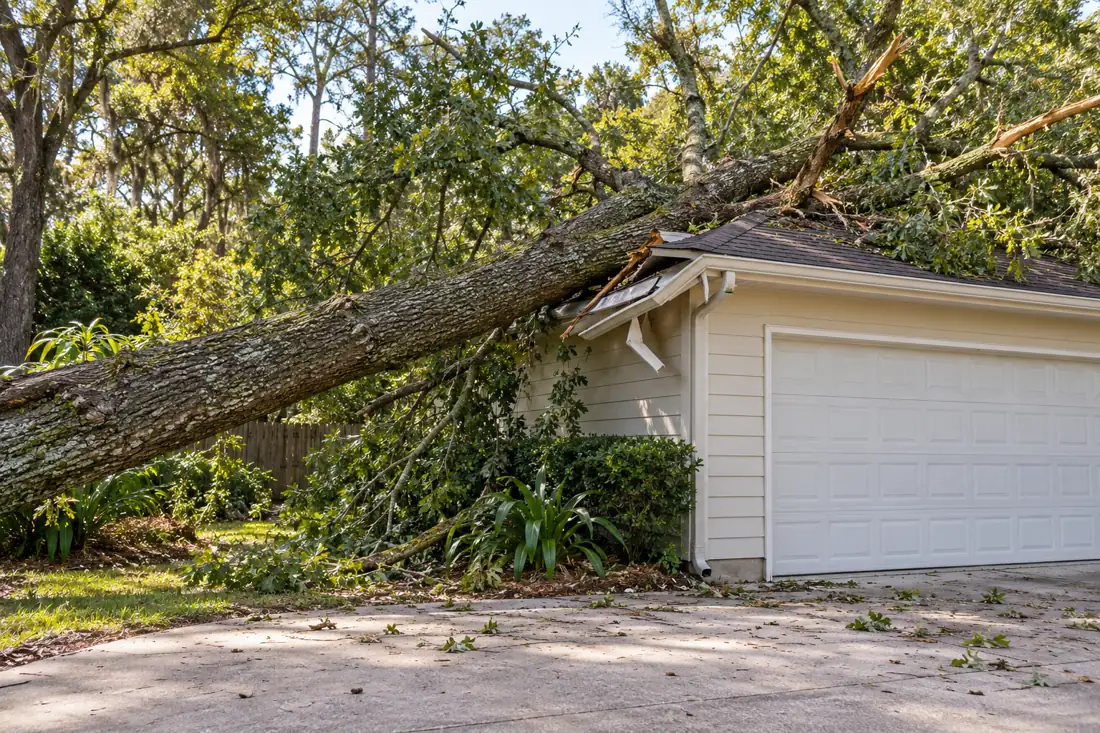
Pecans are not among the strongest performers in Louisiana extension summaries of hurricane wind resistance, yet a healthy individual tree can survive major weather and a damaged tree is not always beyond recovery. After storms, begin with the safety of people and utilities. Hanging branches, a fresh split through a main fork, uprooting or movement at the base require a restricted area and professional evaluation. Do not stand under a cracked limb to photograph the nut crop or pull suspended material down with a vehicle.
Separate pecan canopy inspection from nut and yard cleanup
A pecan can look healthy from the street even when a particular limb needs closer attention. Before requesting pruning, make separate notes about recent changes in the crown, fallen branches, nut-drop patterns, and the location of the heaviest limbs over roofs, paths, or play areas.
Normal seasonal leaf or pecan litter is not by itself evidence of structural failure. A photograph of the entire crown and a second view of the branch union make a more useful starting point than a tight shot of a single leaf.
Where a pecan shades a narrow backyard, access may be the limiting factor rather than the amount of wood. Identify gates, beds, irrigation lines, paving and areas that can carry debris without damaging the landscape. Avoid digging or compacting soil around major roots merely to reach the trunk. If a proposed scope includes removal, ask how the work area, adjoining properties, drop zones, and hauling route will be protected and what remains after the crew departs.
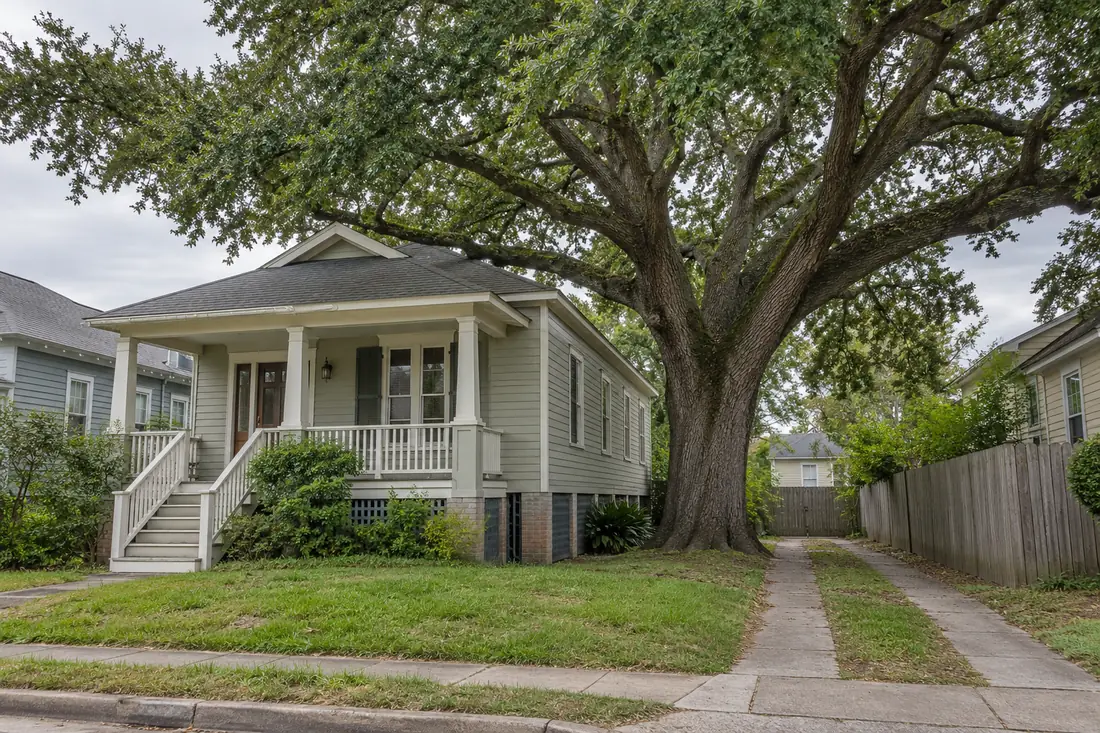
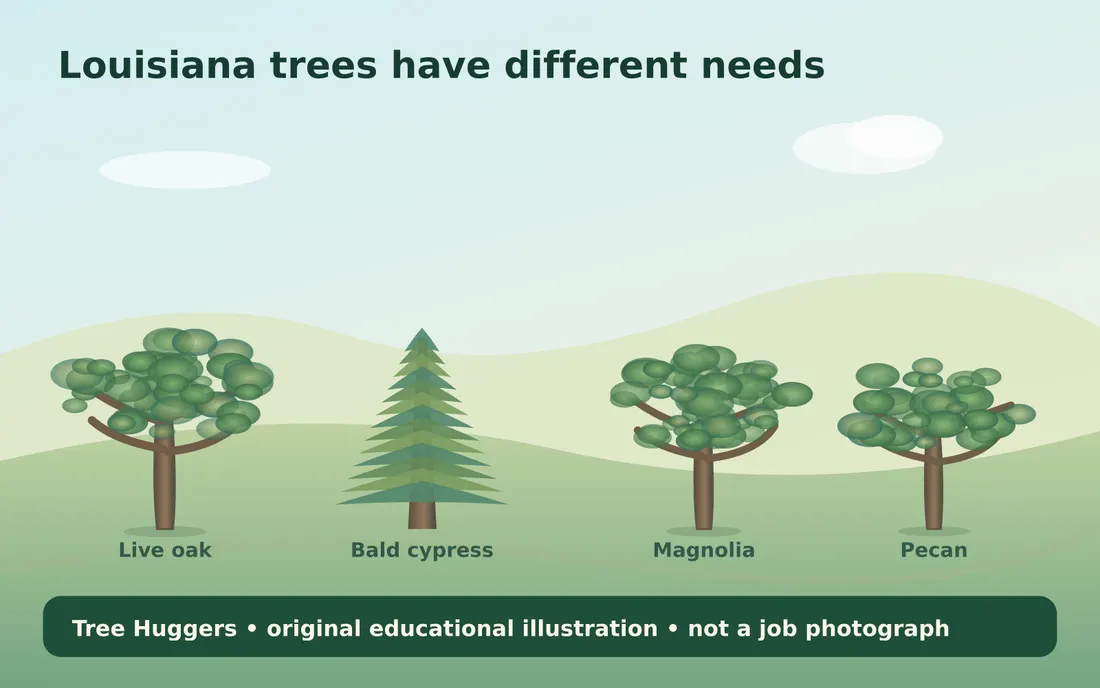
An assessment should distinguish seasonal nuisance, suspected pest or disease symptoms, and an actual safety concern. Ask which observations support the recommendation, which are uncertain without on-site examination, and whether monitoring is a reasonable option. Written scope language should identify the exact limbs or sections, the intended clearance, handling of logs and branches, and whether stump grinding is included. This image is an educational illustration of a species context, not a diagnosis or evidence of a previous customer project.

Once the site is safe, the assessment can distinguish broken peripheral branches from loss of a major supporting scaffold. A tree with limited recoverable crown damage might benefit from careful pruning and monitoring; one with a failed trunk or root plate may require controlled removal. Avoid topping what remains simply to make the crown look even. Strong replacement shoots are not equivalent to the original structure. Save photos, dates and the work description for long-term comparison, particularly when another storm season follows closely.
Remove a pecan without creating a second property problem
If removal becomes necessary, plan the full sequence, not only the cutting. The crew should identify nearby roofs, utilities, neighboring fences, buried lines, vulnerable paving and areas that cannot support a large machine. Discuss how heavy rounds will be lowered, whether the wood will be chipped or hauled, and how the site will be protected. Some owners want usable pecan wood retained; that needs to be agreed before the crew arrives, along with log sizes and where pieces may be stacked safely.
Stump work is a separate decision. Grinding usually leaves grindings and subsurface roots, while complete excavation is more disruptive. If a replacement tree or garden will occupy the same spot, account for wood chips, old root channels and potential soil compaction. It may be safer to plant the next tree away from the old stump rather than forcing it into a confined, debris-filled hole. Ask the contractor exactly what cleanup and restoration are included and what would carry an additional charge.
Make the assessment useful for the next season
Keep a simple record of pecan species or cultivar if known, approximate size, past storm injuries, weak unions, pruning history and current targets. Ask for a condition-based explanation, not a vague statement that all pecans are dangerous. For a valued heritage tree, getting a qualified arborist’s opinion can clarify whether a support system, controlled pruning or monitoring has a reasonable basis. When a main structural defect remains after treatment, the documentation should say so plainly rather than promising that all risk has been removed.
For technical background, consult the LSU AgCenter explanation of good and poor branch angles, which includes a pecan example, and the leaning-tree assessment guide. A professional on-site evaluation can connect those principles to the actual tree. Whether the decision is to preserve or remove it, the work should protect people, nearby structures and the value of the landscape, while avoiding unnecessary cuts or unsupported claims.
Questions about Pecan Tree Care & Removal in Louisiana
Why are V-shaped forks important on pecan trees?
Some narrow forks contain included bark, which can reduce wood attachment. Evaluate the size, structure and exposure of the union.
Can a pecan keep producing nuts with a weak branch?
Yes. Fruit production and structural soundness are separate questions. A productive tree can still have a hazardous limb.
When should a pecan be pruned?
Planned structural pruning is often scheduled while dormant, but confirmed dangerous broken wood may need attention at other times.
Should I heavily thin a pecan for better nut production?
Not without a clear horticultural reason. Excessive removal of live foliage can weaken the tree and reduce production.
Does a poor nut crop mean my pecan is dying?
No. Weather, pollination, disease, water and bearing pattern affect crops. Assess structural concerns separately.
Can I cut pecan roots under a driveway?
Avoid substantial root cutting without evaluation. Root loss can impair vigor and anchorage.
What happens if a pecan loses a main limb in a storm?
The remaining trunk and crown should be evaluated for splits, unstable attachments and recovery potential before selecting pruning or removal.
Can I keep pecan wood after removal?
Often this can be arranged, but agree on piece sizes, safe stacking location and whether the contractor will haul the remainder.
Will a tree service diagnose every pecan disease?
Not necessarily. Crop-health and disease diagnosis may require an extension horticulturist or other qualified specialist.
Does a full canopy mean a pecan is structurally sound?
No. Hidden cavities, damaged roots and included bark may coexist with healthy-looking foliage.
Is stump grinding always included in a pecan removal?
No. Request an itemized scope covering grinding depth, grindings, hauling and any soil restoration.
Should I remove a heritage pecan after one broken branch?
Not automatically. Have the remaining crown, trunk, targets and alternatives evaluated before making an irreversible decision.
Get a scope for your property
For pecan work, include the main branch attachments, any recurring large-limb failure, and the garage, road, or parking area beneath the crown. Mention past heavy pruning or excavation. Request a clear explanation of which branches need attention and how equipment will reach them without unnecessary disturbance to the surrounding yard.