Production depends on staging
After severe weather, debris often accumulates faster than it can be moved. A defined staging plan helps prevent crews from repeatedly handling the same material and keeps critical access routes open. Tree Huggers evaluates where woody debris can be safely accumulated, how equipment will move through the site and how material will be reduced or loaded without creating new obstructions.
Keep storm-debris tickets tied to the actual staging pile
When more than one crew delivers material to a shared vegetative-debris area, mark where each load came from before piles are consolidated. Use a simple zone or work-order identifier, arrival date and material class on each load ticket. Record whether brush, trunks, chips or mixed site waste entered the area. That makes later hauling estimates and invoice questions easier to resolve without guessing which property produced a particular load.
Before the first truck arrives, agree on who can accept a load, whether the location has a clear vehicle exit, and what conditions trigger a halt: wet ground, blocked drainage, public access, incompatible material or a pile crossing its approved boundary. At closeout, reconcile the work orders, hauling tickets and remaining material. A cleared roadside route is not proof that the staging area is restored.
Priority Access
Open entrances, service lanes, parking access and critical travel paths first.
Staging Areas
Use practical collection zones that support equipment movement and later load-out.
Woody Debris Reduction
Cut, consolidate and reduce tree debris to improve handling and site organization.
Load-Out Coordination
Sequence material so hauling and disposal can continue without blocking production.
Designed for larger properties and public-facing sites
Commercial campuses, multifamily properties, municipalities, schools, hospitality sites and industrial facilities may need to remain partially operational during cleanup. We plan around occupied areas, public traffic, equipment routes and site priorities instead of treating every debris pile the same.
Related capabilities

Emergency Debris Removal
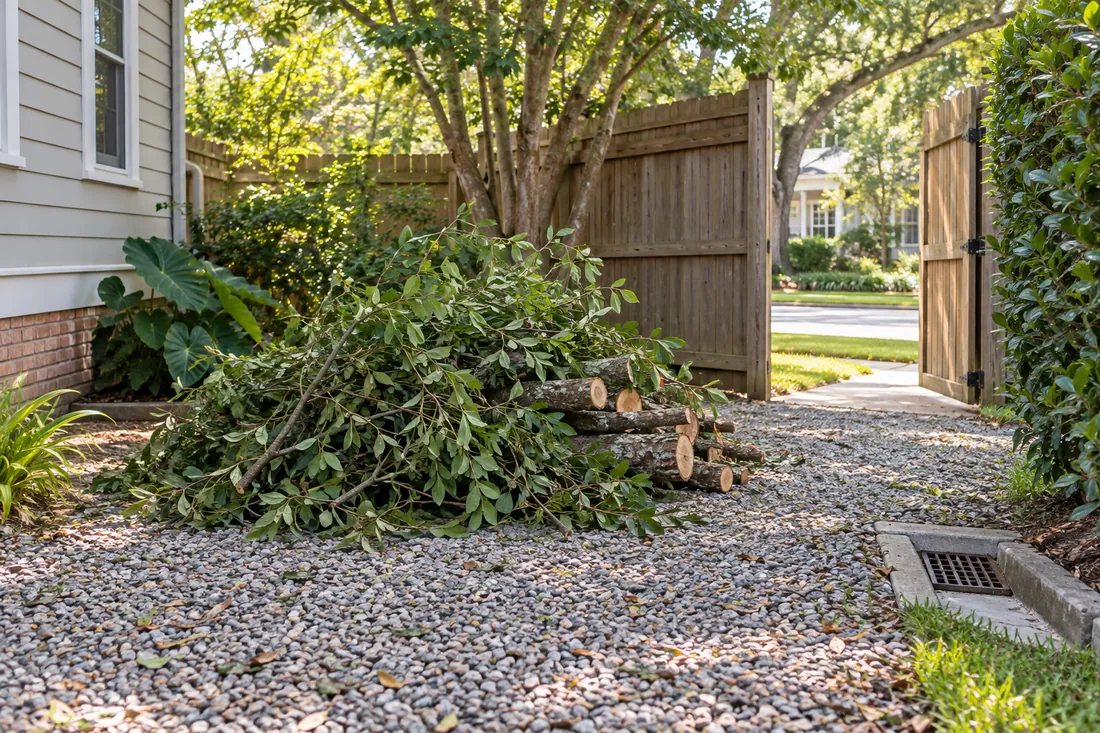
Vegetative Debris Removal

Public Works Tree Services
Use this page to discuss storm debris staging & reduction with Tree Huggers. Start with the current condition, the property and the outcome you need. The sections below explain the information a contractor needs, the responsibilities to clarify and the way to compare the proposed work with the finished result. The right scope depends on the tree and site; a general service description does not confirm a method, price or arrival time.
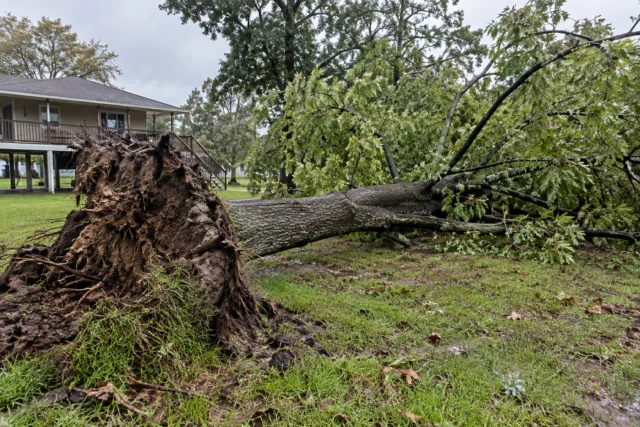
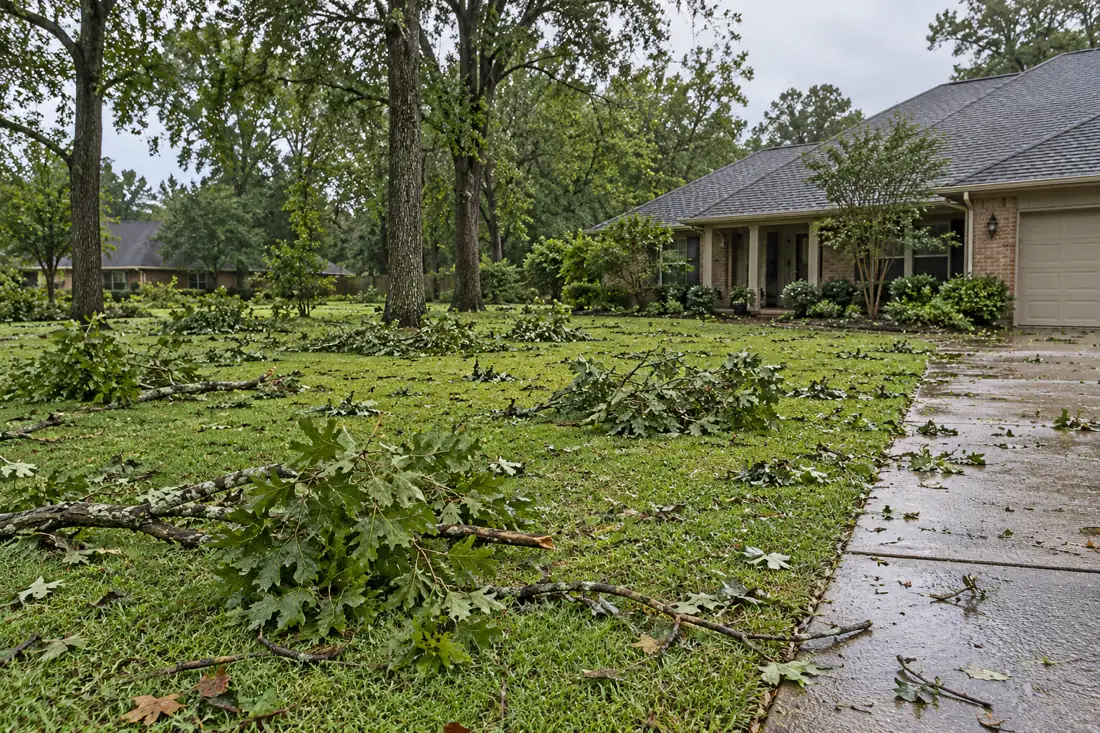
After a storm, tree debris may be scattered across driveways, lawns, roofs, drainage areas and mixed piles of fencing or construction material. Photograph conditions from safe ground before anyone moves unstable trunks or hanging limbs. Mark where clean vegetative debris can be staged, which roads must remain available for emergency access, and where trucks can turn and load without damaging curbs, utilities or saturated soil.
A staging area that is dry on a diagram may fail after new rainfall. Separate branches and wood from household refuse, demolition materials, suspected contaminated waste and anything the disposal facility treats differently.

Keep different debris streams identifiable
Vegetative branches, logs, root material, pallets, construction waste and household debris are not the same material stream. A tree-service staging plan should say which categories it accepts and how mixed loads will be handled. The source of a pile matters because emergency cleanup can include debris that did not originate from the contracted tree work. Misclassification creates disputes and can affect disposal choices.
Use marked zones or another practical separation method that field personnel can maintain. Do not assume all debris can be chipped or burned, and do not promise use of a disposal site without confirming its rules. If environmental controls, special handling or documentation are required by a public buyer, those must be included in the project scope. A photo can show pile composition but cannot by itself establish weight or lawful disposal.
Separate storm-debris staging from final disposal requirements. Storm cleanup may produce mixed branches, heavy logs, root balls and material contaminated by soil or foreign objects. Identify a safe temporary staging area that does not block drains, emergency lanes, sidewalks or neighboring entrances. Discuss material separation, lifting access and the intended disposal destination before piles become too large to move efficiently. Any parish collection rules or disaster-program requirements must be checked for the particular event; ordinary tree-service hauling should not be represented as guaranteed reimbursement.
Choose a debris location that does not create a second hazard
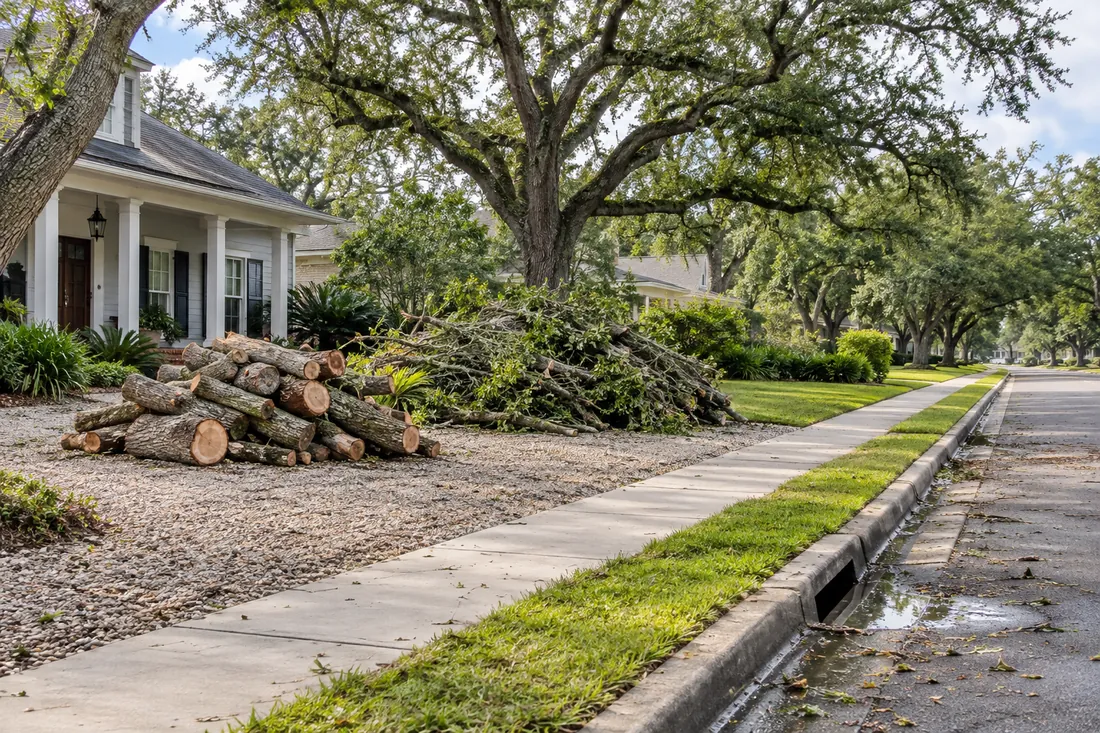
Before crews begin moving storm branches, agree on the temporary stacking area and the route between damaged trees and the loading vehicle. Keep storm drains, public sidewalks, accessible entrances and driveway sight lines clear; a pile that is convenient for loading can still obstruct critical access.
Separate limbs with suspected embedded wire, metal or fencing from ordinary chippable branches. Ask whether the proposal includes cutting, chipping, loading, hauling and final cleanup or only reduction to manageable lengths. Photograph existing hardscape and identify soft lawns or buried utilities that may not support loaded equipment.
Separate staging space from the route used to remove debris
A debris laydown area is useful only when crews can reach it without blocking drains, entrances or required emergency routes. Sketch the places where branches, trunks and root material can be temporarily placed, then map the path the hauling equipment will use. Soft soil, overhead branches and narrow gates may change the practical staging position even on a large parcel.
The pickup plan should distinguish brush from heavy trunk sections and materials that require a different disposal stream. Do not assume every contractor includes chipping, grinding, load-out and final sweeping in one line item. Ask how the work zone will be secured during active operations and what condition the access route should be in when the debris work is finished.

Ask the contractor to define how debris is sorted, reduced, loaded, measured where required and transported to an authorized destination. For a public contract, check the actual documentation, inspection and ticket requirements rather than inventing a measurement standard. Agree on who controls pedestrian access, who authorizes equipment outside the designated route and how changed ground conditions are recorded. Do not place piles over storm drains, in sight triangles or on someone else’s land without permission. At closeout, compare the work area with before photos, inspect drains, access surfaces and turf, and record any remaining stump or hazard work as a separate task.
Assign functional zones before debris starts moving
Storm cleanup runs more smoothly when the site has distinct receiving, sorting, reduction and outbound loading areas. A large open lot is not automatically suitable for all four purposes. Consider ground bearing, access width, traffic movements, drainage and proximity to people or structures. Identify what material is already there and what may arrive under the actual agreement. Keep public streets and emergency routes available as required.
A drawing should show vehicle flow instead of only a rectangle marked debris. Drivers need a controlled entrance, a place to turn and a separate exit where possible. Mark hazards, overhead wires, utility structures and areas that cannot accept heavy loads. If the location is a public facility or leased property, confirm written authorization and operational conditions with the responsible party before treating it as a staging site.
Prioritize access restoration deliberately
After a storm, the first operational need may be to open a hospital entrance, fire access lane, utility gate or occupied building’s driveway. Those priorities are different from fully processing every downed tree. Mark priority corridors and decide where short-term material relocation is permitted without creating a new obstruction. Emergency access work should be scoped separately from later reduction and final hauling where appropriate.
Do not urge residents to drag tangled limbs, approach leaning trunks or move wood touching electrical lines. Unsafe material needs qualified evaluation and appropriate authority coordination. A staging crew may pause processing to clear a critical route, but that should be recorded so remaining piles are not mistaken for unfinished work in the wrong category. The plan should balance immediate access with a traceable route to final cleanup.

Choose reduction equipment after examining the material
Chipping brush and processing large logs involve different machinery, clearance and feeding arrangements. A pile that contains root balls, metal fencing or hidden construction debris may not be suitable for the assumed processing method. The crew should inspect material from safe positions and identify foreign objects or uncertainty before feeding machinery. Equipment selection belongs to qualified operators reviewing the actual site and scope.
Consider dust, noise, flying debris, public separation and the space needed for trucks to receive chips or processed wood. A smaller piece of equipment is not automatically safer if the load or access does not suit it. When reduction is not appropriate, loading and hauling may be the correct path. Quote documents should describe these alternatives as evaluated options, not guaranteed production methods for every pile.
Design a debris staging area around actual movement
Before hauling begins, map the routes that must remain open for emergency vehicles, residents, tenants and delivery traffic. Staging should not block a gate or drainage feature merely because that location is close to the cutting work. Identify the actual owner or agency approval for the laydown area, what ground conditions can support equipment and who is responsible for controlling entry. Access protection is a design input, not a cleanup detail.
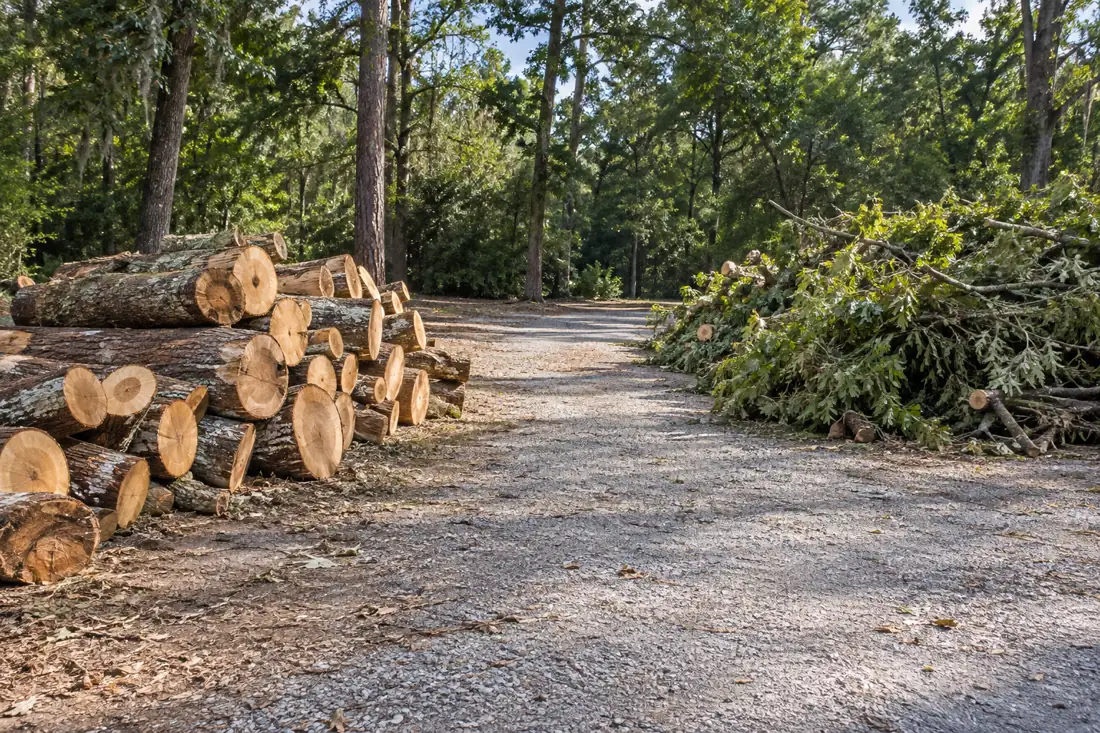
Define material streams in terms the receiving site will recognize. Larger logs, brush, mixed vegetative loads and contaminated or nonvegetative material may have different handling requirements. Do not silently place pallets, construction waste or unknown storm debris inside a woody-material pile. If a buyer requires load tickets or measurements, agree on the measurement process before the first truck leaves rather than reconstructing quantities from photographs.

Keep woody material, access and acceptance distinct
Think through how each pile will be handled twice: first when collected, then when reduced, loaded or removed. Excessive rehandling increases disruption and can block an otherwise workable production lane. Ask whether chipping or reduction is permitted at the proposed location and whether neighboring occupants, utilities, equipment or noise limits affect the plan. No one should assume a public roadway shoulder is authorized staging space.
At the end of a shift, record which zones are open, which piles remain, and which loads were accepted at their actual destination. Match dates, locations and source-specific photographs to the operational record. A planning illustration can show a sensible arrangement but cannot prove the quantity, disposition or completion of a real project. The final scope should make remaining cleanup and restoration visible to the owner.
Design truck flow and load documentation
Storm staging can fail when incoming trucks block outgoing loads or when drivers have no clear place to queue. Identify arrival checks, turning points, operating hours and the point where each load’s origin is recorded. If the buyer needs tickets, weigh slips or destination records, agree on the fields and responsible staff before the first outbound load leaves. Avoid inventing tonnage from visual volume.
Trucks must not use a public sidewalk or drainage shoulder as unapproved overflow space. Build the layout around feasible routes and safe separation from pedestrians and smaller vehicles. Where operations share the site with other agencies, establish radio or contact procedures for conflicts. A daily count of accepted, processed and exported loads can help reconcile progress without representing it as a certified quantity unless the agreed method supports that conclusion.

Protect drains, soils and nearby properties
Branches, chips and loosened sediment can migrate into catch basins, roadside ditches and canals during heavy rain. Identify flow paths and protect critical openings without obstructing facility maintenance. Avoid positioning stacks against fences, drainage structures or root zones that the owner wants preserved. Ground protection should be evaluated for the actual soil and equipment loads rather than used as a blanket claim of zero damage.
Use a before-condition record for hard surfaces, gates and identifiable landscape features. If an operational plan includes sweeping, grading, soil import or drainage restoration, describe those tasks explicitly. Storm-debris removal does not automatically include repairing all unrelated site damage. Flag runoff, unstable piles or a blocked outlet promptly so the responsible property or infrastructure authority can determine the needed response.
Establish stop-work triggers for changing conditions
Weather and debris condition can change quickly during a prolonged storm cleanup. Lightning, rising water, unstable loads, exhausted ground bearing, hidden utilities and unmanageable public encroachment are reasons to reassess. Put responsibility for site supervision and emergency contact on the project plan. A schedule target should never override a credible hazard or a requirement from the responsible facility operator.
Identify where machinery will be secured and how loose material will be contained if operations pause. If a buyer requests extended hours or a new material type, treat those changes under the agreed authorization process. Do not promise an emergency response time without confirming current availability and conditions. A well-managed shutdown is part of successful storm work, not proof that the project has failed.

Close staging areas in measurable stages
Completion may occur in phases: intake closes, remaining piles are processed, outbound hauling finishes and the ground is returned to the agreed condition. Record each phase separately. If some logs are retained for the property owner or another contractor, identify their location and responsibility. Check access lanes, drainage openings and the boundaries of the authorized work area before release.
Provide a concise reconciliation of the material categories, documented load counts and any required disposal evidence. Photographs of cleared zones should include context and not claim that unseen ground or underground systems are undamaged. Outstanding grading or landscaping obligations should remain explicit. The goal is a site that the responsible owner can inspect and accept against a clear scope, not simply a dramatic before-and-after photo.
Set a daily inventory checkpoint
At the end of a storm cleanup shift, record which zones received material, which were reduced and which were cleared for outgoing trucks. Track remaining piles by category and location, not simply the number of trucks on site. A load count can help explain activity but does not establish volume or weight without an accepted measurement procedure. Keep any required tickets with the corresponding stage record.
A simple daily map helps the next crew avoid placing a fresh pile over material already waiting for processing. It also identifies drains, gates or emergency access paths that need immediate attention. If a zone cannot be cleared because another authority controls it, mark the restriction honestly. The report should show a usable operational picture rather than a promotional estimate of progress.

Make the exit inspection specific
Before releasing a temporary staging location, confirm that accepted vegetative debris has been removed or placed as authorized and that equipment no longer obstructs designated routes. Review obvious chip accumulation, surface distress, drainage openings and the original site boundaries with the responsible property contact. Any separately contracted restoration should have its own completion criterion.
Keep visible before and after records with accurate source descriptions, plus a list of matters requiring another contractor or agency. Do not assert that the ground is universally undamaged or that flood-control performance was restored merely because piles are gone. An honest handover lets the property owner decide whether the area is ready for its next use.
Rain, drainage and staging-zone decisions
Temporary storm-debris piles can obstruct a ditch, inlet, gate or turning lane even when a lot looks spacious from the street. Before accepting a staging layout, mark surface-water flow, low ground, truck movement and the boundary of each material type. Vegetative branches, root balls and other waste may require different handling or a different permitted destination, so the operator should not assume a common pile solves every disposal requirement.
A practical shift handoff records what arrived, what was processed, what still needs hauling and which access areas must remain clear. If another storm or rising water changes safe routes, the responsible site contact needs to revise the plan instead of treating the original sketch as permanent. Documenting those decisions helps the next crew work without accidentally recreating blocked drainage or mixing material streams.
Questions about this project
Does vegetative-debris hauling include building waste?
Do not assume it does. Describe mixed roofing, fencing, soil or other material before pricing. Ask what is accepted in the scope and what needs a separate provider or handling arrangement.
Why does access affect a debris-removal price?
The route, loading position, carrying distance and obstacles affect how material can be handled. Send photos of both the pile and the access, and identify any remaining tree or utility hazards.
What access information helps an estimator?
Send the narrowest opening, overhead obstacles, turns and the distance between the tree and the loading area. Include photos of the entire route and identify steps, soft ground or features that must remain protected.
Should I remove a fence before the visit?
First ask the contractor to assess access and agree on any temporary opening. Identify who owns the fence, who can authorize the change and who will reinstall it. Do not assume the opening is necessary or included.
Does cleanup include every root and wood chip?
That depends on the written scope. Tree removal, stump grinding, chip hauling and root excavation are different tasks. Ask what material is removed, what remains and whether soil or landscape restoration is separately included.
What should a final walk-through check?
Compare the identified trees and tasks with the agreement. Check agreed debris handling, stump treatment, access openings and any listed restoration. Record unresolved items clearly instead of relying on a general impression that the property looks finished.
How should extra work be approved?
Use the agreed approval process and identify the change, reason, scope, price or schedule effect as applicable. Confirm who has authority before treating an additional tree or task as part of the original job.
What completion records are useful?
Keep the agreed scope, tree or area identification, authorized changes, invoice and labeled photos where appropriate. Include unresolved items and a contact. Contract-specific records should follow the buyer’s stated requirements.
What should I compare besides the price?
Compare tree identification, work objectives, access assumptions, hauling, stump treatment, site finish and exclusions. Ask whether permits or other coordination are part of the scope and who can approve changes if conditions differ.
Does an online request book the crew?
No. A request starts the estimate conversation. The company still needs to discuss scope, availability and any site assessment. For a dangerous or urgent condition, call 504-458-8336 rather than relying on a form response.
What should I tell Tree Huggers about storm debris staging & reduction?
Explain the property address, the work you want and the specific concerns: work objective,property access,cleanup standard. Send safe photos of the tree, surroundings and access route. The contractor can then discuss the assessment and scope needed for this situation.
How do I request an estimate for this work?
Call 504-458-8336, text photos or use the estimate form on this page. Include the address, desired outcome and any timing constraints. The company will need to review scope and availability; an online request does not confirm a price, appointment or emergency dispatch.
Get a scope for your property
For staging and debris reduction work, send a site map, accepted staging locations, debris categories, critical access routes, disposal requirements and the authority responsible for material acceptance.
Debris staging is not simply a larger pickup
When storm material is collected at a temporary reduction or staging location, the plan must deal with ingress and egress, material separation, equipment circulation, neighbors and eventual removal. A collection crew handling a household branch pile may not be responsible for site operations, volume documentation or the restoration of an intermediate stockpile area. Define whose responsibility ends at each handoff.
For individual property cleanup, the tree debris removal guide focuses on accepted loads and safe access. For public jobs with mapped locations and procurement controls, the public-works tree-services guide distinguishes tree cutting, loading and final inspection. Ask the buyer which operations are actually covered before treating them as a single service.