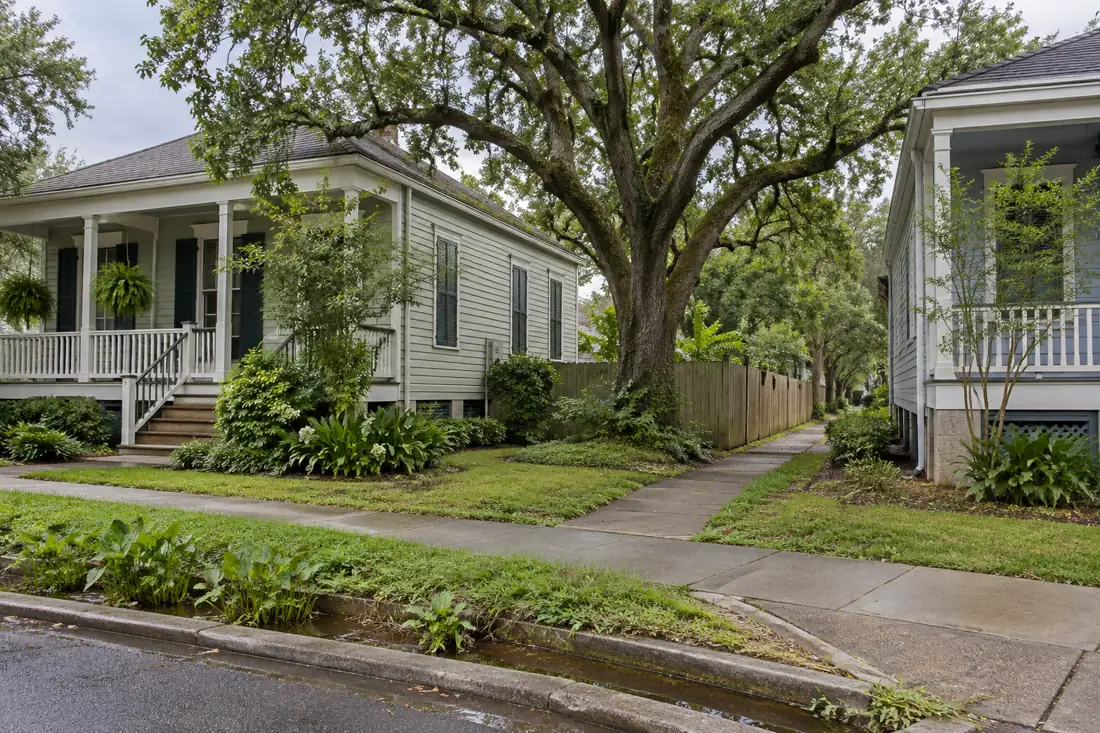
Tree work where property protection is critical
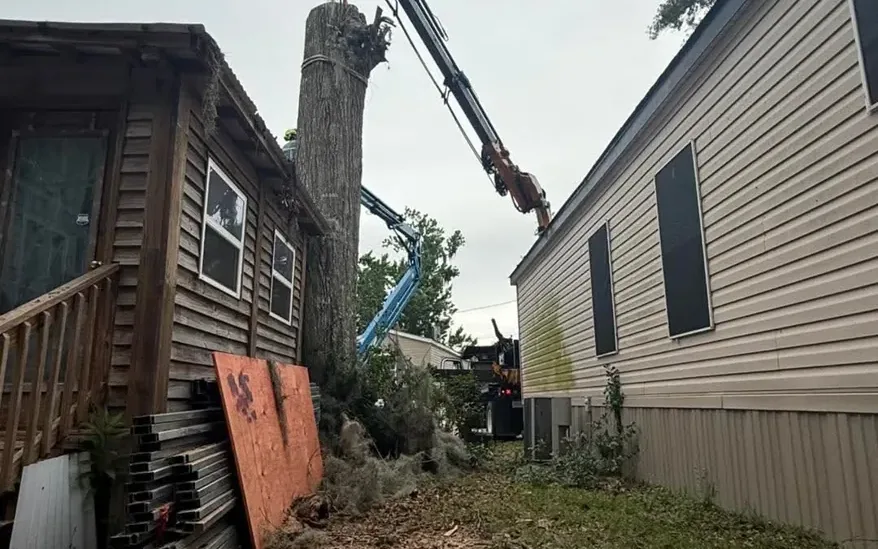
Garden District jobs often involve large trees close to roofs, balconies, fences, sidewalks, landscaping and neighboring property. Open dropping may not be appropriate, so limbs and trunk sections may need to be rigged or mechanically supported.
Tree Huggers evaluates access, tree condition, surrounding targets and debris handling before work begins. For pruning, the objective is targeted improvement rather than unnecessary canopy reduction.
Tell us what the property wants to keep
Begin with the tree’s role in the garden and the reason for the inquiry. An owner may value shade over a sitting area while needing a specific branch objective near a roof, or may be reconsidering a tree after a visible change. Explain both the retention goal and the concern. A general request to make the tree smaller can hide a more useful question about clearance, damaged wood or the tree’s current condition.
The pruning service and preservation guide provide related context. Show the complete tree and the nearby garden, then identify the particular work you want discussed. A photograph should help locate the question without turning every tree or planted feature in the image into an authorized task. Ask what the proposed visit includes and whether a separate condition evaluation is needed before committing to a particular treatment or removal.
Connect branches with the actual building features
Photograph the relationship between canopy and roofs, porches, balconies, exterior fixtures and other nearby features. Identify which concern is current and which relates to planned work by another provider. A tree-care brief is more useful when it connects the desired result with a recognizable location instead of asking for unrestricted clearance around the whole building. Do not climb or approach unstable material to obtain a close photograph of the exact point.
Explain any building repair, renovation or future-use requirement before the tree scope is accepted. The person responsible for that project should state the condition they need. Pruning, a structural review and a building repair are different responsibilities even when they concern the same roof edge. A clear tree-work objective helps preserve useful canopy while making it possible to review the actual result afterward, rather than judging the job by how much foliage has been removed.

Put garden protection into the access discussion
Identify planted beds, paths, walls, irrigation features and trees the owner intends to retain. Show the route from entry through turns to the work area, plus the proposed material route out. A well-kept garden may contain several practical constraints that a close tree photograph omits. State what is known about the ground and where access depends on a gate, temporary arrangement or another owner’s cooperation.
The equipment planning hub explains the relationship between method and site. A covering or protection arrangement should not be treated as an unlimited guarantee against every possible site effect. Discuss the actual route, work objective and restoration responsibilities. Do not remove planting, dig around roots or change a boundary before the company has reviewed the relevant preparation. Accurate information about what must stay is useful while there is still time to plan around it.
When another grounds provider maintains the beds or irrigation, connect that provider with the relevant preparation and finish questions. Existing photographs can document the visible garden condition before work without promising a particular outcome or implying that a later plant problem has a known cause. Keep those records labeled with the actual property and date. The purpose is a shared description of retained features and responsibilities, not a substitute for reviewing the work route and accepted scope.
Clarify authority before the tree work is defined
Identify the person who owns or is authorized to manage the tree and property. If a manager or tenant is gathering information, provide the decision-maker and change-approval contact. Explain any boundary, shared route or public-space question that could affect the scope. A branch visible above a fence does not by itself establish whose tree it is or authorize work from an adjoining property.
For public-tree or frontage questions, consult the City’s tree information and confirm the requirements for the specific work with the responsible authority. This page does not determine a property’s legal status or grant permission to remove or prune a particular tree. Keep applicable approval and access responsibilities visible before scheduling relies on them. The accepted work should match the authority actually established for the tree, route and property area involved.

Garden District: define pruning limits first
A mature tree may look crowded from a porch even when most branches function normally. Identify the exact concern: deadwood, roof contact, a visible defect or clearance over a walking route. The requested result should name that concern instead of merely asking to thin everything.
Removing excessive live foliage can create a different longer-term problem. Ask which limbs are targeted and why, rather than approving a vague reduction above the building. A pruning decision should consider the individual tree’s condition and the surrounding property.
Protecting landscaped beds and decorative fencing is a distinct part of the work plan. At completion, compare the named cuts, cleanup route and retained branches with the approved scope. A pruning invoice is not a permanent safety certification for future storms.
Compare retention options with a defined review
If a cavity, split, new lean or previous failure prompted the inquiry, describe what you observed and when. Share known storms, excavation or other changes that may help the reviewer understand the history. The assessment page distinguishes work pricing from a defined evaluation and any written findings. Ask about the proposed scope, relevant qualifications and limitations rather than expecting a photograph to establish structural condition.
Possible work categories can include selective pruning, support or removal, but those are not interchangeable assurances. The support-service overview provides related context. A retained-tree choice needs an explanation of its intended purpose and follow-up, not a guarantee that a living tree will never change. Keep the recommendation connected to the particular tree and question so the owner can understand what a proposed investment addresses and what remains outside it.
Define the finish when removal is the accepted result
For an intended removal, identify the tree and discuss wood, branches, the stump and the material route. State whether any material is requested to remain and where. The removal overview helps organize the inquiry. Do not assume a proposal includes preparing firewood, preserving particular pieces for a recipient or leaving the garden ready for every later use simply because the standing tree has been removed.
The stump guide connects below-ground tasks with future use. Grinding, removing grindings, excavation, backfill and replanting are different operations. If another grounds or landscape provider follows the tree company, share the finish that provider needs. On a carefully maintained property, an agreed handoff is especially useful: it lets each party recognize its own task without transferring responsibility for unrelated repairs or garden reconstruction through an undefined promise of complete cleanup.
Keep timing connected to actual household use
Describe the entrances, sitting areas, driveways and routes used by residents, visitors, deliveries or other contractors. Explain pets and any arrangements needed to make the work area available. The company needs a practical operating window for the accepted task, including setup and material movement. A quiet garden photograph or a preferred date alone does not establish that all relevant access and use questions have already been resolved.
Report changes before the visit relies on an earlier plan. A new fence, stored building material or a ground condition after weather can affect the route even when the tree objective is unchanged. The customer planning guide offers related preparation questions. Confirm scope and availability directly; an estimate form starts that discussion rather than booking the work automatically. Keep the contact who can approve a revised arrangement available through the agreed communication process.
Review completion and continuing care separately
Compare the work with the accepted tree identifiers, objective, access assumptions, material decisions and finish. Record any remaining item and who is responsible for it. If labeled photographs are needed for an absent owner or manager, arrange that output beforehand. Completion of selected work should not be described as an assessment of every tree in the garden or a permanent assurance about every future weather event or property change.
A planning example is limited clearance work on a retained oak, review of a separate trunk concern and later planting-area restoration by the owner’s gardener. The sequence preserves distinct decisions instead of treating them as one undifferentiated service. To begin, send the property address, safe photographs, the features you want retained and the outcome you need so Tree Huggers can discuss an appropriate next step.
Tree Service Garden District questions
What should I explain about a valued garden tree?
Describe what you want to retain, the specific concern and the result you need reviewed.
Does more removed foliage mean a better pruning job?
No. Compare work with a defined objective rather than the amount of canopy removed.
What building details help with the estimate?
Show roofs, porches, balconies and other features in relation to the affected branches.
Should garden features be identified before access is selected?
Yes. Show retained planting, paths, walls and known features together with the complete route.
Does ground protection guarantee no site effects?
Do not assume unlimited protection. Discuss the actual conditions and accepted restoration responsibilities.
Who must approve work on a managed property?
Identify the owner or authorized decision-maker and the process for approving changes.
Can this page determine permission for a particular tree?
No. Confirm ownership and relevant official requirements for the actual tree and work.
Is an estimate automatically a structural assessment?
No. State the evaluation or written output you need and confirm the proposed scope.
Does cabling guarantee the tree will never fail?
No. Ask about purpose, limitations and follow-up for any proposed retention option.
What should a removal scope clarify?
The identified tree, wood and branch handling, stump decisions, access and agreed finish.
Is replanting included with stump work?
Do not assume it. Grinding, excavation, backfill, restoration and planting need separate scope decisions.
What belongs in the completion review?
Compare the work with accepted objectives, material decisions, finish and remaining-item responsibilities.
Let’s plan your tree work.
Send the property address, safe tree photos and the result you need. Include access restrictions and the person who can approve the work.