Prune selectively
Magnolias often carry dense foliage and lower branches. Pruning should solve specific clearance, deadwood or structural concerns rather than forcing the tree into an unnatural shape.
Define the actual Southern magnolia concern
Southern magnolias retain dense crowns and shed older leaves. Identify whether the concern is dead wood, roof contact, a changed lean, thin foliage, altered drainage or construction near roots. Include the date the change became visible.
A blanket canopy lift can permanently alter the form of a magnolia. Discuss selective cuts and which lower limbs remain. Do not assume fertilizer or pesticide is warranted before a plausible cause for decline is established.
Keep material off the trunk flare, note paved surfaces or delivery traffic beneath the tree, and list leaf cleanup separately from structural pruning. Save the agreed limits so the crew’s work can be reviewed against the original objective.
Manage branches near roofs, drives and walkways with targeted cuts.
Construction and soil compaction can stress mature roots.
Broken branches and new structural changes should be assessed after severe weather.
Removal decisions
Removal may become appropriate when severe decay, root failure, repeated major limb problems or site conflicts make long-term management impractical.
Related resources

Recognize healthy Southern magnolia behavior
Southern magnolia, Magnolia grandiflora, is treasured in Louisiana for its glossy evergreen foliage, large white blooms and dense architectural canopy. Evergreen does not mean that each leaf stays on the tree forever. Older leaves often drop in spring and early summer, and fallen flower petals and cones add another seasonal layer beneath the crown.
A yard full of tough brown leaves can be inconvenient, but it is not proof that the tree is dying. Evaluate unusual thinning, discoloration and dead branches against the species’ normal cycle.
Look at the entire crown from a safe distance. Some magnolias are grown with branches sweeping low to the ground, while others have been raised for traffic or footpaths. Compare foliage color, growth at the tips, leader condition and the shape of old pruning cuts.
If a section declines suddenly or bark separates near a main attachment, investigate rather than assuming the issue is seasonal litter. A good maintenance plan starts with correct identification and the specific reason someone wants work performed, not a demand that every magnolia be cut into a narrow cone.
Preserve the lower canopy where it belongs
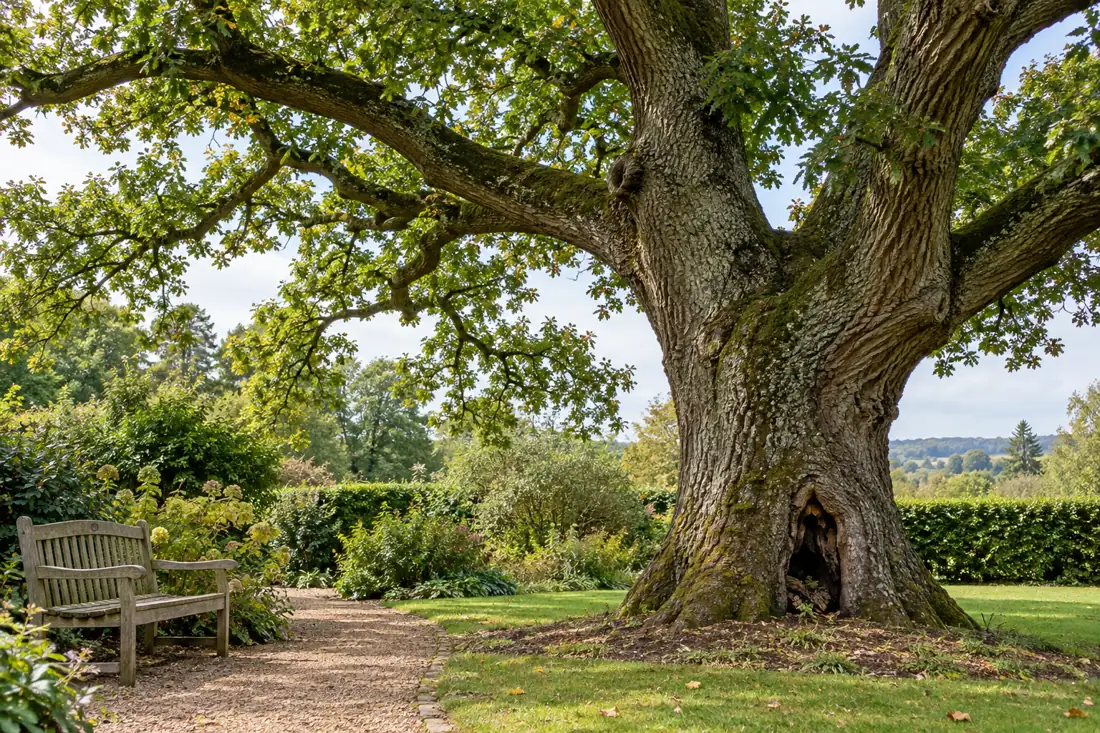
A mature Southern magnolia often looks best when its natural layered crown is allowed sufficient room. Removing all low branches may expose a bare trunk, change the tree’s character and create lasting clearance demands as new branches develop. Consider whether the branches genuinely obstruct a sidewalk, driveway or building, and whether an alternative path or modest selective cut would solve the problem. The owner’s desired landscape appearance matters, but the tree should not be damaged for an easily avoided cosmetic preference.
If a branch rubs a roof or obstructs a walkway, ask a qualified professional to identify the specific cut and its consequence. Proper reduction or branch removal should preserve the collar and not leave a long dead stub. Avoid repeated severe shearing across the outer crown. Magnolias can respond with dense shoots that obscure structural problems and demand further maintenance. For young trees, intentional early pruning can help maintain desired clearance while cuts are smaller, but large mature branches need individual assessment before removal.

Read a magnolia’s natural form before prescribing pruning
Southern magnolias may carry a low, dense canopy and shed older leaves naturally. Lower limbs are not automatically defective, and raising the canopy simply for a tidier appearance can change shade, screening and limb exposure. Identify the actual clearance or branch condition that motivates work.
Before requesting cuts, record walkways, nearby roofs and the growth you want to preserve. A competent scope should distinguish a limited clearance objective from wholesale removal of low limbs.
Distinguish magnolia leaf drop from lasting decline
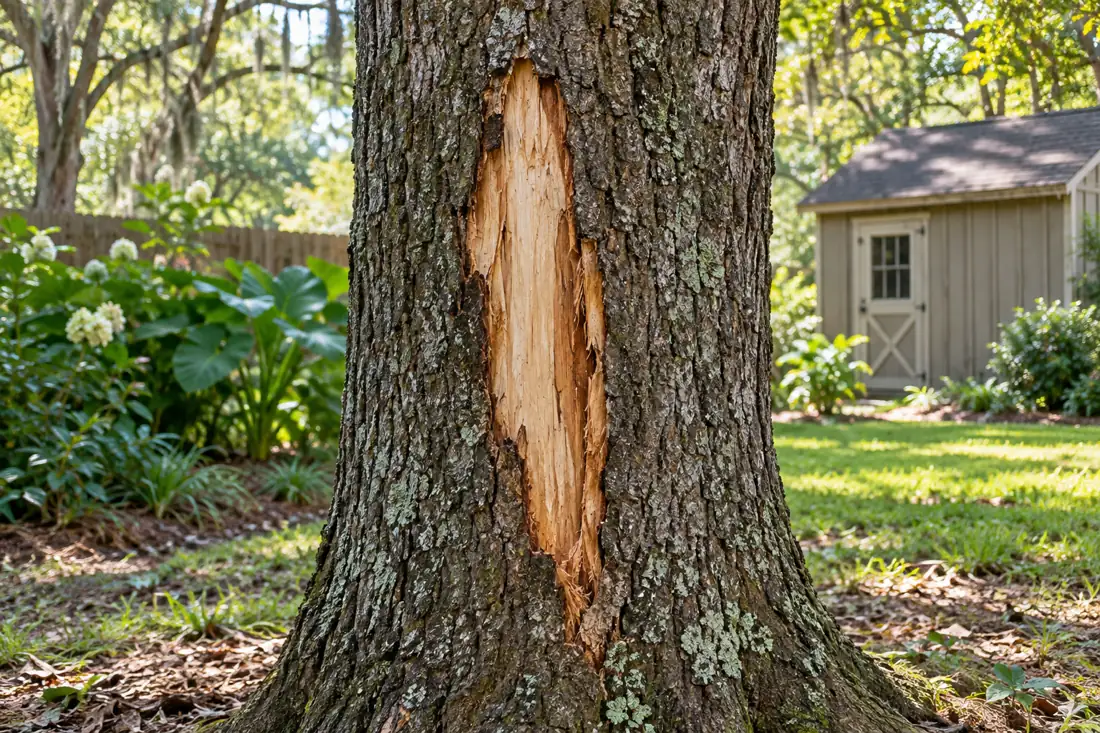
Southern magnolias carry dense evergreen foliage and may shed older leaves as part of normal renewal. Leaf litter and a shaded lawn are not proof that the tree is dying. Look for persistent loss of live crown, major branch injury, damage around the base and a history of grading or compaction. A photograph of one discolored leaf cannot determine the overall condition.
If limbs require clearance around a building, ask which branch or contact point needs attention and what removal limits are proposed. Severe opening of the crown can have lasting visual and biological effects. The estimate should distinguish ordinary clearance from cutting dead or broken structural wood and state how debris will be handled.
Understand the root spread before paving
Southern magnolias can develop substantial surface roots, especially in constrained urban soils. LSU AgCenter cautions against planting them too close to slabs, driveways and walkways. Those visible roots are not a license to chop them away when a paving edge lifts. Roots also anchor the tree, and cutting them close to the trunk may have consequences that appear only after later storms or drought. Before installing a patio, sidewalk or buried service, mark the proposed route and review opportunities to preserve the root system.
Keep soil grade changes to a minimum around established trees. Do not bury the root flare under fill or build a tightly packed planting bed against the trunk. A broad mulch zone can reduce mowing conflicts, cushion foot traffic and help moderate soil moisture; it should taper away from the trunk rather than forming a mound against bark.
Where a hardscape conflict is severe, ask whether a different paving design, root-friendly path alignment or professionally assessed removal is more realistic than repeated root cutting. Fixing the pavement must not quietly destabilize the tree.

Protect magnolia roots while preserving the tree’s natural outline
A Southern magnolia can carry evergreen foliage close to the ground and still be healthy. Before raising the crown to create a bare trunk, establish what clearance is genuinely needed at paths, delivery routes and windows. Mature lower limbs contribute to the tree’s form, so selective work usually deserves more thought than removing an entire lower tier for appearance alone.
Look beyond the leaves when proposed paving or grade work is near the tree. Show the distance between the trunk, planned footing, compacted work area and any drainage changes. Protect the root zone during material delivery and ask for qualified guidance before a trench or cut crosses important roots. Mulch piled against the trunk and standing water against the root flare should not be accepted as routine finishing details.
Keep season, irrigation history, site changes and observed canopy symptoms in the record. If a tree has recently been transplanted or heavily disturbed, follow-up may be more useful than immediate additional cuts. A written scope should name the exact branches or work boundaries and clarify debris handling, root protection and who can authorize changes.
Give newly planted magnolias appropriate water
A young magnolia needs attention while roots expand into the surrounding soil. Planting too deep is a common and avoidable problem, and new specimens can be stressed when they are placed in compacted, poorly drained or constantly saturated planting holes. LSU AgCenter guidance emphasizes proper planting depth, establishment moisture and mulch. Do not assume that a mature-looking nursery tree is immediately drought tolerant. Check the root flare and the condition of the soil before adding more water or fertilizer.
Watering should reflect rainfall, soil drainage and the time since planting, rather than a fixed rule applied regardless of weather. In New Orleans, a site can be waterlogged after repeated storms and dry in a period of heat. Both conditions affect root function. If leaves yellow, curl or drop outside their usual pattern, investigate moisture, placement and planting conditions before treating it as a disease. Fertilization is not a universal remedy and cannot correct a buried root flare or roots damaged by construction.
Protect the root zone during landscape changes
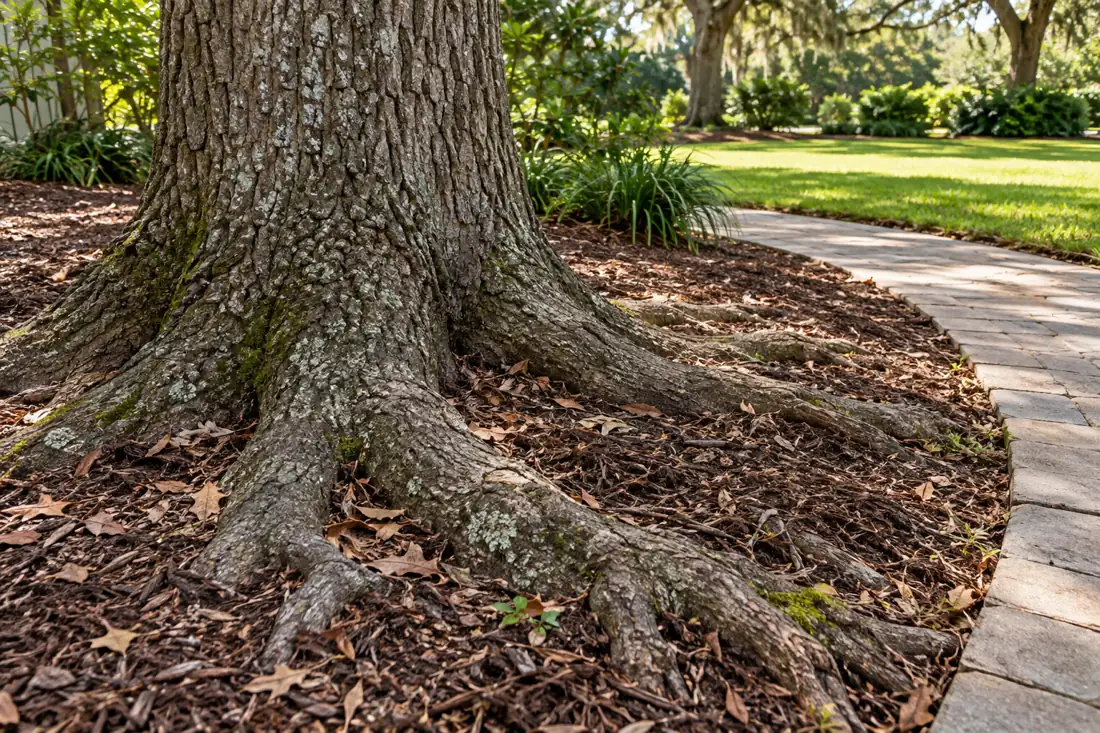
A magnolia near paving or new beds can be affected by soil compaction, fill over existing roots and equipment movement. Observe the trunk flare and original grade; avoid building up soil against the bark or cutting roots to fit edging without an appropriate assessment.
When coordinating tree and landscape contractors, share the planned excavation limits and equipment route before work begins. Healthy foliage on the day of construction does not rule out delayed root stress.

Recognize Southern magnolia structure without over-pruning
Southern magnolia is an evergreen broadleaf tree, not a deciduous shade tree that should be opened up simply to let in more light. Large leathery leaves, rusty brown leaf undersides and prominent creamy flowers are familiar identification clues. Leaf drop can occur while the tree remains evergreen, especially as older leaves are replaced. Ask about changes from that tree’s normal appearance instead of treating every fallen leaf as a disease signal.
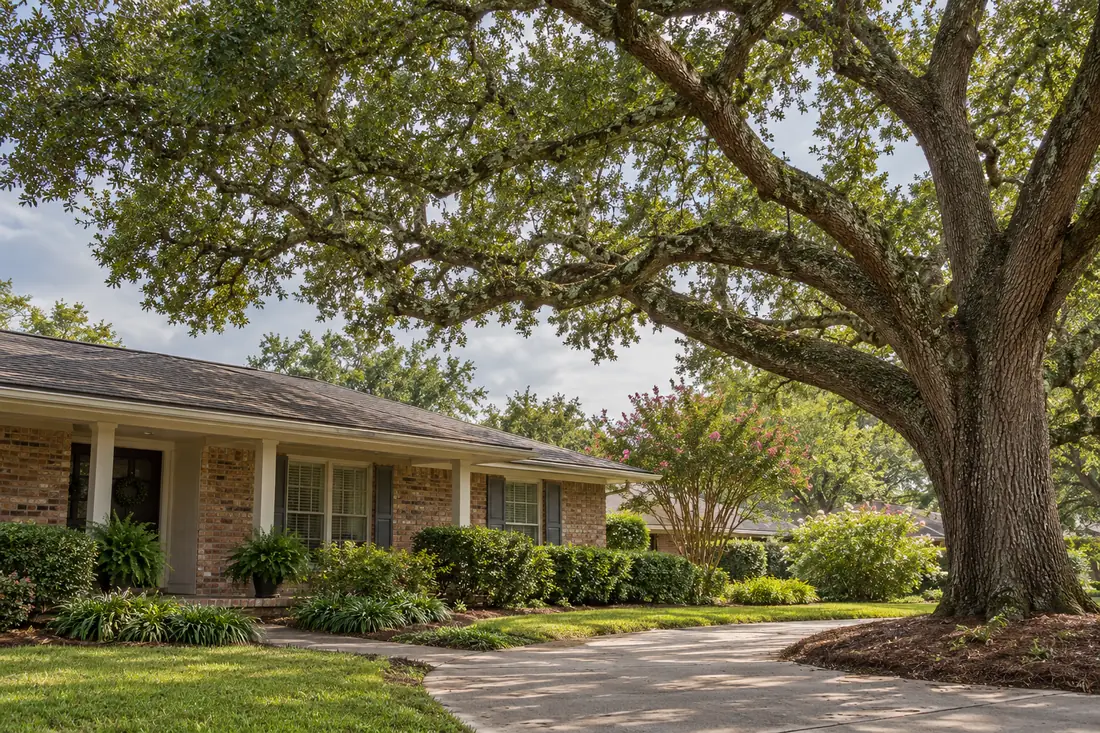
For a mature magnolia beside a house, look at the destination of each proposed cut. A lower branch may provide the tree’s natural shape, while another branch may interfere with a walkway or roof. Selective clearance and removal of damaged material are different from excessive canopy raising or topping. Keep the amount of live crown removed tied to an explained objective and the condition of the actual tree. Avoid making large cuts merely to match an arbitrary height line.
Photograph real symptoms before requesting a diagnosis
Magnolia roots may extend well beyond the trunk and can be affected by excavation, new paving, repeated compaction or changed drainage. Before planning a driveway extension or trench near the tree, show the proposed work area to a qualified professional. Surface roots should not automatically be cut for a smooth lawn. A description of recent construction, standing water or soil filling may be important context when foliage appears sparse or individual branches decline.
To request an assessment, include the full crown, trunk base, any damaged branch and the surrounding pavement or planting bed in a set of safe photographs. Note when the concern became visible and whether heavy wind, construction or a drainage change preceded it. The images can help determine what should be inspected, but the actual pruning or removal recommendation still depends on tree condition, site targets and a professional evaluation.
Make room for flowers, cones and leaf litter
Magnolia flowers are a major reason people plant the tree, but bloom and seed structures bring maintenance needs. Large petals and cones may collect around patios, pools, drains and parked vehicles. Make that ordinary cleanup part of the landscape plan rather than removing healthy limbs to eliminate every flower.
If the tree is being planted near a pool or hardscape, think about mature canopy size, prevailing winds and future litter patterns from the beginning. A compact cultivar such as Little Gem may suit some constrained spaces better than a full-size specimen.
Seasonal cleanup should be performed without injuring roots or compacting the soil. Raking leaves is not the same as aggressively tilling or trenching through the upper root zone. When flowers and seeds fall onto a roof, first assess the drainage and gutter maintenance plan; do not assume a large branch must come down.
If a branch is directly abrading shingles, clearance might be appropriate, but cutting the entire side of the magnolia may create new problems. The most effective decision often combines sensible housekeeping with a few targeted cuts.
Inspect dense foliage for hidden deadwood
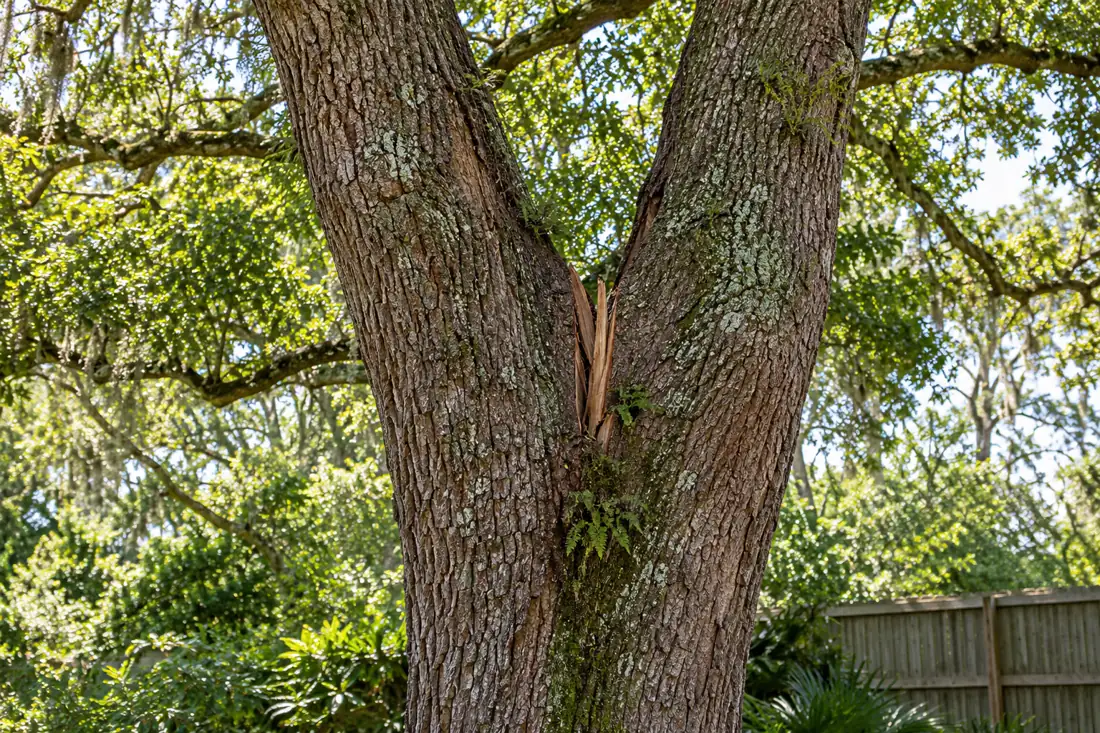
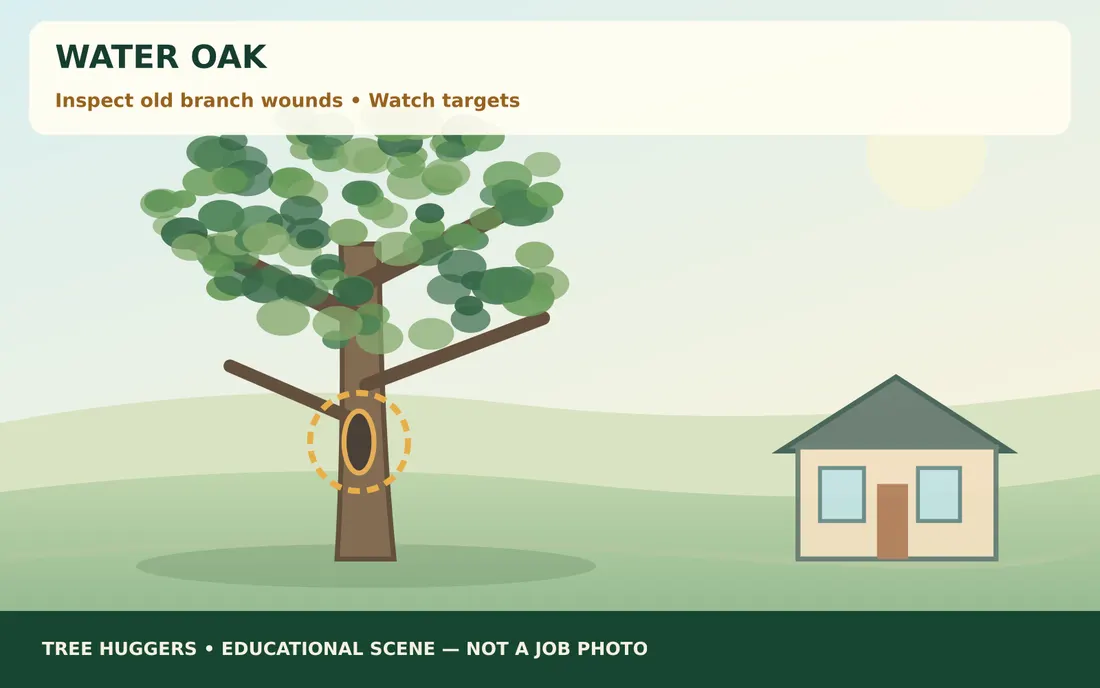
A thick evergreen crown can conceal dead interior branches and old fractures that a quick drive-by inspection misses. Look from several safe ground-level viewpoints and note branches that lack foliage while neighboring branches remain normal, loose broken material caught in the canopy, and major unions with visible wounds. A twig that falls during normal weather is not equivalent to a split supporting a heavy limb. Ask a professional to distinguish ordinary interior dieback from the kind of defect that warrants pruning or more detailed inspection.
Do not climb inside a mature magnolia to check a suspected hanger or probe a cavity from a ladder. Dense leaves can hide unstable branches and make access more difficult. An ISA-qualified arborist may use appropriate techniques to inspect the crown and assess the remaining structure.
If a large dead branch is above a porch, school route or parking bay, restrict use of that area while advice is obtained. A written assessment should tell you which feature is concerning, not simply describe the whole tree as overgrown.
Take a species-aware approach to hurricane planning
Louisiana extension storm guidance generally places Southern magnolia in a higher wind-resistance group, but site condition can override species averages. Recent root cuts, severe canopy imbalance, a poorly formed fork or a large internal cavity deserve attention. Preparation should focus on observed defects and targets rather than stripping an otherwise healthy canopy. Excessive pruning removes foliage and creates wounds without providing a guarantee against hurricane damage. The correct recommendation may be no cut, selective clearance, closer assessment or removal when the tree is structurally compromised.
After wind events, inspect from outside the possible fall zone. The dense crown can hold broken material, and damaged limbs may remain hidden from one side. Photograph a new lean, crack or root movement from a safe position. If a palm-sized branch has fallen, ask whether it came from a minor outer limb or signals a more serious defect above.
If electrical lines are involved, leave the area to the utility. Do not let the tree’s reputation for wind resistance override visible evidence of damage.
Plan access for heavy crown work or removal
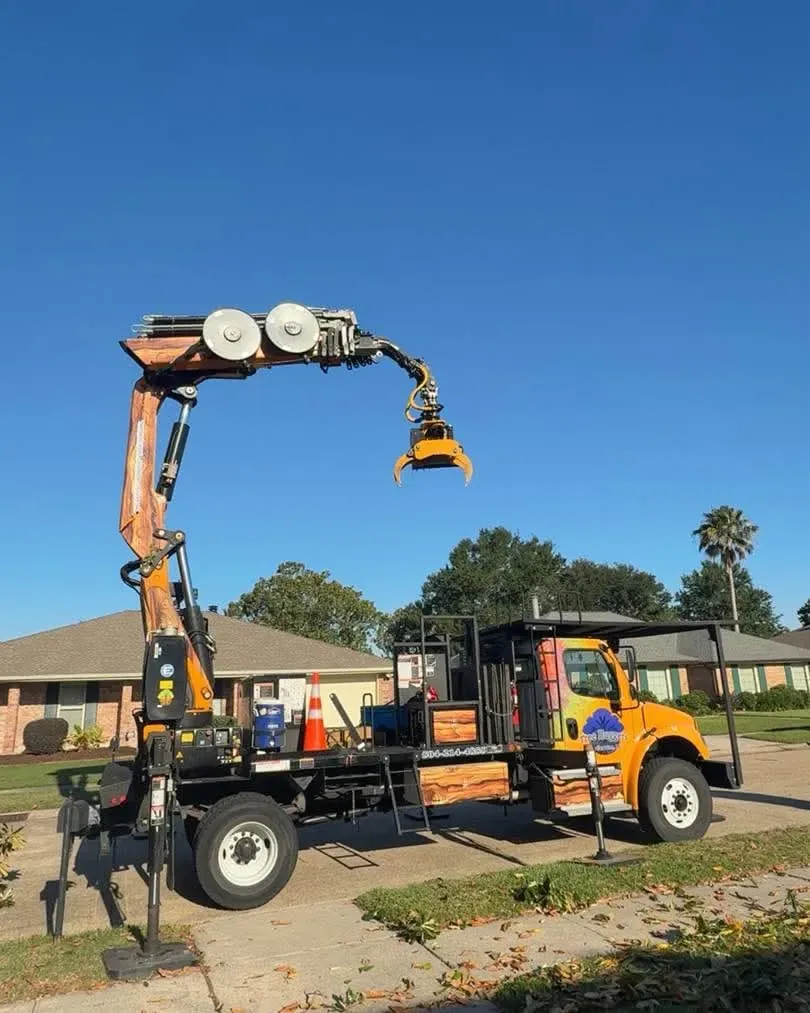
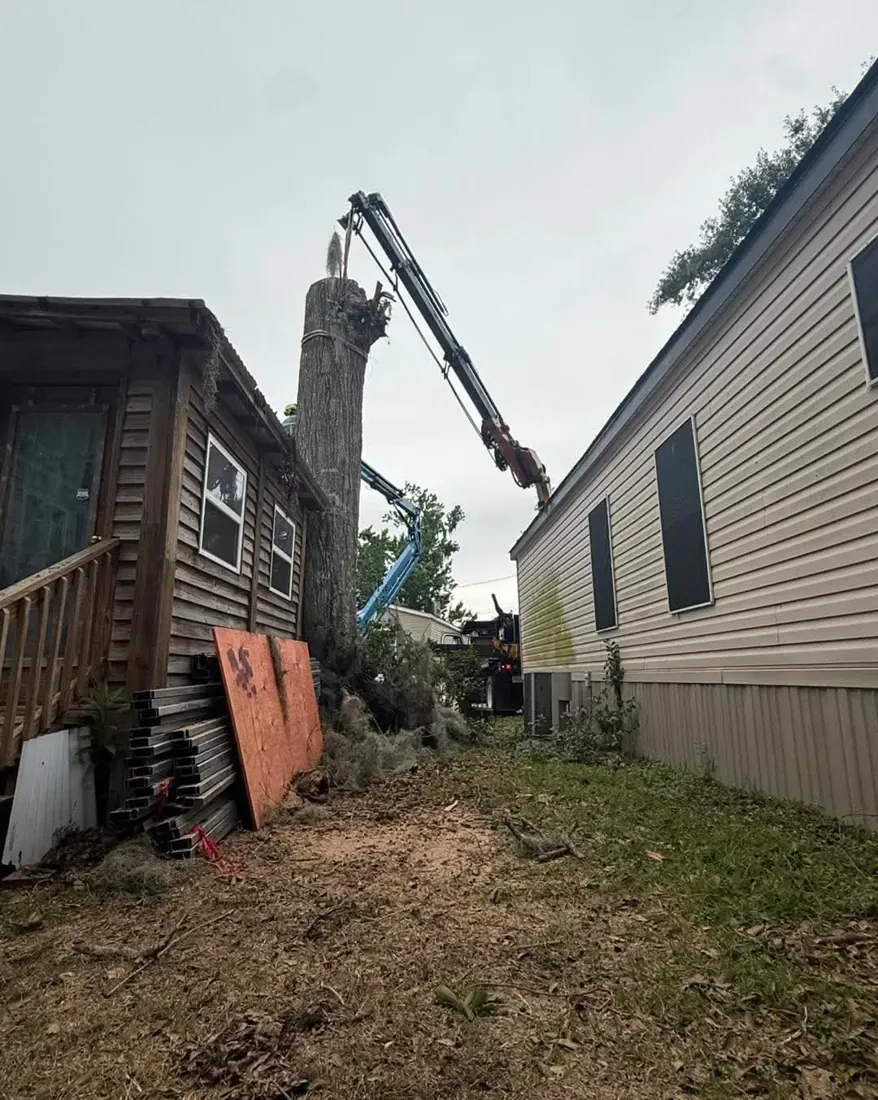
A mature magnolia can occupy a narrow courtyard, sit close to a building or span a neighboring fence. Large limbs cannot necessarily be dropped freely, and dense foliage adds weight and obstructs visibility. A contractor may need careful sectional removal, controlled rigging or mechanical access. Walk the route from the street to the tree and account for gate width, utilities, soft soil, overhead lines and landscaping. Ask how the crew will protect the home, parking and other plants while handling wood.
The estimate should specify whether the job is pruning, crown clearance or full removal and include a clear description of what happens to the stump and large wood. Stump grinding, hauling and surface restoration are separate tasks that should not be presumed included. If a new magnolia will be planted, compare its eventual size with the original space before choosing the cultivar. Avoid replacing one overcrowded tree with another solely because the smaller nursery specimen fits today. Thoughtful spacing reduces future pressure for severe pruning.
Request practical care and preserve the tree’s strengths
Before authorizing work, ask the contractor to describe the actual problem, proposed cuts, expected appearance and whether the tree will retain its natural form. An old magnolia may have considerable landscape value that cannot be replaced quickly. Conversely, a major split or unstable root system over an occupied area may require decisive action. Good care separates aesthetic choices from structural safety and does not promise that ordinary pruning eliminates every storm risk. Record past treatments and take photographs afterward for future comparison.
For useful local background, read the LSU AgCenter Southern magnolia article and the tree trimming scope and cost guide. If decline is suspected, ask about root conditions, water, foliage and pruning history instead of treating a single symptom as a diagnosis. Whether the outcome is preservation, limited clearance or removal, a carefully defined scope helps the property owner protect the tree, the building and the surrounding landscape.
Questions about Southern Magnolia Tree Care in Louisiana
Why does my evergreen magnolia drop leaves in spring?
Southern magnolias regularly shed old foliage, often in spring and early summer, while continuing to grow new leaves.
Should lower magnolia branches be removed?
Only where there is a clear access or design need. A sweeping lower canopy is a normal part of the tree’s appearance.
Can magnolia roots affect a driveway?
Surface roots can create conflicts with paving. Do not cut significant roots without reviewing effects on tree stability.
Does brown leaf litter mean my magnolia is unhealthy?
Not by itself. Look for unusual crown dieback, changes in new growth or other persistent symptoms.
Should I shear a mature magnolia into a narrow cone?
Avoid severe, repeated shearing that removes healthy foliage and changes the natural crown. Use targeted pruning.
When should I worry about a dead branch inside a magnolia?
Large dead limbs over occupied areas warrant prompt assessment, especially if the dense foliage conceals suspended branches.
Can I plant a Southern magnolia beside a house?
Consider mature size, surface roots, canopy clearance and litter before planting; a compact cultivar may be more suitable.
Do magnolias tolerate wet soil?
Site tolerance varies. Young plants can be stressed by poor drainage, deep planting or chronic waterlogging.
Is a magnolia considered wind-resistant in Louisiana?
Extension guidance generally rates Southern magnolia favorably, but damaged roots or branches can still create serious risk.
What if a magnolia branch rubs the roof?
Identify the actual contact and request careful clearance pruning rather than removing an entire side of the crown.
Can a magnolia be saved after storm damage?
Recovery depends on the extent of root, trunk and major branch damage. Qualified assessment can explain realistic options.
Does a magnolia removal quote include stump and cleanup?
Not automatically. Ask for exact cutting, rigging, wood hauling, grindings and landscape-restoration terms.
Get a scope for your property
Southern magnolia often holds a dense evergreen canopy, but older foliage can drop seasonally and surface roots may be prominent near lawns or pavements. Photograph the overall crown and changes over time rather than treating ordinary leaf litter as evidence of a dying tree. Watch for broken limbs, severe trunk injury, unusual dieback or soil changes around the root zone.
Do not raise the canopy aggressively simply to create a tidy shape; poor pruning can remove important foliage, expose previously shaded limbs or leave undesirable structure.
For an estimate, identify the practical conflict: pedestrian headroom, driveway clearance, roof contact, storm-damaged branches or a proposed construction area. Ask what selective cuts will accomplish and what will remain afterward. Discuss retained-tree protection, mower damage near roots, branch removal methods and disposal of foliage or seed litter. If construction is planned, root-zone preservation may matter more than canopy appearance. A written plan should clearly distinguish routine care from any condition that needs a site assessment.