Common concerns in mature water oaks
Large dead branches over roofs, parking and walkways should be prioritized.
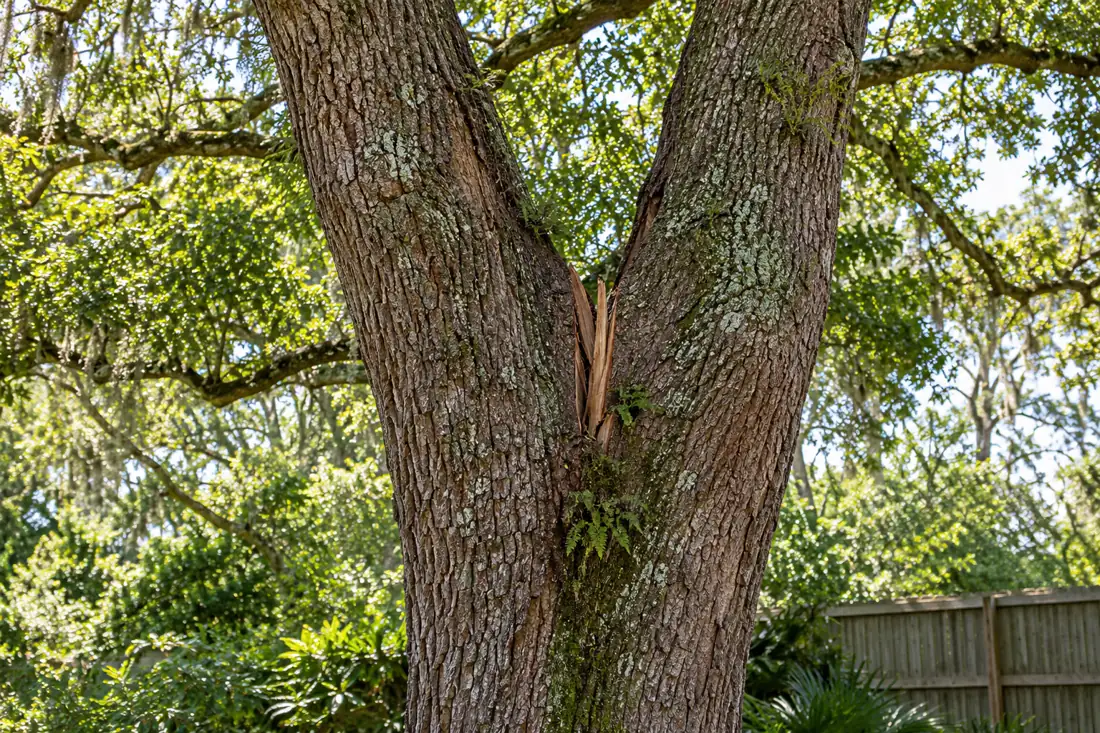
Site planning detail: Water oaks can develop structural and decay concerns as they age, especially when prior pruning wounds, saturated soil or storm damage affect already stressed trees. A concern about one specimen is not proof that every water oak should be removed. Watch for large dead limbs, weak unions, fungal growth, cavities and changing soil levels near the root flare. The surrounding use matters: a limb above a seldom-used corner of a lawn creates a different exposure from the same defect above a roof or playground.
A management plan may include monitoring, selective pruning or removal after appropriate inspection. Avoid climbing or cutting near suspected defects, and do not treat ordinary seasonal leaf changes as a diagnosis. Photos of the complete crown, trunk base and nearby targets help establish useful context for a professional conversation.
Older wounds and internal decay can reduce structural capacity depending on location and extent.
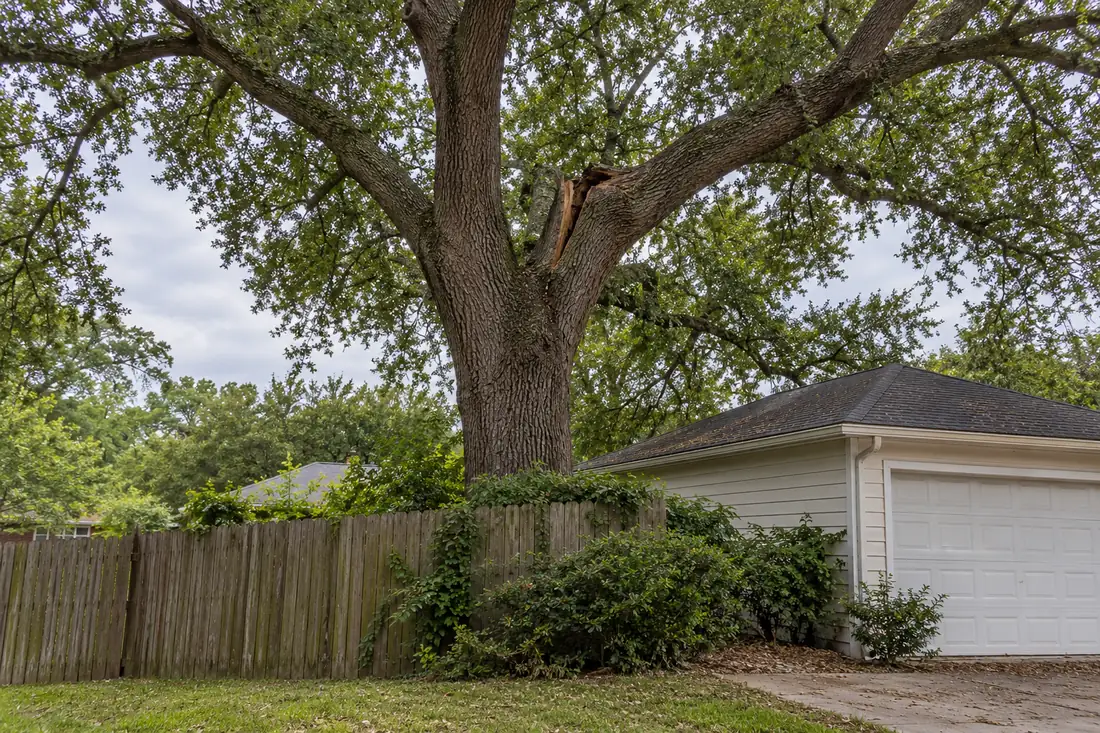
Wind can expose weak unions, broken tops and compromised roots that were less obvious before the storm.
Pruning can manage some problems
Selective deadwood removal, clearance pruning and structural work can reduce specific hazards when the tree remains a reasonable preservation candidate. Heavy indiscriminate pruning is not a substitute for evaluating serious defects.
When removal may be appropriate
Severe root failure, major trunk decay, repeated large-limb failures or an unacceptable target situation can make removal the practical choice. Large mature water-oak removals may require crane or mechanized support depending on access.
Related resources
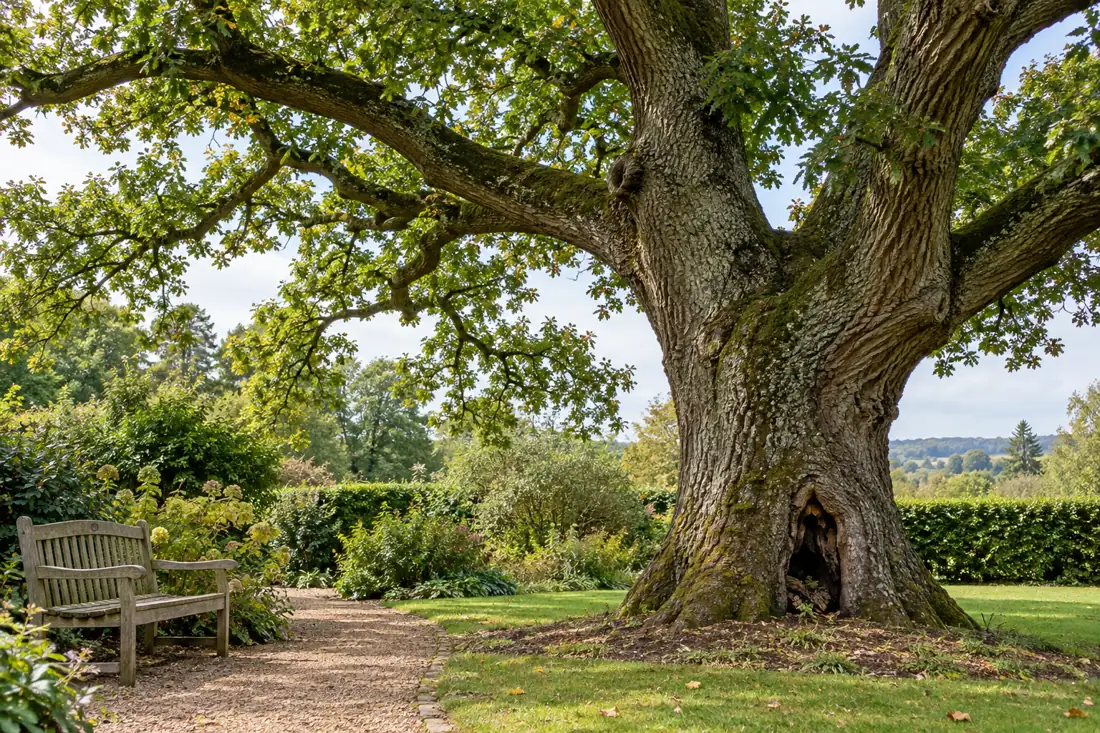
Know what makes water oak different from live oak
Water oak, Quercus nigra, is a fast-growing, broad-crowned oak commonly encountered in Louisiana yards and older developed lots. Its speed and shade can be advantages, but it does not share the same typical longevity or wind-resistance profile as a Southern live oak. The LSU AgCenter warns that older water oaks can develop decay, weak wood and problematic large branches.
That observation is a reason for deliberate inspection, not an automatic verdict that every water oak must be cut down as soon as it reaches a particular birthday.
Evaluate a water oak by condition, not species alone
Older water oaks can develop structural concerns, but species and age alone cannot establish that an individual tree will fail. Photograph large limb attachments, observed cavities, deadwood and any fresh breakage without standing under a suspect branch. Note changes that occurred over more than one growing season and distinguish chronic crown decline from a crack that opened after a storm.
An estimate should make clear whether the request is urgent removal of hanging wood, a qualified risk evaluation, pruning of a documented defect or complete removal. Ask the contractor to identify the actual tree, defect, exposed target and access restrictions. A single leaf picture is not enough to rule a mature tree safe or unsafe.
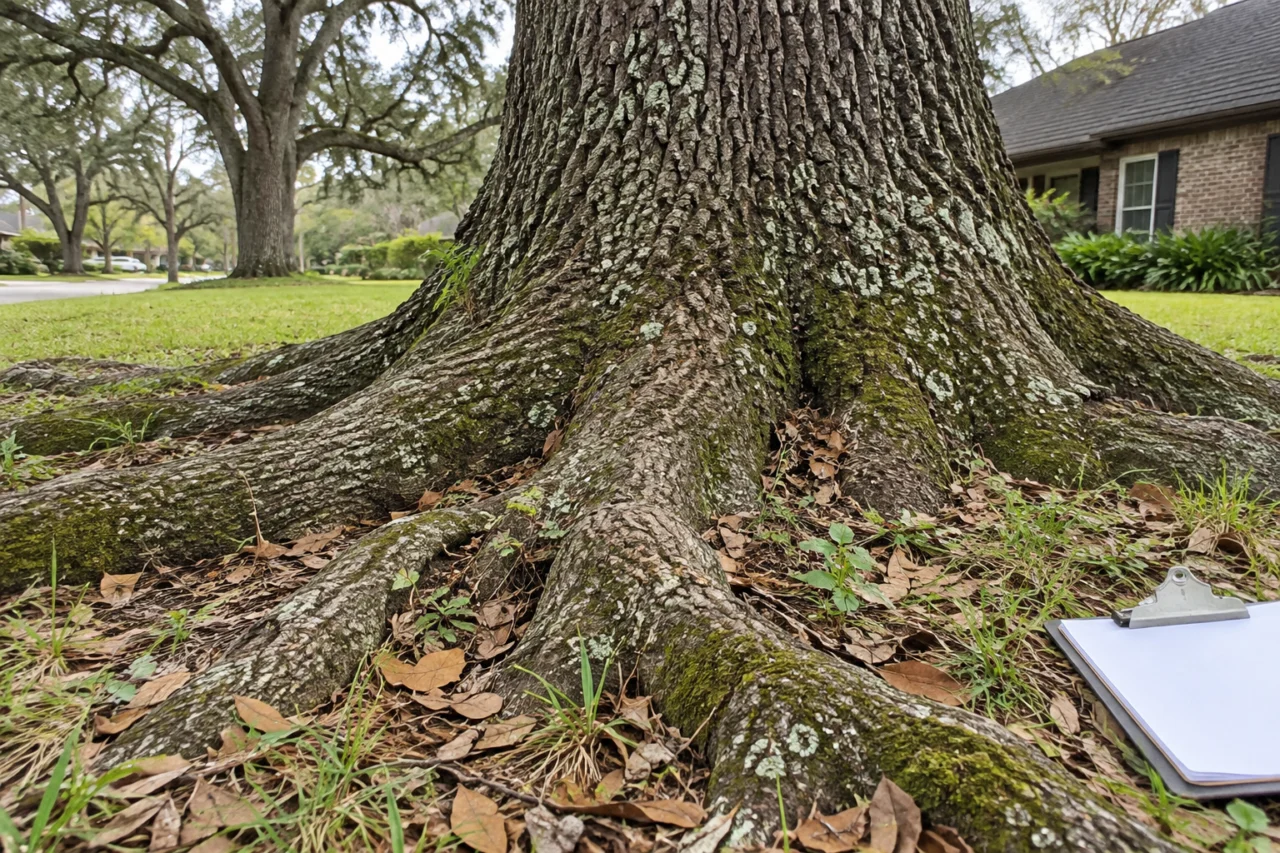
Start by confirming the species before making a treatment decision. The leaf shape and seasonal behavior differ from other oaks, and mixed plantings can make tree identification unreliable from a distant photograph. Age estimates, trunk size and the amount of leaf litter do not establish internal strength.
A trained arborist can consider species together with actual branch attachments, cavities, wounds, soil conditions and targets such as a home or driveway. If the identification is uncertain, record that uncertainty rather than applying a species-specific conclusion to the wrong tree.
Treat cavities and past branch breakage as evidence
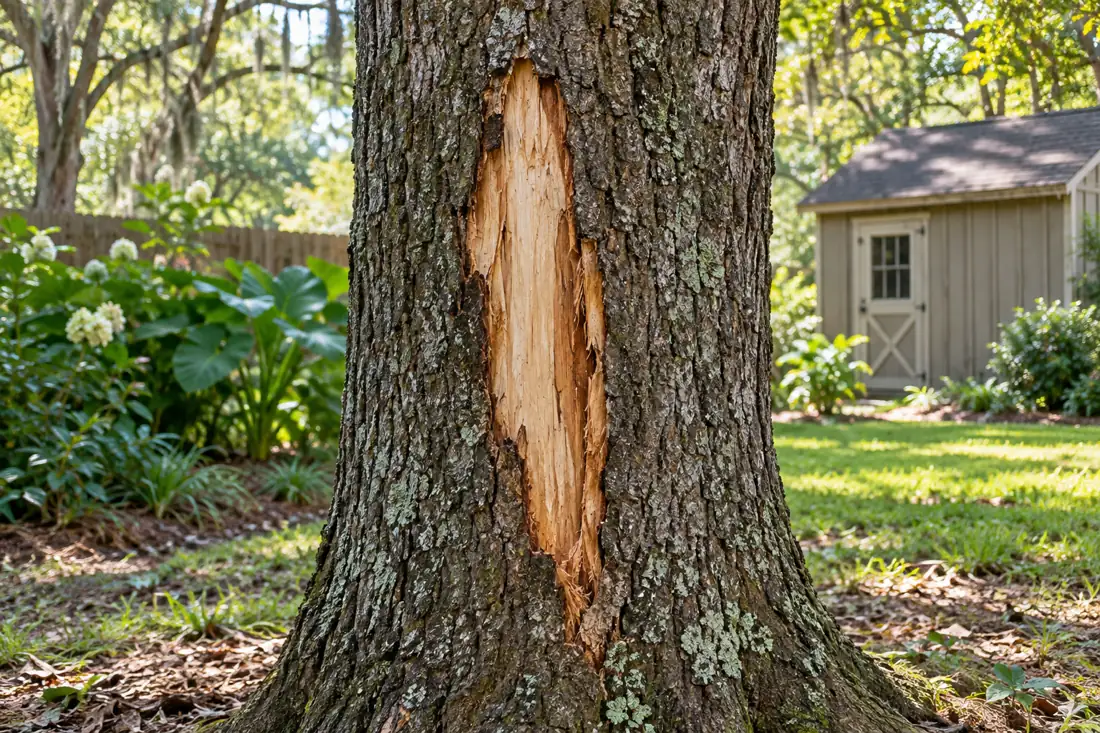
A water oak that has dropped a substantial limb deserves more than cleanup and an assumption that the remaining tree is sound. Look from a safe distance for the origin of the break, exposed wood, splits into the trunk, loose bark or other branch unions with similar geometry. Older pruning wounds may have closed externally while decay continues internally, and a cavity does not reveal the complete amount of supporting wood. Evaluation should account for both decay and what the branch or trunk could strike.
Do not probe a high cavity with a ladder or cut into the trunk to see how deep a hollow runs. Those actions can create danger and additional injury without providing an adequate structural diagnosis. An appropriately equipped professional may recommend a detailed inspection, more advanced testing, targeted branch removal, a changed use of the area beneath the tree or removal.
Ask why each option is justified. Simply filling a hollow or coating the exterior with a product does not restore the original strength of decayed wood.

Prioritize trees near roofs, streets and parking
The consequence of a failure should shape the urgency of the work. A large aging water oak next to a bedroom, classroom, parking lot or busy sidewalk needs a different discussion from one over an unoccupied wooded area. Map the crown against the roof, power lines, neighboring fences, vehicles and the only route out of the property. Note whether children regularly play beneath the canopy or whether a nearby business relies on access. These are real-use conditions that a generic tree-age rule does not capture.
A professional tree-risk discussion is more helpful when it separates likelihood of failure from likelihood of striking a target and the seriousness of the possible impact. A branch can be unsound without creating the same risk everywhere; conversely, a relatively small defect above a frequently occupied area can matter. Ask for a written explanation of the concern and the practical mitigation: exclusion, pruning, monitoring or removal. For urgent hazards near utilities, restrict access and call the appropriate utility or emergency service first.
Prune younger water oaks with the future in mind
Training a young water oak can reduce structural problems that would be expensive to correct when its trunk and limbs become large. Encourage a dominant central stem where appropriate and keep major structural branches reasonably separated rather than allowing multiple heavy limbs to develop from one crowded point. The LSU AgCenter highlights branch spacing and pruning while branches are still relatively small as important practices. A small corrective cut now may avoid a much larger wound decades later.
Mature water oaks need a more conservative evaluation. Removing an enormous limb from an older trunk can introduce a large wound into wood that may already be vulnerable to decay. A request to remove all lower branches or strip the crown for more sunlight should be weighed against tree condition and structural effects.
Professional pruning can address specific dead branches and clearance, but topping or removing excessive interior growth is not a substitute for diagnosis. Ask which cuts solve a problem and which cuts are merely cosmetic.
Separate water oak decline signs from isolated defects
Water oak complaints often begin with a cavity, broken branch, or thinning crown. Those observations are worth documenting, but their importance depends on where the defect sits and how much sound structure remains. A large opening near a critical load path deserves different attention from a small old injury on an otherwise stable branch. A photograph cannot reliably measure hidden decay.
Check whether the condition changed recently. New cracks, fresh exposed wood, unusual movement, or new deadwood over an occupied area may change the urgency of an assessment. Soil saturation, construction damage, and drought can complicate the picture. Do not drill, remove bark, or climb to investigate a suspicious area; qualified tree assessment methods are preferable.

Look for change, target exposure, and structure
Consider the surrounding property before choosing work. Deadwood above a playground or roof may warrant priority even when the rest of the tree is retained. A tree with widespread structural concerns close to critical access can present a different management decision. Species identity alone is not a reason for removal, and not every older water oak is unsafe.
Ask that the written recommendation name the specific defect or exposure being addressed. Distinguish selective pruning, follow-up monitoring, further professional risk evaluation, and removal as separate options where relevant. Record site access, utilities, and debris constraints so the eventual project reflects the actual property instead of a generic price assumption.
Make storm inspection a recurring habit
Water oaks are among the species that Louisiana extension guidance places in a comparatively low wind-resistance group. This is a population-level observation, not a forecast of what one tree will do in a particular storm. Exposure, root support, past pruning, previous damage and branch size all modify the situation.
Before hurricane season, compare dated photographs and look for new cavities, cracked attachments, hanging limbs or soil movement from a safe position. Do not assume that because a tree survived the last storm it has no accumulated damage.
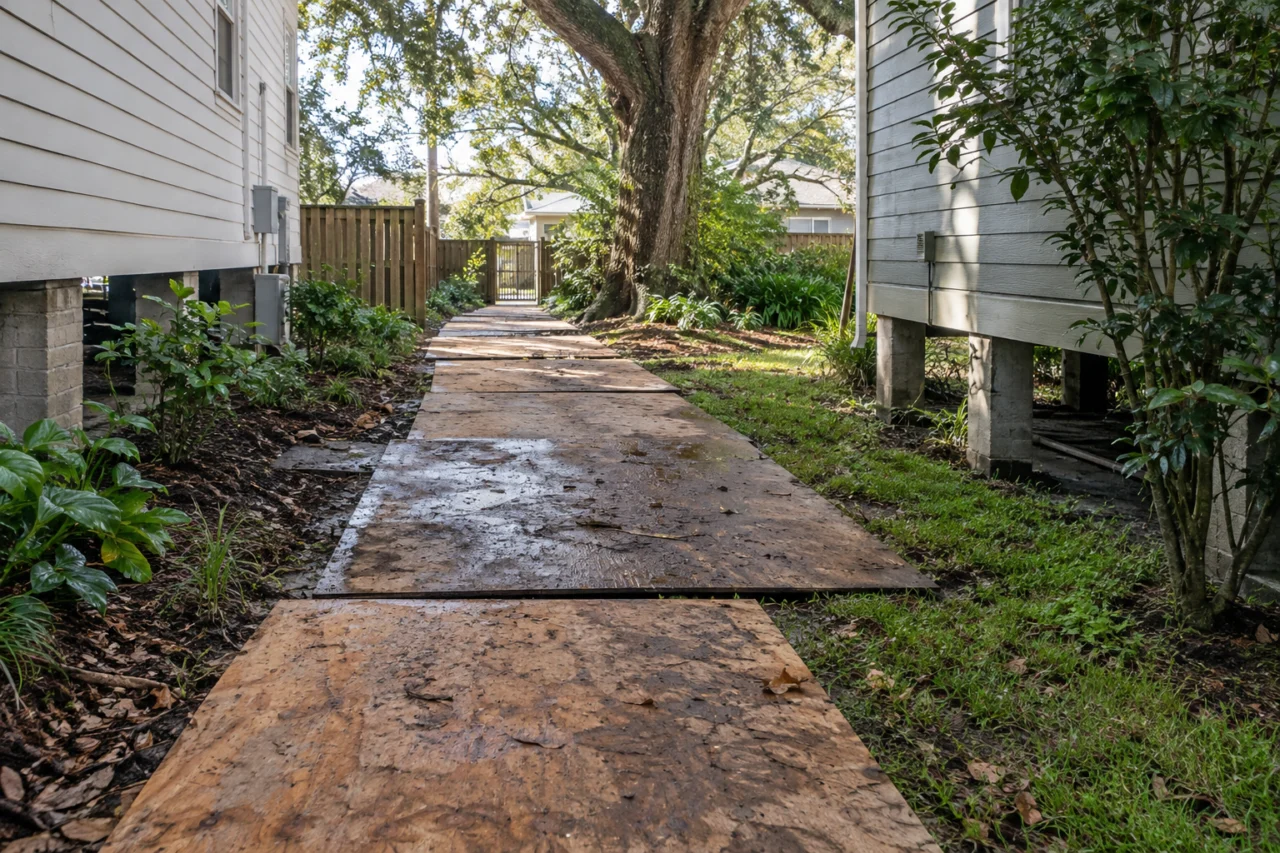
After severe wind, a fresh fracture may be visible high in the crown even when the tree continues to carry leaves. Suspended limbs can fall without warning, and a broken branch may remain caught in adjacent foliage. Do not walk underneath to retrieve debris or pull at a branch with a rope.
If the tree has shifted or is touching utility conductors, move clear of the area and call trained responders. Routine seasonal work can wait until the site is safe and the cause of the damage can be evaluated.
Inspect roots without damaging them
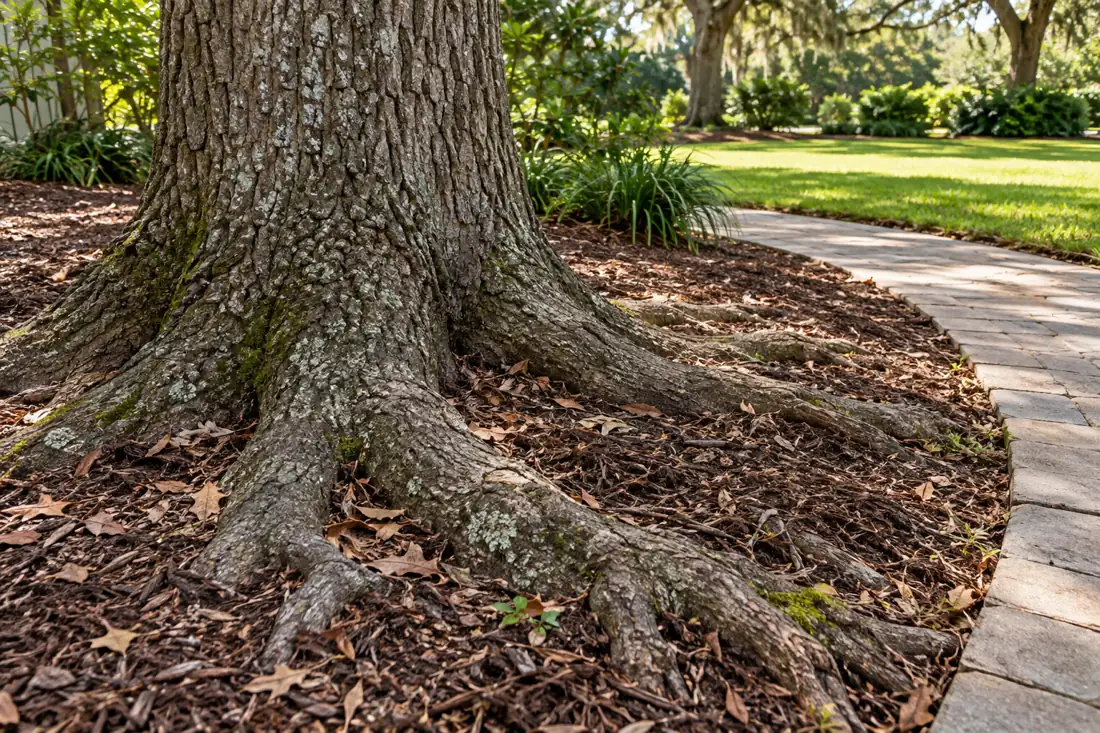
Water oaks often compete strongly with grass and ornamental beds for water and nutrients, and some have relatively shallow roots. Surface roots are not automatically a problem, but they can affect mowing and paving decisions. Avoid cutting significant roots solely to flatten a lawn or install a sidewalk. Those cuts may compromise anchorage, especially when they are close to the trunk or affect an already stressed tree. Coordinate driveway work, drainage trenches and major landscaping with an assessment of the root protection zone.
Repeated waterlogging, soil compaction and erosion also deserve attention. Wet soil does not mean every water oak is about to fall, and a dry lawn does not guarantee healthy roots. Document drainage changes, excavation history, sudden soil lifting or cracks developing around the base. Keep soil or new mulch from burying the flare where the trunk meets the roots. If a root defect is suspected, leave it undisturbed until the correct scope of work has been determined; improvised digging can erase useful evidence.
Decide between repair, monitoring and removal
There is no single age or trunk diameter that answers whether a water oak should remain. A vigorous younger tree in an open area with sound unions may be a reasonable tree to maintain. An older tree with recurring major limb failures, extensive decay or unstable root support directly above occupied buildings may warrant removal. The useful discussion is about the evidence, uncertainty, alternatives and consequences. Ask whether selective pruning meaningfully reduces exposure or whether it would leave the primary structural concern untouched.
Monitoring is an active plan, not an excuse to postpone every decision. Record who will inspect the tree, how often, what photographs should be repeated and which changes trigger immediate reassessment. If removal is selected, plan for equipment access and debris handling, not just the chainsaw cuts.
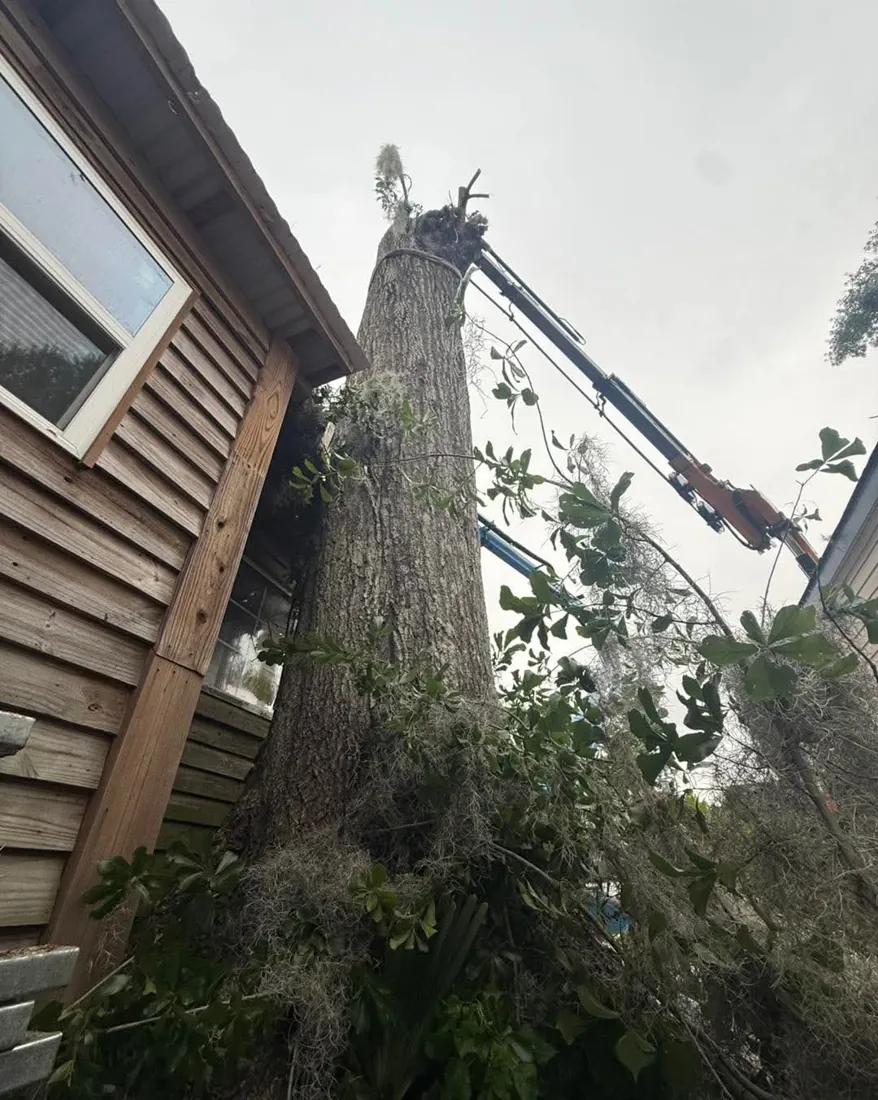
A tall oak above a roof or adjoining yard may require rigging, cranes or controlled mechanical work. Get a written estimate specifying the tree, the limits of the scope and cleanup so everyone understands what work is actually included.
Consider replacement species before the old tree comes down
A replacement can restore shade over time, but choosing another rapidly growing oak without checking the site may repeat the original conflict. Evaluate mature crown size, nearby structures, available rooting room, utility lines, soil drainage and the amount of maintenance the property can support. LSU AgCenter recommends considering live oak, Nuttall oak, cherrybark oak, Shumard oak and other site-suitable species rather than assuming water oak is the only option.
Each candidate has its own mature size and conditions, so matching the tree to the space is essential.
Planting while heavy removal equipment is still working in the yard is rarely a good idea. Finish the log and stump handling plan, then review whether grindings, compacted soil or buried debris will interfere with the new tree. Determine who will water it through establishment and who will train the young branches. A new tree planted too close to a house or under overhead lines may create a future clearance conflict. Long-term replacement decisions deserve the same care as the removal itself.

Separate water oak condition symptoms from species assumptions
Water oak concerns often arrive as a short description such as ‘the leaves look thin’ or ‘the tree drops limbs.’ Neither report is enough to determine internal decay, root damage, or whether removal is necessary. Capture the crown from several directions, the lower trunk, and the ground near the base, and compare with prior seasons when available. Species identification itself should be confirmed on site rather than asserted from one distant canopy photograph.
Document recent events that may explain a change: trenching, fill added over roots, prolonged saturation, drought stress, impact wounds, or a storm that damaged a major branch. Dead leaves in one season can have different significance from a repeated pattern of dieback. Cavities, fungal fruiting structures, cracked unions, and disturbed soil deserve careful professional evaluation, but no single photograph reliably measures the tree’s entire structural capacity.
Ask the assessor to distinguish observed defects, uncertainty, likely exposure targets and practical risk-reduction choices. Some conditions may justify monitoring or selective work; others may require restricted access while an urgent hazard is addressed. A useful written proposal identifies exact branches or stems, treatment objectives, cleanup and follow-up conditions. Avoid generic predictions of tree life expectancy or warranties against future storms; explain what the site-specific evidence actually supports.
Ask for clear documentation, not a blanket diagnosis
An estimate should tell you what the crew observed and what action is proposed for each water oak. The phrase dangerous tree is too vague by itself. Ask for the likely problem location, nearby targets, reason for the proposed cuts or removal, expected access route, debris handling and exclusions. If the recommendation rests on internal decay or root instability, request an explanation of the assessment method and its limitations. The contractor should never imply that pruning eliminates all storm risk.
Keep records of previous branch failures, tree inspections, maintenance invoices and dated photographs. These materials help future professionals understand whether a defect is progressing, and they may be relevant to a property claim after damage, without guaranteeing coverage. For background, read the LSU AgCenter discussion of water oaks in developed areas and the guide to warning signs. Any final decision should be based on the tree in front of you, not solely on its species label.
Questions about Water Oak Tree Problems in Louisiana
Are all water oaks dangerous after 50 years?
No. The species becomes more prone to decay as it ages, but individual condition and risk must be evaluated rather than judged by age alone.
Why do old water oaks drop large limbs?
Decay, branch attachments, storm loading and other defects may contribute. A professional should evaluate the origin of a break and remaining crown.
Can a hollow water oak stay standing?
Some can, depending on remaining sound structure, roots and exposure. A visible cavity alone cannot determine the outcome.
Should I remove a healthy young water oak?
Not solely for its species. Maintain sound structure and monitor growth, site conditions and any future defects.
Can pruning make an older water oak safe?
Targeted pruning can reduce some identified risks, but it cannot repair severe trunk decay or unstable supporting roots.
What does included bark mean in a water oak?
It is bark trapped between growing stems at an attachment, potentially weakening the union and warranting closer evaluation.
Do water oaks have shallow roots?
Water oaks can develop relatively shallow rooting, but actual root architecture depends on soil, moisture and site history.
Is leaf shedding in winter evidence of a dying water oak?
Not necessarily. Water oaks can retain and lose foliage irregularly through cooler months in Louisiana.
What should I do after a large water oak limb falls?
Keep clear of any suspended wood, photograph from a safe spot and request an assessment of the break and other structural limbs.
What species could replace a removed water oak?
Consider site-suitable live oak, Nuttall oak, cherrybark oak, Shumard oak or other choices recommended by Louisiana extension specialists.
Can tree removal proceed if a water oak is next to power lines?
A qualified crew must coordinate utility safety; owners should not cut or touch branches in contact with energized conductors.
What should my water oak removal quote include?
Identify the exact tree, access and rigging, wood handling, hauling, stump scope, property protection and exclusions.
Get a scope for your property
Photograph a water oak cavity or wound from a safe position and include the entire trunk, canopy, and nearby occupied area. Record whether cracking, dieback, or soil movement is new. The next step may involve inspection or targeted work, and an estimate should distinguish observed conditions from conclusions that require further examination.