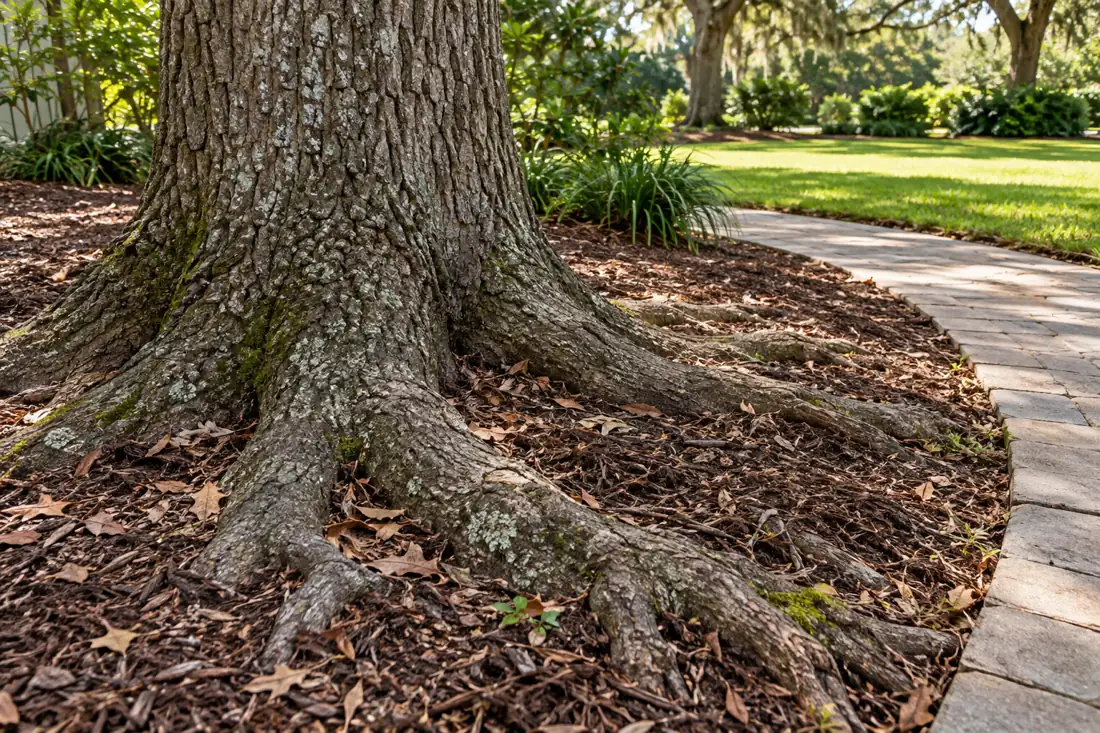
When new ground movement matters more than the canopy
A tree with a recently lifted root plate calls for a different conversation than one with gradual leaf decline. Fresh soil cracking, uplifted turf attached to the trunk base or a new tilt after prolonged rain can indicate movement of the root anchoring system. Green leaves do not tell you whether the underground support remains adequate, and photographs cannot establish a safe distance or predict when a tree might fall.
Keep people away from the likely fall area and do not probe, cut or pull the roots to investigate. Explain when the change first appeared and which buildings, sidewalks or occupied areas may be affected. The partially uprooted tree guide explains what can be reported safely without turning an observation into a do-it-yourself stability test.
Warning signs that deserve attention
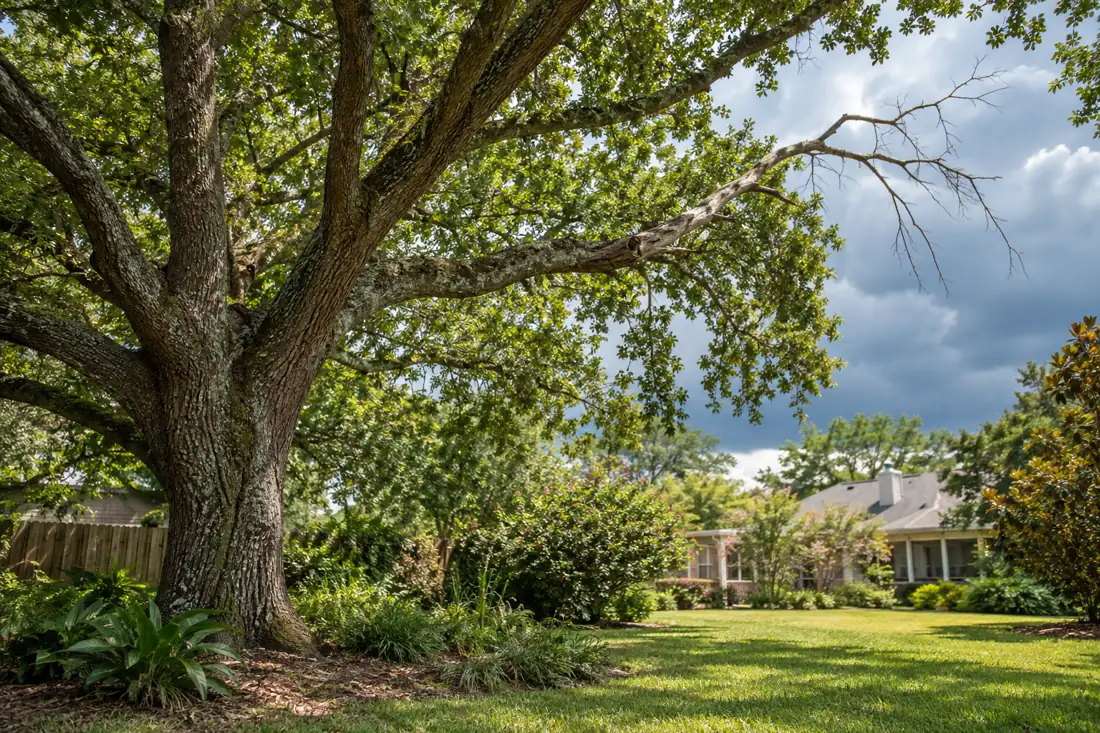
A recent change in angle or lifting soil around the root plate can indicate reduced stability.
How to report a suspected hazardous tree without diagnosing it yourself
Describe what has changed rather than calling the tree dangerous based on one photograph. Examples include new soil movement near the trunk, a freshly opened crack, a hanging broken limb, a branch suddenly contacting the roof, or a new lean following wind. Record which side of the tree is involved and which occupied spaces are beneath it. A previously formed lean and a newly moving root system require different questions.
Keep people, vehicles and pets out of the potential fall zone when a significant defect is suspected. Do not climb, tie, shake or test a damaged branch. If a utility line is involved, contact the utility rather than approaching or handling the tree. When reporting the issue, note recent weather, when the condition was first noticed, and whether the crack, lean or ground heave is progressing.
A tree assessment should consider the defect, the likelihood of failure, what could be struck and the consequences. The possible response may be monitoring, restricting access, pruning, support work or removal. No visible symptom proves that an entire tree must be removed, and no routine inspection can promise a tree will never fail. Ask for the specific finding that supports the recommended action.
General danger signs: change over time matters
A single knot, old scar or exposed root does not automatically establish imminent failure. Compare dated observations: sudden lean, newly cracked soil, moving root plate, fresh splits, dead canopy or limbs hanging above occupied areas. Some defects cannot be diagnosed from photos, so provide scale and context rather than declaring a tree safe or unsafe from a distance.
This evergreen guide supports routine observation and timely professional evaluation throughout the year. When a tropical system is forecast and access time may be short, the linked hurricane-specific warning-sign guide helps rank urgent observations and prevent unsafe last-minute work. Neither page substitutes for an on-site risk assessment, and neither should imply that trimming automatically prevents storm failure. Signs a Tree May Be Dangerous Before a Hurricane.
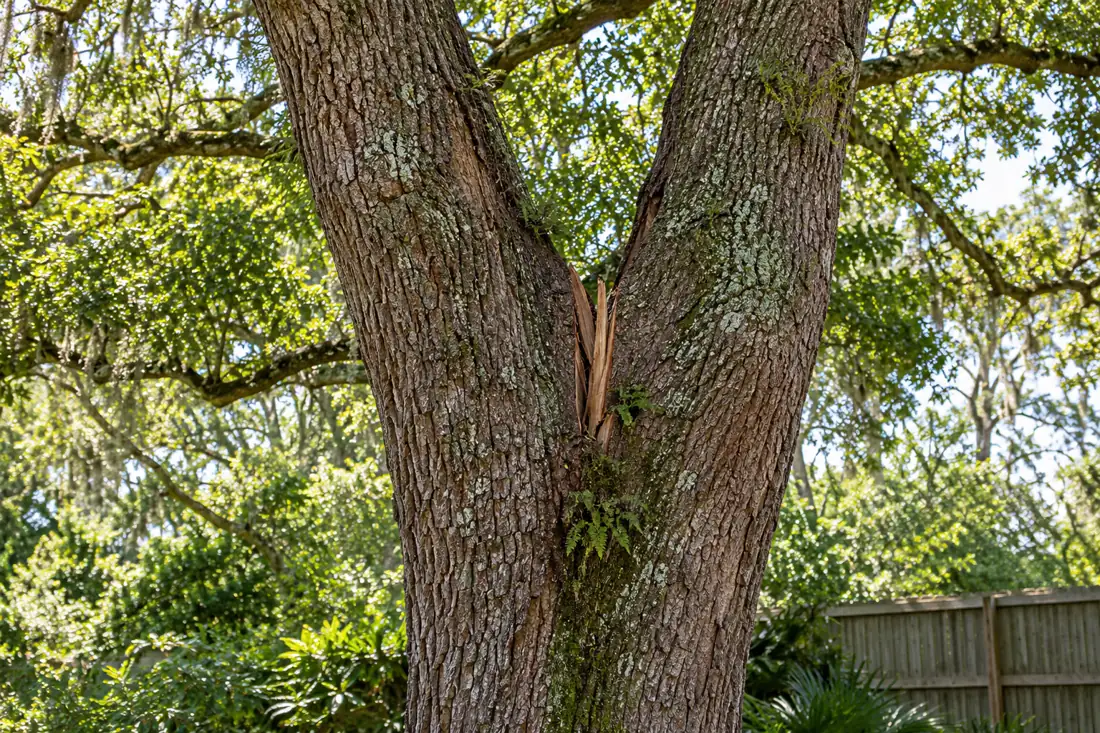
Fresh cracks, opening seams and splitting at major attachments can signal structural stress.
Deadwood over occupied areas can become a branch-failure hazard even when the trunk is healthy.
Cavities and decay need context
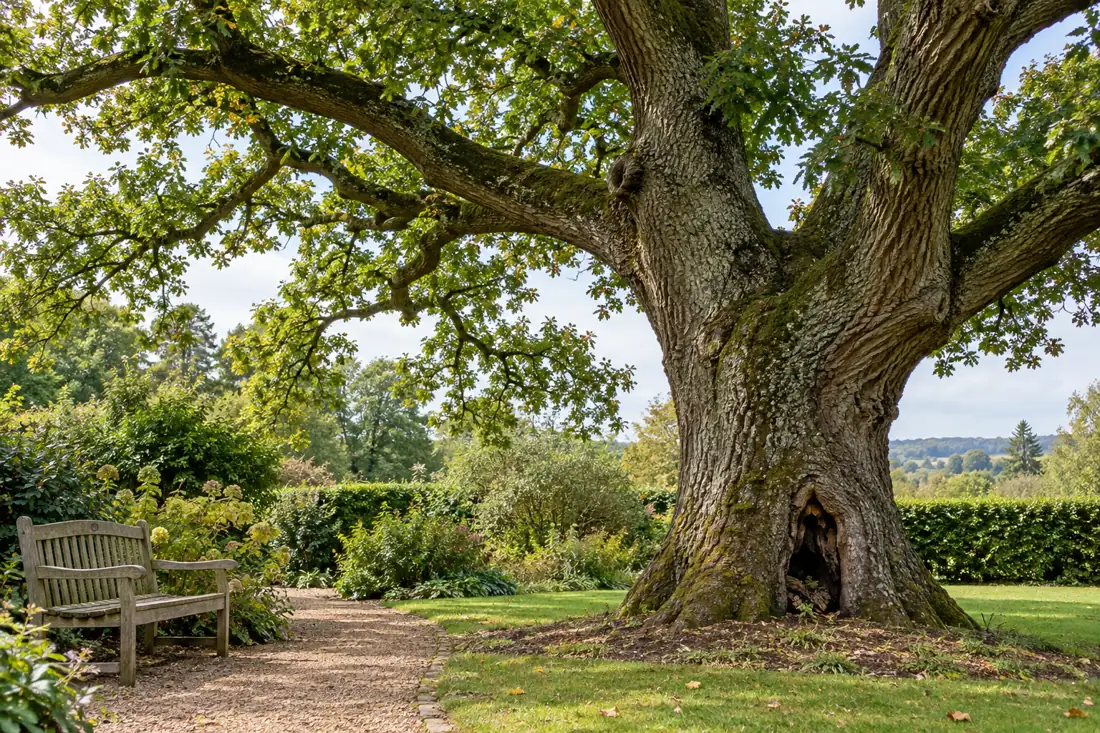
A hollow or cavity does not automatically mean a tree must be removed. What matters is how much sound structure remains, where the defect is located, how the tree is loaded and what it could hit if failure occurs.
Storms can reveal hidden problems
After strong wind, look for new lean, exposed roots, fresh cracks, torn limbs and changes in canopy balance. A tree may remain standing while its stability has changed.
Look for a change you can describe safely
A newly opened crack, recently changed lean, broken branch or movement near the base is useful information to report. Observe from places you can already use safely rather than walking beneath questionable material to inspect it. State what you noticed and approximately when. If the condition is actively changing or threatens people, keep clear and use the appropriate emergency or utility response instead of continuing a routine property inspection.

Describe cracks and openings without testing them
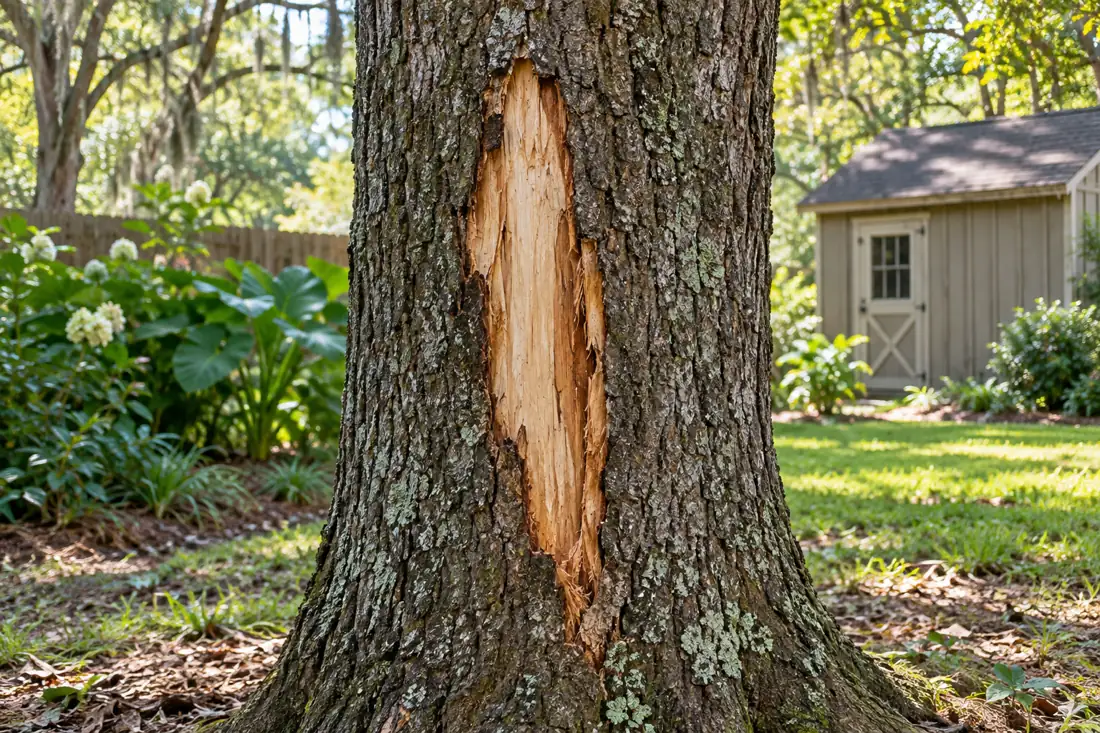
Tell the assessor whether an opening is on a small branch, major union, trunk or near the base. Include a whole-tree view and a safe view of the concern when available. Do not pull, push, drill, scrape or climb the feature to find out how strong it is. If it can only be seen from a hazardous position, explain the limitation and let the provider determine an appropriate assessment approach.
A cavity or old seam does not automatically establish that removal is required, while a fresh split should not be dismissed because leaves are still present. Ask which part is involved and what can be known within the agreed review. See cracked-trunk planning for a more specific request. Keep any existing report with the history, including its limitations, instead of remembering only a broad conclusion that the tree was once called good or bad without the basis and date of that opinion.
Track what changed rather than relying on a one-time photo. A useful hazard inquiry describes whether a lean, branch crack, root movement or soil opening appeared suddenly, enlarged after weather or has been present for years. Take clear photographs from a safe distance that show the whole tree, the specific concern and nearby targets without walking beneath a damaged limb. Note when a change was first observed and whether the tree moves under ordinary wind. Do not test a cracked union or probe a lifting root plate yourself. Restrict access where necessary and request a qualified onsite assessment.
A warning sign is a reason to ask a better question, not a complete diagnosis. Tell the provider whether the concern is new, longstanding or uncertain. Older photographs can help establish visible changes, but preserve their dates and context honestly. Do not describe every unusual feature as imminent failure or assume that a familiar feature has no significance. An appropriate assessment needs the actual tree, its surroundings and the limits of the available information, with observations kept separate from unsupported conclusions.
Distinguish a visible sign from a complete risk judgment
A professional risk discussion considers more than whether a defect can be seen. Ask how the tree’s condition relates to the people, buildings and spaces that could be affected over the relevant assessment period. The ISA tree-risk recognition guide describes observations owners can bring to that discussion. It does not let a photograph or single checklist item establish the safety of every tree with a similar appearance.

Document the change rather than trying to prove the tree is unsafe
A new crack, fresh soil movement or newly hanging limb deserves a different response from a cavity that has been stable for years. Make notes about when you first noticed the condition and what changed after wind or rainfall. Photographs from the same safe viewing position can help a qualified evaluator compare conditions without guessing from a single dramatic angle.
Do not push on a trunk, enter the fall zone or dig around exposed roots to test stability. If the tree is contacting utility lines, keep people away and contact the utility or emergency service as appropriate. A useful request for an assessment describes the concern, nearby targets, recent weather and whether access is restricted; the final risk determination requires on-site judgment.
Explain what decision you need: immediate management of an affected area, advice on a visible concern, a written assessment or removal pricing. Those requests may need different services. Ask who provides the assessment, what it covers and what further investigation may be useful. A green canopy, a large trunk or survival through previous storms cannot substitute for that conversation. The useful result is a reasoned recommendation with limitations, rather than an absolute promise that a living tree can never fail.
Include the ground and root-zone history
Report fresh soil lifting, cracks near the base, exposed or broken roots and a changed lean from a safe viewpoint. Do not excavate or pull on roots to investigate. The UC IPM hazardous-tree resource notes that some important defects can be difficult to see. An absence of obvious surface symptoms therefore does not prove that every belowground or internal condition has been assessed.
Describe Risk Indicators Without Diagnosing From a Photo
A declining canopy, dead branch, fresh trunk opening and root-plate movement are not equivalent observations. When requesting an assessment, record exactly what changed and where a falling part could reach. The likelihood of failure and the consequences beneath a tree are separate considerations.
Take a wide photograph from a safe location so the tree and nearby entry, driveway or path are visible together. Do not walk beneath a hanging limb, approach a freshly leaning trunk or enter a utility hazard to obtain a closer picture. For immediate danger, keep people away and contact the appropriate emergency or utility authority.
A field professional may need access around the trunk and crown to assess defects, targets and available options. The purpose of this record is to support prioritization and a clear conversation, not to assign a numerical risk score from online images or promise that an apparently healthy tree cannot fail.

Use general warning signs to decide whether qualified evaluation is needed
This guide is about changes that deserve professional attention throughout the year, not a forecast of how any specific tree will behave in a hurricane. A newly raised patch of soil, a widening trunk crack, sudden branch loss, decay near a major union or a change in lean can warrant review, but one symptom rarely establishes the full condition.
Look from a safe location and record when the change was first noticed, nearby buildings or walkways, and major recent work around the roots. Avoid probing a suspect trunk or standing beneath hung wood.
Hurricane preparations add a deadline and weather constraint that may not apply to ordinary maintenance. This page helps a homeowner organize an observation and ask the right condition question; the pre-hurricane guide addresses planning before tropical weather arrives. Do not promise that pruning or a visual check will make a tree storm-proof. Where people may be endangered by a sudden change, avoid the exposed area and seek appropriate help rather than treating the page as an at-home diagnosis.
Sort a changed tree condition from an old feature
A photograph of a cavity or old pruning wound says less about urgency than a new crack, recent root movement or a limb that shifted after the latest storm. Make a short timeline that identifies the tree, the first date you noticed a change and whether the ground or nearby structure has changed since. Do not tug on the branch or enter the possible fall area to improve the evidence.
The professional still needs to determine actual likelihood of failure and consequences. A customer photo log can support that discussion but cannot assign a tree-risk rating.
Show the change and the setting in separate safe views
An isolated photograph of bark or a dead branch can make a tree look worse or better than the full context supports. Begin with a wide view showing the whole tree, nearby structures and the direction in which a concern is developing. Add a second view from the same safe ground location to explain a new crack, broken limb, unusual canopy loss or displaced soil.
If a change is visible in older photographs, keep the dates and viewpoints together; if no earlier record exists, say so rather than estimating when damage began.
Tell the assessor whether targets beneath the tree are occupied regularly or only occasionally and whether recent weather, drainage alteration, construction, trenching or pruning preceded the concern. These details do not replace a tree-risk assessment. They help the professional choose the right inspection scope and explain any limits of visual examination. Stay outside the potential impact area if the concern involves hanging material, a split trunk or a moving root plate.

When the concern involves a new structural change after wind or rain, keep people away and explain that timing in the inquiry. A split trunk, moving root plate or suspended limb may demand prompt assessment. Photographs help describe a problem; they cannot calculate likelihood of failure or substitute for a qualified on-site examination.
For an estimate: Give only safe, owner-authorized photos and describe the finished condition you want. A request is not a confirmed visit or price.
Record the change, not a diagnosis
Use a dated observation log that distinguishes a new crack, new lean, fresh soil disturbance, repeated deadwood and a previously unchanged feature. A safe wide photograph can show the whole tree and nearby targets, while a closer view taken from an accessible position may show where the reported change began. Do not pull bark, dig structural roots or enter a drop zone to collect a dramatic picture.
Tell the provider about trenching, driveway work, grade changes, heavy traffic, flooding or other known site changes. Give the approximate timing and location without assuming they establish a particular cause. If a new project is planned, share it before the assessment or preservation recommendation is finalized. Root-zone and construction information can matter even when the trunk was never cut. A useful review connects the actual history with current observations and identifies what remains uncertain rather than inferring the whole root system from one ground photograph.
Separate dead material from the rest of the tree
Describe whether the concern is small twigs, a large dead limb, a suspended broken branch or a wider canopy change. Show the area below it and explain how people use that space. A piece already on the ground creates different handling questions from material still held overhead. Do not assume that another tree, fence or branch is reliably securing a broken piece, and do not walk under it to see the connection more closely.
Ask whether the proposed visit includes damaged-material handling, review of the standing tree or both. A debris-cleanup agreement should not be read as a complete assessment of the remaining structure unless that service was actually arranged. If the tree looks unhealthy too, describe those symptoms separately.
Health and structural risk are related questions but not identical ones. The provider can then explain the appropriate next step without treating every brown leaf as proof of impending failure or every leafy branch as proof of a sound connection.
Explain the targets and current property use
Identify occupied rooms, play areas, entrances, parking and other places people regularly use around the tree. Include neighboring property where relevant. Say whether the use has recently changed, such as a new gathering area beneath an existing limb. The same observation can create different management questions depending on what is nearby and how the space is used. A condition photograph alone may omit that context.
Ask how the affected area should be managed while assessment or work is pending. A movable item may be part of a management discussion, but do not enter an unstable area to relocate it or assume a generic distance establishes safety. Keep occupants and the responsible property contact informed of the actual work status.
Accepting a quote does not mean a hazard has been addressed. Clear communication helps prevent a tenant, visitor or later manager from relying on an assumption that the tree was treated merely because a service request was submitted.
Compare recommendations by their basis and limits
An assessment may lead to further investigation, a particular pruning objective, changes in site use, support-system consideration, monitoring or removal. Ask what finding each recommendation addresses and why the proposed response fits this tree. A familiar treatment name is not a complete justification. If ongoing review is recommended, ask what it involves, who arranges it and which changes should prompt earlier contact.
If recommendations differ, provide the same available history and ask which observation or assumption explains the difference. Do not seek an unsupported guarantee or omit a concern to obtain a preferred answer. The tree-risk assessment service is the place to discuss a condition-focused review. Keep pricing and assessment deliverables understandable before accepting them. The owner should be able to explain the next action and remaining uncertainty, while the professional remains responsible for the agreed evaluation and technical recommendations.
Send a focused tree-concern request
Give Tree Huggers the address, safe whole-tree and concern views, timing of any change and the spaces below or nearby. Mention known failures, support hardware, recent site work and access limits. Say whether you need urgent availability reviewed, a routine work estimate or a written assessment. If utilities or immediate danger are involved, contact the appropriate service and remain clear rather than waiting for an online form response.
For a new storm-related lean, use the leaning-tree guide to organize the information. For a broader concern, describe what you actually see without assigning a diagnosis. A useful first conversation turns the warning sign into an appropriate assessment question and practical management plan. It does not require the owner to measure hidden wood, test roots or decide the tree’s future from a website image before a qualified person has reviewed the actual property.
Recognize warning signs without pretending to diagnose a tree
Concern about a tree often begins with one visible change: a hanging limb, a fresh crack, an exposed root or a leaning stem. These observations are reasons to review the tree, not reliable stand-alone verdicts that it will fall. The importance of a defect also depends on what is beneath it, how the tree has changed and whether people or buildings regularly occupy the affected area. Record the observation and avoid standing under suspect branches to examine them.
A cavity, fungal fruiting body or patch of missing bark may deserve professional attention, but it cannot be interpreted from a single photograph as proof of complete internal failure. Similarly, normal seasonal leaf drop can resemble decline to someone unfamiliar with the species. Look for changes over time, especially after heavy rain or wind. From a safe position, photograph the full tree, the base and the relevant area of concern without touching unstable wood.

Risk is about the defect and the surrounding targets
Immediate practical precautions may be appropriate when a limb hangs over an occupied entrance or a trunk has visibly shifted after a storm. Keep people out of the questionable area and contact a qualified tree professional; utility lines or an active emergency may require the appropriate utility or emergency response instead. Do not attempt to test a crack, tug on a branch or climb the tree to determine whether it is still attached.
A useful evaluation request identifies which tree is involved, what changed, when the change was first observed and what nearby assets could be affected. Ask what inspection or documentation can be provided and what uncertainty remains. Treatment, monitoring, targeted pruning and removal are not interchangeable outcomes. The responsible decision comes from condition, exposure and feasible options rather than a dramatic photograph alone.
Signs a Tree Is Dangerous questions
Does one warning sign prove a tree must be removed?
No. An appropriate assessment relates the finding to the actual structure, site use and remaining uncertainty.
What changes should I report promptly?
Report new cracks, changed lean, ground movement or broken overhead material from a safe location.
Should I test a defect myself?
Do not push, pull, drill, scrape, climb or excavate to test a questionable tree or root.
Can green leaves coexist with structural concerns?
Yes. Foliage does not establish the condition of every attachment, trunk section or root.
Do cavities always require removal?
No universal rule applies. Ask what the cavity means in the context of this tree and site.
What if a broken limb is held by another branch?
Keep clear and describe it as suspended material rather than assuming it is secured.
Why should nearby buildings and activities be described?
They provide the target and site-use context needed for the risk-management discussion.
Does a cleanup job include a full tree assessment?
Not automatically. Confirm whether standing-tree evaluation is included or separately arranged.
Should construction and drainage history be shared?
Yes. Provide actual work locations and approximate timing without assuming they prove a cause.
Is accepting a quote the same as addressing the concern?
No. Confirm work status and any interim restrictions while assessment or treatment is pending.
What makes monitoring useful?
Define follow-up responsibilities, the intended review and changes that require earlier contact.
What should I send with the request?
Include the address, safe views, recent changes, known history, nearby targets and the decision you need help making.
Let’s plan your tree work.
Send the property address, safe tree photos and the result you need. Include access restrictions and the person who can approve the work.