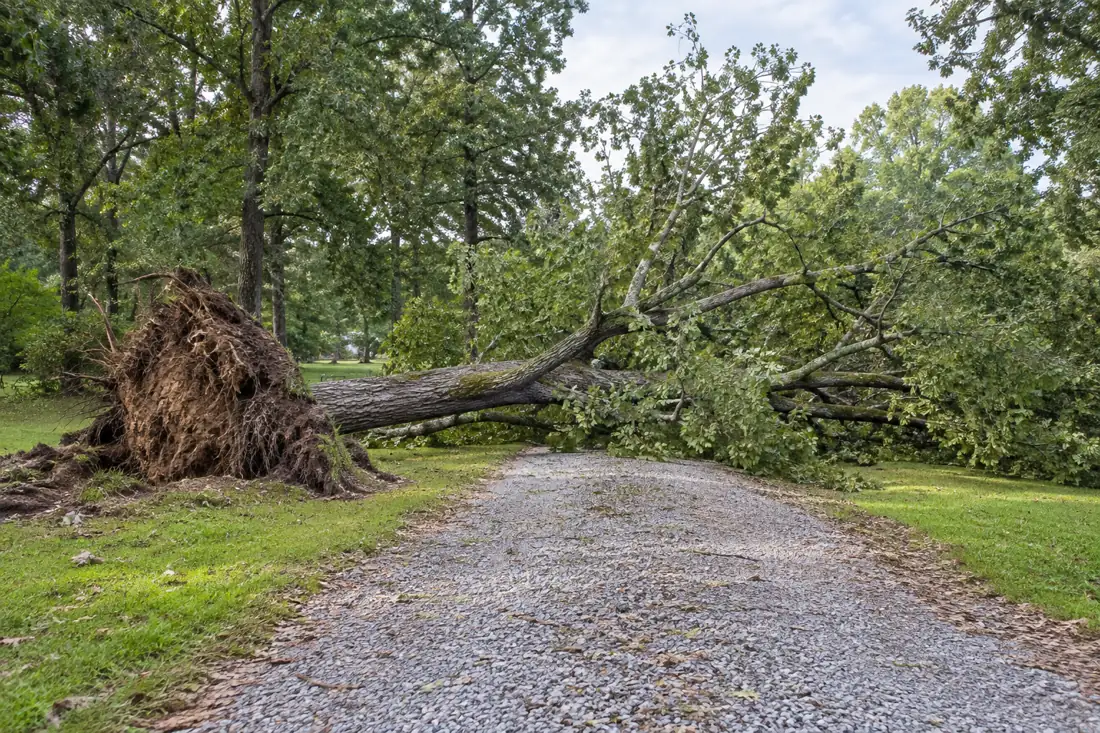
Start with immediate hazards
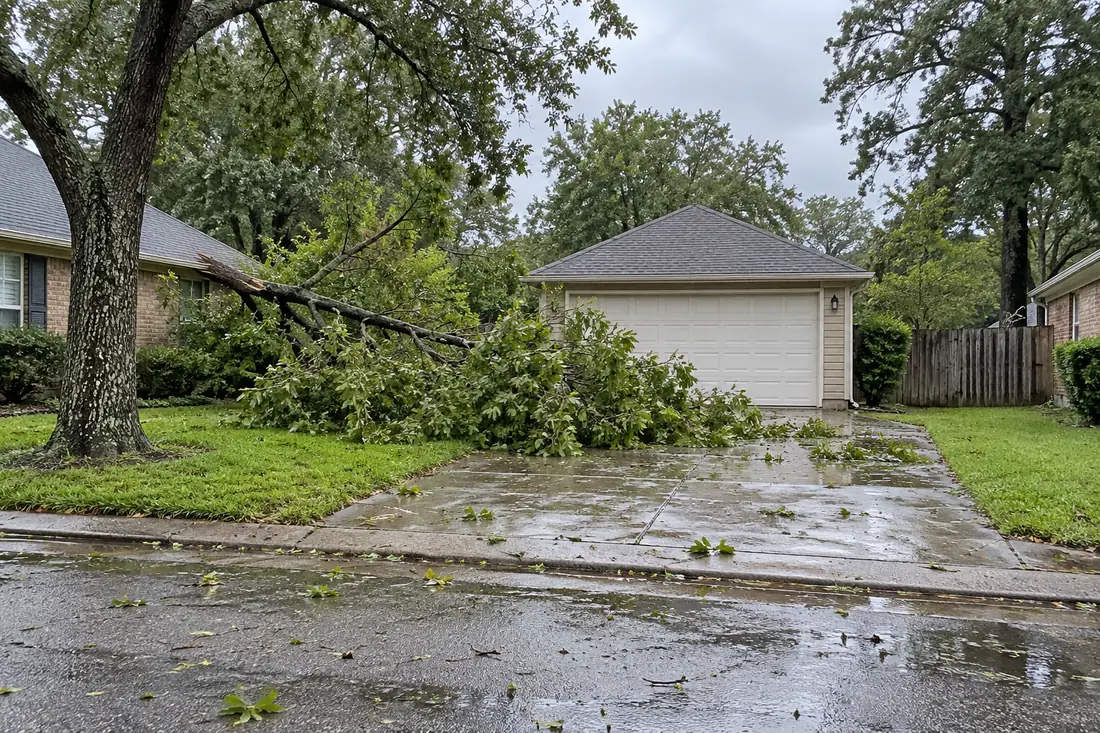
Suspended branches can fall without warning and should be isolated from people and vehicles.
A post-storm tree observation record
Stay outside areas with suspended branches, newly displaced root plates and utility lines. Note locations of fresh soil cracks, broken attachments, blocked entrances and structural contact. Wide photographs from safe ground tell more of the incident than images taken directly beneath damaged wood.
Distinguish observations from predictions: visible raised soil is documented; an assertion that a tree will certainly fail requires qualified assessment. Date each image and assign a simple number to each affected tree so photographs, calls and estimates refer to the same location.
Separate stabilization and access clearing from full debris removal. A safe path reopened after emergency work does not necessarily mean every dangerous limb or remaining stump has been addressed. Preserve the original inspection record for subsequent contractors and any insurance inquiry.
Site planning detail: After a hurricane, begin with an exclusion zone rather than a chainsaw. Stay clear of leaning trunks, suspended branches, uprooted root plates and material resting on buildings; assume any downed power line is energized and notify the utility. From a safe distance, photograph the changed tree, its base, targets and visible damage, then compare with earlier photographs if available. Prioritize occupied entrances, roads, structures and play areas over isolated debris that poses no immediate exposure.
A standing tree that lost limbs may need evaluation, but not every defoliated tree is permanently damaged. Ask whether the scope covers temporary hazard reduction, complete removal, preservation work, hauling, stump treatment and restoration. Keep any insurance claim documentation distinct from opinions about the cause of the failure. Reopen areas only when their hazards have been addressed; do not infer safety from a quick cosmetic cleanup.
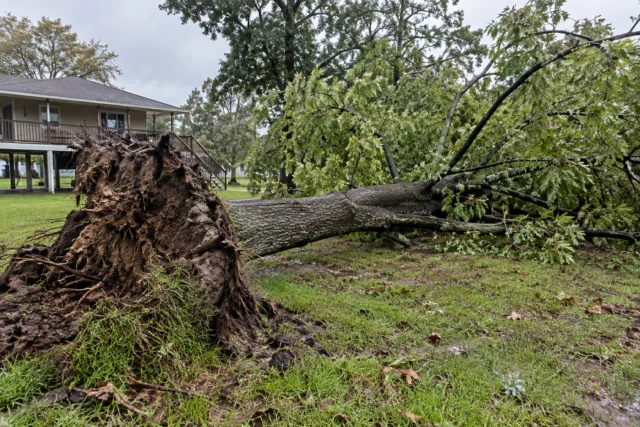
Heaved soil, exposed roots and sudden lean can indicate reduced stability.
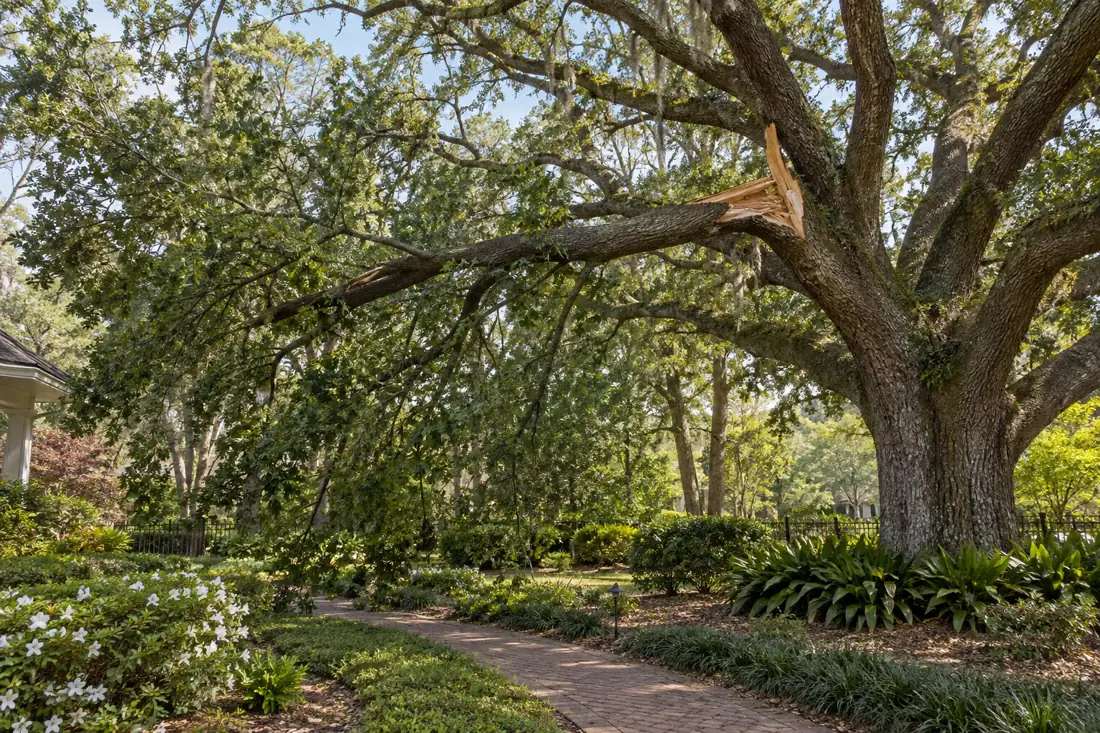
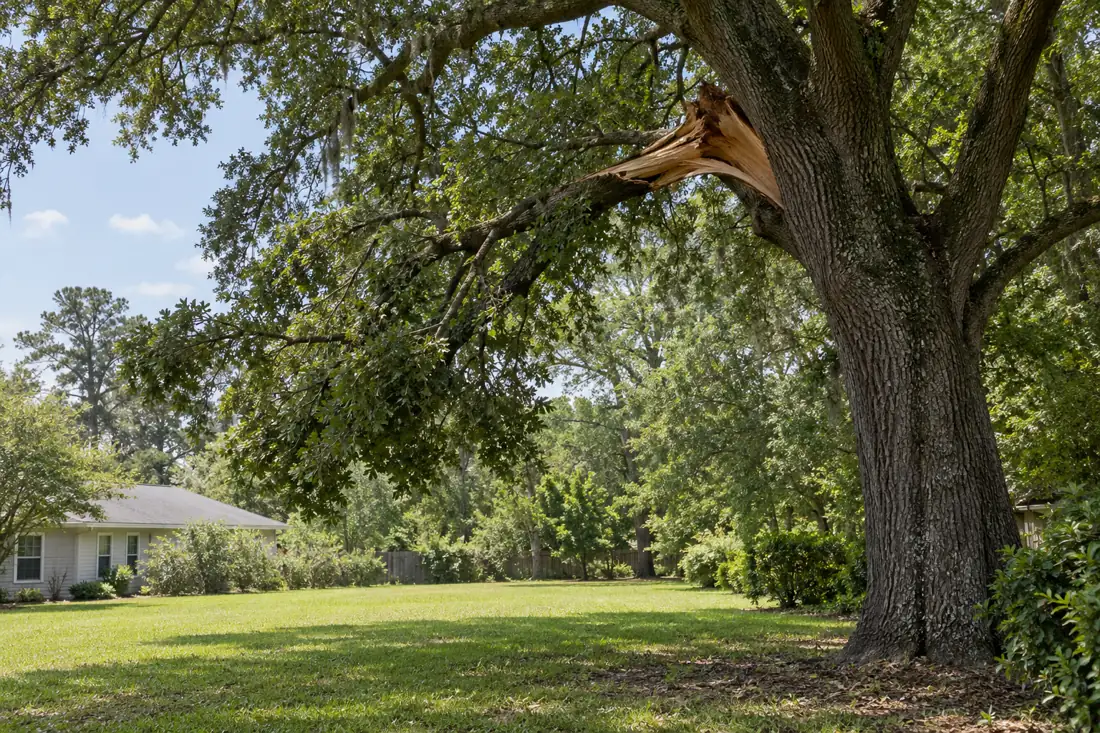
Storm loading can open splits at trunks and major unions that were not visible before.
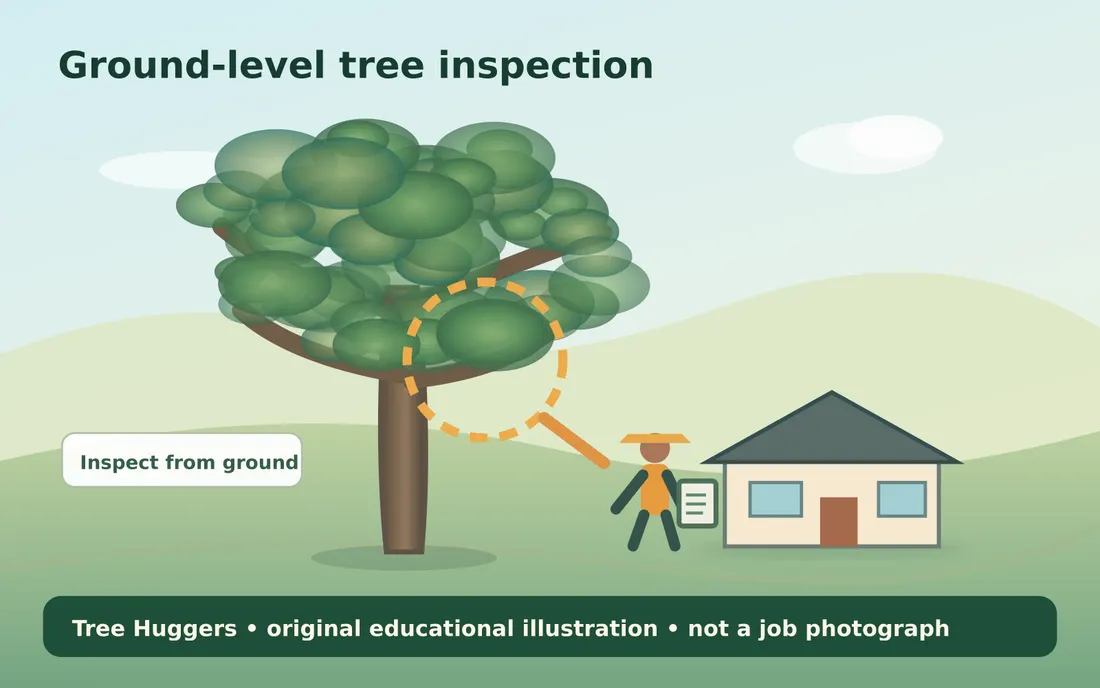
Inspect from the ground first
Do not climb damaged trees or stand underneath broken canopies. Wide ground-level photos are useful for comparing the whole structure and documenting changes.
Separate cleanup from tree evaluation
A yard can be full of branches while the most important issue is a damaged standing tree. Clear safe access, but do not let routine debris removal distract from hazards that could still fail.
Related resources
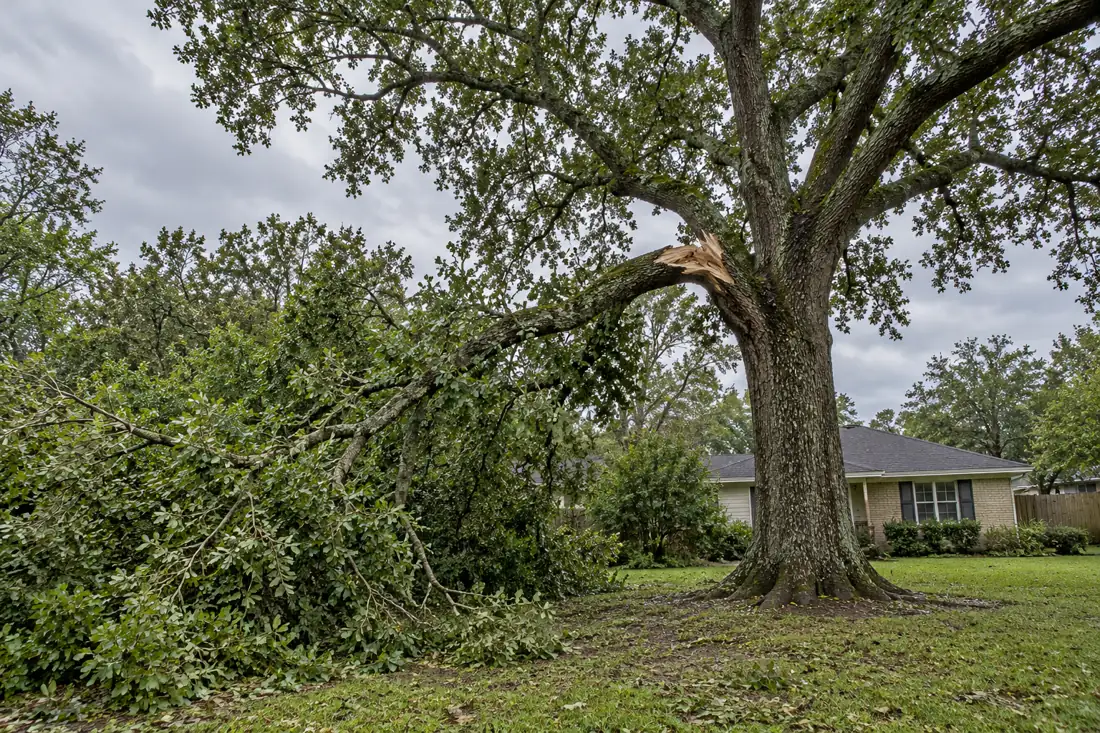
Storm Damage Service
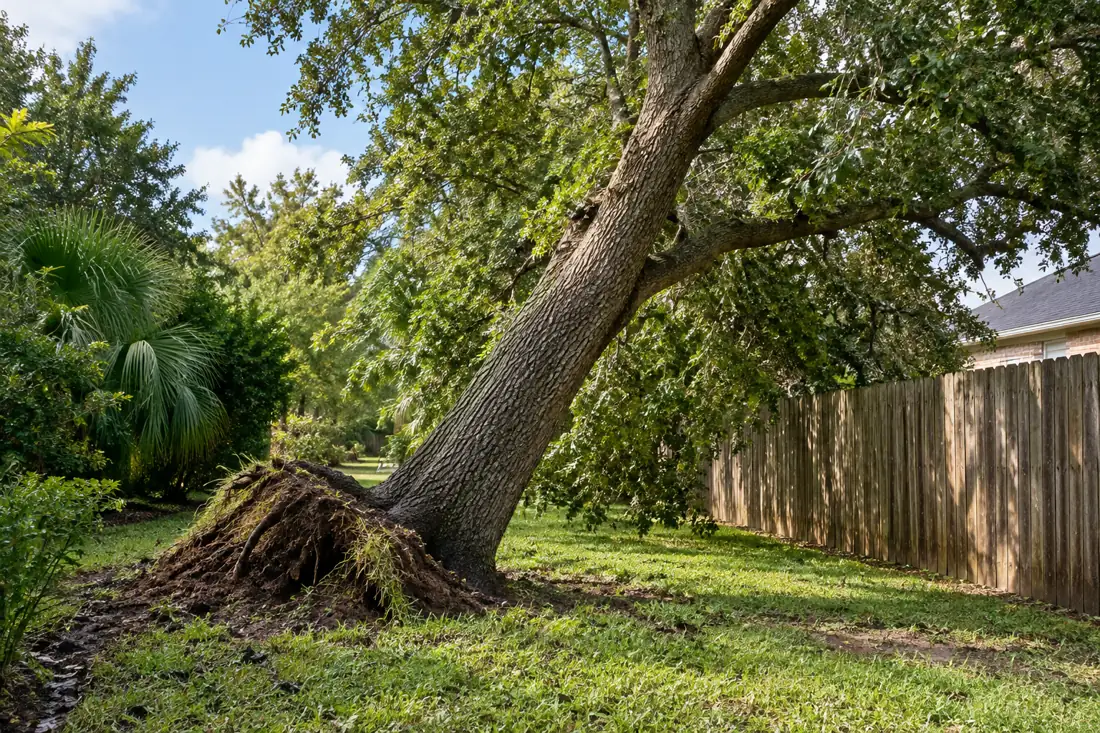
Tree Leaning After Storm
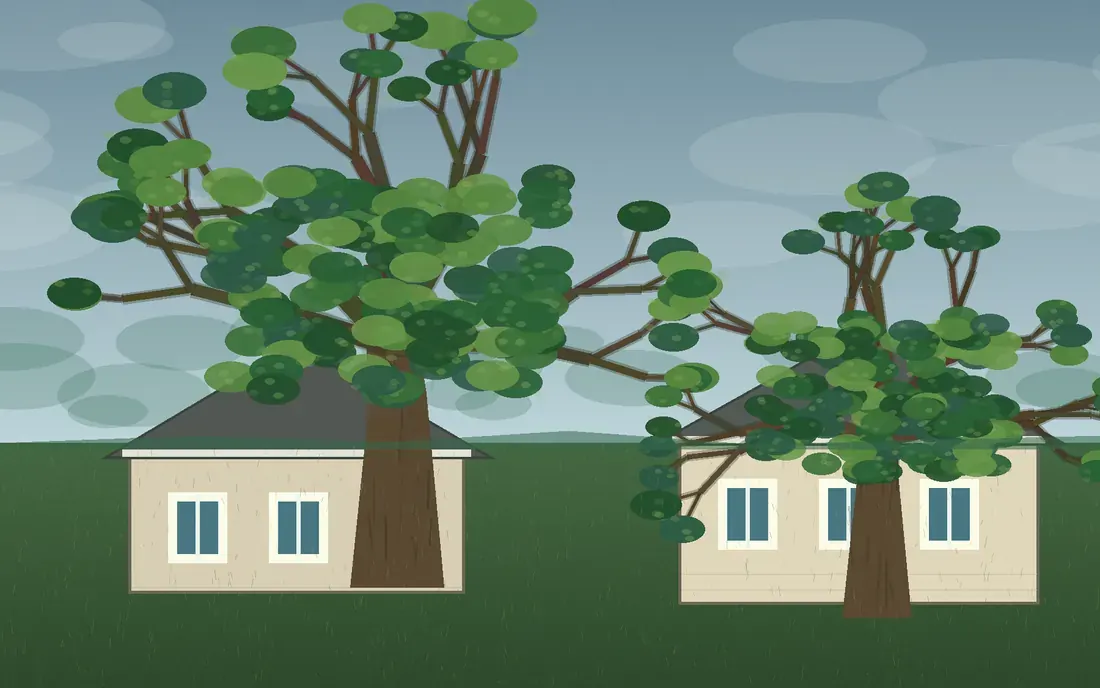
Storm Resource Center
Let emergency safety determine when inspection begins
A hurricane may leave a property looking quiet even when the tree hazards remain active. Hanging limbs, bent trunks, uprooted root plates and downed conductors can shift or fail without warning. Do not go beneath a damaged canopy to photograph it, and do not assume that a branch resting against a roof has finished moving.
First follow local emergency instructions, confirm the area is safe to approach and keep children, pets and vehicles away from obvious hazards. A tree assessment is secondary to medical, electrical and structural emergencies.
If a tree is touching an electrical line, stay away and contact the utility or emergency services as directed locally. Do not attempt to move the tree, trim branches or drive over a fallen wire. Other storm hazards include gas leaks, floodwater, unstable fences and debris that hides sharp material.
Begin only with a distant visual survey from a safe position. When safe access cannot be established, document the general location from outside the hazard zone and request qualified help. No checklist can make a shifting tree safe to stand beneath.
Compare the site with its pre-storm condition
Start with the photographs or records made before the hurricane. Compare trunk lean, canopy shape, branch positions and exposed roots from similar angles. A crooked tree that has grown that way for decades is not necessarily newly unstable; a tree with fresh ground heave or a recently opened split demands more attention. Record the date, approximate time and major weather event, and note any changes that are visible without crossing a hazard area. These comparisons can help a professional distinguish storm-caused damage from long-standing characteristics.
Look beyond the tree itself. Has the storm undermined soil around the base, broken a retaining wall, removed a large neighboring tree or altered drainage? A newly exposed tree may experience different wind loading in later storms. A branch that landed on a building can create roof damage or hidden structural loads even if it looks easy to cut.
Photograph the entire setting and not just the fallen wood. Preserve original files rather than altering images that might be needed for estimates, insurance questions or later comparison.

Make the first post-storm review from safe ground
Stay outside the fall area of suspended branches, leaning stems, damaged structures and possible electrical hazards. Look for fresh soil heave, split unions, displaced bark and fallen limbs from a protected vantage point. Note whether conditions are changing, but do not pull branches, drive over roots or enter a blocked yard to obtain a better photograph.
Send original wide-view and detail images together when requesting help. The larger view explains what could be struck and whether equipment can approach; a detail image alone can exaggerate or conceal the true condition.
Make a safe observation log before cleanup changes the evidence
After a hurricane, loose limbs may be suspended above walkways, roots may be partially lifted and apparently resting trunks can shift if their supports change. Stay outside the possible movement zone. From a safe distance, record the location, the route blocked, whether anyone is beneath the hazard and what has changed since the storm. Do not move wood just to expose a better photograph.
A tree-work proposal may describe a safe sequence after site inspection, but an online submission is not a guaranteed emergency response. Reopen access only when the relevant professionals have cleared the hazard.
Identify hanging limbs and fractured wood
Branches suspended in other branches are especially dangerous because their support is uncertain. They may drop after a gust, vibration or movement of the supporting tree. A partially split limb can also be under tension that is not obvious from the ground. Do not pull it with a rope, shake it with a pole or try to dislodge it using a ladder.
Keep people out of the possible fall area and tell the responding crew what you observed. Some material may require rigging, mechanical handling or a controlled sequence of cuts.
Inspect the visible trunk and major unions for new cracks, bark separation and broken attachments. A split around a crotch can signal a compromised branch union; a crack continuing into the main stem may require urgent evaluation. Do not enlarge a crack to see how deep it goes. Even when the leaves remain green, the supporting wood may be severely damaged. A professional will consider the direction of loading, remaining attachments and consequences of failure before recommending pruning, support options or removal.
Watch for movement in the root plate
Freshly lifted soil, tilting roots and cracks in the ground near the trunk are important warning signs after high wind. In saturated Louisiana soils, a tree may have lost anchorage without completely falling. The visible root plate can move again, especially if another gust arrives or someone begins cutting the crown.
Never walk into the root zone of a tree that appears to be tipping, and do not try to push it upright with a vehicle. Root disturbance near buildings and utilities requires coordinated, qualified assessment.
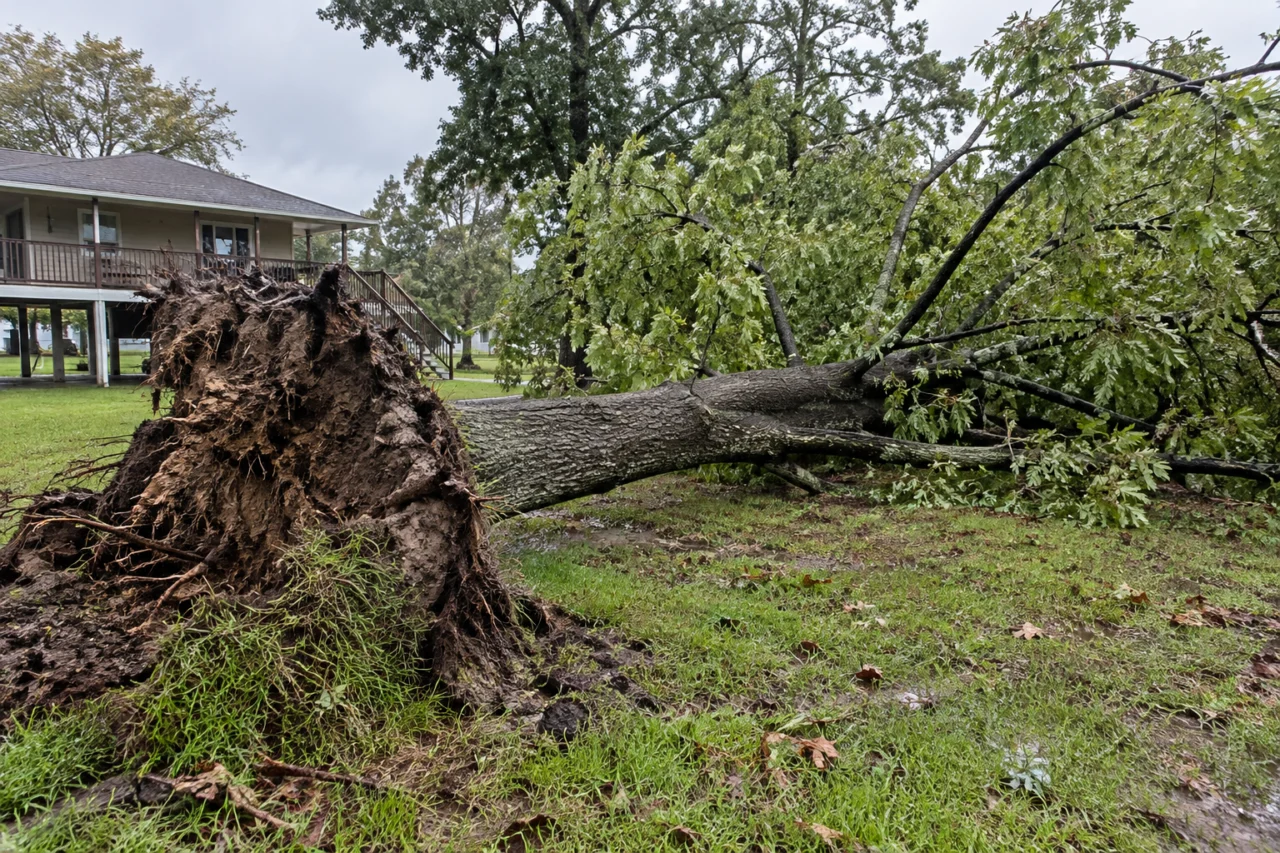
Differentiate new movement from long-standing exposed roots and ordinary ground unevenness. Pre-storm photographs and neighbor observations can help, but they do not eliminate uncertainty. A tree may also show crown damage with no visible root movement, so the absence of soil cracks is not proof of full stability. Ask the assessor to consider soil saturation, drainage, erosion, recent excavations and the tree’s species. In some cases a formal risk assessment is appropriate; in others, clearly severe displacement may leave little realistic opportunity for retention.
Post-hurricane inspection starts with keeping people clear
After severe weather, look first for conditions that mean an area should remain closed. Broken limbs can hang above the ground, root plates may have shifted, and a tree resting against another tree can be under unpredictable tension. Do not walk beneath a suspended limb to take photographs. If a tree contacts wires or related equipment, stay away and seek utility guidance before anyone approaches.
Make a simple inventory from safe locations: fallen debris, blocked entrance, changed lean, damaged canopy, and any contact with a building or fence. Keep storm timing and existing damage separate in your notes. A tree that looks mostly green may still have a split union or moved roots; conversely, loss of leaves does not by itself dictate removal. Detailed decisions require site-specific evaluation.
Separate urgent hazards from recoverable damage
Prioritize access and immediate exposure rather than clearing everything at once. An obstructed emergency route or entrance used by residents can be more time-sensitive than branches already resting harmlessly in an unused part of a yard. If several trees are involved, label each in the photos so the written estimate cannot confuse one location with another.
Once the property is safe to assess, ask for clear distinctions between hazard work, tree preservation measures, stump work, hauling, and landscape restoration. Document who authorizes each part of the scope, especially at rental or multi-owner properties. That documentation is useful for coordinating work but should not be described as a guarantee of insurance coverage.
Examine the relationship to structures and access routes
A branch over a roof creates two problems: tree condition and the safety of the building or recovery work. Do not enter an obviously damaged room merely to inspect a limb from the attic. A tree leaning against a wall or roof can transfer heavy loads that change when the wood is cut.
The crew must consider where the material will move and how the structure will be protected. Coordinate with building professionals or emergency authorities when structural integrity is uncertain. Tree removal cannot be planned safely by ignoring the supporting building.
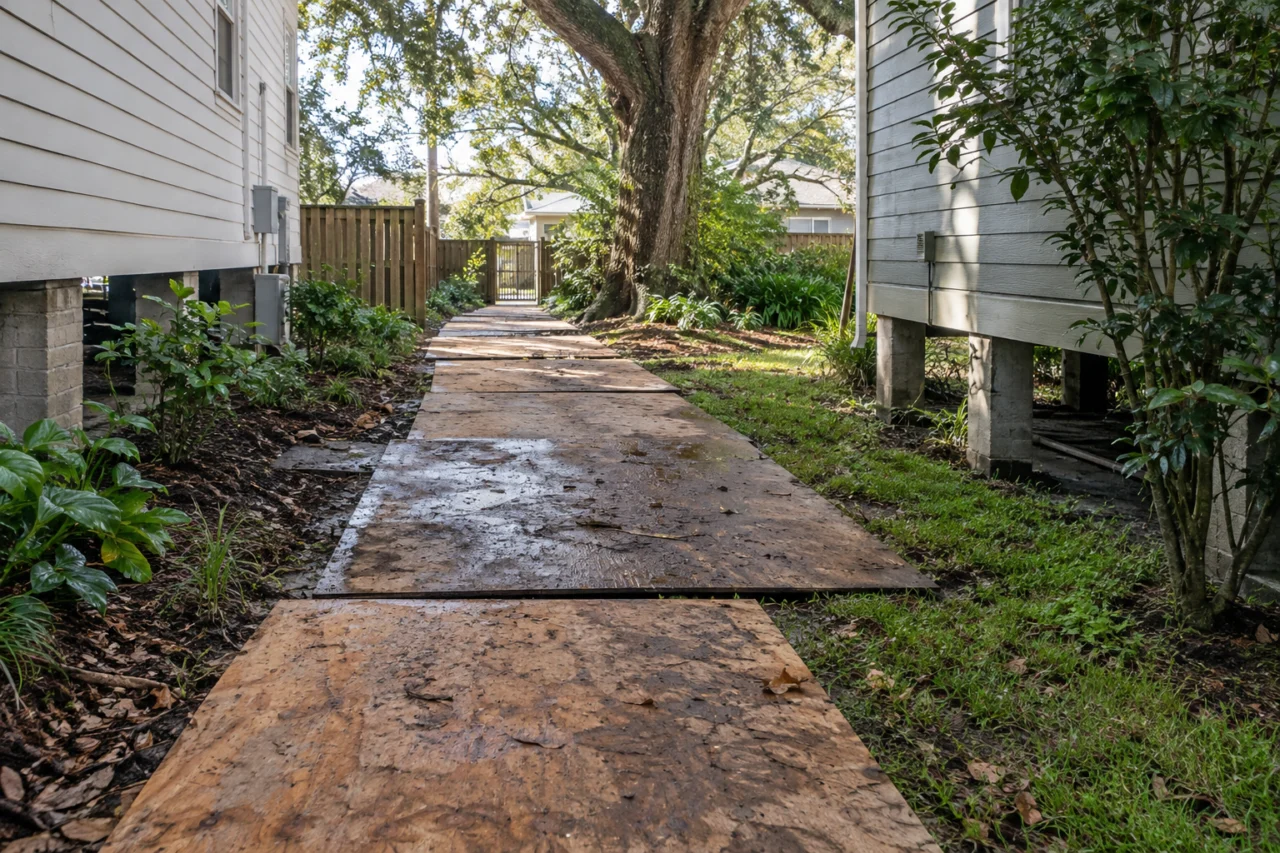
Driveways, sidewalks and streets also deserve priority because they affect access for occupants and emergency crews. Identify blocked exits and the locations of parked cars, fences and utility drops. If a public road or right-of-way is affected, contact the appropriate agency rather than moving major debris into traffic.
Trees along property lines may require coordination with neighbors or public authorities. Record the location and the access constraint so a contractor can bring a suitable crew instead of arriving with equipment that cannot safely reach the work.
Decide what can be monitored and what needs urgent help
Minor broken twigs or small branch wounds in an otherwise stable tree may be handled during planned maintenance once immediate hazards are cleared. Large suspended limbs, active trunk splitting, major uprooting and contact with utilities belong in a more urgent category. The distinction depends on both defect and target.
A damaged branch above an unused portion of a large lot is not the same exposure as one over a home entrance. Ask a qualified professional to explain whether exclusion, temporary stabilization, further inspection or removal is appropriate.
Avoid the automatic assumption that every storm-damaged tree must be removed. Some trees can recover with careful wound management, correct pruning and follow-up monitoring. Others have lost so much structural support that retaining them near occupied structures would be unreasonable. The decision should consider species, vitality, extent of crown loss, trunk integrity, roots and the likelihood of future failure. The save-or-remove guide lays out the questions that help separate recoverable damage from serious structural compromise.
Document damage without making claims you cannot prove
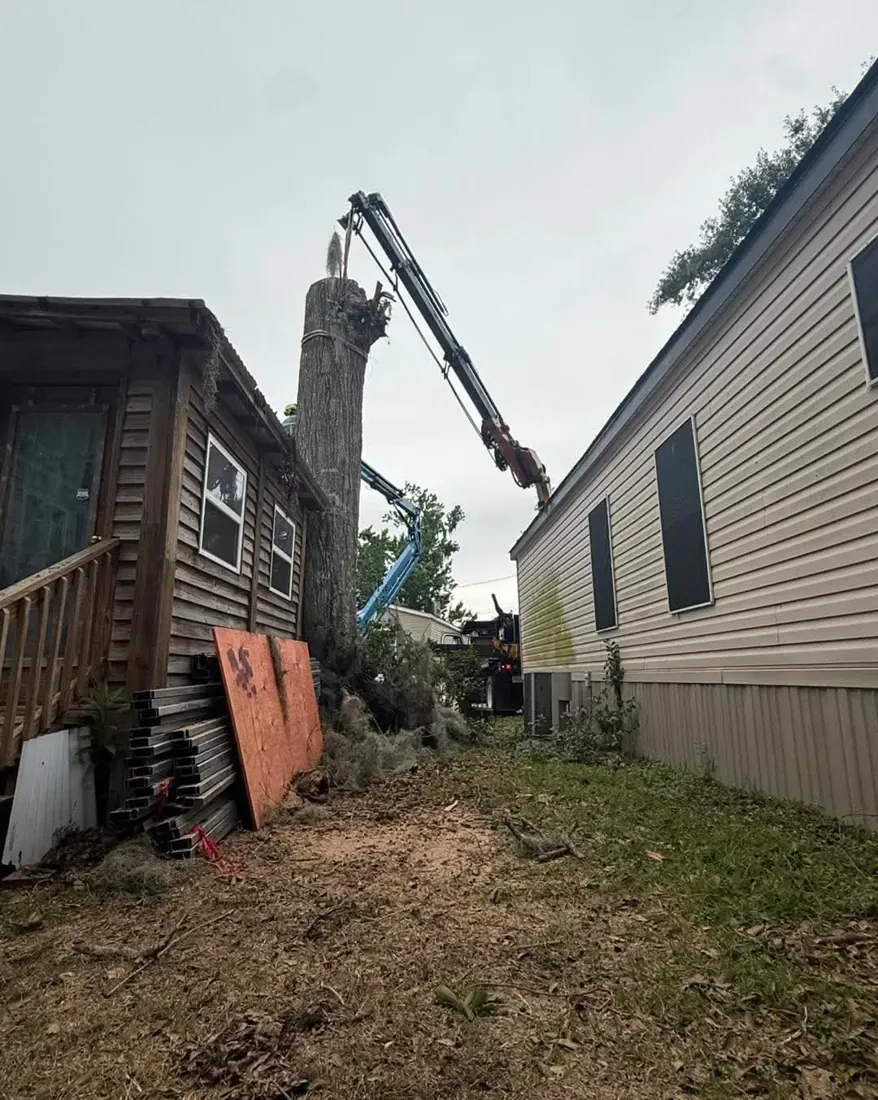
Take clear photographs from safe viewpoints that show the whole tree, the specific defect, the affected structure and a wider property context. Record dates, weather conditions and any immediate protective actions taken. If materials must be moved to make the property safe, document their original positions when feasible without delaying an emergency response. Preserve estimates and invoices that identify which tree was handled and what work was necessary. These records help explain the sequence of events and reduce confusion when several contractors are involved.
Do not assume a fallen tree is covered by insurance or that every removal cost is reimbursable. Coverage depends on the policy, damage circumstances, deductibles, exclusions and applicable procedures. Ask the insurer directly and consult the tree-removal insurance guide for questions to raise. Avoid modifying photographs or inventing conditions to strengthen a claim. A truthful record is useful regardless of whether a claim is filed, especially if additional damage becomes visible during cleanup.
Plan debris handling as a separate operation
Tree material can be surprisingly heavy and awkward after a storm. Water-soaked branches, tangled crown sections and trunks under compression or tension may react unpredictably when cut. A cleanup plan should specify safe dismantling, machinery access, hauling, chipping, logs and stump work if applicable. Ask whether the estimate includes debris already on the property, debris created by the crew and restoration of disturbed ground. Large emergency jobs may be staged to restore access first and complete hauling later.
Keep children and pets away from cut logs, machinery and unstable stacks even after the obvious hazard has been removed. In narrow neighborhoods, verify where debris and trucks can be placed without blocking neighbors or emergency vehicles. Avoid piling material near electric equipment, storm drains or travel lanes. If municipal debris collection applies, follow the current local separation and placement rules rather than guessing. Documentation should state what material will be removed by a private contractor and what, if anything, the owner will handle.
Reinspect during recovery and after future weather
A single post-hurricane visit may not reveal every consequence. Some branches die back later, hidden structural problems emerge as damaged wood dries, and root stability may be affected by subsequent storms. Ask whether surviving trees should be reassessed after a defined interval and what signs would trigger an earlier visit. Take repeat photos from the same safe positions. If the property undergoes roof repairs, soil grading or excavation, inform the arborist so new construction does not undermine a tree already stressed by the storm.
The objective is to restore safe use of the property and preserve trees that remain viable, not to turn every broken branch into a complete removal job. Keep urgent hazards separate from routine pruning and landscaping. The hurricane resource center can organize the process, and the preseason guide helps improve next year’s plan. When new cracking, ground heave or suspended wood is discovered, stop close inspection and obtain help rather than trying to solve it alone.
After the storm, new movement takes priority over routine planning
A post-hurricane review begins with what changed and whether anyone can safely approach the site. Treat suspended limbs, fresh trunk splits, shifting soil, utility contact and blocked emergency routes as immediate access concerns, not ordinary seasonal maintenance items. A tree that appears leafy can still have storm-related structural damage.
Compare a safe post-storm view with older photographs when they exist, but do not invent a baseline if there is none. Note which observations are visible and which areas remain inaccessible. A professional may need to separate emergency stabilization from later tree-health or preservation decisions. Once urgent conditions have been addressed, a preseason guide can help establish a new maintenance baseline for the next storm season.
- Keep people out of a suspected fall zone and report electrical involvement appropriately.
- Label damage photographs by tree and observation time, not a guessed diagnosis.
- Request separate written scopes for urgent hazards, deferred care and debris.
Questions about Post-Hurricane Tree Inspection
When is it safe to inspect trees after a hurricane?
Only after authorities and site conditions permit safe access. Stay away from hanging limbs, downed lines, unstable trunks and flood hazards.
What are the most urgent tree warning signs?
New root-plate lifting, active trunk splits, large suspended limbs, contact with energized lines and trees loading damaged buildings warrant urgent attention.
Should I pull down a hanging branch?
No. Suspended wood can fall or spring unpredictably. Keep people away and arrange qualified removal.
Does an upright tree mean the roots are sound?
No. Some root movement may be hidden or partial. Check for new soil heave from a safe distance and request assessment when suspected.
Can a broken limb resting on a roof be removed easily?
Do not assume so. Tree and building loads may interact; controlled removal and possibly structural coordination are needed.
Should I use a chainsaw on storm-bent wood?
Avoid do-it-yourself cutting of loaded or tangled storm wood. Tension and compression can cause violent movement and severe injury.
What photographs help with a damage record?
When safe, capture the whole tree, the defect, affected structures and broader surroundings, retaining original files and dates.
Will insurance pay for the cleanup?
Coverage varies by policy and circumstances. Contact the insurer and document legitimate work rather than assuming all debris costs are included.
Does every damaged tree require removal?
No. Some limited branch injuries can be managed; serious root or main-stem failure may leave few safe retention options.
Should I move branches into the street for pickup?
Follow current local debris rules and do not obstruct roads or emergency access. Ask what the private crew will handle.
Do I need a second inspection later?
Possibly. Delayed dieback, further movement or subsequent storms may reveal new issues; ask for a follow-up interval.
Who should handle a tree entangled with a power line?
Keep clear, report it to the utility or emergency services as appropriate, and use only qualified personnel authorized for the electrical hazard.
Get a scope for your property
After a hurricane, label photographs by tree and keep them outside unsafe zones. Tell the estimator which entrance or driveway is blocked and whether any overhead utility concern is present. Request separate line items for hazard work, subsequent tree care, and debris handling so the priorities and authorizations remain clear.