Give mature cypress room
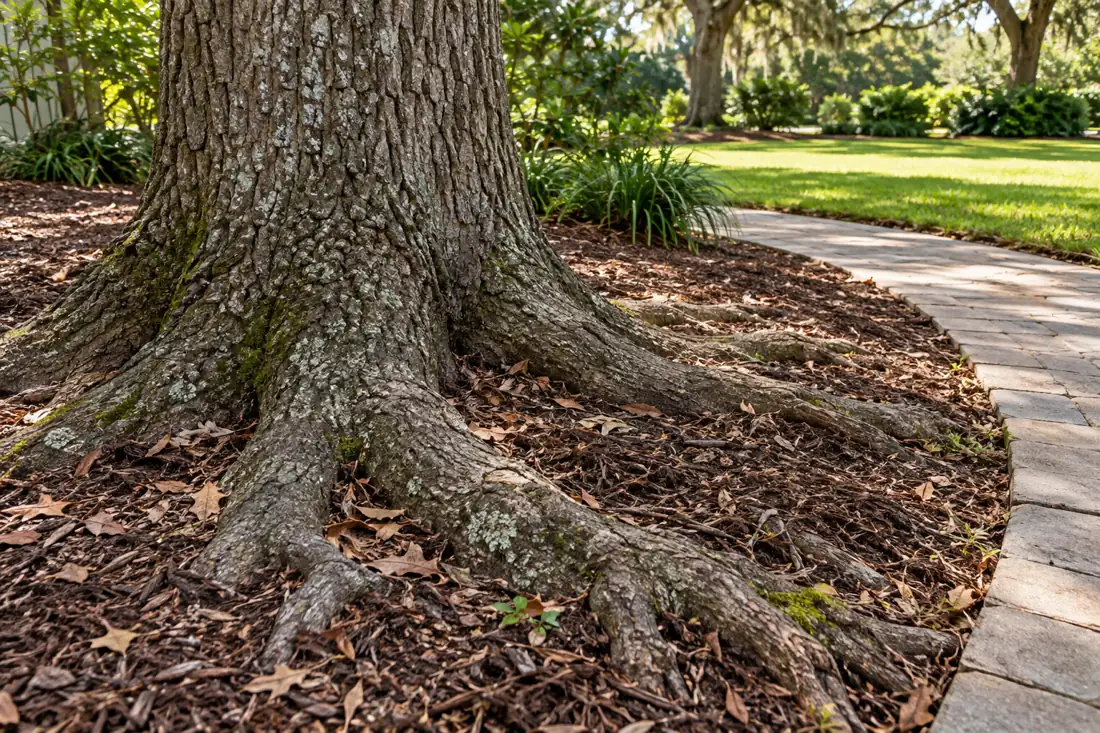
Bald cypress can develop broad root systems and visible knees depending on site conditions. Conflicts with paving and tight urban spaces should be managed with the whole root zone and tree stability in mind.
Site planning detail: Bald cypress tolerates wet settings better than many other landscape trees, yet drainage changes, soil compaction, trunk damage and construction can still create problems. Knees and surface roots deserve careful treatment because cutting them for a level lawn may injure the root system; the effect depends on their location and extent. A brown or sparse-looking crown should be considered against the tree’s normal seasonal cycle before declaring it dead.
In a yard near a sidewalk or drainage structure, evaluate clearance and root impacts together instead of making isolated cuts. Keep heavy equipment and deep excavation away from sensitive roots whenever possible. The useful first step is to document the full tree, root area and any recent site changes, and then request advice that accounts for the actual species and property use.
Protect soil and roots from unnecessary compaction and cutting.
Selective pruning can address specific hazards and clearance needs.
New lean, root movement and broken structure deserve review after severe weather.
When removal may be appropriate
Removal may be considered when severe structural defects, root conflicts or an unsuitable location make long-term management unrealistic. The decision should be based on condition and targets, not simply the presence of knees.
Related resources

Recognize the bald cypress before changing its landscape
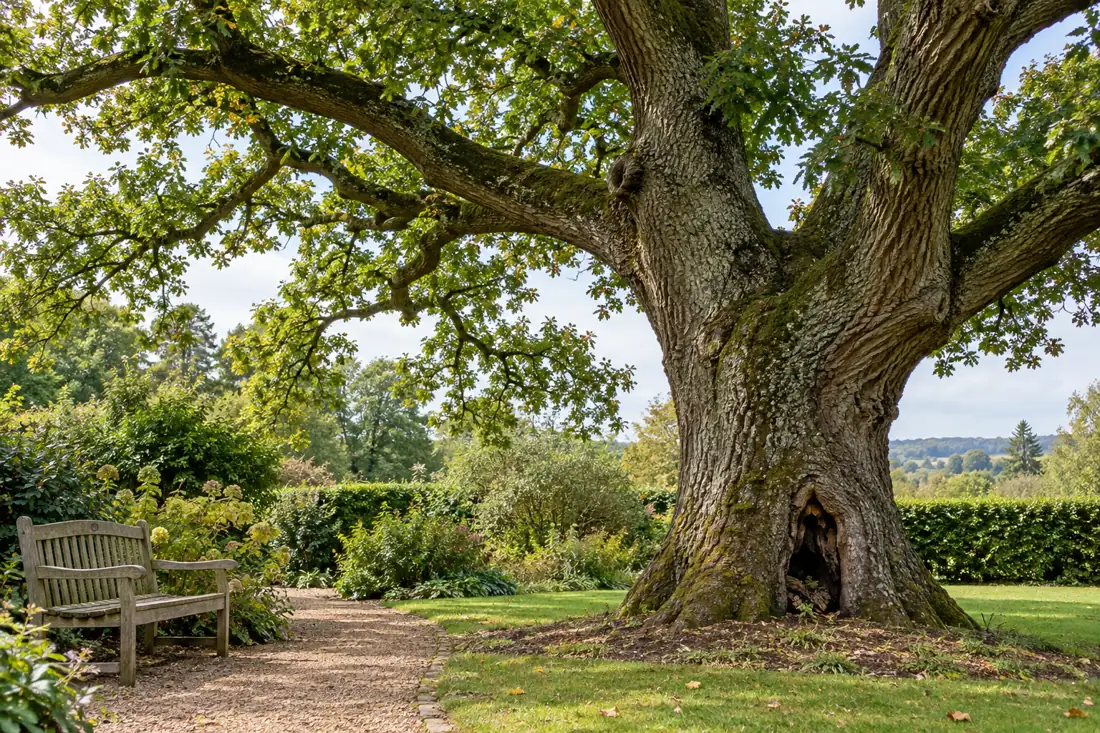
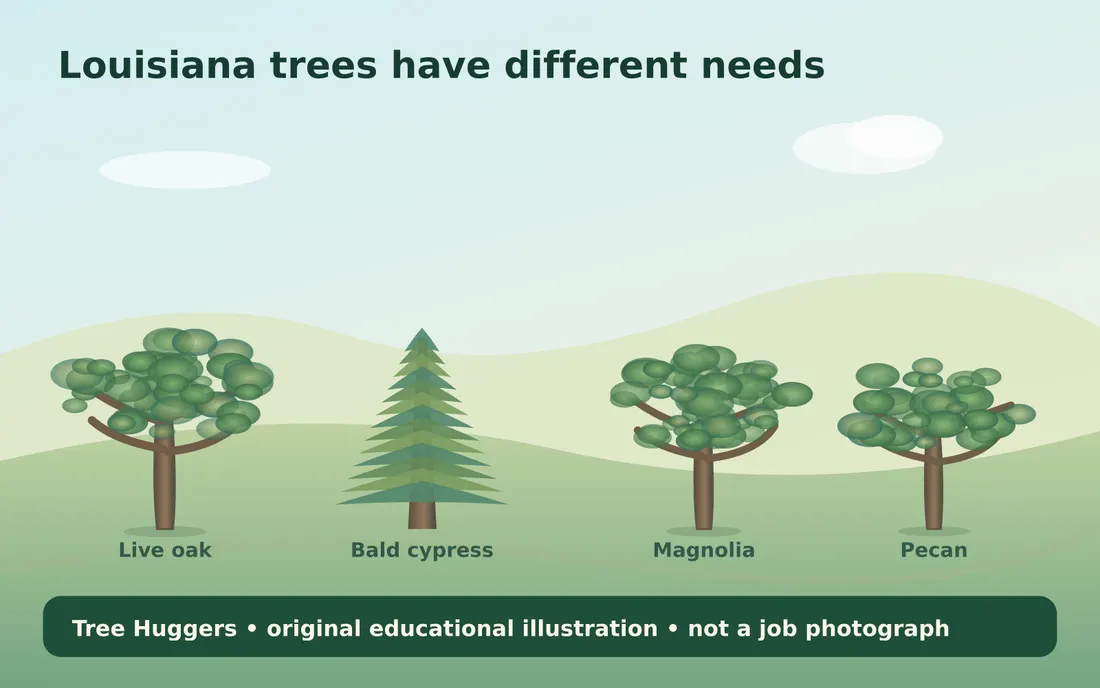
Bald cypress, Taxodium distichum, is the Louisiana state tree and a distinctive presence in parks, streetscapes and yards. It is a conifer that sheds its feathery foliage seasonally, so autumn browning and winter leaflessness do not by themselves mean the tree is dead. Its tapering trunk, flared buttress and upright crown may differ sharply from the sprawling oaks nearby.
Before recommending any pruning, identify what the tree is doing normally and what has genuinely changed. A color photograph from the same time in a prior year can prevent unnecessary alarm.
Plan around cypress roots, knees and wet soil
Bald cypress can grow in wet conditions, but nearby fill, trenching and equipment traffic still require care. Exposed roots and knees may interfere with mowing or paths; removing them without assessment may not solve the underlying conflict. Record actual walking routes and the limits of proposed grading. Do not assume a water-tolerant species cannot suffer from altered drainage or construction damage.
For a tree bordering a ditch, detention area or property line, confirm permissions and staging space before scheduling work. Soft soil can constrain truck and equipment access even when canopy clearance looks simple. Ask how the operation will protect drainage features and stabilize the site after the work.
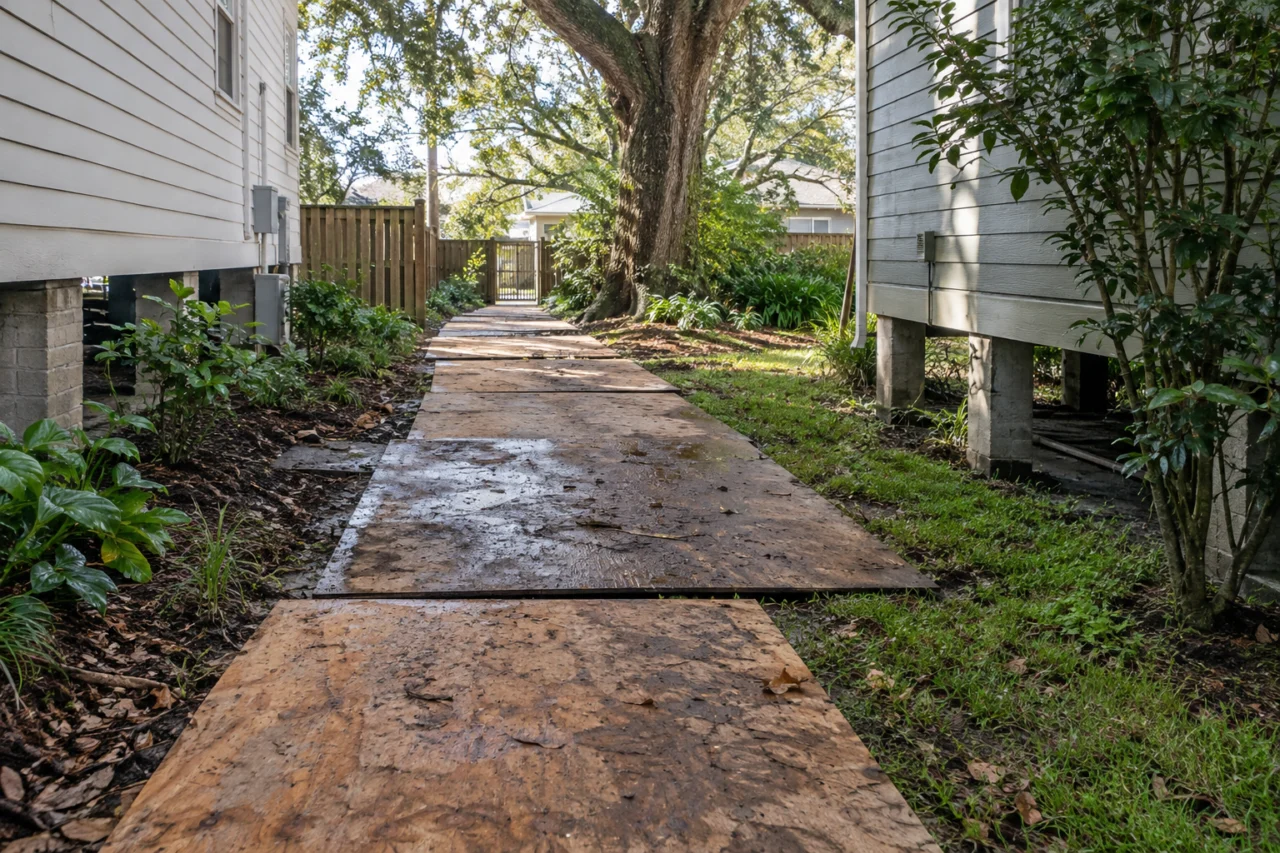
Observe the top, main stem, lower trunk and root area from safe ground level. A newly dead upper leader, a split following wind, sudden movement at the base or a hanging branch deserves evaluation even if the species is generally considered resilient. Conversely, a bare winter cypress with intact buds and no structural defect may simply be dormant.
Ask for identification when the tree could be a related pond cypress or cultivar. Care decisions should respond to the actual form and site conditions, not the mistaken expectation that all evergreens retain green foliage year-round.
Understand cypress knees and their possible reach
The knobby projections called knees can appear where bald cypress roots grow, especially in wet or heavy soils. They are part of the living root system, not random weeds that can be pulled out. LSU AgCenter guidance specifically advises against removing cypress knees. Their presence can create a mowing or walking issue, but cutting them without an understanding of the root system can injure the tree and introduce a problem that did not exist.
Start by identifying the paths people actually use and whether a design change could accommodate the knees.
A gravel edge, mulched island or rerouted path may work better than trying to flatten every surface near a mature cypress. Avoid using a stump grinder against root projections merely to create a smooth lawn. A knee visible some distance from the trunk may still connect to important roots.
Before installing a patio, drainage structure or foundation near the tree, map visible projections and ask for professional input on trench routes. Treat knees as a site-design constraint that can often be managed without sacrificing a valued Louisiana tree.

Match moisture management to tree age and soil
Bald cypress tolerates conditions that would distress many landscape trees, including periods of wet soil, but that does not mean every newly planted tree can be forgotten in standing water or drought. A young cypress needs establishment care appropriate to its soil and planting stock. LSU AgCenter describes the species as adaptable to a range of wet and dry landscape soils. Look at drainage history, root establishment, heat exposure and recent grading rather than prescribing constant flooding. A cypress in compacted roadside soil faces different pressures from one at a pond edge.
Avoid abruptly raising soil against the trunk, filling a swale or diverting runoff into a root area without understanding the effects. Roots need oxygen as well as water, and construction may change the balance even for a wetland-adapted species. A broad, moderate layer of organic mulch away from the trunk can support establishment and protect the soil surface.
Watch the tree through dry spells and prolonged inundation. If upper foliage browns out of season, investigate water, roots and possible pests instead of assuming one symptom proves a fatal disease.
Respect the natural central leader and canopy
Bald cypress typically develops a strong upright leader and a relatively narrow, pyramidal crown when young. That form generally requires much less routine shaping than a heavily managed ornamental hedge. Pruning should have a defined purpose: remove dead or broken limbs, address an actual rubbing branch, or provide necessary clearance for a sidewalk or structure.
Cutting off the top to hold the tree below an arbitrary height can spoil its form and lead to undesirable replacement growth. Ask why each living branch would need to be removed.
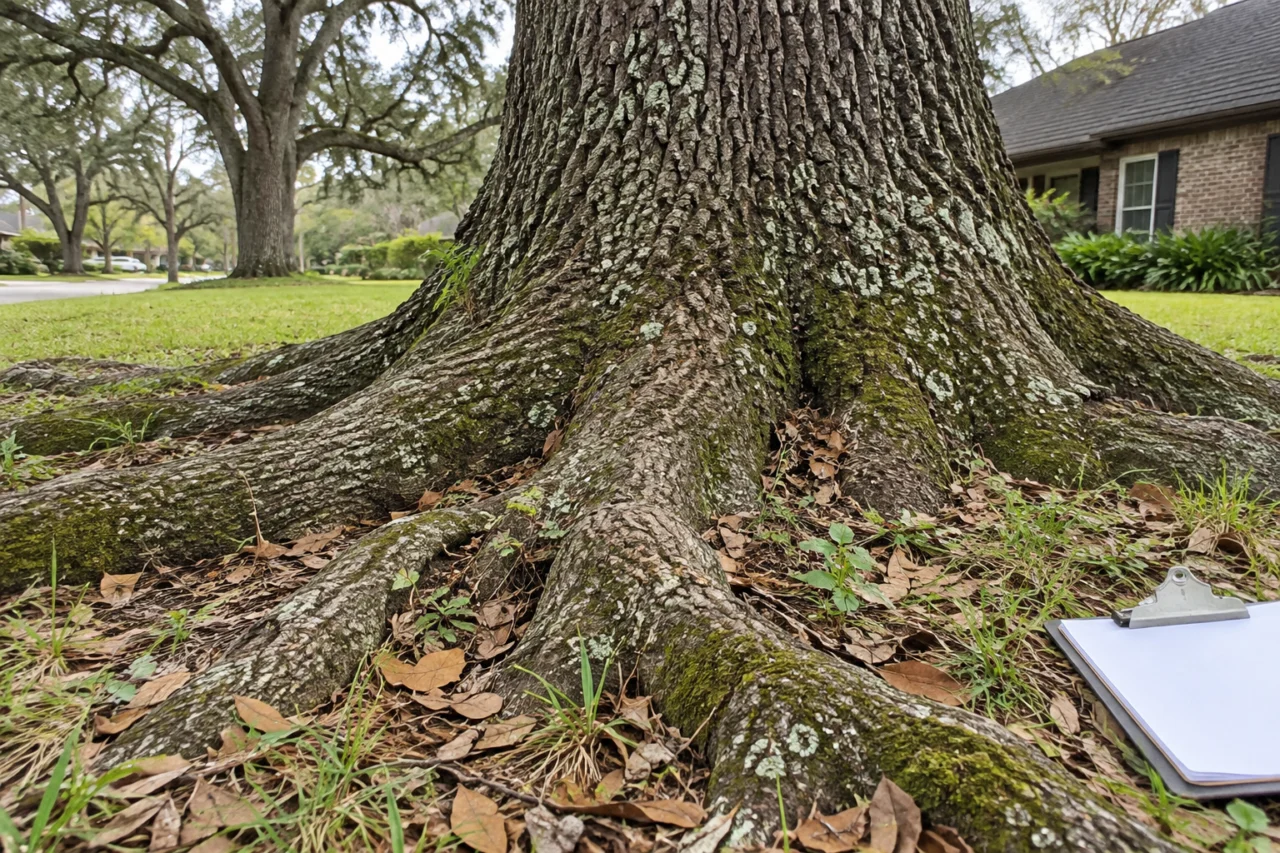
As the tree grows taller, even relatively small branches may be too high for ground equipment. Professionals should assess access and safe lowering methods around buildings and overhead services. Lower-crown raising can be considered for clearance, but stripping too many lower branches changes the tree’s appearance and reduces living foliage.
A conservative approach keeps the natural taper visible and avoids creating a bare pole beneath a small tuft. If the cypress is healthy and fits the space, doing less can be the most sensible maintenance plan.
Bald cypress knees, water, and paving need context
Bald cypress often grows in conditions that would challenge some other landscape trees, but an individual tree still depends on adequate soil, roots, and space. The woody knees sometimes found around the trunk are distinctive; they do not automatically mean the tree is sick. Concerns usually arise when roots or surface features conflict with paving, mowing, or a planned construction route.
Before cutting roots or changing the grade, identify whether the issue is a trip hazard, cracking pavement, drainage, or new equipment access. Excavation and repeated compaction can harm important roots beyond the area immediately beside the trunk. A design change to hardscape or access may sometimes avoid unnecessary tree injury, but the options depend on the actual site.

Understand the roots before proposing a fix
Consider canopy and trunk symptoms separately from ordinary seasonal appearance. Bald cypress is deciduous, so seasonal color changes and leaf drop are expected. Sudden dieback, fresh structural cracks, or unusual root movement warrant a different assessment. Recent flooding or altered drainage should be part of the history supplied with the inquiry.
For a site visit, send a photo of the entire tree and another showing its relationship to the walkway, ditch, driveway, or building. Identify proposed construction and any planned equipment route. Ask for a scope that distinguishes tree care from civil or drainage work, with realistic protections for the root zone.
Inspect the roots during paving and drainage projects
Surface roots and knees are not the only portions of the root system that matter. Utility trenches, street repairs, dock work and grading can cut unseen roots or compact soils around a large cypress. The resulting effects may develop gradually, so an immediate green crown does not prove that the work caused no harm.
Identify the root area before large machines or material stockpiles arrive. If the proposed construction crosses that area, explore routes or methods that avoid severing substantial roots and keep the trunk flare at the original grade.
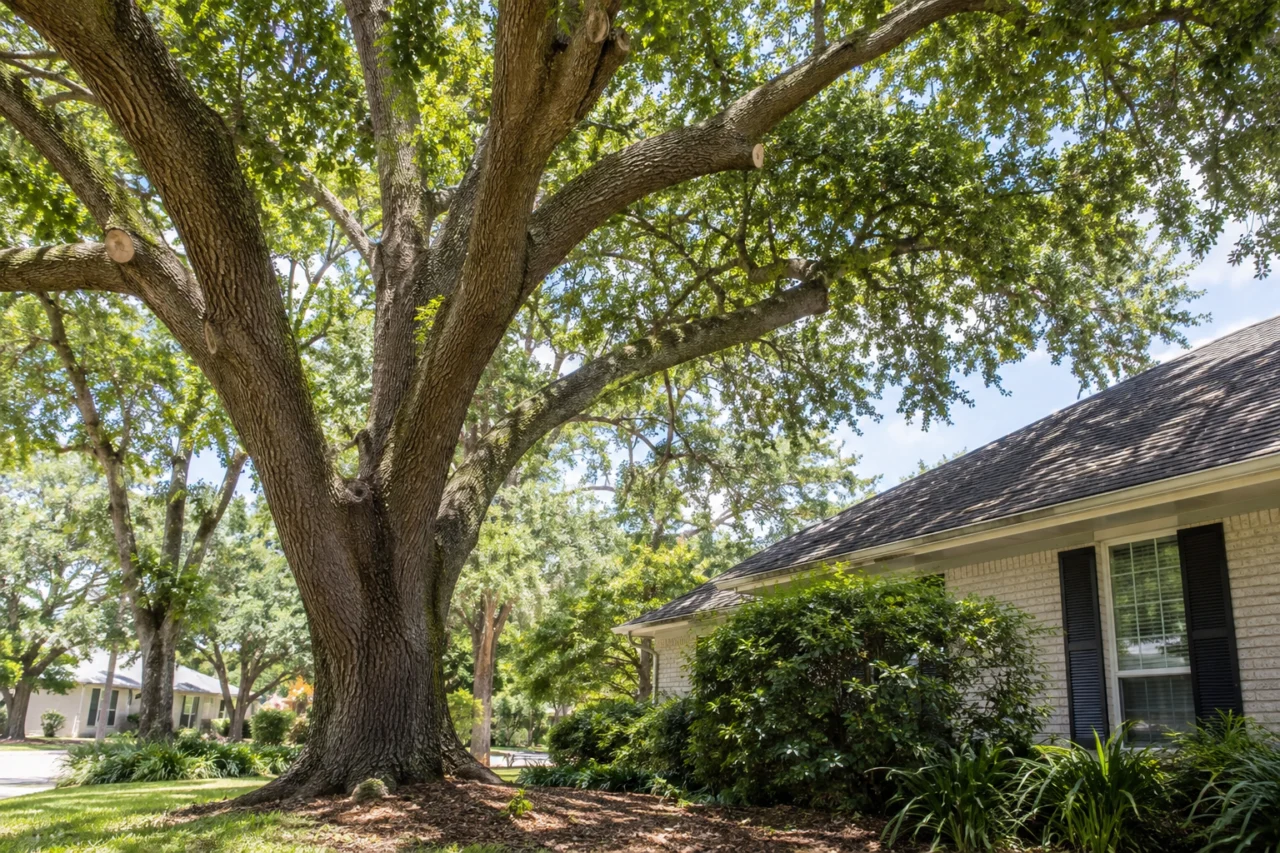
Where a cypress stands beside a waterway, erosion or changes in bank stability deserve special attention. Do not attempt to anchor an unstable tree by pushing fill against the trunk or cabling it to another object without engineering review. A tree with obvious root-plate movement, splitting or a sudden lean should be assessed from a distance. Professionals may need to consider both tree stability and site engineering, especially near a retaining wall or public pathway. Tree pruning does not solve every root or drainage defect.
Assess storm damage without relying on species reputation
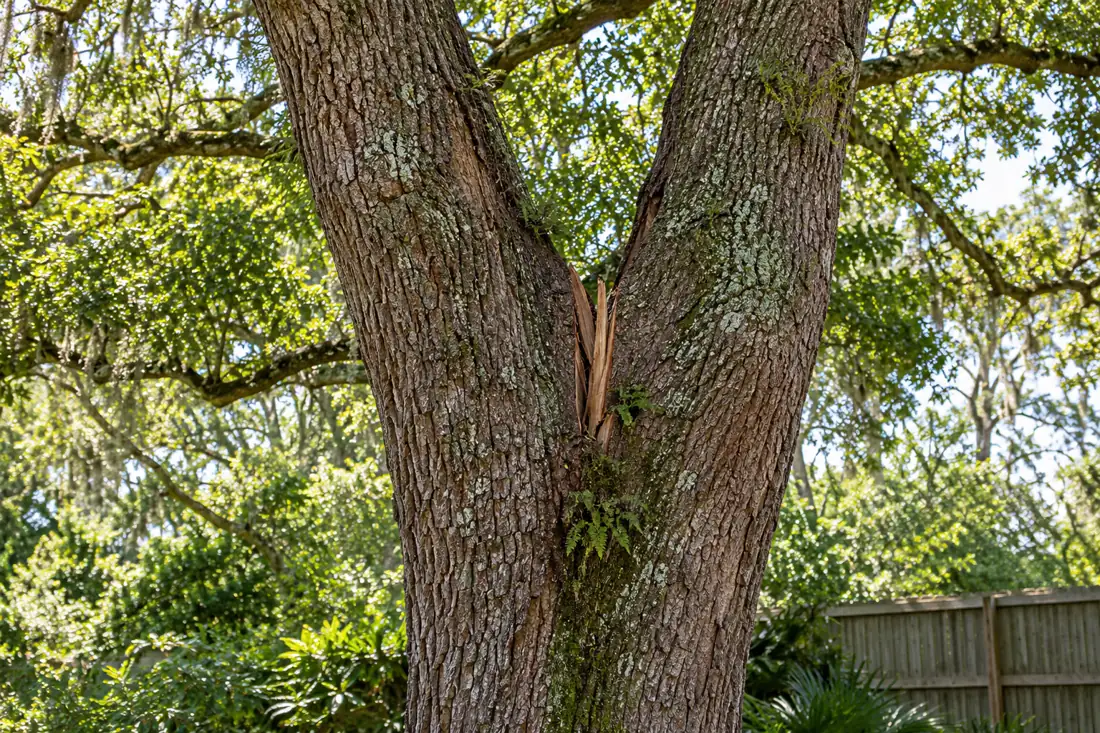
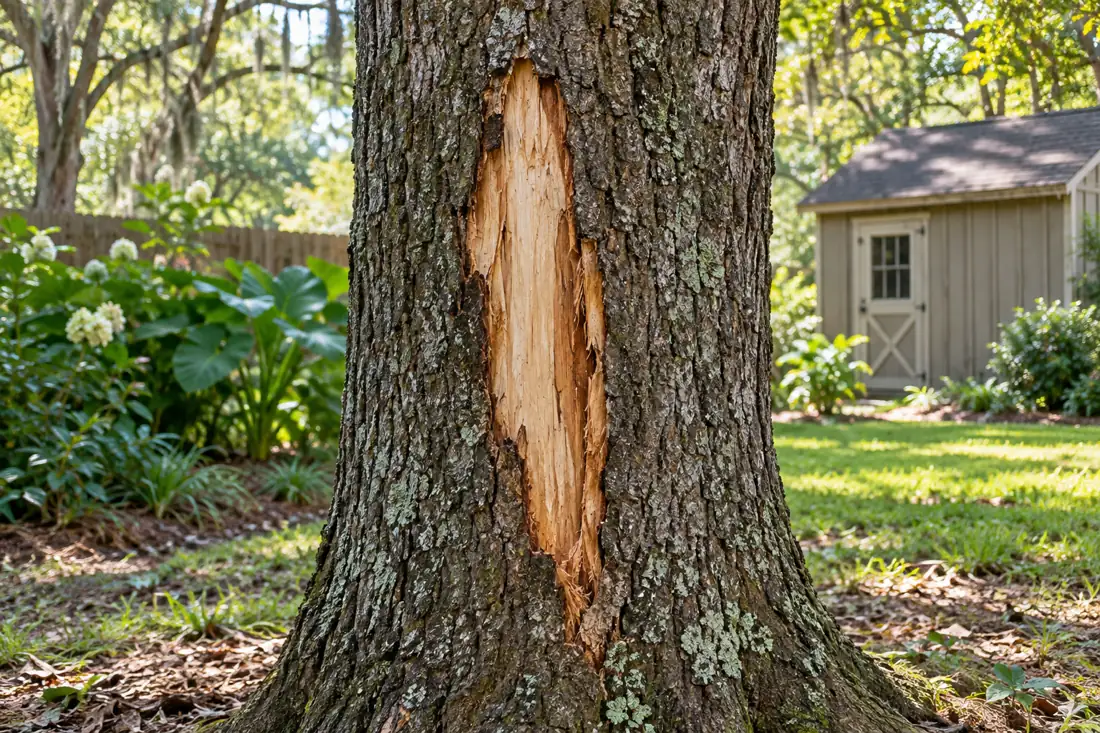
LSU AgCenter storm guidance lists cypress among species with comparatively high wind resistance, but individual trees can still lose branches, break or uproot. An old lightning scar, recent trenching, a compromised leader or a narrow planting strip may alter its performance. The important questions are what defect is visible, how the tree is supported and what lies beneath the possible fall path. A cypress close to a porch or school path deserves a careful inspection even when neighboring specimens look unchanged after a hurricane.
After severe weather, do not approach a hanging limb, cracked trunk, flooded electrical service or tree contacting a power line. Wait for utility and emergency safety instructions before site access. From a safe location, photograph new splits, exposed roots, leaning and missing crown sections. Minor outer branch loss might be addressed with selective pruning, while a shattered leader or failed root system requires a different decision.
Avoid impulsive topping of the remaining crown in the hope of rebuilding an ideal shape; the species’ growth form and the severity of damage must guide recovery.
Plan around large mature specimens
Mature bald cypress can become very tall, with a considerable trunk diameter and extensive root influence. Homeowners sometimes underestimate these dimensions because the young landscape tree occupied so little space. Before building near one, consider long-term crown clearance, root space, access for maintenance, runoff and whether the design can keep the tree as an asset. In a public plaza or commercial landscape, fallen seasonal needles and cones are housekeeping tasks, not defects requiring tree removal. Maintenance plans should differentiate ordinary litter from safety concerns.
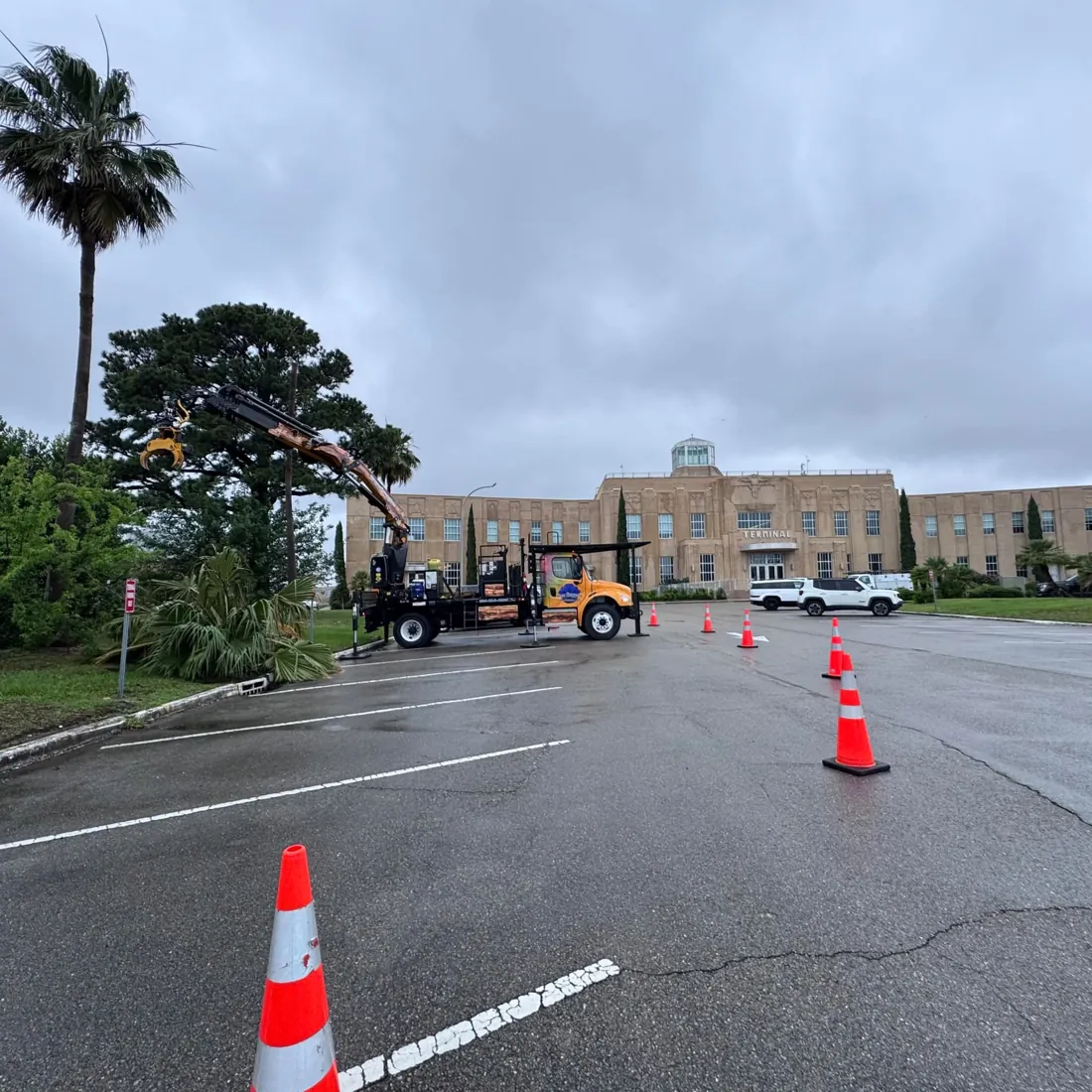
If a tree must be removed, the location of water, soft ground, structures and root projections makes work planning especially important. A truck or crane cannot safely be placed merely where it would shorten the reach. Ask how the crew will evaluate bearing surfaces, protect nearby utilities and lower wood without damaging adjacent landscaping.
Discuss what happens to the stump and knees afterward; they may remain connected to roots or require a site-specific landscape plan. Include disposal, cleanup and surface restoration expectations in the written scope.
Choose a replacement and protect future growth
Bald cypress is often a strong choice for Louisiana sites with sufficient room, but the right tree is not determined by the state-tree designation alone. Compare mature size with overhead cables, walls, neighbors, narrow sidewalks and root space. A compact cultivar or different species may be more practical where the ordinary tree would outgrow the site.
Young plants should be set at proper depth, with the flare visible, and watered while establishing. Replacing a tree after storm removal is a long-term landscape design decision, not just dropping a new sapling into the old hole.
Think ahead about where future knees might emerge, especially in wet locations, and whether a walking path or lawn equipment will need access. Protecting a clear rooting area now can reduce conflicts many years later. Avoid burying old stump material beneath the new planting position and confirm that heavy equipment has not compacted the soil. If the first tree declined, understand the cause before choosing its successor. Repeating the same planting mistake can lead to another expensive removal, even with a naturally adaptable species.

Assess drainage and roots before recommending bald cypress work
Bald cypress can thrive in settings that would stress other landscape trees, but its presence near water does not remove the need to inspect individual condition and root-zone constraints. When a property owner reports lifting pavement, drainage conflicts, or crown thinning, document the pattern and relevant site history before assigning a cause. A photograph of a buttressed trunk or exposed root is not, by itself, evidence of structural danger or a diagnosis of disease.
Record how seasonal water levels, recent grading, new retaining walls, trenching, and soil fill have changed around the tree. Changes in hydrology may matter more than a cosmetic pruning request. If roots or cypress knees interfere with hardscape, do not cut them casually: the effect can depend on size, position, and the health of the retained tree. A qualified site assessment should explain what can be observed, what remains uncertain, and which alternatives protect both the tree and infrastructure.
A written scope can distinguish crown clearance, deadwood management, inspections, utility coordination, and potential removal rather than bundling them into one undefined service. Photograph access from the street, the tree base, the water edge and nearby structures so the proposed treatment fits real constraints. After permitted work, keep a monitoring plan for drainage changes and crown response instead of promising that a single intervention will solve all future site issues.
Get a cypress-specific plan instead of routine trimming
A useful estimate states the actual concern, what treatment is proposed and what happens if nothing is cut. For pruning, ask about the branch or leader involved, the expected finished form, equipment access and how debris will be removed. For a root or knee conflict, the contractor should explain whether the work falls within tree care, hardscape redesign or specialized arboricultural assessment. Do not accept a promise to eliminate all future knees or hurricane risk. Neither can be guaranteed by a simple trimming visit.
Keep seasonal photographs, a record of construction near roots, and any previous inspection findings. For botanical and care background, see the LSU AgCenter bald cypress guidance, which discusses knees and minimal pruning, and the ground-level inspection guide. A qualified local professional can adapt those principles to the particular tree and property. Preserve a healthy specimen whenever a realistic treatment exists; choose removal when a documented risk or site conflict cannot be responsibly resolved.
Questions about Bald Cypress Tree Care in Louisiana
Is a bald cypress dead when its needles turn brown?
Not usually in autumn. Bald cypress sheds its needles seasonally; unexpected dieback at other times merits further investigation.
Should I cut off cypress knees in my yard?
LSU AgCenter advises against removing knees. Consider adjusting paths, lawns or landscape design around them.
Why do some cypress trees have more knees?
Knee development varies with genetics and site conditions and is often associated with wetter, heavier soils.
Can bald cypress grow outside a swamp?
Yes. It adapts to a range of soils and is widely planted in ordinary Louisiana landscapes.
Does bald cypress need heavy annual pruning?
Generally not. Preserve its natural upright form and limit work to real defects and necessary clearance.
Should a bald cypress be topped to protect a roof?
No. Topping harms the natural leader and can cause undesirable growth. Evaluate a specific clearance issue instead.
Is bald cypress wind-resistant?
Extension summaries place the species among comparatively wind-resistant trees, but an individual tree can still have structural or root defects.
Can I install pavers over cypress roots?
Have the root area assessed before excavating or compacting soil. A rerouted or alternative surface may be preferable.
What should I do if a cypress develops a new lean?
Keep clear if movement is sudden or accompanied by soil heave, and seek a qualified inspection.
Can I plant bald cypress beside a tiny courtyard?
Consider its mature height, rooting extent and potential knees. A smaller cultivar or different species may fit better.
What happens to cypress knees after tree removal?
They can persist with the root system. Ask about stump, root and landscape restoration expectations in the scope.
Who should evaluate a damaged cypress near a pond?
A qualified tree professional may need to work with a site or bank-stability specialist where roots and erosion interact.
Get a scope for your property
For bald cypress concerns, show the tree base, visible knees, nearby paving, and the drainage feature or proposed project. Explain whether the issue is routine tree care, hardscape conflict, or new root-zone construction. Ask that root protection and any separate drainage or paving work be clarified in the proposed scope.