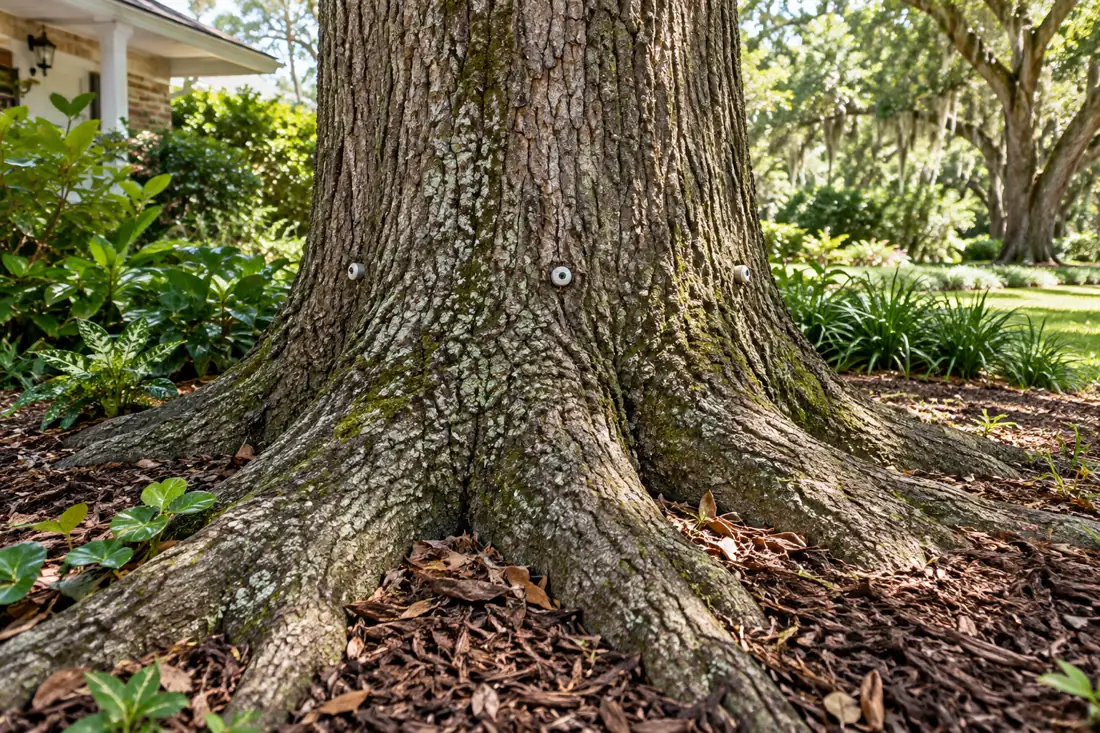
Why cavities form
Hollows may develop after old branch wounds, trunk injuries, decay or long-term compartmentalization. Trees can sometimes continue adding sound wood around a cavity for many years, which is why appearance alone does not tell the whole story.
Site planning detail: A cavity or hollow sound is a reason to look more closely, not automatic proof that a tree is about to fall. The concern depends on the amount and location of sound supporting wood, the shape of the trunk, decay progression, canopy loading and nearby targets. Look for associated warning signs such as expanding cracks, recent movement, fungal fruiting bodies, dead upper branches or soil lifting near buttress roots.
Do not drill, probe deeply or cut into a hollow trunk to diagnose it yourself; amateur tests can cause new injury and provide misleading reassurance. A qualified assessment may be needed to evaluate risk and management choices. Photos should capture the entire tree and the defect from a safe position, never requiring someone to stand beneath a suspect limb. If failure appears imminent, keep the area clear.
The amount and continuity of sound wood around the cavity affect structural capacity.
A defect at the base or major union can have different consequences than a small cavity higher in the trunk.
A hollow tree near an occupied building deserves more attention than the same tree in an open area.
Other warning signs matter
Fresh cracks, movement, fungal growth, expanding decay, large dead limbs, root problems and recent storm damage can make a cavity more concerning. The tree should be evaluated as a complete structure.
Related resources


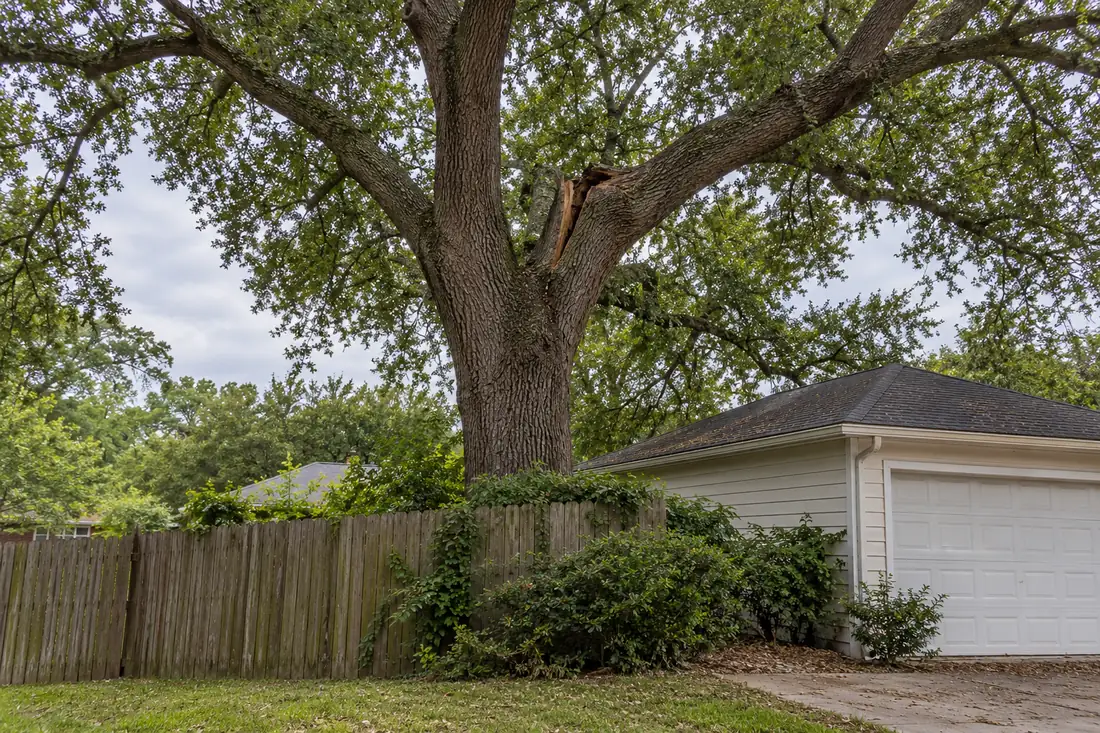
What a hollow actually tells you
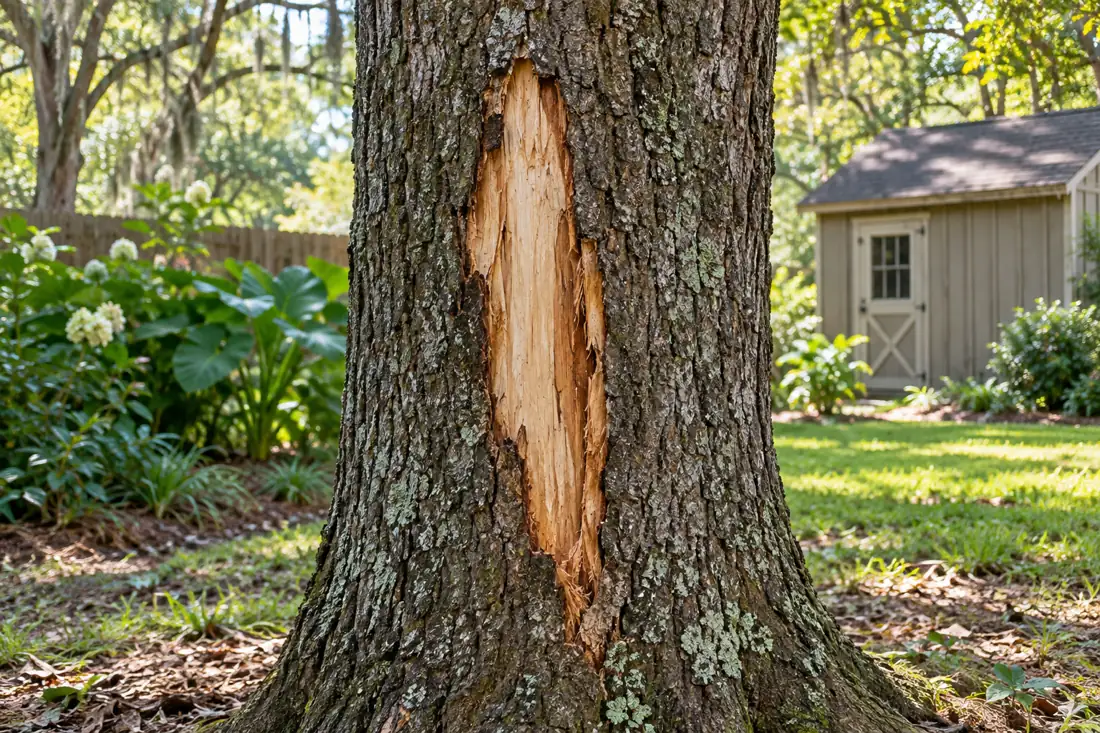
A cavity is evidence that wood has been lost or altered inside a tree; it is not a simple yes-or-no verdict on whether the tree will stand. An old pruning wound, a broken limb, a trunk injury or decay that entered years earlier may explain an opening visible today.
In a living tree, new wood can continue forming around injured tissue while older wood changes inside. That response makes the location, extent and continuity of the remaining supporting wood important. Neither a dramatic photograph nor a healthy green crown reveals those measurements.
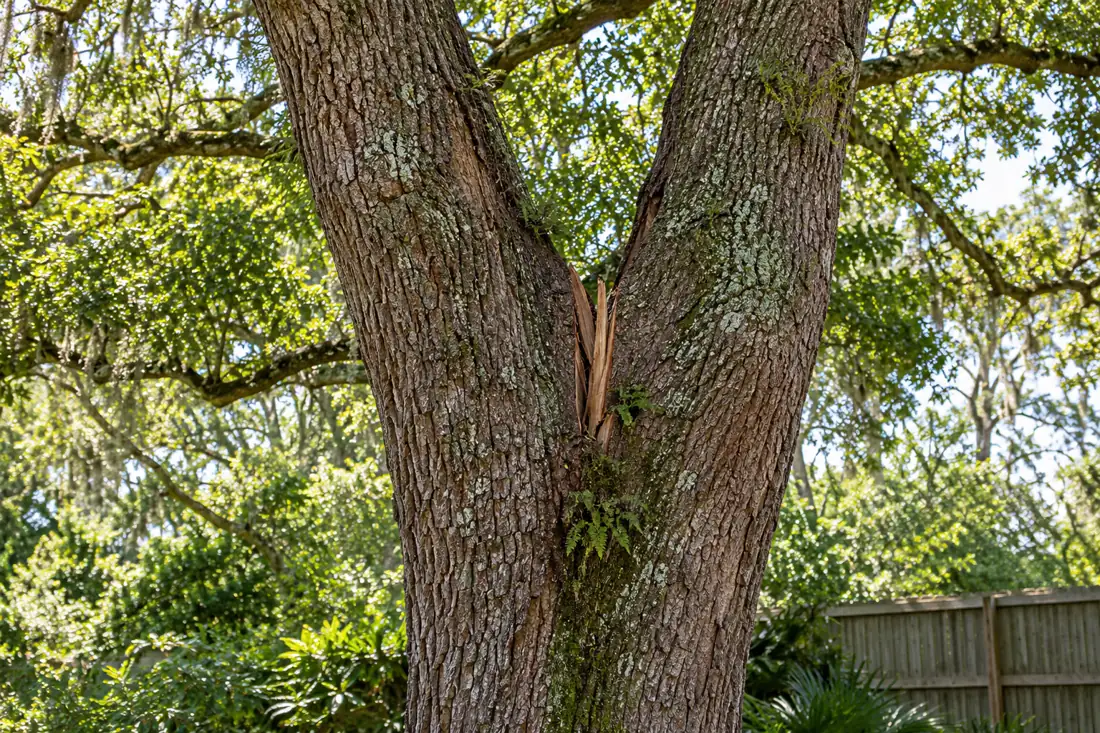
Begin by identifying exactly where the opening occurs. A small hollow in an upper limb raises different questions from a cavity at the lower trunk, root flare or the connection of two large stems. The shape of the opening, cracked edges, adjacent fungal growth, fresh movement and loading above it all change the inspection priorities.
A narrow opening may conceal greater internal deterioration; a broad opening may still be surrounded by substantial sound tissue. The goal is to understand the entire load path, not to rank trees by the size of a hole.
Look at the trunk, root flare and surrounding soil together
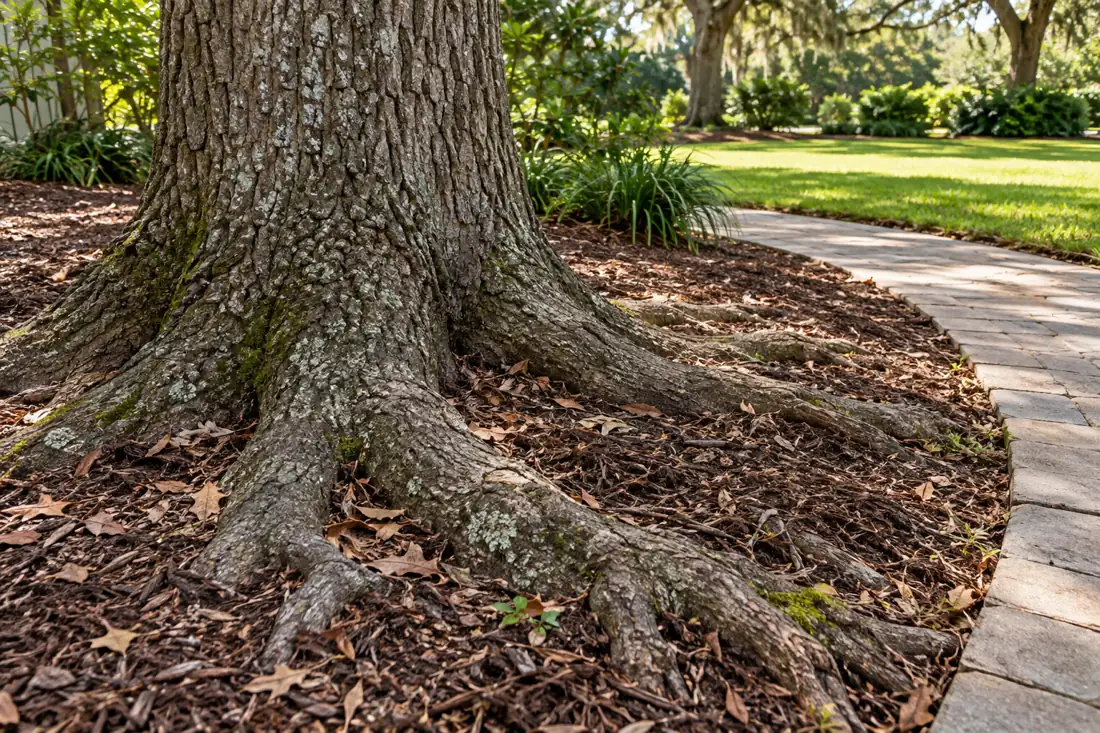
A hollow low on the trunk should prompt questions about the stability of the base as well as the visible cavity. From a safe distance, note whether major roots are exposed, the soil has lifted, the trunk has developed a new lean or the ground has settled near one side.
Those observations matter because a tree can fail by root movement, stem breakage or branch failure, and a cavity does not automatically identify which possibility deserves the most attention. Do not scrape bark, dig around roots or probe into a suspicious opening to gather evidence yourself.
For mature live oaks around Greater New Orleans, the tree may extend across roofs, neighboring driveways and public areas while the base occupies a comparatively small visible space. Saturated ground after heavy rain can complicate the picture, but standing water alone does not prove the roots have failed.
A trained evaluator should consider species, site drainage, past construction, canopy distribution and apparent defects together. If new soil displacement accompanies a hollow at the base, describe when it appeared and keep the area clear pending professional review.

A visible cavity is a finding, not a verdict
A trunk opening can indicate decay, old injury or a long-standing hollow, but the size of an opening does not directly tell a property owner how much sound wood remains. Internal condition, defects, crown loads and nearby targets require site-specific evaluation. Do not fill a cavity, drill into it or climb into it to test its depth.
Record the opening’s location and any new cracking, fruiting bodies, soil movement or changes in canopy growth from a safe viewing point.
A hollow is a finding, not a verdict
Some older trees continue producing functional wood around cavities. Others have weaknesses that warrant urgent attention, particularly when cracks, root movement or broken scaffold limbs are present. The outside size of the opening does not reveal the thickness or condition of all remaining wood. Resist the urge to knock out material, fill a cavity with concrete or poke deep into decayed areas to find a reassuring answer.
A qualified arborist can explain inspection limits and whether further testing is justified. The goal is to manage risk while avoiding both automatic removal and unjustified declarations that a hollow tree is safe.
Separate ongoing decay from an immediate change
A cavity that has looked similar for many years is not the same observation as a new opening following a violent storm. Older photos can show whether the perimeter has changed, a crack has lengthened or a large branch has disappeared from the crown. Record the date and direction of each image so a professional can compare the same surface.
Avoid writing ‘the tree was fine last month’ when the only evidence is that its leaves were green. Structural defects may be present while a crown continues to leaf normally.
Signs that warrant timely attention include fresh splits, hanging branches, an opening associated with a major branch union, sudden tilting, recent impact and newly displaced roots. None proves a particular outcome on its own. The International Society of Arboriculture’s tree-risk guidance emphasizes considering defects alongside the people and property that could be affected. A hollow over a rarely used section of lawn and a similar tree next to a child’s bedroom present different exposure questions.
What an appropriate inspection can involve
Ask what kind of evaluation you are purchasing or receiving. A tree-work estimate identifies proposed labor, access and cleanup, while a formal risk assessment may require a different scope and documentation. A qualified assessor can begin with a visual review and determine whether closer examination or specialized tools are justified.
Not every hollow demands invasive testing, and no tool should be marketed as a crystal ball that guarantees a tree will survive the next hurricane. Request a clear explanation of limitations and what finding would change the recommendation.

A useful report or discussion identifies the inspected tree, the target area, observable defects, significant uncertainty and realistic management options. If internal decay is suspected, the professional should explain why additional assessment is warranted and how results will affect a decision. Ask whether a second specialist is appropriate for a high-consequence tree.
Written findings are particularly helpful when several property owners, an HOA or a facility manager must agree on work. Do not substitute the size of a cavity measured from a photograph for an actual evaluation.
Preservation and risk reduction are not always opposites
A tree with a cavity may still provide shade, neighborhood character and ecological value. Depending on the findings, management could include pruning a specific compromised branch, changing how the area beneath it is used, periodic reassessment or other professionally designed measures. Supports such as cabling or bracing require careful selection and inspection; they are not universal fixes for a hollow trunk. Retaining a tree should come with a plan that addresses the important risks and defines what new symptoms should trigger another review.
Removal may be the more reasonable choice if defects, exposure and uncertainty cannot be reduced to an acceptable level for the property. That decision is different from assuming every hollow tree should be removed. The practical question is whether the tree can continue to occupy this site with a manageable level of risk and a realistic maintenance burden.
Discuss the value of the tree, the location of occupied structures, inspection findings and alternative treatments. If removal is selected, request a written handling and restoration scope rather than treating the diagnosis as permission to improvise work.
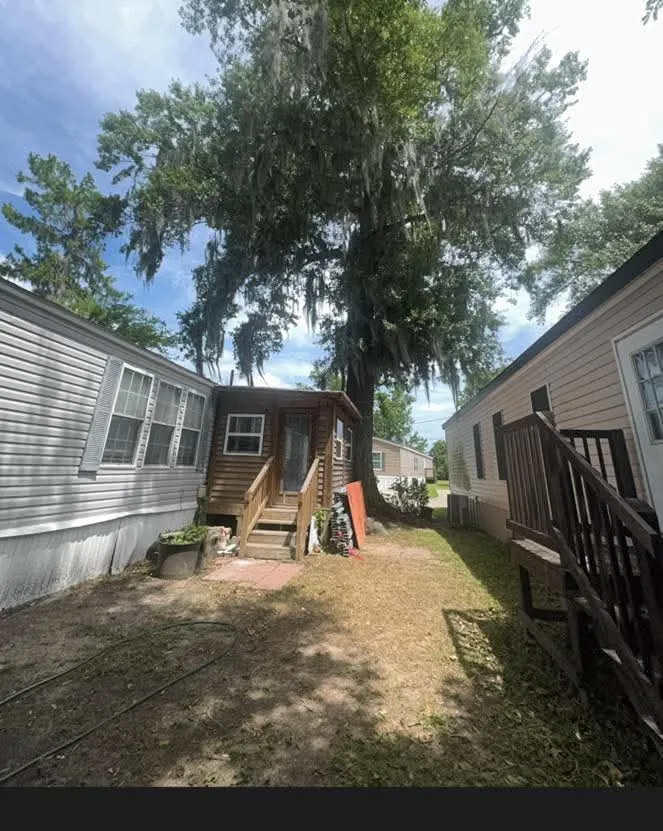
Why filling a cavity is not a repair
Concrete, expanding foam and random sealants do not replace the wood that carries a tree’s load. Filling an opening may conceal changes that should remain observable, interfere with future inspections or trap unwanted conditions, depending on the material and site. Painting or covering a wound should not be used to claim the internal decay has been arrested.
Sound tree care focuses on the actual structure, surrounding growing conditions and risk-management decisions. A cosmetic patch can make a photograph look better while leaving the relevant questions unanswered.
Likewise, cutting into the cavity with a saw to see what is inside can make matters worse and expose someone to unstable material. A tree near power conductors or another immediate hazard belongs with the appropriate utility or emergency response team, not a homeowner’s experiment. If you have seen a cavity filling method advertised as a cure, ask for evidence that it addresses the specific defect rather than merely hiding the opening. Preservation work needs measurable objectives and follow-up expectations.
Photograph the context, not just the hole
For an initial estimate request, send one image of the whole tree, one of its position relative to buildings or commonly used areas and a safe, closer view of the cavity. A photo of the base and surrounding soil can be valuable if it can be taken without approaching unstable wood.
Include the approximate date the opening was first noticed, whether storms or nearby digging occurred and whether people use the space beneath the tree. These details help prioritize the first conversation without pretending a remote image review is a complete diagnosis.

Separate a visible cavity from the question of actual tree risk
A hollow in an older trunk is worth documenting, but hollow does not automatically mean the tree is about to fall. Structural strength depends on remaining sound wood, defect location, tree architecture, loading and targets. Make a wide photograph showing the whole trunk and its surroundings, then a closer view from safe ground of the cavity opening. Do not insert tools or climb the tree to estimate the amount of internal wood.
New cracks, shifting ground, fresh root disturbance, hanging large branches or a rapid change in lean deserve prompt qualified attention. If people or buildings are beneath the potentially affected part of the tree, adjust access until it can be assessed. An assessment may recommend further inspection, monitoring, pruning, support or removal; a visual image cannot establish a safe percentage of remaining wall thickness.
Ask for the finding, limits of inspection, management options and inspection interval in writing. Keep earlier photographs to distinguish a long-standing opening from a new change. If work is proposed, separate diagnosis from the priced scope and clearly identify who may authorize additional action when hidden decay or unstable wood is exposed.
When more than one tree is involved, give each a simple identifying name such as ‘front oak near driveway’ rather than sending a mixed collection of close-ups. Note overhead utility lines, narrow gates, fences, detached buildings and available equipment access. If you already have an arborist’s report, share its actual findings and date instead of summarizing it as ‘safe’ or ‘unsafe.’ A precise request can lead to a more useful visit and a quote that addresses the tree and the property rather than just the visible defect.
Make the next decision explicit
At the end of an assessment, ask which findings support the recommendation, what alternative treatments were considered and what the next check or service would involve. Clarify whether the proposal covers one branch, a whole-tree removal, stump work or some combination. Specify who will protect the driveway and landscaping, where equipment can stand and how branches and wood will be handled. A narrow lot or a tree near a neighbor’s roof can change the method even when two hollow trees look alike.
For background, see the tree risk assessment service, tree health guidance and dangerous tree removal options. These are complementary paths, not three automatic requirements. Tree Huggers can discuss access, appropriate professional evaluation and possible work scopes once the property and condition are understood. No online description can guarantee a particular tree is safe. If the tree is moving, a limb is hanging over people or a line may be involved, keep out of the area and seek the appropriate urgent help.
Evaluate a hollow tree as more than an empty trunk
A hollow-looking trunk raises a reasonable question, but the opening alone does not reveal how much sound wood remains or how the tree carries loads. Trees can compartmentalize decay and continue growing around cavities. Whether the tree is appropriate to retain depends on the location and extent of affected material, surrounding conditions and what could be struck if part of the tree failed. Avoid assuming that a leafy canopy proves structural soundness.
Pay attention to change over time without touching or climbing the cavity. New fungal structures, cracks, loose sections or a history of large limb failures may be relevant background for an inspector. Soil movement, previous construction and heavy canopy loads may also matter. Photograph the whole tree and the opening from accessible ground, and include any property features beneath the canopy. Do not insert tools or climb into the hollow to measure it yourself.

An internal cavity is one part of the structure
A professional may use visual assessment or appropriate additional methods to understand the remaining structure, but tests have limitations. Ask what the findings actually support and what cannot be determined. The likely consequences of failure near a busy walkway differ from those in an unused part of a landscape. Restrict access if there is an immediate visible hazard while qualified evaluation is arranged.
Options can range from monitoring and managing nearby use to targeted pruning or removal. No universal cavity size or percentage seen in a casual photograph determines the correct choice. Before authorizing work, identify the specific concern, the proposed treatment, any known limitations and the finished site condition. A written explanation helps protect the tree when retention is reasonable and avoids unsupported promises when it is not.
Questions about Hollow Tree – Is It Safe?
Does a hollow trunk automatically make a tree unsafe?
No. A hollow is a structural observation requiring context, not a stand-alone removal decision. Remaining sound wood, loading, other defects, root support and nearby people or property matter.
Can a full green canopy prove the trunk is strong?
No. Leaf growth does not measure the strength of the supporting trunk or roots. A tree may continue producing foliage while important wood has decayed or a branch connection has weakened.
Are cavities at the base more serious than cavities in a limb?
They can involve different parts of the load-bearing system. An opening near the base requires attention to trunk and root support; a limb cavity changes the assessment of that branch and its targets.
Will concrete or expanding foam make a hollow trunk stronger?
Filling a cavity does not restore missing structural wood. Cosmetic material may conceal changes and complicate inspection. Ask a qualified tree professional about assessment and realistic management instead.
Should I remove bark to look deeper into the cavity?
Do not scrape, drill, climb or enlarge the opening yourself. Such work can cause injury, damage living tissue or bring you beneath unstable wood. Supply safe photographs and request assessment.
What is the difference between an estimate and a tree risk assessment?
An estimate describes proposed work and price. A documented risk assessment may examine defects, targets and management alternatives using a separate method and scope. Ask which service is being provided.
How can I track whether a hollow is changing?
Keep dated ground-level photographs from repeatable viewpoints, including the full tree and the opening. Report new cracks, soil movement, hanging branches or sudden lean promptly rather than waiting for a planned review.
Can a hollow tree be pruned rather than removed?
Sometimes targeted pruning or a change in how the area below is used may address an identified concern. Whether that works depends on the tree’s condition, remaining structure and property exposure.
Can bracing or cabling repair internal decay?
Support hardware can address certain structural issues when correctly designed, but it does not replace decayed wood or guarantee against failure. Its role and inspection requirements need professional explanation.
What photos should I send of a cavity?
Send a wide view of the entire tree, its position relative to occupied areas and a closer photo from a safe distance. Include the root flare if accessible without entering a hazard zone.
Does past storm damage change the assessment?
It may. Recent branch loss, new cracks, leaning or soil displacement can change the risk picture. Share the dates and any older photographs instead of assuming the cavity alone caused the change.
What should the written proposal clarify?
Ask whether the scope includes assessment, selected branch work, complete removal, hauling, stump treatment and property protection. Have the contractor identify the specific tree, work objectives and exclusions.
Get a scope for your property
A hollow section is a reason to assess a tree carefully, not a reliable measurement of how much sound wood remains. From outside the possible fall or branch-drop zone, note the cavity location, openings, moisture, mushrooms, cracks, recent canopy changes and the use of nearby space.
Avoid inserting tools into the cavity or removing loose material to estimate depth. The significance of a cavity depends on trunk geometry, decay distribution, root anchorage and the targets that could be struck—not merely how dramatic the opening looks in a photograph.
Ask the assessor to identify what can and cannot be concluded visually, whether additional testing is justified and whether pruning, access restrictions, monitoring or removal is appropriate. Tell the estimator about buildings, walkways, play areas and parked vehicles within reach, as well as possible equipment access. A written recommendation should separate tree condition from the proposed work, the reason for each action and any uncertainty remaining. If fresh cracking, uprooting or a major suspended limb appears, keep the area clear pending qualified review.