Common signs of tree decline
More light through the canopy, smaller leaves and repeated dieback can indicate ongoing stress.
Separating temporary leaf stress from decline that needs investigation
A sparse canopy is a useful observation but not a complete diagnosis. Compare leaf color and density with the same species nearby and with earlier photographs from the same season. Consider when new growth normally appears, whether the tree lost leaves after drought or heavy rain, and whether one side is affected more than another. A tree stressed by drainage changes can look different from one with dead structural wood.
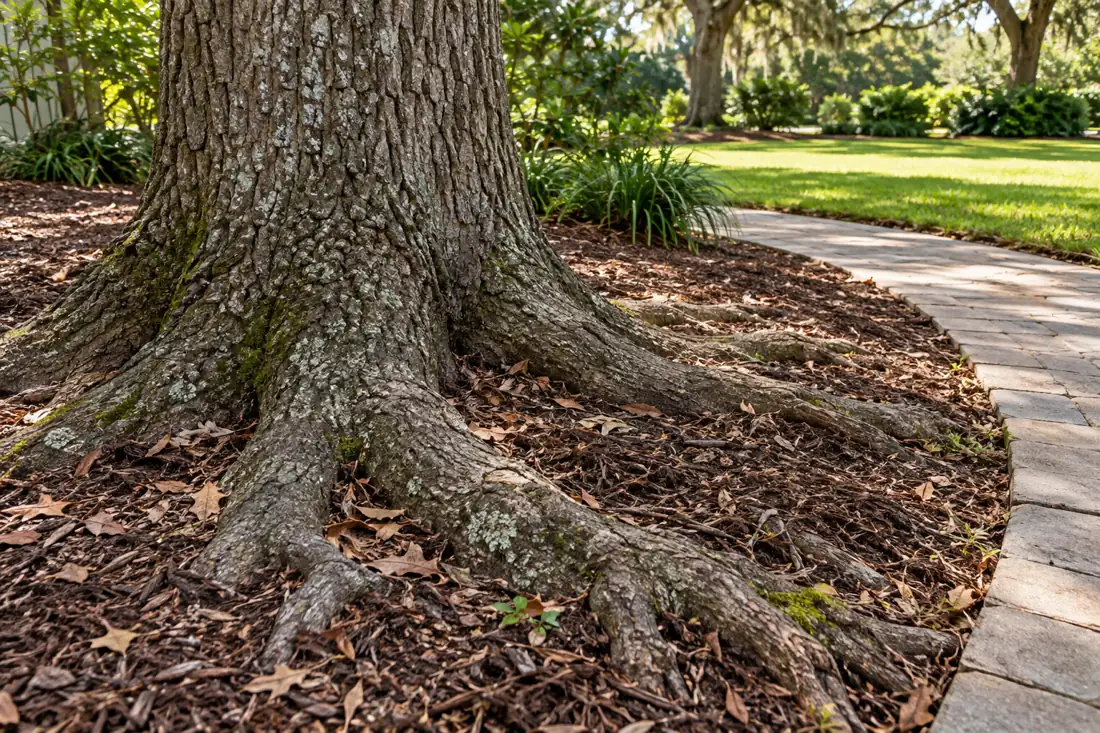
Review what has happened around the root zone. New fill, trenching, traffic, repeated waterlogging, fertilizer application or altered irrigation may matter more than what is visible on the bark. Photograph the trunk flare and nearby soil at ground level, without disturbing roots. If there are mushrooms, cavities or bark loss, document their locations and progression rather than guessing at the cause.
Describe the actual concern when requesting help: reduced leaf cover, dying tips, brittle branches, unusually wet soil or gradual decline. A qualified site assessment can determine whether pruning, improved conditions, testing or removal should be considered. Avoid drilling into the trunk or applying chemicals based only on an online picture; treatment without a diagnosis can create new problems.
A few dead twigs can be normal; expanding deadwood is more concerning.
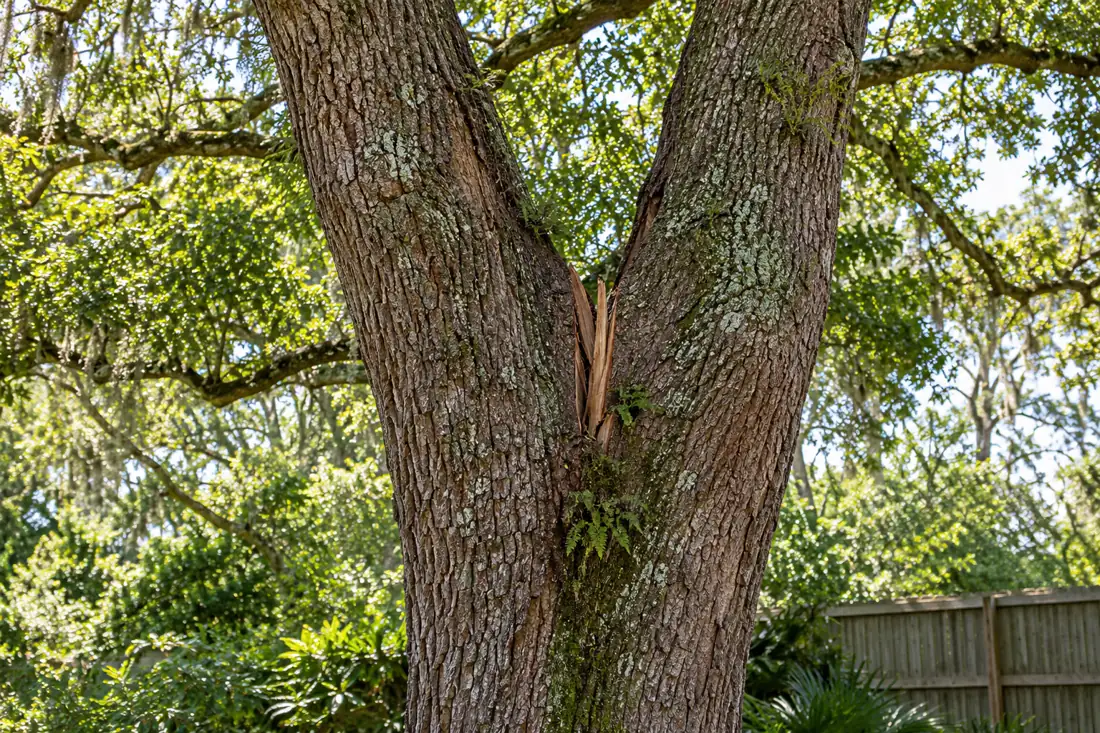
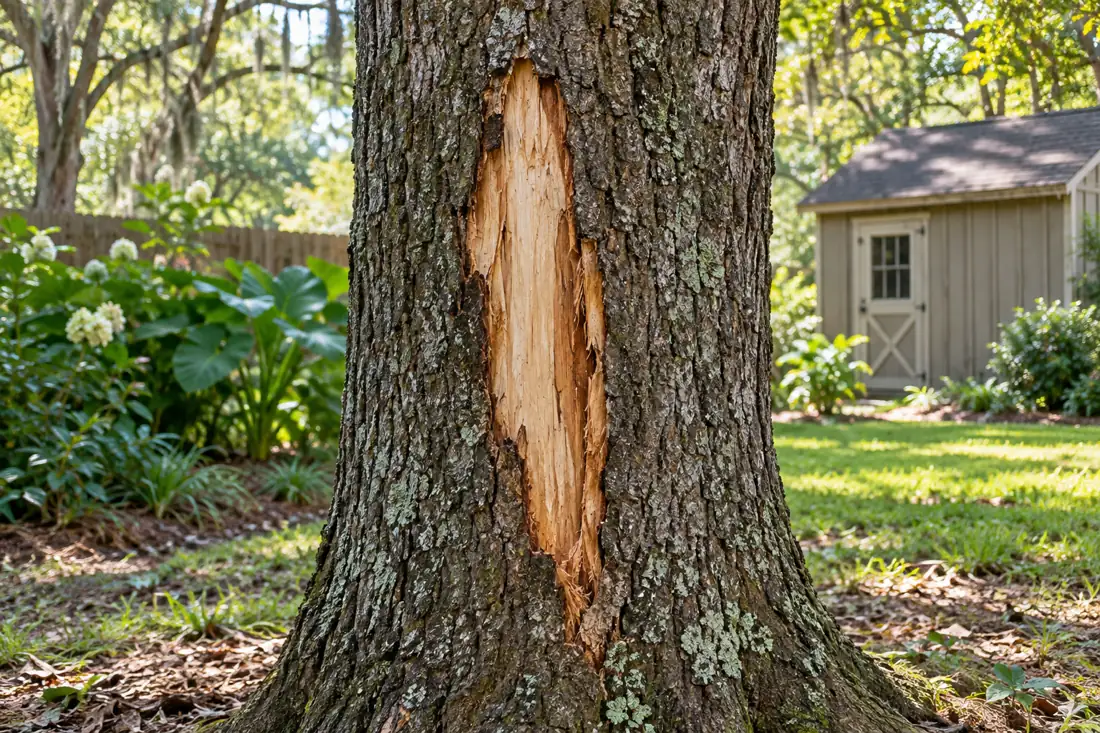
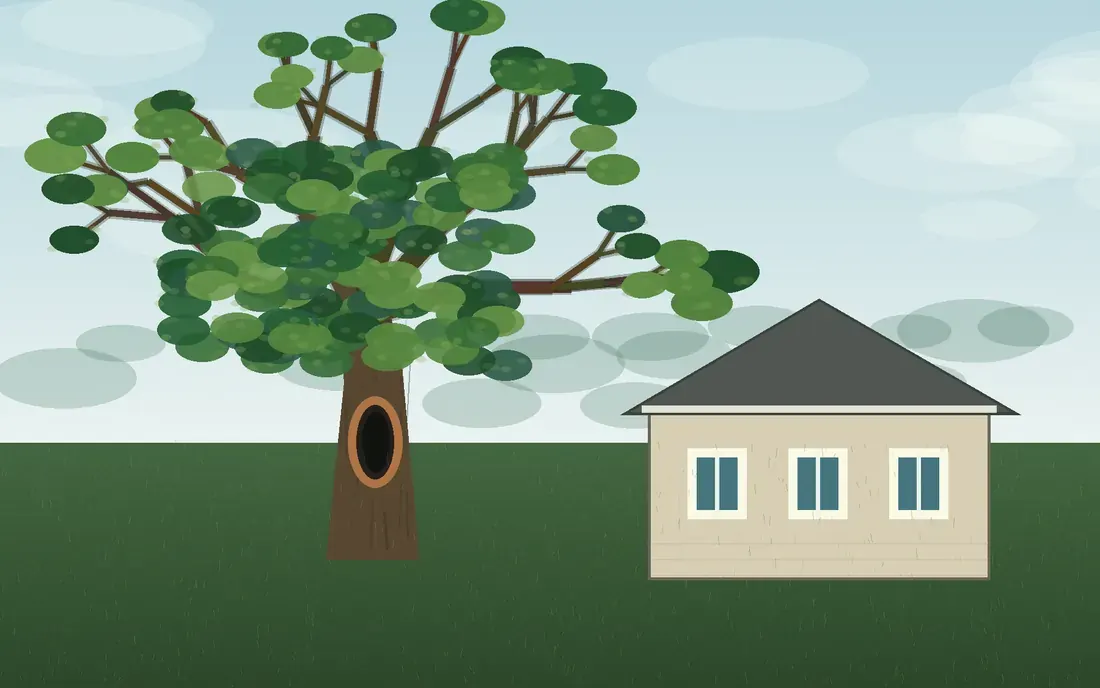
Loose bark, cracks, cavities, fungal growth or root damage can point to deeper problems.
Site changes can trigger decline
Construction, soil compaction, grade changes, drainage problems, root cutting, drought and repeated flooding can all affect a tree long after the site change occurred. Tree health should be viewed together with what has happened around the root zone.
Decline is different from structural risk
A tree can be unhealthy but structurally stable, or structurally dangerous while still carrying green leaves. Health and risk overlap but they are not the same question.
Describe the change instead of choosing a diagnosis
Start with the pattern you can see: thinning foliage, brown leaves, bare twigs, a newly affected branch or a wider change across the crown. Note when it first appeared and whether it is spreading or recurring. A description such as the upper right side lost leaves this month is more useful than assuming the tree has one particular disease. Tell the provider what is known and what remains uncertain.
Use safe whole-tree photographs and views of the affected areas. Do not climb, cut samples or approach unstable material just to make the request look complete. If the concern includes a fresh split, changed lean or suspended limb, report that separately from leaf symptoms. Ask whether the next visit is intended to assess health, structural condition or both.
A general appearance question can lead to different services, and understanding the purpose of the review helps the owner avoid buying a treatment before the actual problem is reasonably identified.
Consider season, species and the pattern across the property
Different trees do not keep identical foliage through every season. Tell the provider the species if known, when the tree normally changes and whether similar trees nearby look different. If you are unsure of identification, ask for help rather than applying advice for another species. A single photograph should not be treated as proof that every bare branch is dying or that all brown foliage is a normal seasonal change.
The LSU AgCenter drought-stress resource describes how weather stress can produce visible changes and complicate seasonal interpretation. Use that context to prepare the history, not to diagnose the tree from a weather label. Explain whether symptoms appeared during dry conditions, after prolonged wet ground or following another event. The provider should relate the pattern to the actual tree and site. A useful review can identify what further observation or testing may change the recommendation, instead of attributing every decline to the most recent weather.

Build a timeline of what happened around the roots
Write down known trenching, new paving, driveway replacement, grade work, equipment traffic or drainage changes near the tree. Approximate dates and locations are useful when exact records are unavailable. Include work that did not touch the trunk but changed the surrounding area. Do not assume an activity proves the cause of decline; share it as information for the professional evaluating the tree.
If several contractors worked on the property, retain the available plans, photographs and scope notes. Explain whether more work is planned so the health recommendation does not ignore an upcoming change. Ask which site concerns need another provider, such as a drainage or construction professional, and who coordinates that discussion.
A treatment intended for a specific issue should not be assumed to correct every acknowledged site problem. The timeline makes the evaluation more useful by connecting current symptoms with the actual property history rather than relying on a general label such as an old or stressed tree.
Separate a seasonal response from a progressive decline
A sparse canopy after a dry spell is not the same observation as the same branches failing to leaf out over successive growing periods. Record whether thinning is scattered or concentrated on one side, whether new shoots are appearing, and whether soil has recently been piled, dug or compacted near the trunk. These facts can help a professional trace stress without guessing that one symptom proves the tree is dying.
A maintenance proposal should explain what can actually be investigated before treatments are prescribed. Avoid removing living branches simply to improve the appearance of a thin canopy, and do not treat a leaf-color photograph as a diagnosis.
Document care and treatment without guessing
Provide known watering arrangements, recent pruning and previous treatments. Keep the product or work records if available and be honest about gaps. A guess about an old injection or fertilizer can lead the next conversation in the wrong direction. Tell the assessor whether someone else manages irrigation or landscape maintenance and identify the person who can explain that history accurately.
Ask what information is genuinely needed before sending large folders of unrelated documents. A clear summary with relevant records is easier to review than a pile of unlabelled receipts. If a treatment is proposed, ask what problem it addresses, why it suits the tree and what result will be reviewed. Avoid assuming every declining tree needs a nutrient product or injection. The injection guide explains that diagnostic distinction. The owner should understand the recommendation and its limits before accepting a recurring package or a procedure chosen solely because the canopy looks thin.
Keep health and structural concerns separate
A tree’s leaf condition does not establish every aspect of its structure. Tell the provider about cavities, cracks, recent movement, prior major failures or support hardware in addition to the canopy symptoms. Conversely, a health concern alone does not settle whether the standing tree presents an unacceptable risk in its particular setting. Ask which questions the agreed assessment will answer and which may require another review.

Use a consistent observation record instead of guessing a diagnosis
Start a tree-health record with observations that can be repeated: overall canopy fullness, leaf color, new twig growth, visible dead branches and the condition of the root flare. Take the same wide photograph from an accessible position at intervals. Close-ups of isolated leaves help describe a symptom, but without the full crown and recent site history they can be misleading.
Write down when symptoms first became apparent, whether similar trees nearby changed at the same time and whether there was excavation, paving, flooding, irrigation alteration or herbicide use near the root area. Seasonal leaf behavior differs by species. One brown leaf or one brief period of leaf drop is not enough evidence to assign disease, drought or terminal decline.
If dead limbs hang over a frequently used entrance or other target, handle that exposure question separately from the longer diagnosis. A qualified assessor can decide what inspection or testing is useful and what uncertainty remains. Keep recommendations and follow-up dates with the photographs so any treatment or preservation decision has a factual starting point.
Show the occupied rooms, entrances, play areas and neighboring property around the tree. If the concern appears urgent, keep clear and use the appropriate emergency or utility response instead of continuing to inspect it. For a condition-focused discussion, use tree-risk assessment. A treatment invoice should not be read as a whole-tree safety certificate, and a removal price should not be mistaken for a diagnosis of the cause of leaf change. Keeping the questions distinct helps the owner understand both the immediate management and the longer health decision.
Ask what evidence supports the next recommendation
A useful recommendation explains the identified problem or leading possibilities, the basis for the proposed action and the limitations of the review. Ask whether further identification, testing or another specialist could change the decision. The answer should help you understand the purpose of additional work rather than treating every test as automatically necessary. No provider should need an invented certainty to explain a practical next step when the evidence is incomplete.
Compare options according to the actual goal: investigating a cause, managing site conditions, addressing a specific pest or nutrient issue, reviewing the tree’s structure or considering removal. Ask what each option is intended to achieve and what it cannot assure. If different providers disagree, share the same available history and ask which observation or assumption accounts for the difference. The owner can then consider a reasoned recommendation without choosing solely between a reassuring promise and an unexplained removal instruction.
Give follow-up a practical purpose
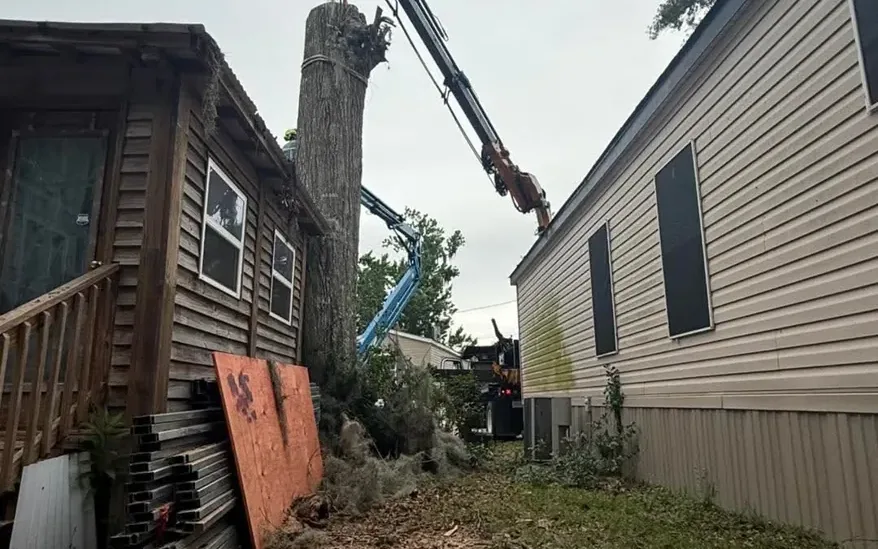
If the tree will be observed or treated, ask what should be reviewed, when that review is appropriate and which changes call for earlier contact. Keep safe baseline photographs showing the same parts of the crown and property. A monitoring plan should not require climbing, scraping bark or approaching questionable branches. Its purpose is to make the next professional decision better informed, not to transfer hazardous inspection work to the owner.
Keep the work and follow-up notes where a future manager can find them. Report new construction, irrigation changes or structural concerns rather than assuming the original explanation still covers everything. Do not automatically repeat a treatment because a calendar period has passed. Ask whether the identified problem remains relevant and what the current evidence shows. Useful follow-up connects the original recommendation with actual observations and work, allowing the owner to distinguish progress, uncertainty and a changed condition that may need a different response.
Send a focused tree-health inquiry
Give Tree Huggers the address, species if known, safe whole-tree and symptom views and the approximate onset of the change. Include a short timeline of weather, site work, care and previous treatments where relevant. State whether your goal is to understand decline, review a prior recommendation or discuss a specific service after a diagnosis. Identify access limits and any immediate structural or utility concern separately.
The tree-health service is the starting point for a preservation discussion, while dead-tree removal addresses a removal scope when that is appropriate. A useful first reply may ask for more history or a site review instead of naming a product immediately. The goal is a decision tied to the actual tree and property, with realistic limits and follow-up. A website image or generic symptom list cannot establish that your tree is dying, what caused the change or which treatment will be suitable.
Track tree decline carefully before choosing removal
A tree with thinning foliage or scattered dead branches may be under stress, but a single symptom does not identify its cause. Seasonal changes, drought, waterlogged soil, root damage, pests and prior pruning can create overlapping appearances. Begin with the species if known, the time of year and the first date you noticed the change. Compare the same tree over several weeks instead of relying on a one-day impression after extreme weather.
Look beyond the canopy from a safe ground-level viewpoint. Recent grading, construction traffic, trenching, landscape fill or changes to drainage can alter root conditions without obvious trunk damage. Explain whether water has been standing around the base or whether irrigation changed. Avoid digging into major roots or applying treatments on a guess. Information about the surrounding site can help a professional narrow the questions that need inspection.

Separate a seasonal change from a developing problem
Photographs are most useful when they show the full crown, the trunk base and specific symptoms, along with an indication of when each was taken. A close-up of one brown leaf is rarely enough to understand the tree. If dead limbs are located over an entrance, parking area or roof, separate the near-term exposure concern from the longer-term health diagnosis. Do not approach or climb to collect closer images of unstable limbs.
Ask for an assessment that explains observed findings, meaningful limitations and a practical next decision. The answer may involve monitoring, correcting a site stressor, selectively removing deadwood or removing a tree with unacceptable structural concerns. No photograph or general guide can promise that a declining tree will recover. A careful record makes it easier to tell whether conditions are improving or deteriorating.
Is My Tree Dying? questions
Do brown leaves always mean a tree is dying?
No. Species, season, symptoms and site history need review; do not diagnose from color alone.
What symptom pattern should I describe?
Explain where the change started, when it appeared and whether it is spreading, recurring or limited to particular branches.
What if I do not know the species?
Send safe whole-tree views and ask for identification before applying species-specific advice.
Can weather stress resemble other problems?
It can contribute to visible changes. Share the timing and conditions and let the provider assess the actual tree.
Should old construction work be mentioned?
Yes. Provide known locations and approximate dates of digging, paving, grade changes, drainage work and heavy traffic.
Does a declining tree automatically need injection?
No. Ask what problem is identified and why the proposed method and material suit it.
Should I guess which product was used previously?
No. Supply actual records when available and be clear about missing information.
Does healthy foliage prove structural safety?
No. Report cracks, cavities, movement and prior failures as separate concerns requiring appropriate review.
Is removal pricing a diagnosis?
No. Pricing and evaluation serve different purposes; confirm what the visit and any written findings include.
How can treatment results be followed?
Agree on the intended outcome, review timing, safe baseline records and changes requiring earlier contact.
Should a treatment repeat automatically every year?
Do not assume that. Review the original target and current evidence with the provider before repeating it.
What should I send first?
Send the address, safe symptom and whole-tree views, onset, known species and a concise site and care history.
Let’s plan your tree work.
Send the property address, safe tree photos and the result you need. Include access restrictions and the person who can approve the work.