Tree work in New Orleans is shaped by the property around the tree
Mature trees grow around homes, narrow drives, fences, service lines, streets, pools and neighboring property. Soft soils, drainage, tropical weather and hurricane exposure can change how a tree should be inspected and how equipment can be placed.
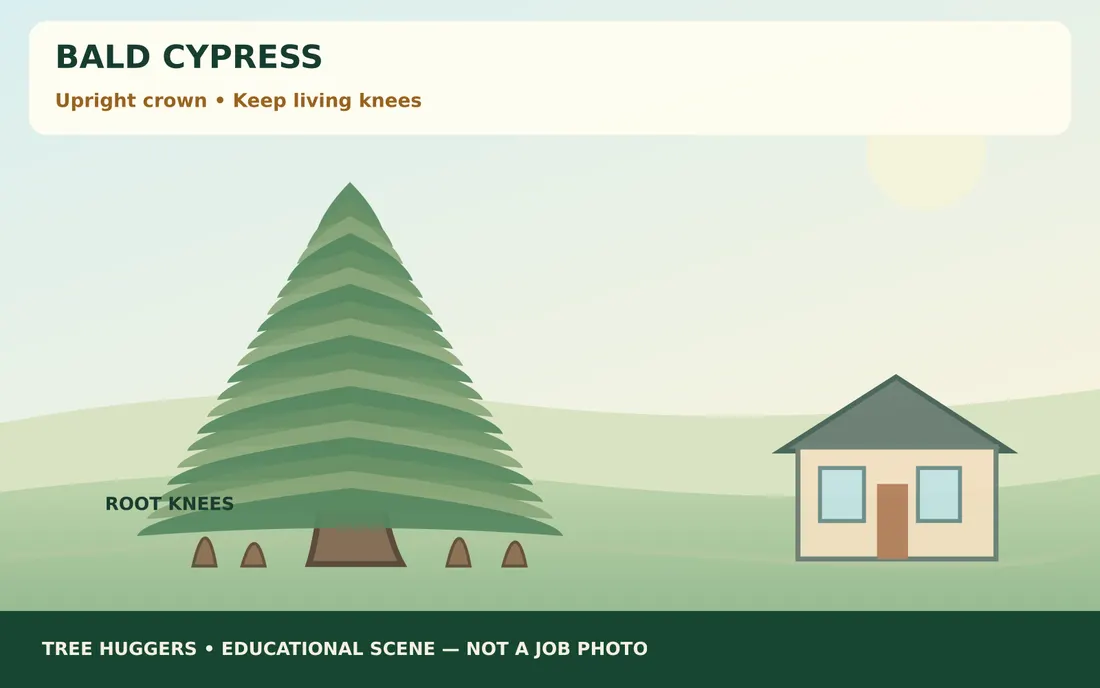
Site planning detail: Louisiana tree identification is easier when several features agree. Photograph leaves, bark, twigs, buds, fruit or cones when present, together with the full tree shape and surrounding growing conditions. Mature live oaks, water oaks, bald cypress and other common trees can vary with age and site conditions, so do not identify a species solely from one distant canopy photograph. Seasonal needle loss on bald cypress is normal, while unexpected dieback may deserve closer examination.
Record whether a tree stands in wet soil, a compacted parking edge or an irrigated landscape, as site stress can affect appearance independently of species. Proper identification matters because pruning response, growth pattern, storm characteristics and root protection needs differ. If an identification is uncertain, describe the features rather than guessing, and request on-site confirmation before recommending significant work. Keep illustrations labeled as educational, not customer-job evidence.
Start with the objective
Before work begins, identify whether the goal is safety, clearance, health, storm preparation, construction access or complete removal. A clear objective prevents unnecessary pruning and helps the estimate focus on the work that actually solves the problem.
Tree Removal
Removal is considered when a tree is dead, structurally unsound, badly storm damaged, in conflict with construction or no longer reasonable to retain.
Pruning
Pruning should target specific needs such as deadwood, roof clearance, broken limbs, structure or storm preparation.
Stump Grinding
Grinding addresses the remaining stump and visible root flare after removal when access allows equipment to reach the site.
Storm Response
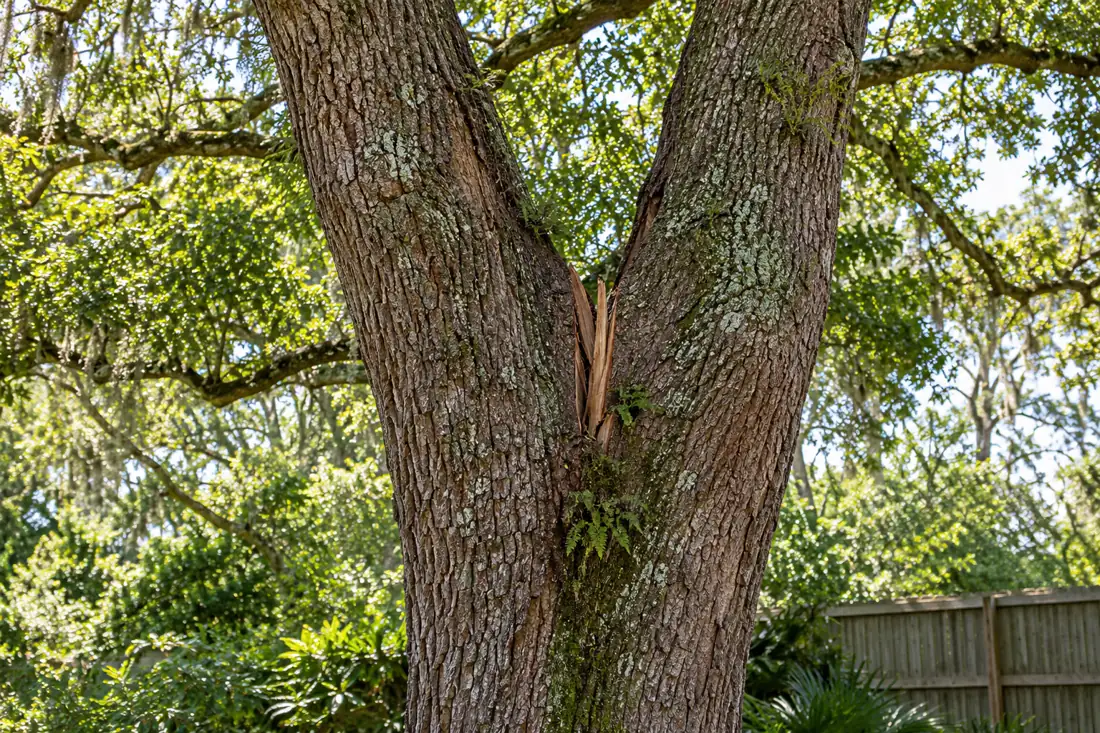
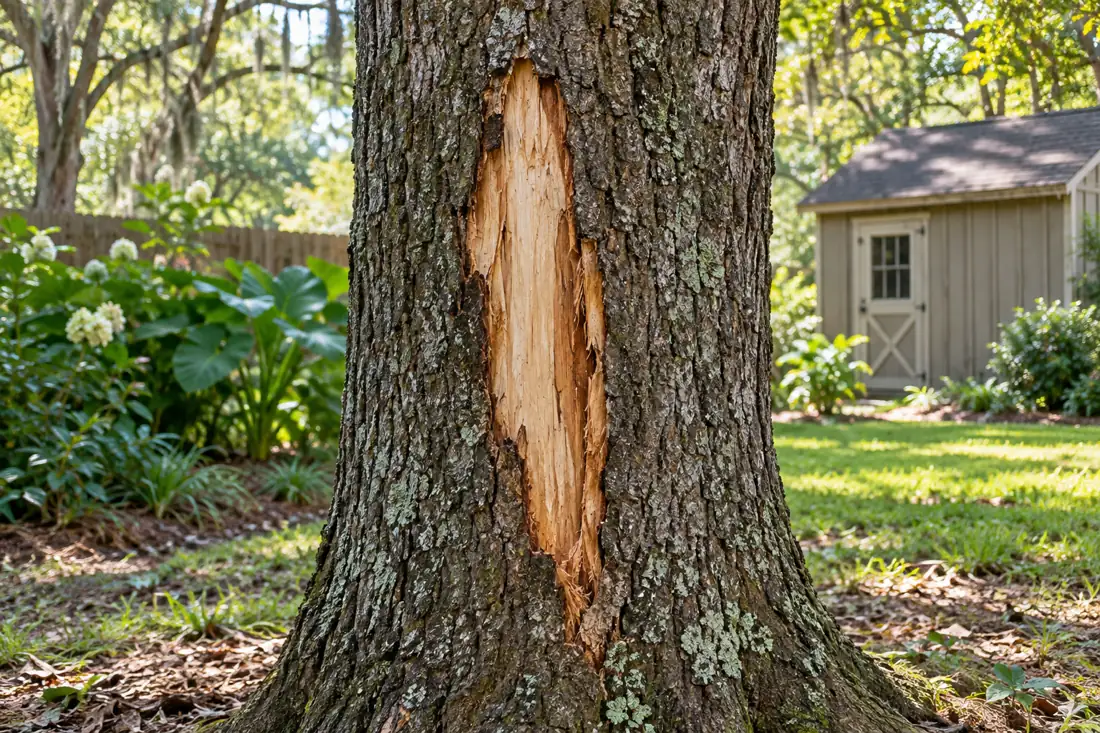
New lean, hanging limbs, cracked trunks and root movement deserve priority after severe weather.
Access changes the job
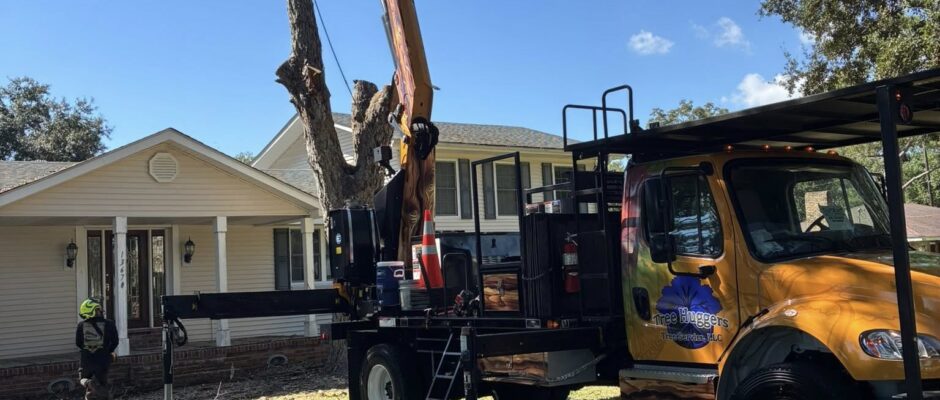
A tree over open lawn can be approached very differently from a tree over a roof with no drop zone. Gate width, driveway strength, overhead lines, pools, fences, neighboring property and street access can determine whether climbing, controlled rigging, aerial equipment or crane support is appropriate.
Use photos to start the conversation
Useful photos show the full tree, trunk base, surrounding structures, visible defects and the route equipment would use to reach the work area. Complex or high-risk trees may still require an on-site inspection.
Why tree identification matters in southeast Louisiana
New Orleans landscapes include long-lived native canopy trees, fast-growing shade trees, ornamentals and species planted for specific urban conditions. The same pruning schedule or risk assumption should not be applied to all of them. A live oak with a broad, spreading crown behaves differently from a bald cypress in seasonally wet soil or a palm with a single growing point.
Correct identification helps a professional discuss mature size, expected form, decay response, branch attachments and the effect of pruning. Start with the species rather than the height alone.
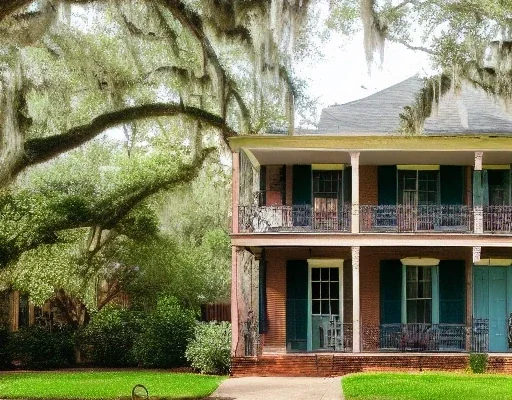
Local site conditions are just as important as a label. Soil may be compacted, periodically saturated, raised with fill or constrained by sidewalks, foundations and utilities. Salt exposure, wind, occasional flooding and heat can affect performance differently across species. A tree that thrives in an open park may struggle in a narrow planting strip.
When assessing an existing tree, ask how its roots, crown, drainage and surroundings have changed. The goal is to keep appropriate trees healthy and make sound decisions about those in unsuitable or hazardous locations.
Live oak: a broad canopy that requires space
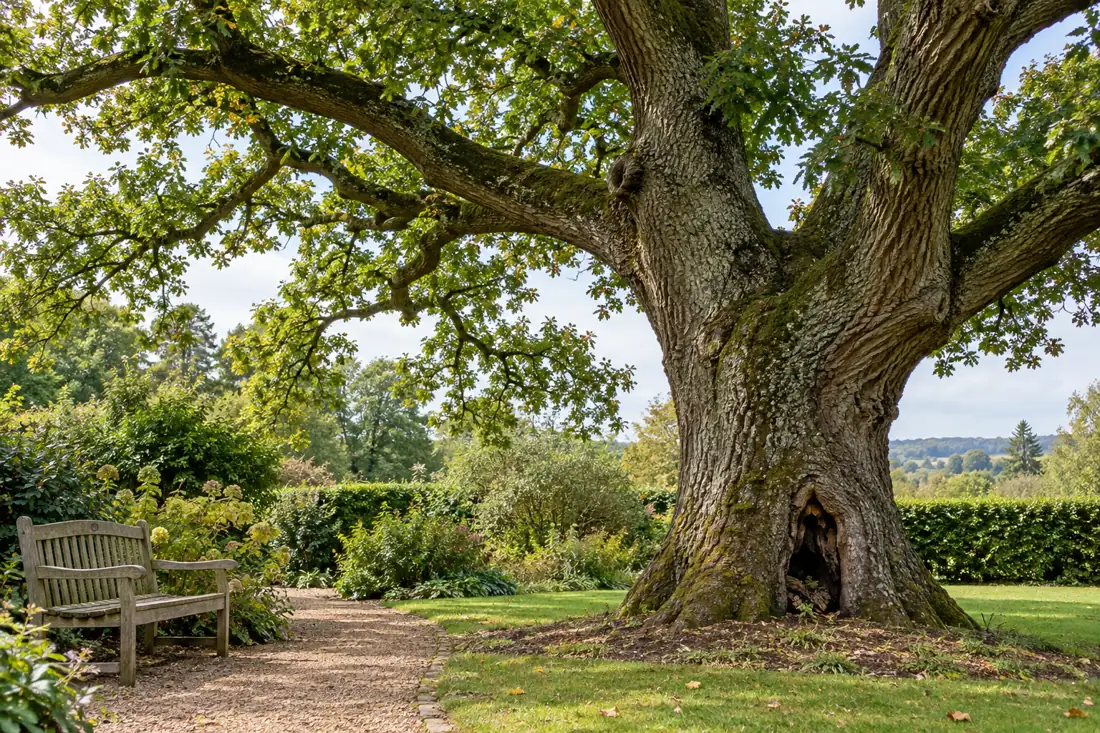
Southern live oak, commonly identified as Quercus virginiana, is an iconic Gulf South tree. Mature specimens can develop wide, heavy limbs and extensive crowns that provide exceptional shade. Their form is valuable but demands planning near roofs, roads and neighboring structures. A limb growing horizontally is not automatically defective; it may be part of normal architecture. Evaluation should consider its attachment, size, decay, historic growth and the target below. Avoid removing major live limbs simply to make the crown resemble a narrower tree.
Live oaks can also be harmed by root disturbance during construction. Trenching, grade changes, paving and compacted soil beneath the canopy may affect stability and long-term health. Protect rooting areas where possible and ask an experienced arborist before cutting substantial roots. If a live oak has a cavity, old pruning scar or heavy limb over a building, request a tree-specific assessment rather than relying on general rules. The live oak care guide goes deeper into preservation, clearance and risk management.

Species identification starts with several traits
Leaf shape alone can be misleading, especially when a photo shows only juvenile or damaged growth. Compare leaves, bark, branching, fruit or seed structures and the overall form, preferably across more than one season. Large live oaks, water oaks, cypress and magnolias differ in their usual form and site interactions.
An uncertain identification should be recorded as uncertain rather than converted into a confident online diagnosis. A useful tree-care request describes the observed issue and location even before the species is confirmed.
Identify the tree before choosing a service
A tree-service inquiry benefits from an accurate species identification rather than a guess from one leaf. Photograph the entire crown, bark, leaf shape and any visible fruit or cones from a safely accessible spot. Live oak, water oak, pecan, bald cypress, southern magnolia and palms may lead to different questions about crown structure, root protection and removal access. If a common name is uncertain, request identification as part of the assessment instead of choosing treatment or pruning methods from a photo alone.
Show the surrounding grade and nearby occupied buildings as well as the tree. Recent excavation, flooding, soil compaction or storm damage can change the assessment more than a species label. A tree identification is a starting point for a site-specific decision, not a substitute for checking the actual condition.
Water oak: look beyond fast growth
Water oak, Quercus nigra, occurs in many Louisiana neighborhoods and can establish a sizable shade canopy relatively quickly. Mature specimens may develop defects, decay or branch problems, especially when stressed or poorly maintained, but this does not mean every water oak is dangerous. Age, vitality, site conditions and structural history matter. A tree showing crown dieback, decay at major unions or newly cracked wood deserves attention for reasons that can be observed, not merely because of its species name.
Water oaks can be difficult to identify from a single leaf because leaf shape varies. Bark, buds, acorns, branching and the surrounding habitat may help confirm identification. Avoid choosing extensive pruning or removal on the basis of a casual guess. In urban yards, review root conditions, past storm damage and the proximity of occupied structures. When replacement is necessary, consider the space available for the mature tree and the desired service life. The water oak problems guide discusses common inspection questions.
Bald cypress: adapted to wet places, not every disturbance
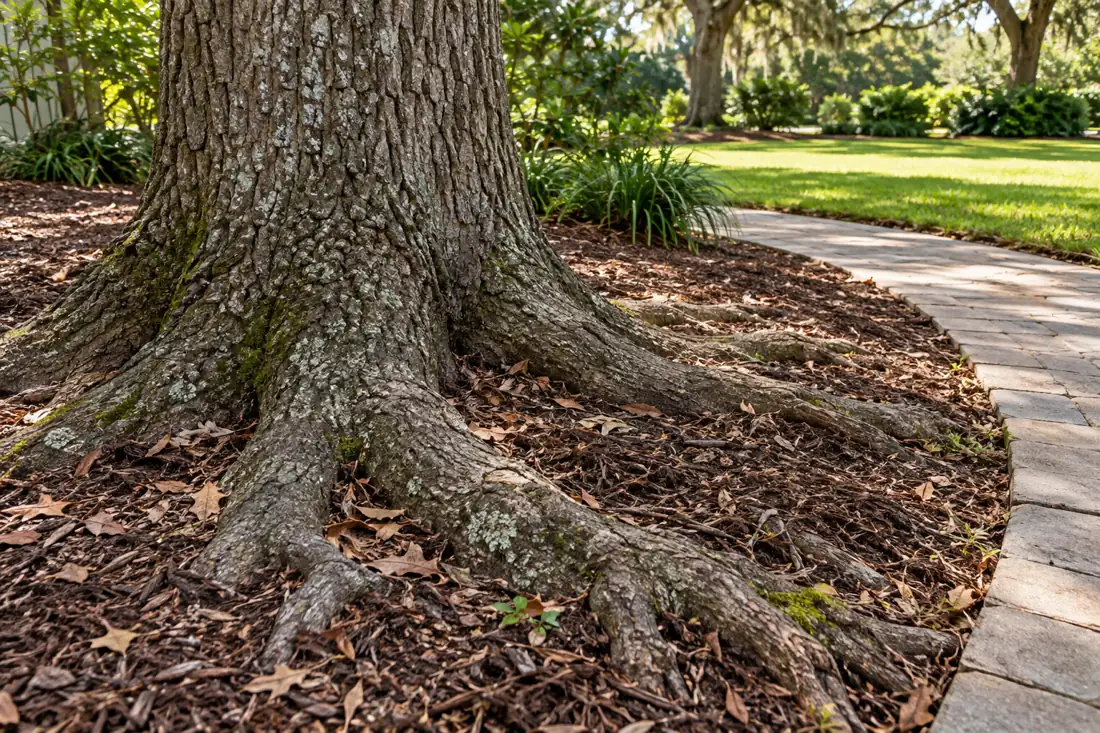
Bald cypress, Taxodium distichum, is a familiar Louisiana tree associated with wetlands, floodplains and seasonally moist landscapes. It can also grow in managed urban settings when conditions are suitable. Its deciduous foliage turns rusty orange or brown before falling, a normal seasonal change that should not be confused with sudden decline. Buttressed trunks and exposed root structures are part of the species’ recognizable form. Do not interpret every visible root or knee as a sign that the tree is lifting or unstable.

Use species identification to refine the assessment
A mature live oak, bald cypress, pecan and water oak can present very different questions about roots, crown structure, seasonal foliage and expected growth. Make the identification using several clues together, including leaf shape, branching, bark and fruit where visible; a single distant image may be insufficient.
Tree-care decisions should then respond to the actual observed problem. Cypress knees are not automatically proof of root damage, and falling leaves from a deciduous species are not automatically dieback. Photograph the whole tree and the relevant feature before asking for pruning or removal, and request an assessment rather than prescribing the same treatment for every species.
Although bald cypress tolerates wet conditions, construction injury, abrupt soil changes and restricted root space can still harm it. A contractor working near roots should understand whether excavation will remove essential support. Avoid unnecessary cutting of large roots, and do not assume that a wet yard automatically makes it a good location for a new cypress. Consider mature height, utility clearance and nearby paving. The bald cypress guide covers planting space, pruning priorities and the difference between normal seasonal color and concerning symptoms.
Recognize species differences when planning New Orleans tree care
Tree identification helps explain why two similarly sized trees may require different care. Live oaks often have broad lateral limbs, pecans can carry heavy scaffold branches, water oaks may develop serious concerns as they mature, and bald cypress may tolerate wetter ground than many other common landscape trees. Those are general tendencies, not diagnoses for a specific specimen.
Look at leaf shape, branching pattern, bark, fruit or seed structures, and overall crown form. A single distant image may not distinguish similar species, especially when seasonal leaves are absent. If a species choice affects a pruning or risk recommendation, request identification from appropriate observations rather than relying on a guessed name in an online form.
The site can matter as much as the species name
A species well adapted to southeast Louisiana may still face compacted soil, changed drainage, buried root flare or inadequate space near pavement. Document recent grading, construction, irrigation changes and root-zone traffic when discussing decline or clearance concerns.
Keep tree identification, structural risk and proposed treatment as separate questions. A photo reference can help start the conversation, but it cannot establish internal decay, underground rooting or a universal pruning prescription.

Match common traits to the actual site
Location matters just as much as species. A live oak beside a narrow house may require clearance planning; a cypress near paving raises different root-management questions; and a pecan shading a parking lot raises questions about falling limbs and seasonal nuts. The same species growing in open ground may present substantially different access and exposure conditions.
Use this guide to decide which species-specific page to read next and what photos to collect before requesting a visit. Include the whole tree, base, branch attachments, and the nearby feature you want protected. Resist one-size-fits-all advice such as topping every large tree or removing roots that interfere with pavement without considering stability.
Southern magnolia: dense evergreen structure and specific pruning needs
Southern magnolia, Magnolia grandiflora, is an evergreen native valued for its glossy leaves and large flowers. Its dense, often pyramidal crown can provide privacy and shade, but heavy lower limbs and limited clearance may become issues around driveways and buildings. Removing too many major branches can alter its natural form. Evaluate the purpose of a proposed cut: pedestrian clearance, a broken limb, deadwood or a particular rubbing branch. Preserve the healthy structure where a limited adjustment can meet the objective.
Magnolias may shed leaves throughout the year, so some leaf litter is normal. Browning or decline concentrated in a portion of the crown, recent bark damage or root disturbance deserves closer evaluation. In small yards, consider the mature spread before planting close to walls. A tree that regularly needs severe trimming to clear a structure may simply be in the wrong location. Our magnolia care guide explains inspection and maintenance considerations without treating a compact ornamental and a mature specimen as identical.
Pecan: fruiting trees with large limbs and targets below
Pecan, Carya illinoinensis, is a substantial deciduous tree that may produce nuts and a broad shade crown. Mature limbs can become large and may extend above roofs, vehicles or outdoor gathering areas. An inspection should examine deadwood, major unions, branch weight and signs of decay. Nut drop and leaf fall are seasonal management considerations, not proof of a diseased tree. Never remove large living limbs solely because they are inconvenient without considering how the remaining canopy will respond.
Pecans benefit from appropriate soil conditions and space for their roots and crown. Excessive pruning, trunk injury and root disruption can reduce vigor. A homeowner should distinguish a fruit-production concern from a structural-safety concern, because the actions may differ. If large limbs must be removed over a home, plan safe access and debris handling before scheduling the cut. See the pecan care and removal guide for the questions to ask when a mature specimen is close to buildings or public access.
Palms and ornamental trees need a different approach
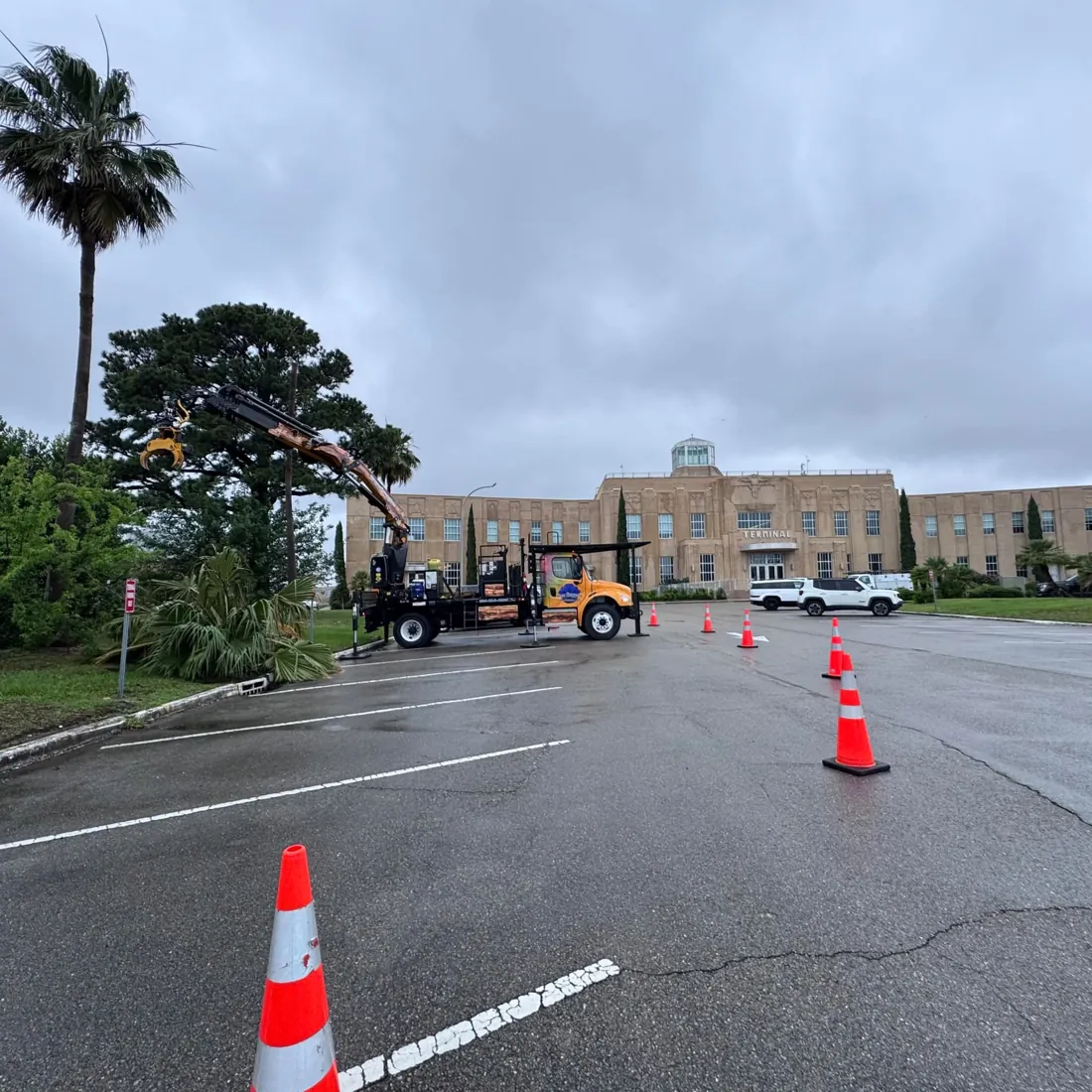
Palm trees are not structurally equivalent to branching hardwoods. Their growth patterns depend on the species, and the removal of the single growing point can kill a palm. Some palms retain old fronds, while others shed them naturally. Routine palm trimming should not strip excessive green foliage or create an exaggerated ‘hurricane cut.’ Identify the species and the actual hazard, such as dead fronds over a walkway or a compromised trunk. Equipment, access and safe handling differ from traditional shade-tree pruning.
Crape myrtles and other small ornamentals have their own form and maintenance needs. Severe heading cuts can produce crowded regrowth and reduce natural structure, even when the practice is common locally. A tree should be chosen to fit its mature dimensions rather than repeatedly forced into an unsuitable size. For palms, the palm trimming guide addresses access and species-specific concerns. For any ornamental, ask whether a proposed cut helps health, clearance or safety, or merely follows a habit from past landscaping work.
Urban conditions can matter more than species reputation
A tree planted between pavement and a building may have little room to develop roots compared with a similar tree in open soil. Heavy foot traffic, repeated parking, irrigation changes, road salt in unusual circumstances, construction cuts and compacted fill can all affect growth. Pay attention to soil depth, drainage and root access, particularly on recently redeveloped lots. A mature tree’s present condition reflects decades of site history, not only what its species normally does in undisturbed habitat.
New Orleans properties also face intense rain, hurricanes and occasional extended dry periods. These stresses do not affect every species in the same way or justify generic annual ‘storm thinning.’ A meaningful maintenance plan identifies actual defects and protects root space. When a tree appears stressed, investigate soil changes, water availability, mechanical injury and pest or disease symptoms before assuming removal is the only answer. A qualified professional can explain whether targeted care, monitoring or structural assessment is appropriate for the site.
Choose new trees for their mature form and long-term value
Before planting, map overhead wires, buried services, structures, sidewalks and the space required by a mature canopy. Consider shade goals, habitat value, available root area, flood exposure and the realistic maintenance resources of the owner. A young tree may fit between two fences today and become a costly conflict in fifteen years. Ask local extension guidance or a qualified arborist which species and cultivars are suited to the particular drainage and space. Avoid making decisions from a nursery tag that describes only initial height.
Replacement after a storm is a chance to correct a poor location, not simply to duplicate the previous planting. Several appropriately placed trees may offer better long-term shade and resilience than one oversized specimen confined against a house. Plan irrigation and establishment care, protection from lawn equipment and appropriate mulching. Keep soil and mulch away from the trunk flare. If a protected or historically significant tree is involved, check local processes before removal, and document planting decisions for future property owners.
Match inspections and service requests to the actual tree
When asking for an estimate, identify the species if known, location, approximate size, visible issue and target area. Share safe photos showing the full crown, trunk base and the defect. Note whether the goal is clearance, deadwood removal, risk assessment, storm cleanup, stump grinding or preservation. A well-defined request lets the contractor suggest appropriate equipment and explain why certain cuts or removals are recommended. It also avoids comparing two quotes that cover different work.
Do not accept broad claims that every water oak must be removed, every live oak limb should be thinned or every cypress thrives in any wet location. Individual condition and surroundings determine the decision. Schedule inspections after significant storm damage or site excavation, not only when foliage looks poor. The tree risk assessment guide addresses defects and consequences, while the storm resource center covers weather-related action. This guide is a starting map for informed questions, not a substitute for on-site diagnosis.
Questions about Trees of New Orleans & Louisiana Tree Guide
What are common large trees around New Orleans?
Live oak, water oak, bald cypress, pecan and southern magnolia are familiar examples, alongside many other native and planted species.
Is a live oak branch growing sideways a defect?
Not necessarily. Broad horizontal limbs can be natural; evaluate attachments, decay, load and targets before deciding on cuts.
Is bald cypress a deciduous tree?
Yes. Bald cypress normally sheds foliage seasonally, so browning before leaf drop is not automatically a sign of decline.
Are all water oaks unsafe as they age?
No. Evaluate the individual tree’s condition, defects, site history and location rather than making a universal claim based on species.
Should I severely thin a magnolia?
Usually not. Preserve its natural structure and limit pruning to specific health, clearance or safety needs.
Do pecan trees need special clearance planning?
Mature pecans can develop substantial limbs and nut-producing crowns. Consider targets, branch structure, access and seasonal litter.
Do palm trees need the same pruning as oaks?
No. Palms have different growth biology; removing excessive green fronds or the growing point can cause damage.
Can a tree live with exposed roots?
Some exposed roots are normal; new root-plate movement or major root damage requires separate assessment.
What matters most when choosing a new tree?
Mature height and spread, rooting space, drainage, utilities, buildings and long-term maintenance suitability.
Can I identify a tree species from one leaf?
Sometimes, but leaf shape may vary. Buds, bark, fruit, branching and overall habit often help confirm identification.
How does construction affect mature tree health?
Trenching, grading and repeated compaction can damage roots and alter drainage, even when foliage remains healthy initially.
When should I request a species-specific inspection?
Seek help when major limbs fail, cracks or soil movement appear, canopy declines unexpectedly or a large tree conflicts with occupied structures.
Get a scope for your property
For an uncertain species, submit clear leaves, bark, overall crown form, and seed or fruit photos when safely obtainable. Include the property feature affected by the tree, whether clearance, root work, or removal is being considered. Species-specific recommendations should respond to that combination rather than the species name alone.