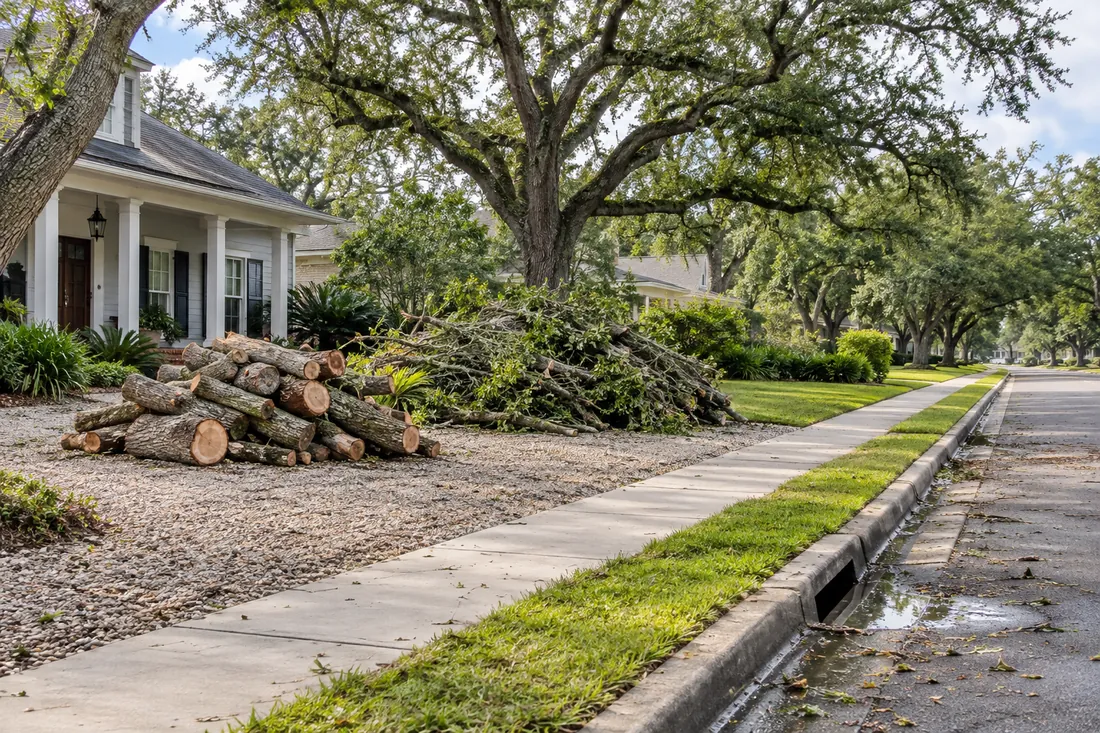
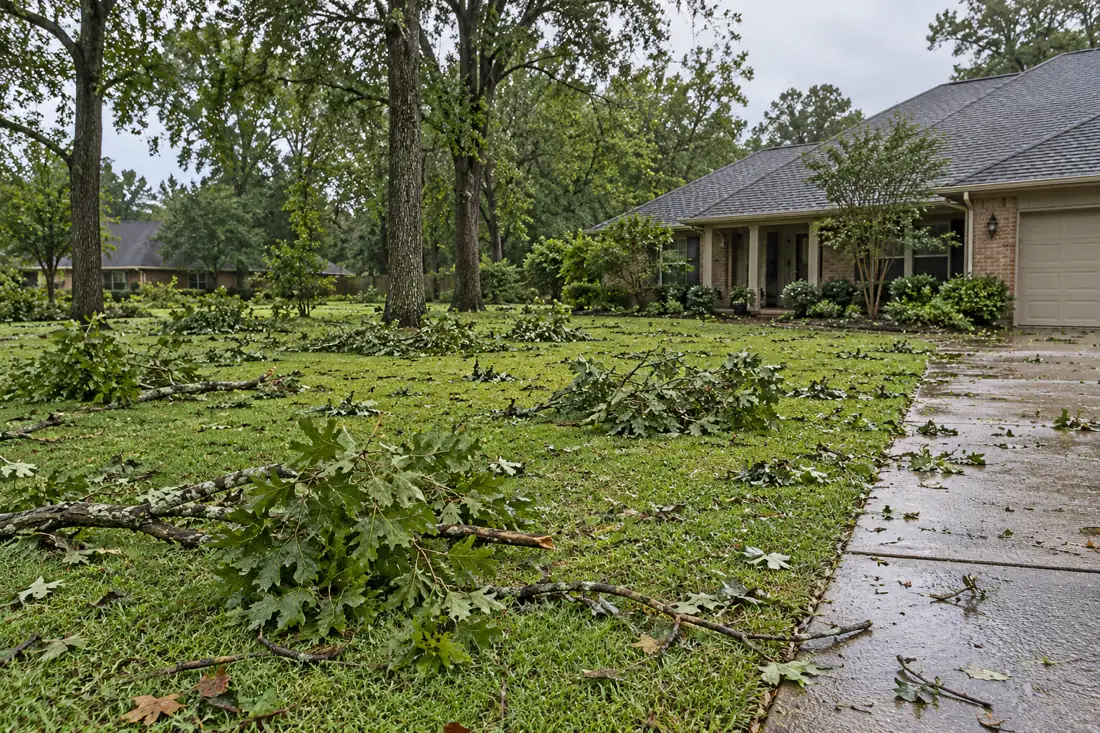
Define wood, brush, hauling access and a cleanup standard that can be checked.
Write a debris scope that defines what clean really means
Tree debris work can mean clearing a path, reducing large limbs to manageable pieces, loading wood, hauling material off site or preparing a surface for another contractor. Decide which result is needed before comparing bids. A pile at the curb, stacked logs and a swept driveway are materially different completion conditions. Note which materials belong to the tree operation and which are unrelated storm debris.
Identify a safe staging area with room for trucks to load, away from active doors, drains, overhead lines and pedestrian routes. Confirm whether equipment can reach the pile without crossing protected landscaping or private utilities. For neighborhoods with narrow streets, coordinate parking and avoid promising an exact loading time before the access constraints are understood.
The estimate should specify whether trunks are cut to a particular handling size, brush is chipped, chips remain or are removed, stump work is excluded, and the crew returns for final cleanup. Document the original condition and perform a walkthrough against that defined scope. Disposal fees and hauling arrangements vary by the material and location; no generic statement about debris removal should replace the actual agreement.
Describe the material before describing the pile size
A pile of leafy branches is not the same job as large trunk sections, stump grindings or branches mixed with fence and roof material. Begin with what is present and where it came from. If the pile followed a storm, say whether it contains building components, household items, soil or unknown material. The contractor needs that information before treating the request as ordinary vegetative-debris hauling.
Tree Huggers’ tree-debris service page introduces the handling discussion. Safe photographs should show the pile from more than one angle and include the surrounding route. If you cannot see what is buried inside, state that uncertainty. Do not reach into unstable material to make the description complete. Honest limits help the estimate identify what needs review or a separate arrangement rather than implying every object in a mixed pile has been accepted.
Show dimensions through context instead of a close-up
A photograph taken directly against the pile can make it hard to understand scale. Step back from a safe position and include the full footprint, height and surrounding space. If you know approximate dimensions, provide them as estimates rather than precise measured quantities. Use fixed visible features for context without exposing a private address or unrelated personal information unnecessarily in broadly shared images.
For several piles, number them on a simple site sketch or marked photos. Explain whether they are loose brush, log sections or a mixture. Keep separate locations clear in the request so one easy-to-reach pile is not assumed to represent material behind a second fence. The purpose is to prepare a useful handling discussion, not to substitute an exact volume calculation from a single image for the contractor’s review of the actual load and site.

Trace access from the truck to every pile
Loading access can affect a cleanup as much as the amount of wood. Show the driveway, gate, carrying route and proposed truck position. Mention tight turns, slopes, wet ground and surfaces with restrictions. If the material lies behind a building, include the entire passage rather than only the open area beside the pile. A route available for pedestrians may not suit the proposed handling equipment or material movement.
Tell the company about shared parking, a locked gate, operating hours and the contact who can clear the loading area. Do not assume the curb, neighboring driveway or a vacant-looking parcel is available. If site conditions change before arrival, update the access information. A pile moved by another contractor can become a different handling problem when it blocks the very route that was meant to reach it. Keep relocation decisions coordinated with the accepted cleanup plan.
Resolve standing hazards before ordinary hauling
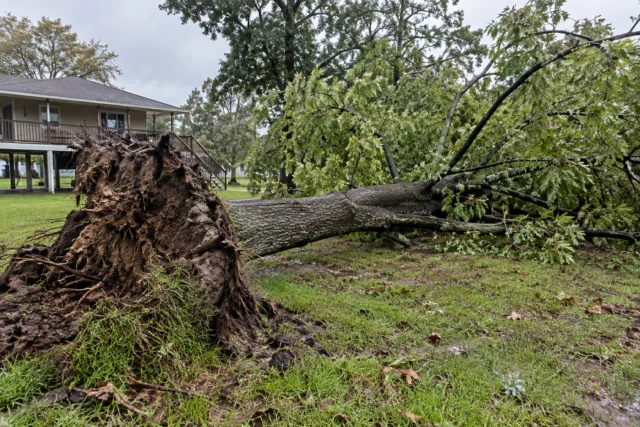
A cleanup pile can sit below a damaged tree or beside a root plate that has not stabilized. Tell the estimator about visible hanging limbs, leaning trees, wires and material resting against structures. Keep people clear and involve appropriate emergency or utility services for immediate threats. Do not treat the absence of moving equipment as evidence that the area is safe to enter.
The storm-cleanup page and fallen-tree information address related situations where handling may require more than loading loose debris. Cutting or releasing loaded material belongs in an appropriate tree-work plan. If another crew created the pile, explain whether any tree work remains above it. Hauling should follow an understanding of the surrounding condition, rather than asking a loader to discover an unresolved hazard after mobilization.

Agree on material groups before a debris truck arrives
Vegetative debris can include leafy branches, chippable brush and heavy trunk sections, each requiring different handling. Fence boards, roofing, glass and household waste are not automatically included merely because a storm produced the pile. From a safe place, describe the separate groups and the route to the loading point.
The cleanup scope should identify whether wood will be chipped, hauled, cut to length or left for the owner, and who is responsible for any remaining mixed waste. Note wet turf, drainage edges and access gates before equipment is scheduled. Do not climb over tangled piles or separate material still held under tension to improve a photograph.
Separate urgent hazard control from debris pickup
A hanging broken limb, a fallen trunk across access and scattered twigs in a yard are not the same cleanup assignment. Describe where material rests, whether any part is suspended or under tension and whether people can use the area. Photograph from a safe position without moving debris beneath a damaged canopy. If a public route or energized line is affected, contact the responsible authority. Clearing visible debris should not be mistaken for certifying the remaining tree as safe.
Lay out each debris pile and the intended loading route. Large pieces may require cutting, controlled handling and a different equipment approach than loose brush. Show gates, narrow sidewalks, saturated turf, buried irrigation and fragile paving. Distinguish vegetative waste from fencing, roofing or household refuse that might be mixed into the site. Ask whether logs, chips and small branches leave the property or remain in an agreed location, and whether a separate hauling or disposal record is needed.
Agree where wood and brush will go
A cleanup request should specify the material and its final destination, not merely say remove the mess. Branches, trunk sections, mulch and mixed yard waste may require different handling. Identify the pickup area and whether a truck can reach it without crossing fragile pavement or a shared driveway.
If wood is to be retained, choose a suitable location and distinguish that from the hauling scope. If removal follows storm damage, photograph the access restriction from a safe area and note any material still suspended above the ground. An estimate should state whether cutting, stacking, loading, hauling, chipping or final surface cleanup is included.
This reduces uncertainty about what the work ends with, especially when another landscaping contractor is scheduled afterward.

Planning example: similar piles with different handling
Suppose one pile contains brush and cut logs beside an open drive, while another contains branches mixed with broken fencing behind a locked gate. A close-up could make the two requests look similar. The useful descriptions identify the material, full pile, route and access contact. The mixed pile needs its contents and handling boundary discussed before it is treated as ordinary vegetative hauling. Unknown material should be reported as unknown rather than accepted by assumption.
For the open-drive pile, clarify retained wood and the small-debris finish. For the gated area, also resolve entry, the carrying route and any separate provider needed for material outside the tree scope. If the property manager needs photos or destination records, request those during estimating.
A comparable price depends on the same accepted material and finish at each location. This hypothetical example illustrates why pile size alone cannot describe a cleanup. It does not promise acceptance of a waste type or calculate load quantity from an image. The final task still needs a clear agreement for the actual material and property.
Decide what wood you want retained
Some customers want usable wood left; others want all agreed vegetative material removed. Identify the choice before pricing. If wood stays, discuss a feasible amount, handling condition and location. Keeping a few manageable pieces is different from leaving a large trunk wherever it happens to land. Storage should not block access, drainage or the next stage of work.
Ask whether additional processing or relocation is included instead of assuming retained wood is automatically prepared for its intended use. The contractor should explain what handling is practical within the scope. If you change the retention decision during the job, review any effect on labor, loading and price through the agreed approval process. A clear retained-material note makes completion easier: both customer and crew know which wood remains intentionally and which material still needs to leave.
Define debris sorting and the final handoff
Define 'clean' as observable tasks instead of an undefined promise. A crew can remove specified tree material while rut repair, fence repair, stump work or damaged landscaping belongs to another authorized scope. Take post-work photos showing the cleared access and any material deliberately left. Identify unresolved tree defects for follow-up instead of hiding them in a completion note. Label stock planning images accurately; do not imply a photographed emergency response occurred at a particular address.
Decisions to confirm
- Identify unstable or overhead hazards before entry
- Map separate debris piles and the loading route
- Specify haul-off versus retained material
- Document unresolved hazards and excluded restoration
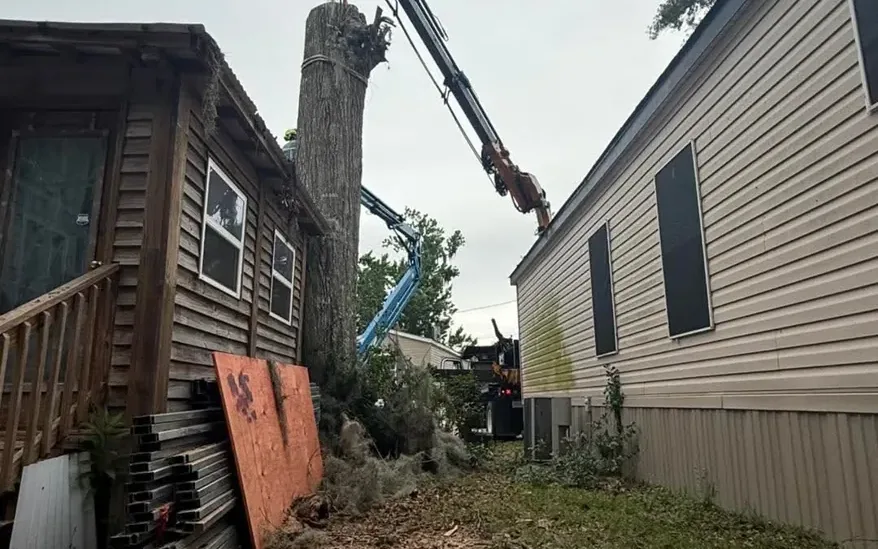
Give small debris and surface cleanup a definition
A property can look different after large wood is loaded even when leaves, chips or small fragments remain. Agree on the cleanup area and practical finish expected. A lawn, gravel approach and planted bed can require different handling. If the request includes a surface that cannot be disturbed, point it out before the method is chosen. Do not leave the entire finish to a phrase such as haul everything.
Tree cleanup also differs from site restoration. Imported soil, turf, landscape replacement, paving repair and unrelated existing damage should be separately identified. Stump planning is useful where grindings or a remaining stump are part of the broader job. Ask which material and surfaces the accepted task covers, what remains for another provider and how an unresolved item will be recorded. Those distinctions help avoid a disagreement caused by two different meanings of clean.
Make commercial and public records specific
A property manager or public buyer may need location identifiers, load information, destination records or labeled photos. Provide those requirements before pricing and agree on a practical format. Ordinary hauling should not be assumed to include every document a particular buyer, contract or funding process might require. If a quantity is estimated, say how it will be confirmed or reconciled under the project’s agreed process.
Keep mixed material, disposal expectations and exclusions visible in the request. If another provider handles building waste, identify the boundary between the scopes and the contact coordinating them. The commercial service and public-work pages provide related planning context. The relevant record is the one that accurately connects the accepted material and locations with the hauling performed, rather than a general photo collection with no task or quantity references.
Prepare a request that supports a clear finish
Send the address, material description, safe pile photos, access views and desired result. Mention known mixed waste, standing hazards, retained-wood preferences and timing restrictions. If the request follows a larger tree job, provide the current condition instead of only the original standing-tree photographs. The company can then discuss the assessment, feasible handling and current availability for the actual cleanup.
Before accepting, compare proposals against the same piles, loading route, hauled material, finish and required records. Identify optional or separate tasks clearly. At completion, check those same locations and note any material intentionally left or awaiting another contractor. Save useful photos with the invoice. A well-defined cleanup does not need to promise an untouched landscape; it needs to deliver the specific removal, handling and handoff the parties agreed for the property.
Tree Debris and Cleanup Planning questions
What material information should I send first?
Describe brush, logs, chips, grindings and anything mixed into the piles. Identify unknown or concealed contents honestly before assuming ordinary tree-debris handling applies.
Are building scraps included with tree debris?
Not automatically. Explain roofing, fencing, household material or other waste so acceptance and any separate handling can be discussed before pricing.
Which photographs show a debris pile well?
Use safe wide views from several angles with the footprint, height and surrounding route visible. Mark separate piles consistently.
Can a photo determine the exact load volume?
It can provide context, but not necessarily an exact quantity. Label approximate dimensions honestly and let the contractor review the material and handling.
Why does the truck route matter?
Gates, distance, surfaces, turns and loading position affect how material reaches the truck. Show the full route, not just the pile.
Should I move the pile before the visit?
Discuss the handling plan first. Relocation can block access or change the scope, so coordinate any change with the contractor.
Can hauling begin under a damaged tree?
The surrounding hazard needs appropriate review and coordination. Report hanging limbs, leaning trees and wires; do not treat the pile as a separate safe area automatically.
Can I keep selected wood?
Discuss a feasible amount, handling and storage place before pricing. Clarify whether additional processing or relocation is included.
Does hauling include every leaf and chip?
Define the cleanup area and practical finish. Large wood, small debris, grindings and landscape restoration can be different scope items.
Is new soil or turf part of cleanup?
Only if expressly included. Identify restoration responsibilities separately from loading and hauling tree material.
What records should a managed site request?
State required location labels, photos, quantities or destination records before pricing. Agree on the format and responsibility for supplying them.
How should I compare cleanup prices?
Match the material, piles, access, loading, retained wood, finish and documents. A different handling boundary can explain a different total.
Agree on what happens to the debris
Describe whether the job involves logs, brush, storm-damaged material, wood chips or a mix. Specify what should be hauled away, what may remain, and where a vehicle could safely load it. If a municipality, insurer or property manager has special documentation or disposal requirements, identify them before the scope is priced. Removing tree debris and restoring lawns or pavement are separate tasks unless explicitly included in a written agreement.