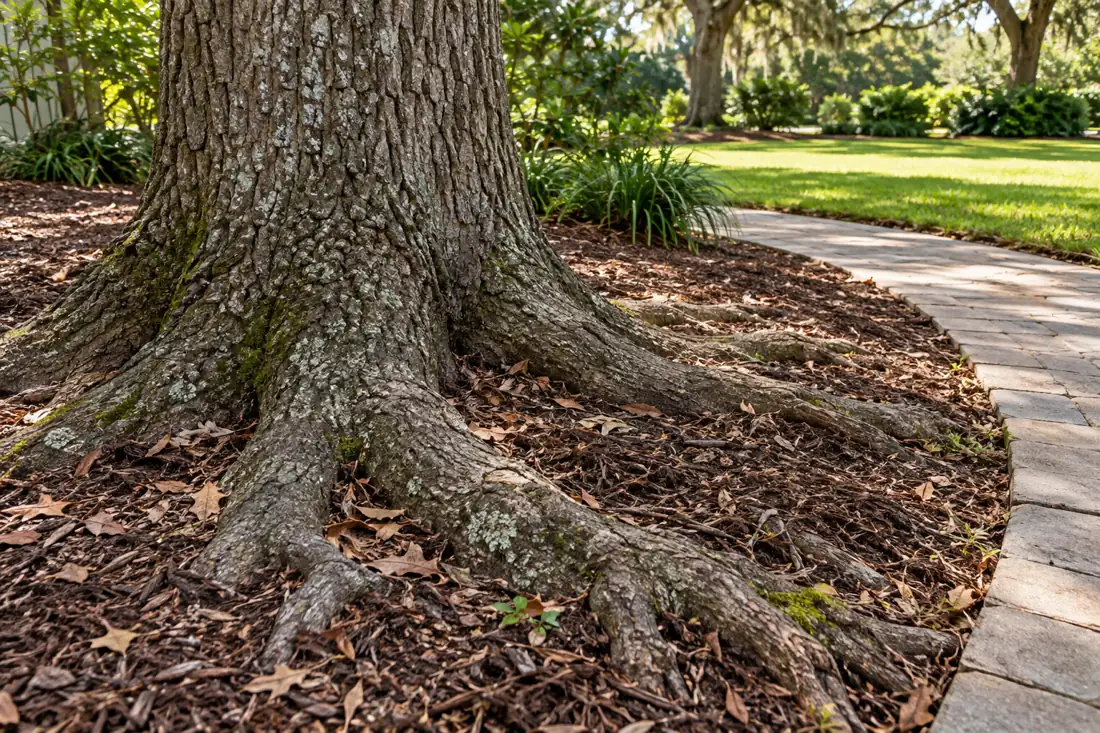
What makes a trunk crack more concerning?
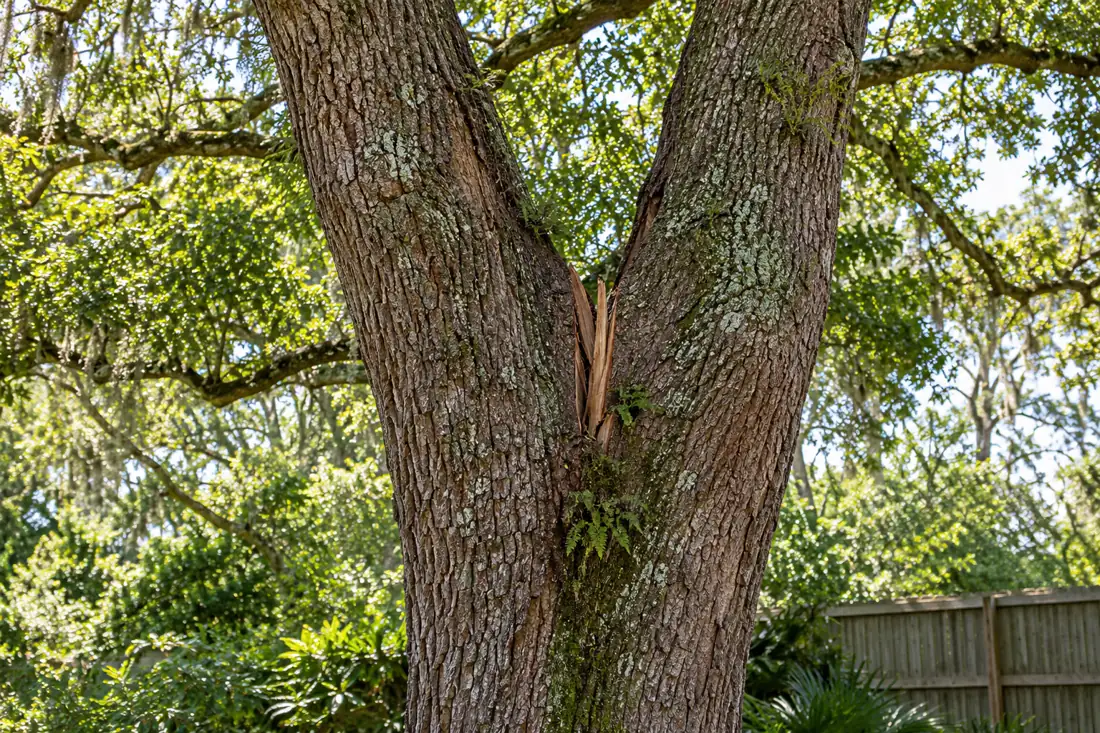
Newly opened wood, changing gap width or movement in wind can indicate an active split.
Cracked trunks: document the opening and its load path
A vertical fissure in bark is not always a structural split, but a newly opened crack across load-bearing wood can be serious. Record whether the opening appears at a fork, in the main trunk, or where a large limb joins. Identify any visible separation between stems, fresh exposed wood, changed branch positions or movement in wind. Do not put fingers or tools into the crack to test its depth.
Keep the area beneath the affected stem clear when an opening may be progressing. A tight V-shaped union, included bark and a long history of unequal limb loading may be relevant, but they do not by themselves establish a safe repair. Cabling or bracing changes how loads are shared; it does not rebuild damaged wood or guarantee that a split will stop. Cutting one side without a plan may change the forces suddenly.
Send photographs showing both the whole tree and the defect from a safe position, with a brief note about when the crack became visible and whether it widened. The assessment should explain whether support, reduction, monitoring or removal addresses the actual risk. Ask for a clear description of remaining limitations instead of accepting a generic claim that the tree is either safe or unsafe.
Cracks where large stems divide can affect major portions of the canopy.
Risk increases when a failure could reach a home, road, parking or occupied area.
Old seams and active splits are different
Some trunks show old scars or included bark that may remain unchanged for years. Others open suddenly after storms or heavy loading. Comparing the crack with older photos and watching for fresh exposed wood can help show whether the defect is changing.
Can a cracked tree be supported?
Sometimes. Cabling, bracing and selective pruning may be considered when enough sound structure remains and the tree is a good preservation candidate. Severe splits, extensive decay or major movement may make removal more appropriate.
Describe the opening without testing its strength
Tell the provider where the concern appears: along the trunk, at a major fork, near the base or on a smaller branch. Give a whole-tree view and a safe view of the opening if available. State when you first noticed it and whether it followed a known event. A clear description is more useful than calling every bark seam a fatal split or assuming every visible opening is an old harmless scar.
Do not insert a tool, drill the wood, pull the stems or climb above the feature to investigate. If it is only visible from an unsafe position, explain that limitation. A professional can discuss what review is appropriate and what can be established within the agreed assessment. If the condition is actively changing or threatens people or utilities, keep clear and use the appropriate emergency or utility response. The initial request should not depend on the owner obtaining a close measurement from a hazardous location.
Keep the timeline and image context honest
An older photograph can help show whether a visible feature was present before, but it cannot reveal every condition inside the tree. Retain original files and known dates. If a picture’s date is uncertain, say so. Avoid using a different tree, an illustration or a recreated view as evidence of how this trunk looked earlier. A useful record distinguishes observed change from information that is missing.
Explain recent storms, pruning, impacts or nearby site work that may be relevant, without presenting them as proven causes. If another provider has assessed the tree, share the actual report and its limitations rather than repeating only a short conclusion. The UC IPM recognition resource includes trunk cracks among observations that deserve context. The task for the current assessment is to relate the actual opening and history to the rest of the tree and property, not simply decide whether the feature resembles an example picture.

Ask what the assessment can establish
Confirm whether the agreed review is visual, includes further investigation or provides a written report. Ask what question any additional investigation would answer and how the result could change the recommendation. The owner should understand the purpose of the service before assuming every internal condition has been measured. Some uncertainty may remain, and a useful report should explain it rather than hiding it behind an absolute declaration of safety.
Tell the provider whether you need advice for day-to-day property use, a documented condition review or pricing for recommended work. Those deliverables may differ. A removal quote alone does not necessarily explain the condition or evaluate preservation options. Conversely, a treatment proposal should identify why the tree is suitable and what limitations apply. The tree-risk assessment service helps frame a condition-focused request. Ask for the form of findings you actually need so the visit and subsequent decision are based on the same expectations.
Treat a crack as a structural question, not a cosmetic one
A line in bark can be old and inactive, while a newly opening split through load-bearing wood can change how branches or stems behave in the wind. Note whether the crack crosses a branch union, whether edges have shifted and whether there are recent broken fibers. Photos from a safe distance should include the complete fork and nearby targets, not only an extreme closeup that hides the load path.
An evaluation can distinguish old compartmentalized wounds from active separation, but a website picture cannot verify internal wood strength. Keep the area beneath suspect wood clear until it has been assessed.
Include the rest of the tree and the space around it
Show the canopy, major branches, base and nearby occupied spaces from safe viewpoints. A close picture of exposed wood can omit the feature’s position in the tree and the property it may affect. Identify roofs, entrances, parking, play areas and neighboring property. Explain how those spaces are used and whether that use has changed. The assessment needs this context as well as the appearance of the opening.
Share known root disturbance, previous failures and support hardware. Do not assume leaves establish the soundness of every trunk section or that the absence of a visible cavity rules out concealed concerns. The provider should connect current findings with the tree’s broader structure and the relevant targets.
If a new building project is planned, supply the actual footprint and access needs before a preservation recommendation is finalized. A recommendation based on today’s site should not quietly be applied to a materially different use or construction plan without review.
Understand the limits of a support proposal
If cabling, bracing or another support approach is discussed, ask what specific issue it addresses and what makes the tree a suitable candidate. The proposal should explain related work, limitations and follow-up. It should not present hardware as a universal repair that restores every part of the trunk or guarantees no future failure. Existing hardware is also something to disclose and assess, not an assurance that the present concern is already managed.

Record a possible split without testing the tree yourself
A long bark seam may be an old feature, while a newly opened separation can indicate a different concern. Compare dated images if available, looking for fresh exposed wood, new tearing or changed spacing. Keep the whole tree and nearby occupied areas in one wide reference photograph so a qualified assessor can understand context rather than interpreting only a dramatic close-up.
Do not push, pull, strap or climb a cracked stem to test its movement. Keep unnecessary traffic out of the area beneath a potentially affected crown and contact the utility if conductors may be involved. A clear report should state when the opening was first noticed, what happened beforehand and whether the tree experienced recent pruning, excavation or heavy wind.
Ask what can be established by an initial ground inspection and what further assessment, if any, is justified. Support, selective pruning, monitoring and removal are different decisions with different limitations. The written outcome should specify the assessed condition, the targets considered and any recommended follow-up rather than imply that a photograph alone proves safety.
Do not fit straps, chains, bolts or improvised braces yourself while waiting. Ask what interim access restrictions are appropriate and how the owner should report another change. Keep the installation and inspection history if a system is accepted. The support-versus-removal guide explains the ongoing management comparison. The decision should fit the actual condition and the owner’s ability to carry out the recommended follow-up, rather than treating the lowest initial intervention price as proof that preservation is suitable for every cracked trunk.
Give monitoring a defined role
If observation is recommended, ask what should be reviewed, who is responsible and what changes require earlier contact. A plan should not simply tell the owner to watch the crack indefinitely without explaining the purpose or safe limits of that observation. Keep any baseline record and review recommendation together so another manager understands which feature was assessed and what was left open.
Do not create a monitoring routine that requires standing beneath a questionable union, probing an opening or repeatedly approaching moving ground. Ask the provider how information should be reported from safe positions and when professional reinspection is needed. Changes in property use or nearby work should also be communicated.
A dated recommendation can support the next decision, but it is not a permanent guarantee that applies unchanged after another storm, failure or alteration. Monitoring is useful when it improves a defined review process and preserves the actual history of the concern.
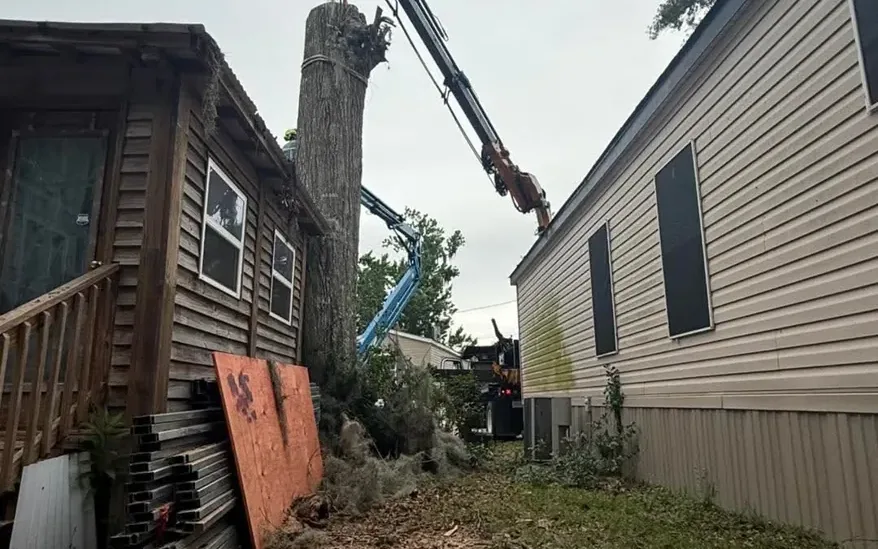
If removal is recommended, specify the property result
Ask what findings support removal and how the tree will be identified in the work proposal. Show the complete access route and retained features. The contractor needs to assess handling against the current tree and surroundings; the owner should not choose a method by comparing a trunk opening with an online demonstration. If the condition changes before the appointment, tell the provider so the plan can be reviewed.
Clarify hauling, retained wood, stump treatment and the handover condition. Repairs to a roof, fence or landscaping should have their own responsibilities where relevant. If the owner wants preservation considered before accepting removal, state that question early and ask what assessment is available. The final decision and work scope should remain traceable to the current findings and customer authorization, not an assumption that any visible crack automatically requires the same equipment, urgency and cleanup package as every other damaged tree.
Send the information needed for this trunk concern
Provide Tree Huggers the address, safe whole-tree and opening views, first-observed timing and any known recent change. Mention affected buildings, occupied areas, utilities, prior assessments and support work. Explain whether you need urgent availability, a written assessment or a removal estimate after a recommendation. Do not delay an appropriate emergency response while trying to assemble a perfect photo set.
For a split at a live-oak union, the split-oak guide addresses that more specific preservation question. For general tree work, state the actual concern and ask what visit is needed. A useful response should make the next action and remaining uncertainty understandable. It does not require the owner to decide how much sound wood remains, test the trunk or commit to a repair before qualified people have reviewed the tree, its history and the property it occupies.
Understand why a fresh trunk crack deserves careful review
A line in bark does not always mean the same thing as a structural split through wood. Some trees develop ordinary growth patterns that resemble seams, while a fresh opening associated with movement can signal a more urgent concern. Record where the crack begins and ends, when it appeared and whether it changed after wind or rain. Do not probe into the opening, pry it apart or place yourself beneath the affected crown.
Multiple leaders growing from one union can introduce included bark or an awkward load path, but not every fork is unstable. Decay, prior storm damage and long limbs can change the assessment. A qualified evaluation should consider the whole tree and the targets nearby, not only the most noticeable line on the trunk. Photographs of the full crown and base provide context that close-up images of bark alone cannot supply.

Location, movement and surrounding use all matter
If a trunk crack faces an occupied entrance, driveway, house or pedestrian route, restrict unnecessary access until the concern is reviewed. Never use a vehicle or rope to test whether the wood moves. If overhead electrical conductors are involved, contact the utility and stay clear. Keep any timeline of previous pruning, branch failures or excavation near the roots so the professional has useful background.
After an inspection, ask what was actually observed, which uncertainties remain and why a proposed option is appropriate. Selective pruning, monitoring, cabling or removal can have very different limitations and none should be promised from a photograph. When a removal is recommended, clarify how the damaged sections, wood, debris and stump will be handled. A clear record is more valuable than labeling every visible crack an emergency.
Cracked Tree Trunk questions
Does every visible trunk opening mean the same thing?
No. Describe its location, history and current changes and ask for an assessment appropriate to the actual tree.
Should I insert a tool or drill into the opening?
No. Do not test the wood, climb the tree or pull stems to investigate a questionable feature.
Can an older photo settle the current condition?
It can help show visible history but cannot establish every internal condition or replace current assessment.
What if I do not know when the opening began?
Say when you first noticed it and be clear about missing history rather than inventing a date or cause.
Does a visual visit inspect all internal wood?
Do not assume that. Confirm the scope, limitations and purpose of any additional investigation.
Can leafy branches prove the trunk is sound?
No. Foliage does not establish every part of the trunk, attachment or root structure.
What should a support proposal explain?
Ask what issue it addresses, why the tree is suitable, its limitations, related work and inspection responsibilities.
Should I strap the trunk while waiting?
Do not attempt improvised restraint. Keep clear as appropriate and obtain professional guidance.
What makes a monitoring plan useful?
Define the feature, review purpose, responsible person, safe reporting method and changes requiring earlier contact.
Can the same report apply after another storm?
A changed condition may need renewed review. Share new failures, movement or site changes before relying on older findings.
What should a removal estimate clarify?
Identify the tree, access, handling, hauling, stump treatment, separate repairs and the approval process.
What should the first request include?
Send the address, safe views, timing, known changes, nearby targets, previous reports and the decision you need help making.
Let’s plan your tree work.
Send the property address, safe tree photos and the result you need. Include access restrictions and the person who can approve the work.