Core Greater New Orleans service area
Tree Huggers is based in Marrero and regularly serves Marrero, Harvey, Gretna, Westwego, Algiers, Jefferson, Metairie, Kenner and New Orleans neighborhoods including Uptown, the Garden District, Lower Garden District, Audubon, Mid-City and Lakeview.
Beyond the immediate metro
Belle Chasse and other nearby southeast Louisiana communities can be served depending on the scope. Larger commercial, storm, municipal, contractor and equipment-heavy projects can also be evaluated for mobilization to Houma, Baton Rouge and other areas when project size and scheduling make sense.
Services available across the coverage area
Tree Removal
From routine removals to high-risk trees near structures.
Tree Trimming
Selective pruning for clearance, deadwood and storm preparation.
Stump Grinding
Grinding after removal or as a stand-alone service.
Storm Response
Fallen trees, hazardous limbs and vegetative debris.
Start with the address, then the work
A city name helps place the inquiry, but the actual address and task make the first conversation useful. Tell Tree Huggers whether you need selected pruning, a removal, stump work, a condition discussion or storm-related help. Include the person who controls access and can approve the work. A photograph of a large tree without its surroundings leaves important questions about how the property can be reached and what needs protection.
Use this page to find the related area guidance, then describe your own site. Neighborhood pages explain planning considerations; they are not records of a crew visit, a separate office or a promise of identical conditions at every property. Tree Huggers is based in Marrero. Current availability, the need for a site visit and any project-specific arrangements still need direct confirmation before a service request becomes an accepted work plan.
If your community is not listed, send the address and work description instead of choosing a nearby page as if it guarantees coverage. Explain whether one owner controls the whole site and whether the request includes several phases. An address can be inside a familiar service region while still needing special access or operating arrangements.
Conversely, a larger project beyond the immediate metro may merit review when its scope and logistics make sense. The company needs those facts to discuss fit; the directory alone cannot make that decision or turn a preliminary inquiry into a confirmed work commitment.

Service coverage depends on real access
The coverage map is a starting point, not a promise that the same equipment or working method fits every address. Before arranging a site visit, identify the tree and show how the crew could reach the area from the street. A drive may be wide in one photograph but narrow at the gate or blocked by overhead obstructions farther inside.
For multi-location properties, send a numbered list with the actual addresses and local decision-makers. Separate immediate tree hazards from routine work so the company can discuss priorities and whether the project is practical to schedule. Keep any public-right-of-way, neighboring-lot or utility authorization question open until the appropriate party confirms it.
An inquiry outside the normal nearby communities is evaluated against scope, access and mobilization, rather than a directory listing. Ask whether the address is currently serviceable before treating a preliminary discussion as an appointment.
If you recently took responsibility for the property, summarize relevant previous tree work and dates where known. Older photos or existing professional findings can help explain the question, but identify their age and which tree they concern. A record about a different tree or an earlier site arrangement should not be treated as a current finding for the work now requested.
Keep the original records available and ask how to share relevant information through an appropriate channel; the native estimate form does not provide a photo-upload control.
Choose the local page that fits the property
For Westbank inquiries, the Marrero, Harvey, Gretna, Westwego and Algiers pages provide related starting points. Include the specific entrance or property section if the mailing address covers several buildings. On a multi-tree property, connect each requested task to a recognizable tree or area rather than treating every tree in a photograph as part of the request.
For nearby Eastbank work, see Jefferson, Metairie and Kenner. Different addresses in the same community can have very different gates, surfaces and surrounding use. Send current photos of the whole tree and approach. Naming a familiar area helps route the conversation, but it does not establish ownership, machine access, a price or a guaranteed appointment for a particular property.

Use neighborhood guidance without losing the site detail
New Orleans pages include Uptown, Garden District, Lower Garden District and St. Charles Avenue. Describe rooflines, gates, courtyards and the routes that matter at your address. If a tree or approach may involve another owner or public space, explain that before assuming the customer can authorize every part of the proposed work.
The Audubon, Tulane–Loyola area, Mid-City and Lakeview pages address other local property settings. A neighborhood name does not imply a relationship with a university, park or public agency. Keep the inquiry tied to the actual owner and site contact. This lets the estimator understand whether the task concerns a private yard, managed property or separately controlled facility.
Separate routine coverage from regional project review
Belle Chasse and other nearby inquiries can be discussed according to the work. Larger projects in Houma, Baton Rouge and other areas may warrant a regional review based on scope, travel, resources and timing. Explain the quantities and work limits early. A broad regional service description does not mean a local branch is located in each city or that every small task is automatically scheduled there.
The mobilization overview explains larger storm and specialized-project inquiries. Provide the location list, current conditions, practical access and coordinating contact. Availability and deployment arrangements need to be agreed for the actual project. Keep the accepted travel and operating assumptions with the proposal so a buyer can compare the full scope instead of assuming an advertised service area removes every logistical question from the job.
Match the service request to a useful outcome
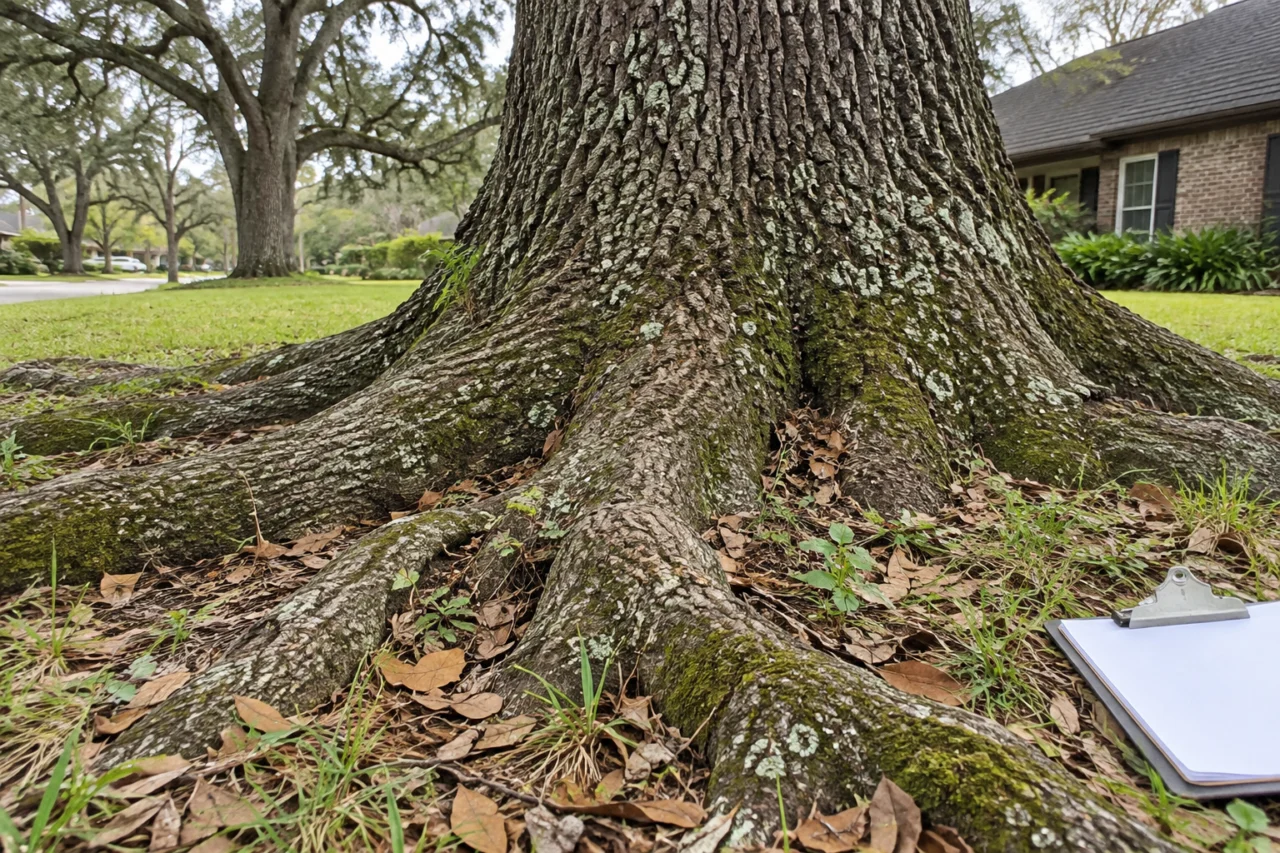
For removal, identify the tree and describe what should happen to logs, branches and the stump. For pruning, state the intended clearance, deadwood or other specific objective. If the question is whether a tree can reasonably be retained, the assessment page helps distinguish condition review from work pricing. Ask what the proposed visit includes rather than expecting one general estimate to supply every possible evaluation or written finding.
The stump guide and material-handling guide help define the condition left afterward. Grinding, excavation, hauling and surface restoration have different purposes. Explain future use of the area so those responsibilities are visible before work is accepted. A simple list of tasks and intended finish is more useful than asking for everything to be cleaned up without identifying what the next owner, grounds team or contractor actually needs.
Show the complete route and the people using it
Include the approach, gate, turns, ground and loading area as well as the tree. Mention pets, resident parking, regular deliveries or other use affecting the work area. A wide lawn in one photo can be reached only through a narrow passage elsewhere on the property. Current information also matters after rain, site work or a changed parking arrangement. Do not move a fence, dig around roots or alter a route merely to make the inquiry appear easier.
For managed sites, the commercial planning hub helps organize several locations and approval contacts. Identify who can make the area available and who approves changes. Public routes and neighboring property need their own coordination; they are not automatically part of a private work area. The accepted approach should connect the actual task, access and surroundings rather than assuming the company uses the same method everywhere within the coverage area.
Report urgent conditions through the right channel
For urgent tree danger, call 504-458-8336 about current availability. Describe what changed and where people or property may be affected from a safe position. Keep clear of hanging wood, damaged trees and other unstable material. Immediate threats to people or electrical involvement need the appropriate emergency or utility response. A routine estimate form or text message does not confirm dispatch, establish arrival time or certify that an affected area is safe to enter.
The storm service overview connects fallen-tree, tree-on-structure and cleanup inquiries. After weather, separate the immediate tree or access task from wider material processing and later repairs. That distinction helps an owner or facilities contact describe priorities without treating every later restoration operation as included in the first response. Keep location references current if several reports concern different entrances, buildings or areas of a large property.
Send enough information for the next conversation
A useful first message contains the address, safe full-tree photos, the desired work, known changes and the available route. Add timing needs and a contact who can approve the scope. If a purchaser needs particular records or documents, send those requirements early. Do not send sensitive account details or assume a form submission has accepted a quotation; use the inquiry to establish what information and review the company needs next.
Keep the final proposal with the identified trees, access assumptions, material decisions and agreed finish. Ask for clarification when an item is uncertain before relying on it for another trade or a property-use decision. The customer planning guide provides a broader checklist for that process. The goal across the service area is the same: a recognizable property task, an informed conversation and a scope that can be compared with the work actually completed.
Service Areas questions
Where is Tree Huggers based?
Tree Huggers Tree Service LLC is based in Marrero and serves Greater New Orleans.
Does every area page represent a separate office?
No. Area guidance does not establish additional offices or a photographed job in each neighborhood.
What should I send before asking about availability?
Provide the actual address, requested work, safe tree photos, access details and an approval contact.
Can I submit a Westbank tree request?
Yes. Describe the actual property and task so scope and current availability can be discussed.
Are New Orleans neighborhood pages interchangeable estimates?
No. They explain related considerations; every property’s conditions and accepted work need review.
Does the Tulane–Loyola area page imply university affiliation?
No. Identify the actual property owner or authorized facilities contact for the inquiry.
Can a Houma or Baton Rouge project be reviewed?
Yes. Larger regional inquiries can be evaluated according to scope, travel, resources and timing.
Does regional coverage guarantee dispatch?
No. Confirm current availability and deployment arrangements directly for the project.
What should a removal inquiry say about cleanup?
Clarify wood, branches, stumps, grindings, hauling and the condition needed afterward.
Why photograph the route as well as the tree?
The entry, turns, ground and loading area can affect how the task is approached.
What should I do about immediate tree danger?
Keep clear and call about availability; involve emergency or utility services for immediate threats or electrical involvement.
Does submitting the form accept or book the work?
No. It starts the conversation; the company still needs to review and confirm the actual scope and arrangements.
Let’s plan your tree work.
Send the property address, safe tree photos and the result you need. Include access restrictions and the person who can approve the work.